Syria news: analysis of 12 November 2026
Back to the Chronology · Current news in this section
Analysis
A week of analysis rather than events: debates over Syria's religious direction and the legal standards for chemical-weapons trials dominate coverage of the country's transition.
This week's items are commentary and features rather than breaking news, reflecting a transitional Syria being assessed on its institutional and societal trajectory rather than on battlefield developments 145. Two threads stand out: whether the Islamist background of the new authorities translates into a broader 'Salafisation' of society 1, and how the emerging accountability process should handle the most serious legacy crimes, notably chemical-weapons use 45. Alongside these, human-interest reporting continues to follow the long tail of displacement, from a family's decade-long refugee journey to the role of a Syrian-origin bystander in a Sydney attack on a Jewish community 23. Taken together, the picture is one of a country whose political transition is now being judged on questions of legitimacy, law and social cohesion.
Key developments
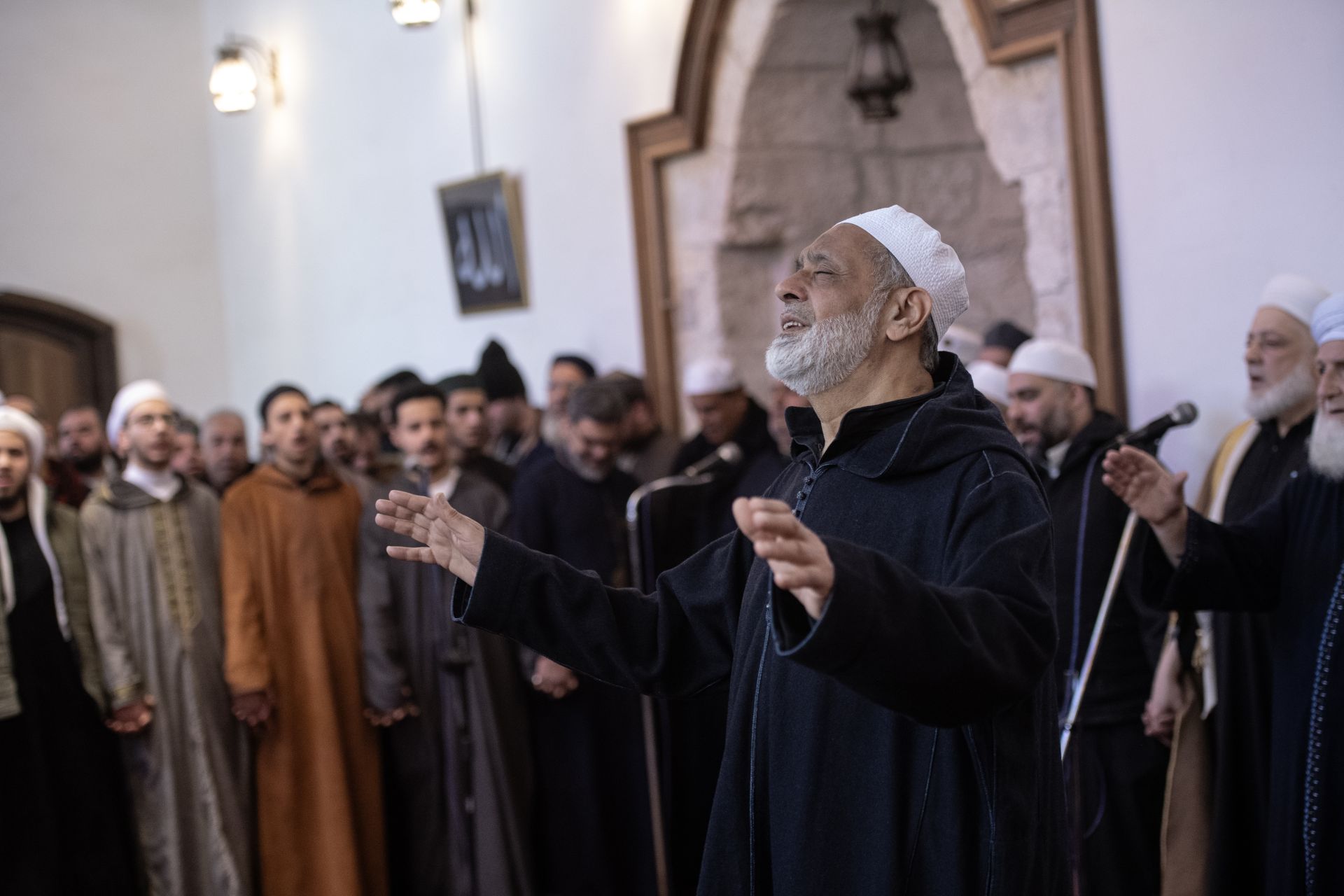
- Debate over Salafist influence. New Lines Magazine argues that asking whether Syria is 'becoming Salafist' is both unavoidable and misleading, because political victory by actors from an Islamist trajectory does not automatically confer religious authority or the ability to remake society in their image [1]. The framing matters because it pushes back against a common assumption that control of the state equals control of religious life, a distinction that will shape how observers read social and legal changes in the coming period [1]. 1
- Legal standards for chemical-weapons prosecutions. Just Security contends that Syrian prosecutors should not bring chemical-weapons charges against detainees unless they can identify a specific incident and evidence linking the individual to it, stressing that attributing an attack to a party does not establish individual criminal responsibility [4]. This is significant because it sets a demanding evidentiary bar for one of the most politically charged categories of legacy crimes and warns against trials that rely on collective or institutional attribution [4]. 45
- Broader transitional-justice agenda. The same outlet is running a 'Syria in Transition' series in which experts assess accountability, reconciliation, institutional reform and constitutionalism [5]. Its existence signals that the international legal and policy community is treating Syria's transition as an unfolding, multi-track process in which courts, constitutional design and reconciliation mechanisms are being evaluated together rather than in isolation [5]. 54
- Long shadow of displacement. The Guardian revisits a Syrian family first filmed in 2015 when 11-year-old Israa and her relatives fled Aleppo for Europe, tracing a ten-year journey that none of them anticipated [3]. The piece is a reminder that the refugee dimension of the conflict spans a generation and that questions of return and integration persist regardless of political change in Damascus [3]. 3
- Syrian-linked bystander in Sydney attack. The Guardian carries a first-person account from Ahmed Al Ahmed, who disarmed one of two gunmen who last year opened fire on a Jewish community at Bondi beach in Sydney, and was then shot five times by the accomplice [2]. The item appears in Syria-tagged coverage, and his profile as a diaspora figure risking his life to protect another community has given the story resonance beyond Australia, though the article as summarised does not detail his background [2]. 2
Themes
- Legitimacy beyond control of the state. Both the Salafism essay and the accountability commentary turn on the gap between holding power and earning legitimacy, whether religious authority in society [1] or legally sound convictions in court [4][5]. The common message is that the new authorities' credibility will be measured by restraint and process, not merely by the fact of having prevailed [1][4]. 145
- The diaspora as an enduring storyline. Coverage of a refugee family's decade abroad [3] and of a Syrian-origin individual intervening in a Sydney attack [2] shows that Syrians outside the country remain central to how the conflict and its aftermath are narrated. These stories underline that any transition will be judged partly by whether it creates conditions for return and reconciliation with those scattered abroad [2][3][5]. 235
What to watch
- Watch whether Syrian prosecutors adopt incident-specific evidentiary standards in chemical-weapons cases or proceed on broader attribution, as this will test the credibility of the accountability process [4][5]. 45
- Watch for concrete legal or social measures on religious practice and personal status, which would indicate whether the debate over 'Salafisation' is becoming a matter of policy rather than perception [1]. 1
- Watch for further output from the 'Syria in Transition' series on constitutionalism and institutional reform, which may shape international expectations of the transition [5]. 5
- Watch refugee-return trends and reporting on families like Israa's, since the pace and voluntariness of return will be a key indicator of confidence in the new order [3]. 3
Stories this analysis is based on (5)
- Is Syria Becoming Salafist? New Lines Magazine
- Shots rang out. I hid behind a car. Then I wrestled the gun from the Bondi beach shooter The Guardian Syria
- ‘Children were wearing fake life jackets’: one Syrian family’s terrifying, 10-year journey The Guardian Syria
- Syria on the Road to Trials of Chemical Weapons Use: Attributing an Attack Does Not Prove Individual Criminal Responsibility Just Security
- Syria in Transition Series Just Security
Written by Claude Fable 5.1 (Anthropic), based on 5 recent headlines and excerpts in this section, Nov 12. AI analysis can misread or miss things: the numbers link to the original reporting, which is the authority.