Great-power competition in Latin America and Chile
Great-power competition in Latin America, with a focus on Chile: the United States, China and Russia contesting trade, investment, critical minerals (lithium, copper), ports and infrastructure, technology, security and diplomacy across the region, from English-language regional outlets, think tanks and Chinese state media for comparison.
Summary
421 news articles and 303 research items in this section, back to 21 November 2025. Browse the news ↓Research ↓
14 stories from 9 publishers in the last 24 hours, 110 from 36 this week; 6 stories were covered by more than one newsroom.
Vietnam always attaches importance to strengthening comprehensive cooperation with traditional friends in Latin America, including Mexico, its largest trading partner in the Western Hemisphere…
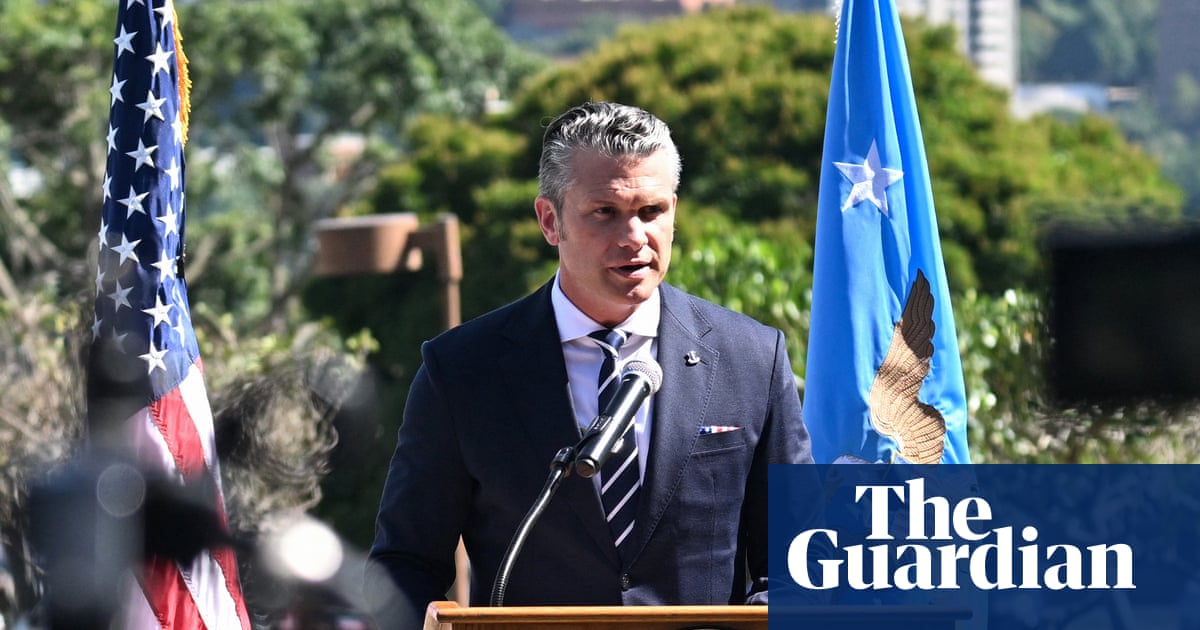
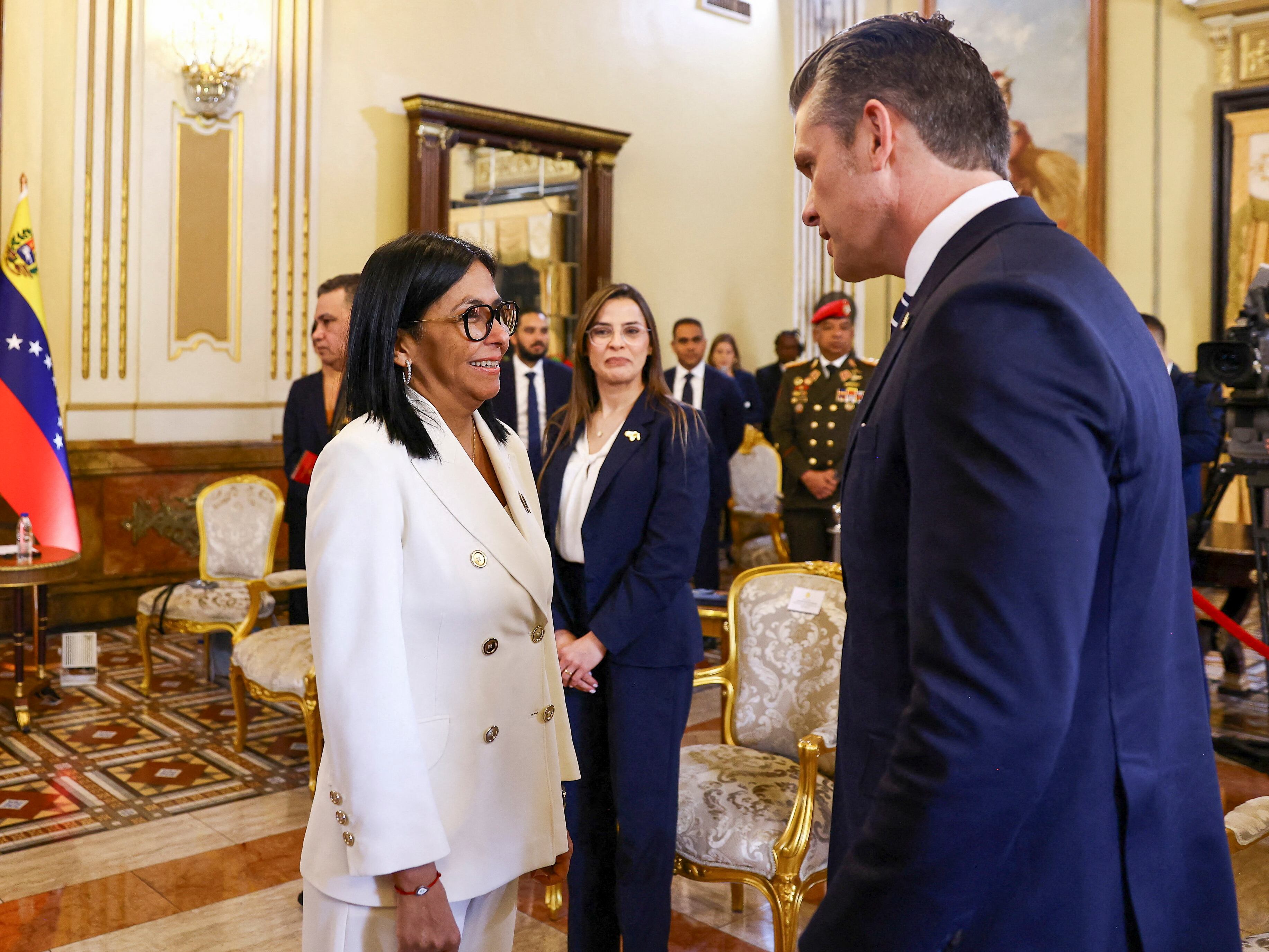
US Defense Secretary Pete Hegseth signed a military cooperation agreement with Venezuela in Caracas on Wednesday during an unannounced visit, the first by a Pentagon chief since the January 3 US…
Washington is converting economic and coercive leverage into open pressure across the hemisphere—tariff threats against Mexico, lethal maritime strikes contested in Ecuadorian courts, a stated timeline on Cuba—while Beijing deepens commercial penetration through APEC diplomacy, battery and mineral i
The fortnight shows a hemisphere in which the United States is behaving as a sphere-of-influence power: Trump threatened to double tariffs on Mexico over a 1,500-person caravan 228, floated a 'short military operation' against Cuba before 2029 6, and continued strikes on vessels that have killed nearly 250 people and are now being litigated by surviving Ecuadorian fishermen 1226. China's approach is predominantly commercial and institutional: hosting APEC in Shenzhen with Sheinbaum pitching Plan México to over 1,000 business leaders 816, CATL opening an Argentine office 4, and Latin America positioning itself as an alternative critical-minerals source as Chinese rare earth curbs bite 3. Latin American governments respond with varied hedging strategies—Milei courting a US trade deal while Washington scrutinises Chinese content in supply chains 21, Mexico simultaneously absorbing US tariff threats and courting Chinese investment 1625, Ecuador denying a US base while hosting 'temporary' US personnel 14. The US midterms, which handed Democrats both chambers 42, raise the question of whether a domestically weakened Trump intensifies or dilutes external pressure 36; Russia is notably absent from the items, underscoring that the real contest is bilateral, US–China, with Europe attempting a late return via Mercosur .
Key developments
Lethal maritime campaign meets legal accountability. US forces destroyed eight Ecuadorian vessels between 28 August and 16 September, part of a campaign that has killed nearly 250 people under a 'narco-terrorism' framing; Ecuadorian courts have exposed flaws in the arrests and sixteen surviving fishermen are suing the Trump administration over a 17 March drone strike [12][26]. Ecuador's president Noboa simultaneously denies a US military base exists, describing US personnel as present for 'temporary activities' [14]. The pattern connects to Washington's expanding use of terrorist designations as a legal instrument—three Guatemalan gangs were branded terrorists on 13 November [29]—and shows how a partner government's alignment can become a dome 12261429
Cuba: coercion with a deadline. Trump said he wants to 'get Cuba done' before 2029 and would consider a short military operation, though no US decision has been announced [6]; Cuba has revived military exercises after the midterms, with a Havana source noting surprise given the Democratic sweep [24]. Fuel restrictions are already deepening an energy crisis with humanitarian costs [40], and the annual UN vote on the embargo highlights tension between unilateral sanctions and international law [38]. Read alongside the Atlantic Council's call for 'targeted economic pressure' on Nicaragua after its rulers abandoned elections [32], this signals a return to explicit Monroe-Doctrine logic toward the hemisphere's remaining authori 624403832
Critical minerals: supply-chain decoupling reaches the region. China holds 70 per cent or more market share for 19 of 20 critical minerals segments, and its rare earth curbs are pushing Western governments to court Latin American alternatives [3]. In parallel, CATL—squeezed in the US—has opened an Argentine office to expand from grid batteries into storage for mines, data centres and Patagonian wind farms [4], while Washington scrutinises product traceability and Chinese involvement in supply chains before approving Milei's fast-tracked trade deal [21]. The region is thus both the prize of decoupling and a site where Chinese firms relocate to escape it, a contradiction that economic statecraft on both sides has not resolved. 3421
Argentina's alignment and its costs. Milei's government wants a US trade agreement submitted to Congress before year-end, but faces US demands on Chinese content and unresolved steel and aluminium tariffs [21]; Argentina's designation of the IRGC as terrorist prompted Iran to reciprocally label the Argentine Navy and Air Force terrorist organisations [1]. The CATL office [4] shows Argentina nonetheless remains open to Chinese capital in energy. Argentina illustrates that overt alignment with Washington yields diplomatic friction with US adversaries without eliminating dependence on Chinese investment—bandwagoning on security while hedging commercially. 2114
Brazil after dual elections: contested exfiltration claims. Jacobin, a socialist outlet, reports that Flávio Bolsonaro fled Brazil after losing the presidential election with help from a Trump operative and a former Mossad agent, and calls for a congressional investigation; these claims are not independently confirmed in the items and should be treated as contested [10]. Post-election assessments of Brazil–US relations [33] and Canada's US$392M pledge to Brazil's forest fund [17] suggest other Western actors are investing in Lula's Brazil even as Lula attends the Asean summit alongside Trump and Li Qiang in Manila [19]. 10331719
Themes
Securitisation as the US instrument of choice. Washington's leverage is increasingly exercised through security framings—terrorist designations [29], lethal interdictions [12][26], tariff threats tied to migration [2], and intelligence operations such as the CIA-linked Mexican prosecutor case that has become a sovereignty flashpoint [13]. This fuses economic statecraft with coercive force, making partner governments' cooperation politically costly at home, as the Greenland comparison invoked by Latinoamérica21 illustrates [31]. 291226213
Commercial presence versus strategic leverage. China's footprint is overwhelmingly commercial—APEC hosting [8][16], CATL [4], a dominant mineral supply chain [3], but also illicit financial networks laundering cartel money [23] and a Panama port figure now wanted by Beijing itself [27]. The Panama case shows Chinese commercial presence can be reversed when political winds shift, which is why it does not automatically translate into strategic leverage comparable to US coercive capacity. 8164323
A divided region with no unified response. Latinoamérica21 argues that Trump's domestic defeat may intensify external pressure on a region with little capacity for coordinated reply [36], and the items bear this out: Argentina aligns [21], Mexico hedges [16][25], Ecuador dissembles [14], Brazil pursues Europe and Canada [17][34]. Sovereignism in South America, as recent scholarship notes, does not necessarily oppose regional integration [37]—yet integration as a shield against great-power pressure is absent from this fortnight's news. 3621162514
What it means for Chile
Copper dependence transmitted through the peso. The peso briefly breached 1,000 per dollar as copper fell and traders priced a US rate rise [7], a direct illustration of commodity dependence: Chile's currency is simultaneously a copper price and a US monetary policy derivative. The US$500M truck-strike settlement cutting diesel prices [20] adds fiscal strain at a moment when terms of trade are deteriorating. 720
Critical minerals and the decoupling dilemma. As Western governments seek alternatives to China's 70-per-cent-plus dominance in critical minerals [3], Chile—the world's largest copper producer and a leading lithium source—is a natural target, but the Argentine precedent shows Washington will scrutinise Chinese involvement in supply chains before granting trade concessions [21]. Chile's existing free-trade agreements with both the US and China, and the heavy Chinese role in its lithium and copper sectors, mean any US-led decoupling demand would test Santiago's long-standing posture of commercial openness to all partners. 3214
Hedging space under pressure. Chile has historically practised active non-alignment, maintaining trade agreements across the Pacific while avoiding security entanglement; the fortnight's coercive US behaviour toward Mexico, Ecuador and Cuba [2][12][6] shows the costs that even aligned or neutral neighbours can incur. Chile's strategic assets—ports on Pacific routes, Antarctic gateway status, and astronomy infrastructure hosting foreign observatories—are the kind of dual-use positions where commercial presence can be reinterpreted by Washington as strategic leverage, as the Panama port saga suggests [27]. 212627
Analytical lenses
Asymmetric interdependence. The concept explains why Trump can credibly threaten to double tariffs over a caravan [2][28] and why Mexican steelmakers invest defensively against both Chinese competition and US tariffs [9]: the actor less dependent on the relationship extracts concessions. It also explains Chile's peso vulnerability to copper and US rates [7]. What it misses is the domestic politics that makes Sheinbaum's open rebuttal and Shenzhen trip [8][16] rational despite the asymmetry. 228978
Spheres of influence and the Monroe Doctrine. Trump's Cuba timeline [6], the Nicaragua pressure prescription [32], lethal interdictions off Ecuador [12][26] and the Greenland analogy [31] fit a revived sphere-of-influence logic in which security trumps partner sovereignty. The lens captures US intent but not capacity: nothing in the items shows Washington displacing China's commercial position [3][4], and the Panama case [27] suggests Chinese retreat is driven as much by Chinese domestic politics as US pressure. 632122631
Hedging and active non-alignment. Mexico's simultaneous APEC outreach and tariff resistance [16][25], Ecuador's denial of a base while hosting US personnel [14], and Argentina's CATL opening alongside a US deal [4][21] are hedging behaviours—retaining options with both powers. Active non-alignment as a doctrine assumes a region able to set terms collectively; the items show fragmented, bilateral hedges with no coordinated stance [36], which is the concept's practical limit. 162514421
What to watch
Whether a Democratic-controlled Congress constrains Trump's coercive options on Cuba and the boat-strike campaign, or whether he escalates precisely because domestic room narrows [42][36][6]. 42366
Outcomes of Sheinbaum's Xi meeting and whether Chinese commitments to Plan México trigger US retaliation under the tariff and supply-chain scrutiny already applied to Mexican steel [8][16][9]. 8169
Whether the US–Argentina trade deal's Chinese-content conditions set a template that other regional governments, including Chile, will face [21][3]. 213
Progress of the Ecuadorian fishermen's lawsuit and domestic court rulings, which could establish legal limits on US high-seas operations [26][12]. 2612
Written by Claude Fable 5.1 (Anthropic), based on 43 recent headlines and excerpts in this section, 3d ago. AI analysis can misread or miss things: the numbers link to the original reporting, which is the authority.
Research 303
Journal articles, academic blogs, think-tank reports and papers, kept apart from the news below.
Russian surveillance and Chinese financing allow the Ortega-Murillo regime to withstand external pressure, at the cost of new strategic dependencies. O post How Moscow and Beijing reinforce Nicaragua’s authoritarian consolidation apareceu primeiro em Latinoamérica 21.
Greenland’s subordination to Washington’s interests raises the question of how far economic sovereignty can be relinquished in the name of security. O post A banana republic in the Arctic apareceu primeiro em Latinoamérica 21.
Nicaragua's dictators called for no more elections, so Washington should call for no more business as usual. It should use targeted economic pressure to push for democratic change.
On November 5, the Brazil Program at the Inter-American Dialogue hosted a hybrid discussion to assess the outcomes of the 2026 elections in Brazil and the United States and their implications for bilateral relations.
Europe’s rapprochement with Mercosur highlights a shift in its geopolitical priorities and raises the question of to what extent it can regain the economic and political influence that China has been gaining over the past decades. O post Europe returns to Latin America: Is it too late? apareceu primeiro em Latinoamérica 21.
Pope Leo XIV's tour of Latin America aims to restore the Catholic Church's influence in the face of political polarization and the rise of the far right. O post The return of the shepherd: Leo XIV and the geopolitics of faith in Latin America apareceu primeiro em Latinoamérica 21.
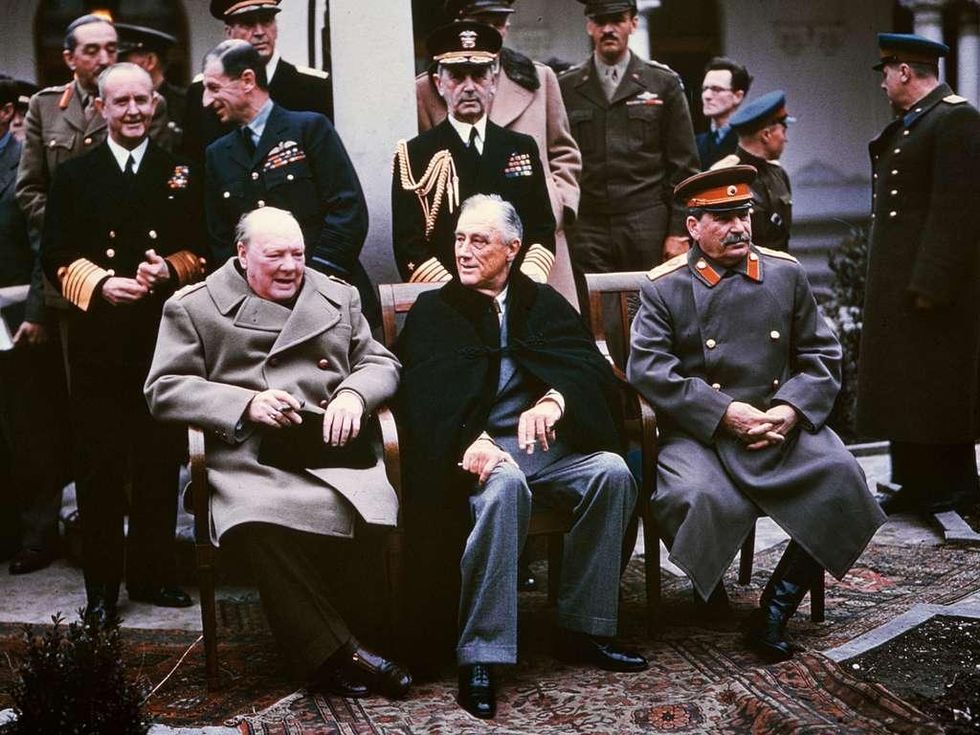
Representatives of the transatlantic establishment were quick to liken the trilateral summit in Shenzhen to the supposed Anglo-American “betrayal” of Poland and other Eastern European states at Yalta in February 1945. Yalta ratified — but did not create — the division of Europe into spheres of influence that later became frozen into the dividing lines of the Cold War. A less apoplectic strain of the same underlying sentiment holds that President Trump’s willingness to meet…
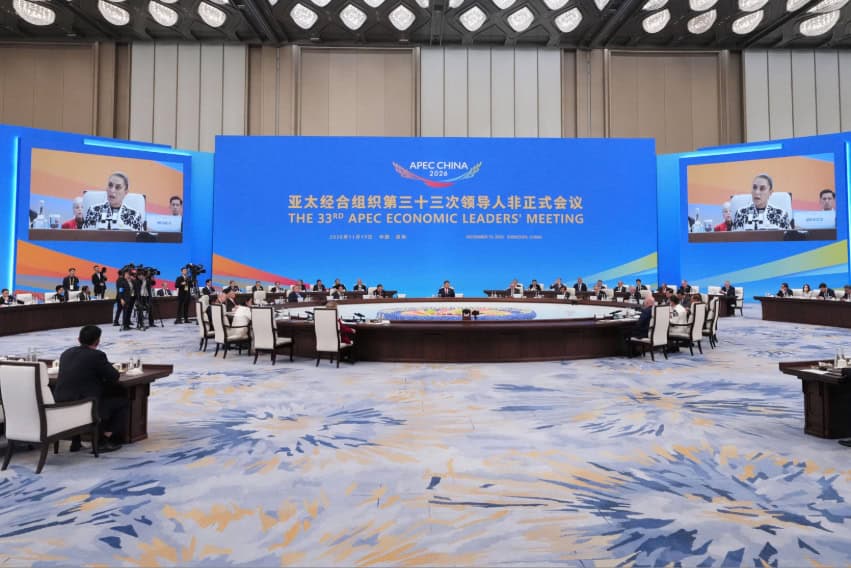
The president called her four-day trip to Shenzhen “very productive and successful,” but said Mexico has no plans for a free trade agreement with China.
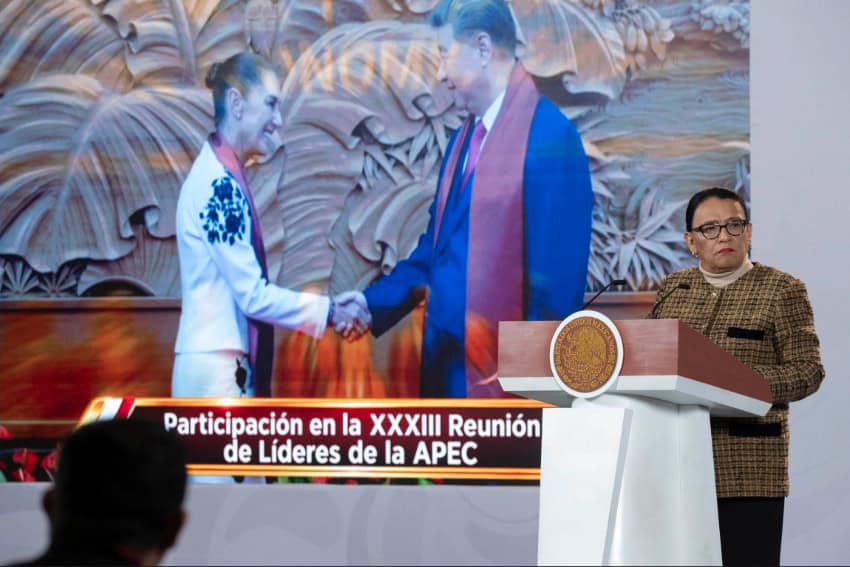
Interior Minister Rodríguez reported on President Sheinbaum's last day at APEC in Shenzhen and addressed Mexico's efforts to stop a migrant caravan in Chiapas.
Defense Secretary Pete Hegseth formally delivered a Lockheed C-130 Hercules military transport aircraft to Colombia on Wednesday as the Trump administration deepens its defense partnership with the Latin American country. “Like our communities, your communities are threatened by gangs and violence and drugs and narco-terrorism, and you want safe streets and a prosperous country for...
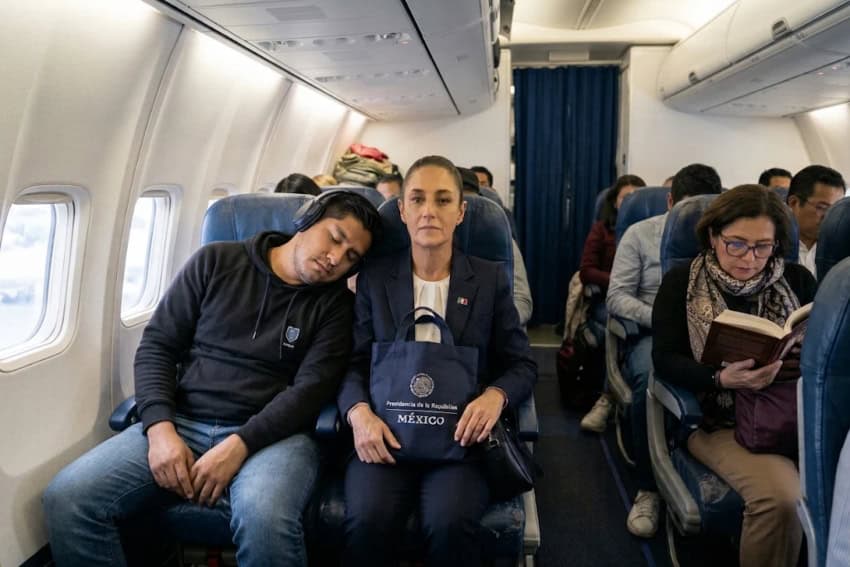
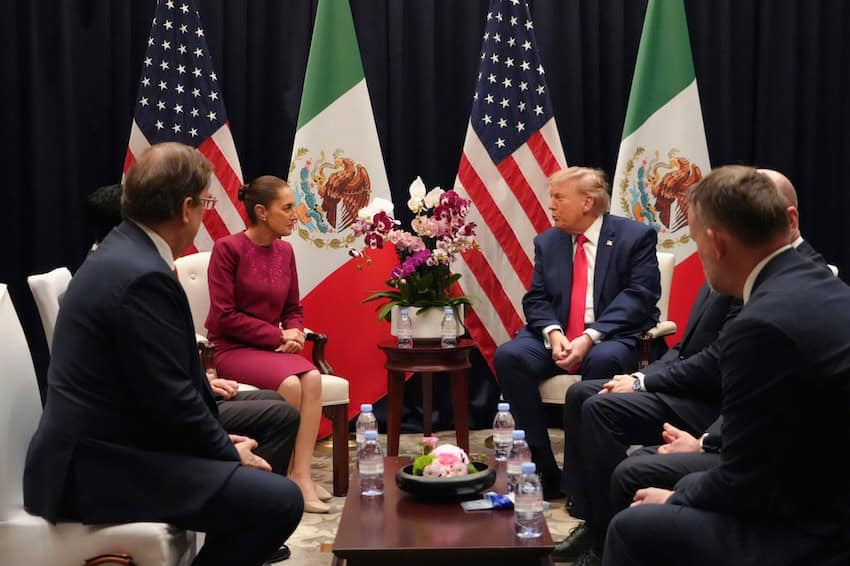
Claudia Sheinbaum closed her China trip with four cooperation memorandums and a 20-minute trade meeting with Trump, while US trade questions stayed open.
Through his personal story, the book also offers insights into the war in Vietnam, the immense suffering endured by the Vietnamese people and growing international opposition to the US military intervention in the country. Documentary on Argentine journalist missing during Vietnam war premieres in Mar del Plata Vietnam emerges as key target for Argentine firms at Asia Trade Seminar Argentine businesses eye expansion into Vietnamese market
Peru's biggest export fell about 5% in a day as investors sold copper with AI stocks while traders weighed higher US interest rates, hitting mining revenue.
Two Latin American presidents have shown their appreciation for tech advancements in musical instruments on display during the Apec summit in Shenzhen. Mexican President Claudia Sheinbaum was captured playing a traditional Chinese folk song, “Jasmine Flower”, using a stringless guitar ahead of the welcome banquet on Wednesday evening. Sheinbaum praised China’s emerging technology in an interview with local Chinese media. “From what I have been seeing, there is a great deal…
US Defense Secretary Pete Hegseth signed a military cooperation agreement with Venezuela in Caracas on Wednesday during an unannounced visit, the first by a Pentagon chief since the January 3 US military operation that removed Nicolás Maduro from power. The agreement restores cooperation that Hugo Chávez broke off in 2005.
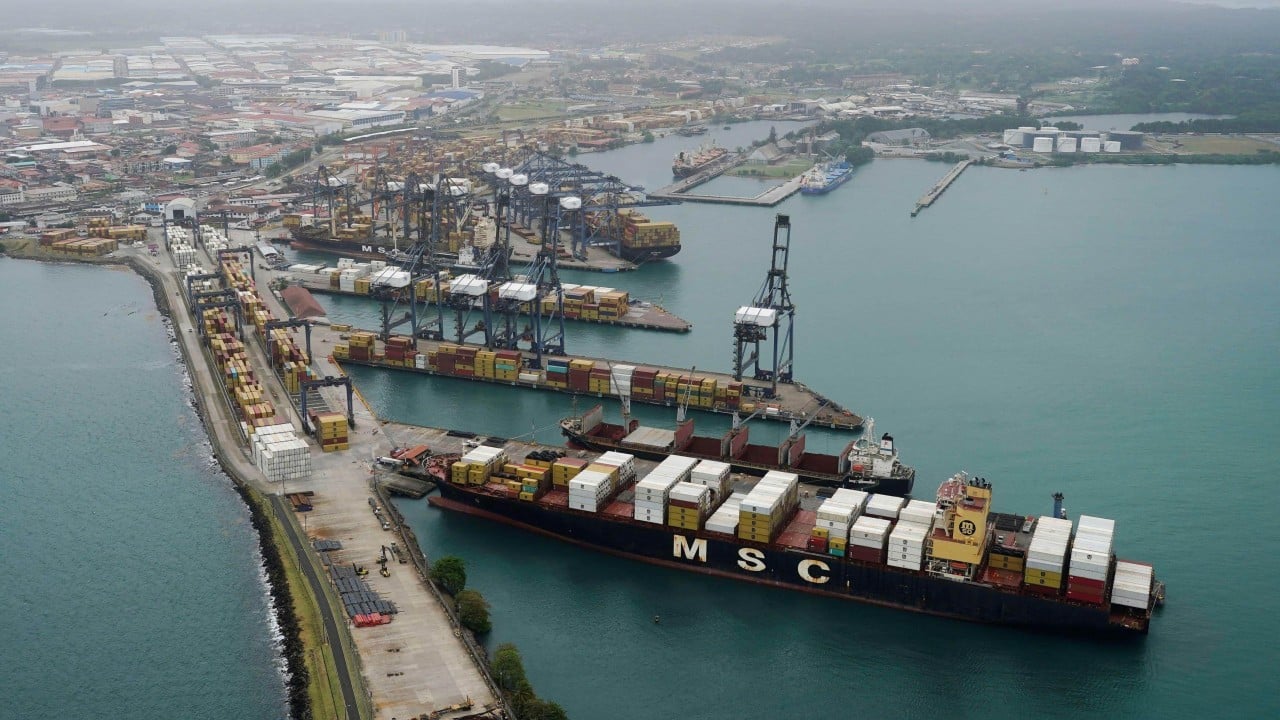
A bipartisan US congressional commission has urged lawmakers to declare China’s detention of hundreds of Panama-flagged ships a form of “economic coercion” and to let the US president respond with sanctions, nearly 10 months after Panama’s Supreme Court stripped a subsidiary of Hong Kong-based CK Hutchison Holdings of its right to run two ports on the Panama Canal. In its annual report to Congress, released on Wednesday, the US-China Economic and Security Review Commission…
A group of Ecuadorian fishermen has sued the Trump administration over allegations that the U.S. military attacked their fishing vessel and kidnapped them after mistakenly identifying them as drug smugglers
The US defense secretary called the former president’s capture the ‘most sophisticated military operation’ in Latin American history Pete Hegseth has used his first visit to Venezuela since US special forces abducted its former president, Nicolás Maduro, to boast of the dictator’s capture during what he called “the single most sophisticated military operation in the history of Latin America”. Maduro was controversially seized by Delta Force operatives in the early hours of 3…
The presidents' meeting in Shenzhen was the first time they have ever held formal in-person talks, choosing to focus on unresolved issues related to the USMCA free trade pact.
Defense Secretary Pete Hegseth traveled to Venezuela on Wednesday to meet with Venezuelan acting President Delcy Rodríguez in Caracas, where he announced the U.S. will deepen its military partnership to help counter foreign actors and “narco-terrorists.” “We look forward to following through, deepening our defense cooperation and our defense partnership in ways that utilizes the...
From Shenzhen, China, President Sheinbaum reported productive meetings with U.S. President Trump and Vietnamese President Tô Lâm on Wednesday. Sheinbaum will attend the second day of the APEC Leaders’ Meeting on Thursday before returning to Mexico.
Insider Brief Brazil received parts for two quantum computers under a deal with Chinese technology company China Electronics Technology Group Corporation, or CETC. The equipment arrived Nov. 16 in João Pessoa, the capital of the northeastern state of Paraíba, Brazil’s Ministry of Science, Technology and Innovation said in a news release. The ministry valued the