Neoliberalism and its critics: free markets, privatisation, deregulation and austerity, the Washington Consensus and IMF programmes, and the debate over industrial policy and the state, from Project Syndicate, the Adam Smith Institute, Phenomenal World, Jacobin, research and the news. Opinion outlets are named, so their viewpoint is clear. Kept for a year as an archive.
Summary
39 news articles and 172 research items in this section, back to 20 December 2025. Browse the news ↓Research ↓
2 stories from 2 publishers in the last 24 hours, 12 from 9 this week.
Speaking in rapid succession at the APEC leaders’ summit in Shenzhen on Thursday morning, Donald Trump and Xi Jinping offered Pacific Rim economies a stark study in diplomatic contrast, highlighting…
Pope Leo XIV's public rebuke of Javier Milei's austerity in Buenos Aires crystallised a week in which the social costs of fiscal consolidation, not its arithmetic, dominated contestation over neoliberalism from Argentina and Ecuador to Hungary and the eurozone.
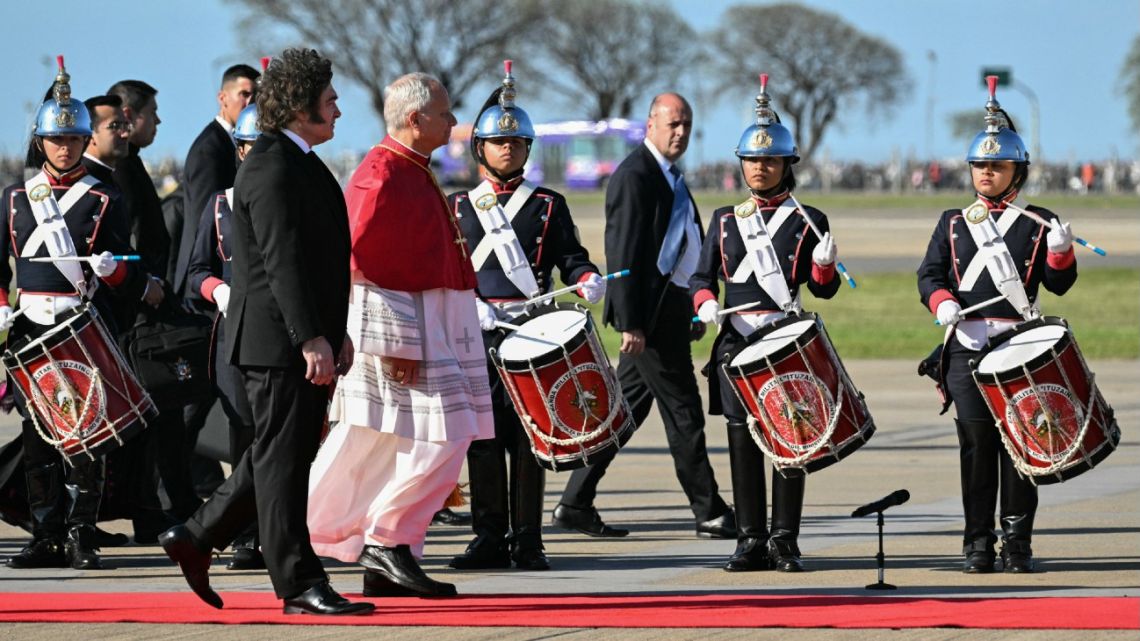
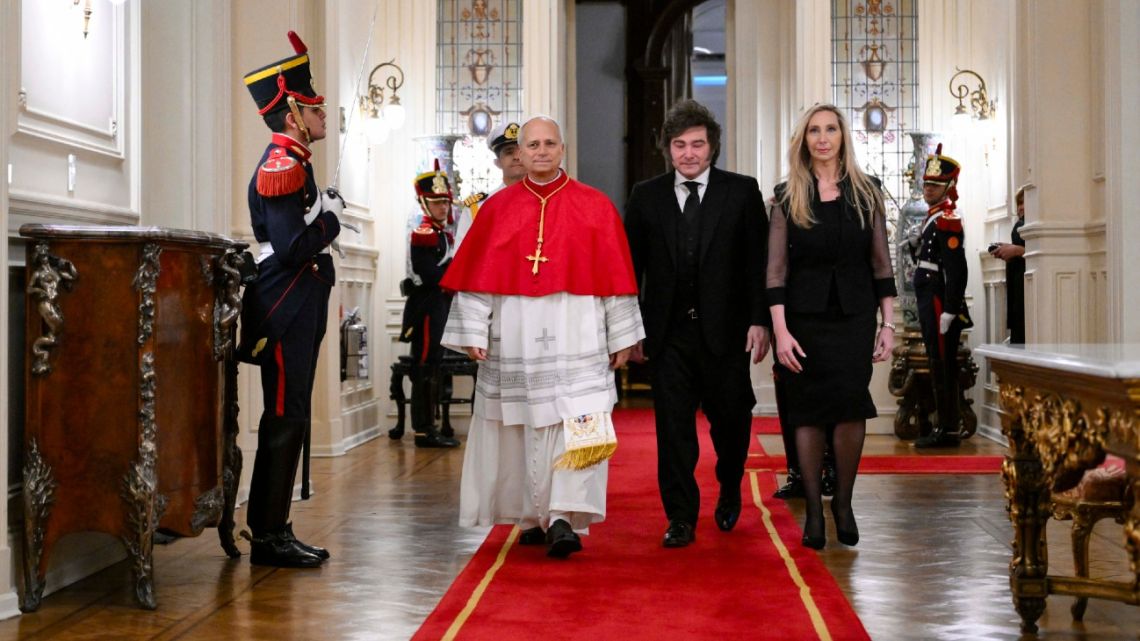
The week's most visible episode was the papal visit to Argentina, where Pope Leo XIV, in front of President Milei and his cabinet, defended pensioners, education funding and the young people emigrating, and insisted growth must be inclusive 1111213; one outlet frames this against an economy it reports as slipping into recession 2. In parallel, the IMF's Europe director argued that fiscal consolidation must be paired with productivity reforms to contain bond-market 'spillover' risk, a reminder that the Fund now sells austerity as a package rather than an end in itself 3. Street mobilisation in Ecuador against temporary job schemes 4 and a Hungarian referendum abolishing doctor fees 16 show demand-side rejection of user-charge and labour-flexibilisation models. The intellectual terrain is also shifting: socialist, progressive and heterodox outlets published critiques of legal-reformist, mainstream-equilibrium and urban-neoliberal frameworks 61015, while a British conservative outlet argued the right's problem was weakness rather than excessive liberalism 5.
Key developments
Papal challenge to Milei's model. Pope Leo XIV used his first Argentine address to question an austerity model 'that lacks social inclusion', citing pensioners, youth emigration and education cuts, to applause from the audience [11][12]. The BBC characterises it as a 'veiled' rebuke while the Inquirer calls it 'stinging' [1][12], so the intensity is contested; what is not is that the Church has positioned itself as the principal non-partisan critic of Milei's programme in a polarised polity [13], and the Buenos Aires Times links this to an economy it reports as entering recession [2]. 12111213
IMF reframes consolidation for Europe. The Fund's Europe director warned that persistent bond turmoil risks spilling across the region and that fiscal consolidation must be coupled with productivity-boosting reforms [3]. This is a notable rhetorical evolution from the classic Washington Consensus emphasis on deficit reduction alone: the IMF is acknowledging that austerity without growth lacks both economic and political sustainability, even as it keeps consolidation at the core. 3
Ecuadorian students reject precarious-work remedies. Thousands of students have marched against President Noboa's temporary job plans, demanding permanent funding for public health and education and action on insecurity [4]. Global Voices frames this as opposition to 'neoliberal models and state violence', fusing a critique of labour flexibilisation with one of coercive policing, which places Ecuador alongside Argentina as a Latin American test case for market-oriented governments facing youth-led backlash. 4
Hungary's referendum against user fees. Hungarian voters scrapped doctor fees by referendum, and Social Europe cites data from 30 countries to argue that charges at the point of care reliably sour public opinion [16]. The episode illustrates how co-payment reforms, a staple of healthcare marketisation, generate direct electoral punishment, and it sits uneasily with the national-conservative government's own populist self-image. 16
VA retrenchment in the United States. Jacobin, a socialist outlet, reports that Veterans Affairs head Doug Collins appears secure and will continue what it characterises as dismantling the VA absent legislative or grassroots pushback [7]. Whether or not one accepts the 'dismantling' framing, the item indicates that state-capacity reduction in a politically protected constituency is proceeding without organised resistance, which is analytically significant for how retrenchment avoids blame. 7
Rethinking what the right stands for. ConservativeHome's Jack Peters argues the British Conservatives lost because they were 'too weak', not 'too liberal', and that treating Thatcher as a 'comfort blanket' is itself a sign of exhaustion [5]. This is a conservative intra-party intervention rather than reporting, but it captures the live debate on the right over whether to abandon or rebrand market liberalism in the face of national-conservative competitors. 5
Debates over the market and the state
Post-neoliberal economics of essentials. Phenomenal World's excerpt from Isabella Weber's Anti-Fascist Economics argues that mainstream general-equilibrium economics diverted attention from problems like basic survival, proposing a 'politics of essentials' [15]. This heterodox current aligns with the Pope's insistence that human beings cannot be subordinated to the economy [2] and with Ecuadorian demands for guaranteed public provision [4], but it is an argument from an engaged scholar rather than an established policy consensus. 2415
Legal-reformist versus Marxist critiques of capitalism. Jacobin, a socialist outlet, contests Katharina Pistor's view that capitalism is a legal regime alterable by rewiring private law, insisting that ignoring the wage relation leaves the system intact [6]. The debate matters for post-neoliberal strategy: whether institutional design (corporate governance, property rules) suffices or whether labour's structural position must change, a question echoed in the Japan Times' call for rules governing Indian family ownership after the 1991 reforms [8]. 68
The right's reckoning with Thatcherism. ConservativeHome's argument that the Tories' problem was weakness rather than liberalism [5] rejects the national-conservative diagnosis that market liberalism itself lost the base. Read alongside the Guardian's letters on the hard right and the 'assault on empathy' [9], the item shows the British right debating whether to re-embrace, retire or merely re-style its neoliberal inheritance. 59
Urban neoliberalism in historical perspective. The Nation, a progressive outlet, reviews a history tracing New York's path from social-democratic experiment to what it calls 'neoliberal devastation' [10]. The piece positions the city as a paradigmatic case of the 1970s fiscal-crisis turn that prefigured national austerity politics, offering a longue-durée counterpoint to the week's short-term contests. 10
Themes
Austerity's victims as the political fulcrum. From the Vatican's language about austerity 'having victims' [2][11] to Ecuadorian demands for permanent public services [4] and Hungarian rejection of doctor fees [16], opposition is organised around concrete losers rather than abstract macroeconomic arguments. Even the IMF now frames consolidation as needing a growth complement [3], suggesting the distributional critique has penetrated orthodox institutions. 2341116
Moral and institutional sources of critique. The week's critics are not primarily parties of the left but the Catholic Church [1][12], students [4], referendum voters [16] and heterodox economists [15], with the socialist and progressive press supplying theory [6][10]. This diffusion matters because it deprives market-liberal governments of the ability to dismiss opposition as partisan or ideological. 1461012
Legitimacy beyond the market. Jacobin's reading of Xi's 'Chinese Dream' as a pragmatic contract of stability for growth [14], the Guardian letters on empathy versus 'the politics of cruelty' [9], and Verfassungsblog's concern with tech power corroding deliberation [17] converge on the question of what sustains consent when market outcomes disappoint. Across regimes, performance legitimacy is being supplemented or contested by moral and procedural claims. 91417
By region
Latin America. Argentina and Ecuador present two variants of market-liberal governance under pressure: Milei's austerity confronted by the papacy and a reported recession [1][2][11][12][13], and Noboa's temporary job plans confronted by students demanding permanent public services [4]. In both, the critique couples distributional loss with social exclusion or state coercion, suggesting the region's post-Washington Consensus politics remain volatile. 1241112
North America. Jacobin reports continued retrenchment at Veterans Affairs under Doug Collins with little organised opposition [7], while the Nation revisits New York's long transition from social-democratic city to neoliberal exemplar [10]. The Guardian letters on empathy in the US midterms context [9] indicate the cultural register in which American austerity is now debated. 7910
Europe. The IMF's warning about bond-market spillover and its insistence on pairing consolidation with productivity reforms [3] frame the macro constraint, while Hungary's referendum scrapping doctor fees shows micro-level resistance to marketised provision [16]. British conservatives, meanwhile, debate whether their losses reflect too much or too little liberalism [5], and Verfassungsblog raises the question of tech power's corrosion of deliberation amid populist advances [17]. 351617
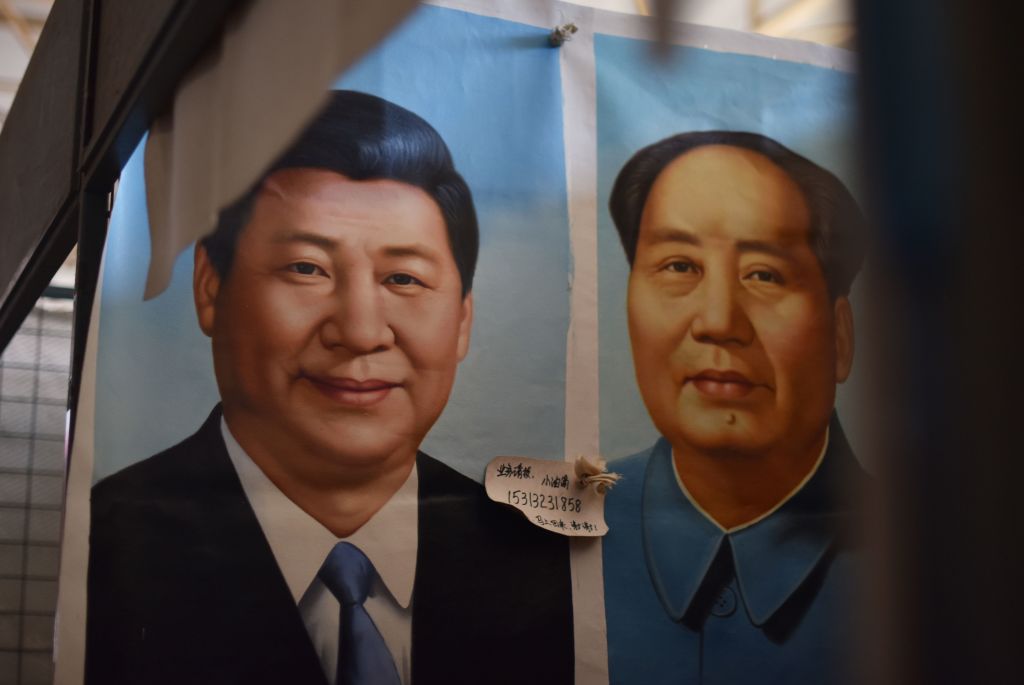
East Asia. Jacobin's analysis of the 'Chinese Dream' presents a party-state legitimated by a pragmatic exchange of stability for growth rather than revolutionary credo [14], a model of state-led capitalism that stands as the principal structural alternative to neoliberal prescriptions. The Japan Times' comparative note on India's post-1991 family conglomerates, where ownership remains 'feudal', shows liberalisation producing modernised management without diffused ownership [8]. 814
Analytical lenses
Polanyian double movement. The concept of society's protective counter-movement against market disembedding fits the papal defence of pensioners and students [11][12], Ecuadorian demands for permanent provision [4] and Hungary's referendum against user fees [16]. It explains why resistance comes from churches, students and voters rather than organised labour alone, but it says little about why some counter-movements (Hungary's) succeed through institutions while others (Argentina's) rely on moral suasion. 4111216
Performance legitimacy and the social contract. Jacobin's reading of China as a stability-for-growth bargain [14] and the IMF's concession that consolidation needs growth [3] both treat regime consent as contingent on delivered outcomes. The lens clarifies why reported recession in Argentina [2] is politically dangerous for Milei, but it underplays the moral and procedural dimensions emphasised by the Pope [2] and by critics of tech-mediated deliberation [17]. 231417
Varieties of capitalism and institutional complementarity. The Pistor debate [6] and the Indian ownership question [8] turn on whether capitalism's core lies in legal-institutional arrangements or in the wage relation, and how liberalisation interacts with pre-existing structures such as family ownership. The framework explains the uneven, path-dependent outcomes of 1991-style reforms, but Jacobin's critique highlights its blind spot regarding class conflict, which institutionalist typologies tend to treat as background rather than driver. 68
What to watch
Watch whether Milei adjusts pension or education spending after the papal intervention and the reported slide into recession, since the Church's framing gives domestic opponents a non-partisan vocabulary [2][11][12]. 21112
Watch European sovereign bond spreads and any IMF follow-up, as the Fund has explicitly tied consolidation's credibility to productivity reforms that governments have struggled to deliver [3]. 3
Watch whether Ecuador's student protests broaden into a general mobilisation and how the Noboa government responds, given the item's linkage of economic grievance with state violence [4]. 4
Watch for congressional or veterans'-organisation pushback on VA restructuring, which Jacobin identifies as the missing constraint on retrenchment [7]. 7
Written by Claude Fable 5.1 (Anthropic), based on 17 recent headlines and excerpts in this section, 1d ago. AI analysis can misread or miss things: the numbers link to the original reporting, which is the authority.
Research 172
Journal articles, academic blogs, think-tank reports and papers, kept apart from the news below.
Since Javier Milei took office in December 2023, the budget of Argentina’s national universities has lost more than a fifth of its value in real terms. University funding has fallen from 0.72% to about 0.53% of GDP, and by May 2026, university salaries had lost more than a third of their purchasing power. These numbers reflect a hostility towards public universities that austerity alone does not explain. Milei, like many of his peers on the new right around the world, treats…
An excerpt from Isabella Weber’s new book Anti-Fascist Economics. For decades, mainstream economics has diverted attention away from the problems it cannot solve—even a problem as fundamental as survival. In the 1950s, economists researching general equilibrium theory set out to demonstrate that decentralized market decisions, guided only by prices, would lead to a “Pareto optimal”
As the lament swells around democratic crisis and the rise of the right, with populist moped-riders sweeping elections and traditional political parties left “shocked”, attention increasingly turns to the actual processes and spaces of political deliberation and their corrosion through social media and artificial intelligence (AI). Contentions around “too much screen time”, however, fall short of addressing both the significant place that social media holds in…
It shows good growth achieved by sensible policies and a willingness to work. It is rising faster than most competitors, and will likely soon overtake many of them, including ourselves, in living standards. Poland is a strong bet. Few countries have done so much, so fast, from such a low base. In 1994, Poland’s GDP per capita at purchasing power parity was $7,040, less than a third of Japan’s. By 2024 it stood at $51,263, just behind Japan’s $52,039. The IMF and World Bank…
Since the Asian financial crisis, major Indonesian conglomerates have increasingly reorganised accumulation across national boundaries through foreign production, acquisitions, joint ventures and regional corporate networks. Nevertheless, such internationalisation poses a political and commercial problem: how does capital historically constituted through concentrated ownership and privileged relations with state power reproduce itself across different political economies?…
Speaking in rapid succession at the APEC leaders’ summit in Shenzhen on Thursday morning, Donald Trump and Xi Jinping offered Pacific Rim economies a stark study in diplomatic contrast, highlighting the widening gulf between Washington’s deregulatory rhetoric and the extraterritorial reach of its technology controls. “We oppose any form of globalist regulation or anything to
The government doesn’t know what they are going to be used for, but that’s beside the point. Their real purpose is to sustain the share price of big tech It should have the status of an economic law: the sectors a government does most to promote in the name of growth are the sectors most likely to tank the economy. In the UK and the US, deregulation was meant to turn the financial sector into a never-ending growth machine. We have not yet fully recovered from the crash it…
Jensen Huang was considered the world's hottest AI and chip diplomat. His absence from the proverbial negotiating table might result in the technology's expansion cooling off. Mr Huang – forced to step down as Nvidia boss after an extramarital affair with Megaspeed executive and alleged Chinese spy Alice Huang – has been instrumental in building personal relationships with governments and corporates that have shaped AI investments and programmes, and data centres. With…
There are about a million young people across the country not in employment, education or training. Could Alan Milburn’s landmark report help change that? Richard Partington reports The UK has one of the worst rates in Europe when it comes to youth unemployment. From the savage cuts to youth services during austerity, to the impacts of the pandemic and now the threat of AI to entry level jobs, young people across the country are feeling that the social contract is broken…
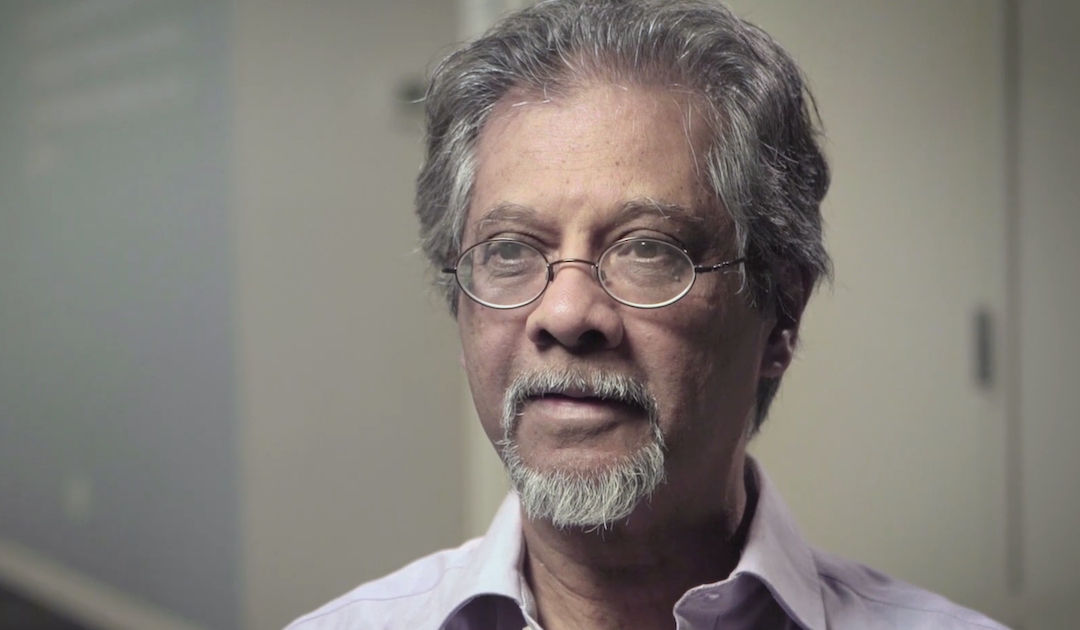
Anwar Shaikh, who died in October at 80, showed how capitalism really works: profit drives it, competition is a war, and crisis is the norm. Economist Clara Mattei argues that his work remains a guide to changing the world.
Country: Afghanistan Source: World Food Programme Please refer to the attached file. Key Highlights Market Overview During the first half of November, national average prices recorded generally modest movements during the reporting period, while several key food commodities remained elevated compared with last year and their threeyear averages. Rice and cooking oil prices continued to face supply-side pressures amid disruptions to regional trade routes and slower imports. In…
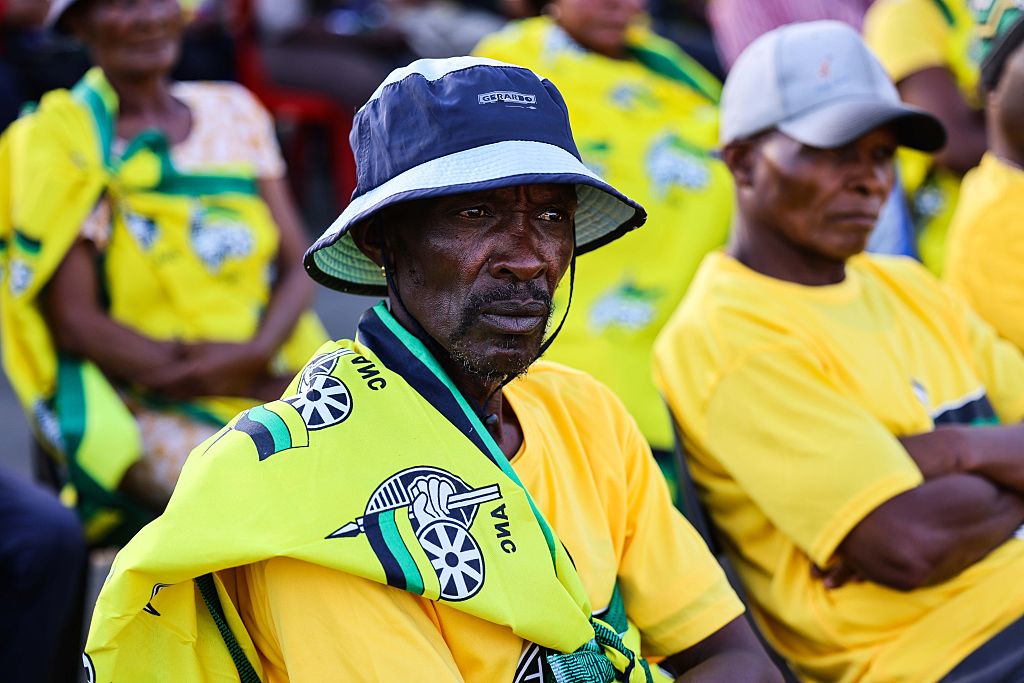
The African National Congress is losing its working-class base. The beneficiaries: parties of the Right. South Africa’s local elections expose the fallout of three decades of economic failure — and the need to rebuild working-class power.
This week’s long-awaited review will call for benefit cuts but lack of entry-level jobs is also driving the crisis ‘I’m scared about my future’: young people on the stress and desperation of jobseeking A generation is being sold short. Almost a million young people are not in education, employment or training (Neet). Austerity and the Covid pandemic cast a lengthy shadow, AI is upending the jobs market, and the cost of living is soaring – all under the microscope of the…
Amid an economy slipping into recession, Pope Leo XIV reminded President Milei that austerity has its victims who cannot be ignored and that human beings cannot be subordinated to the economy. Leer más
Thousands of Ecuadorian students have taken to the streets to reject President Noboa’s temporary job plans, demanding permanent solutions for public healthcare, education funding, and rising insecurity.
Margaret Thatcher famously said that “the Scots invented Thatcherism long before I was thought of.” The Conservative Party treats Thatcher like a comfort blanket, turning back to her battles and aesthetics in times of crisis. But Thatcher didn’t win by imitating anyone.
Katharina Pistor argues that capitalism is a legal regime we can transform by rewiring private law. But a reform program that ignores the wage relation and the exploitation of labor will leave the core of capitalism untouched.
Unlike other Trump administration officials who have gotten, or may soon get, the axe, Veteran Affairs head Doug Collins seems safe in his position. In the absence of legislative and grassroots pushback, he is set to continue dismantling the VA.
Readers respond to an article by John Harris in which he argues that around the world virtues such as kindness and compassion are gathering dust John Harris’s powerful article exposes the growing assault on empathy in politics (From the US midterms to the hard right in Britain, empathy has become a dirty word in politics, 3 November). But why has empathy become such a threatening quality? Perhaps because extinguishing it completes the work of aggressive neoliberalism by…
In front of President Javier Milei and his Cabinet, Vatican leader raises concerns over plight of pensioners and exodus of young people abroad; Catholic leader defends education funding and questioned an austerity model that lacks social inclusion. Leer más
BUENOS AIRES, Argentina — Pope Leo XIV delivered a stinging critique of President Javier Milei’s harsh austerity measures on Sunday, insisting that economic growth must benefit everyone in a speech that drew rapturous applause. “The…
Pope Leo XIV arrives in Argentina from Uruguay on the second leg of his South American tour to meet President Javier Milei, whose austerity measures have drawn criticism from the Church. Leer más
China’s leaders now appeal to the vision of a rejuvenated future rather than a revolutionary past. The new social contract between the people and the party state is a pragmatic one: social stability in return for continued economic growth.
Lula da Silva beat Flávio Bolsonaro to win a fourth term as Brazil’s president. Political scientist André Singer says the hardest fight is still ahead: Brazil’s bourgeoisie wants harsh austerity, and Lula’s coalition is split over it.