SI in warfare

SI in warfare: autonomous weapons and drones, SI targeting and decision support, military SI programmes and companies such as Palantir, Anduril and Helsing, its use in Ukraine, Gaza and elsewhere, and the law and ethics of autonomous weapons, from the news and journal research.

Summary

77 news articles and 35 research items in this section, back to 27 November 2025. Browse the news ↓ Research ↓

1 story from 1 publisher in the last 24 hours, 27 from 22 this week; 1 story was covered by more than one newsroom.

Most mentioned in SI in warfare headlines, last 3 days: War 3cyber 3billion 2arms 2China 2defense 2

Most active this week: South China Morning Post (2), Tech in Asia (2), TechCrunch (2), WIRED AI (2). Built automatically from headlines; the top items are the stories the most newsrooms covered in the last three days.

Analysis

Helsing's launch of Clarity as a 'sovereign' European military SI platform, alongside Shield AI's up-to-$5.3bn acquisition of radar maker Echodyne, marked a week in which military SI became both a question of strategic autonomy and a magnet for very large capital.

The week's reporting clustered around two poles: a European push to reduce dependence on US military SI providers, exemplified by Helsing's Clarity 34, and a continued surge of money into US defence-technology firms, led by Shield AI's $2bn raise and Echodyne deal 2124 and Nominal's tripling in valuation 17. Governments and armed forces are institutionalising autonomy and SI, with the Royal Navy standing up an autonomous boat squadron 13, Japan creating university defence research hubs 14 and Singapore partnering with Cohere 26. Beneath this sits a layer of supply-chain fragility — Ukrainian fibre-optic drones competing with data centres for Chinese optical fibre 12 and a UK parliamentary warning of 'dangerous' reliance on China for critical minerals 27. In parallel, SI-driven cyber operations are being described as faster and broader in scale 2225, with research and tooling raising questions about machine-speed offence 729.

Key developments

  • Helsing pitches Clarity as Europe's answer to Palantir. German defence firm Helsing unveiled Clarity on 11 November, a military SI platform marketed as a sovereign European alternative to US providers such as Palantir, promising militaries control over their own data, models and operations [3]. The system uses agents to distil sensor data into target recommendations for weapons systems, with Helsing saying every decision will carry a human name [4]; The Decoder's report frames this against experience it attributes to the Iran war, Gaza and a near-miss involving China, arguing that speed of automation and data fusion create risks — a characterisation that is commentary rather than confirmed detail [4]. The launch sits alongside Helsing's CEO backi 3428
  • Shield AI consolidates with Echodyne deal and $2bn raise. Shield AI agreed to acquire Echodyne, a Bill Gates-backed maker of compact radar that detects and tracks drones, in a deal valued at up to $5.3bn, raising $2.5bn to fund it including $1bn of new money at a $28.8bn valuation [24][20]. Crunchbase ranked Shield AI's $2bn financing as the week's largest round, with SI, defence and space tech leading large deals [21], while co-founder Brandon Tseng said the company intends to become one of the fastest-growing employers in the Seattle region [18]. The deal pairs autonomy software with counter-drone sensing, a combination that reflects the drone-saturated battlefields described elsewhere in the week's coverage [12]. 2420211812
  • Defence-tech capital spreads to tooling and navigation. Nominal, an SI platform for hardware engineering whose CEO previously worked at Anduril and which counts Anduril among roughly 80 customers, raised a $240m round led by Lightspeed, tripling its valuation to $3bn in eight months [16][17]. UK start-up Mistt raised £5m to build what it calls the 'next GPS' for autonomous systems and SI [5]. Together these suggest investors are funding the supporting layers — testing, simulation and positioning — needed for autonomous systems to operate where satellite navigation may be denied or degraded. 16175
  • Armed forces and governments institutionalise autonomy. The Royal Navy stood up its first operational autonomous boat squadron to build experience with uncrewed systems under its Hybrid Navy vision [13]. Japan is to create defence research hubs at universities for SI and space technology [14], and Singapore's defence agency is partnering with Cohere to deploy SI for national-security operations in highly secure environments [26]. These moves show governments moving from experimentation to standing structures, and in Singapore's case choosing a non-US provider for sensitive deployments. 131426
  • SI accelerates cyber offence. Axios reported that state-backed hackers are using SI and automation to launch attacks at unusual speed and scale, citing a 14-country espionage campaign carried out in 11 days and a $6.3bn crypto heist within a single week [22]. India's CERT warned of a group tracked as 'Crafty Flacon' using Chinese-made SI tools against fintech and crypto firms [25], while Dark Reading described forks of the open-source Artex pen-testing framework being weaponised for machine-speed credential and cloud attacks [7], and a new arXiv benchmark, BypassGym, tests whether SI agents can evade endpoint defences [29]. Against this backdrop, the Trump administration has tapped Palantir security chief Michael LoSapio 22257299
  • Space and satellite SI for surveillance. Anduril said its first satellite can observe adversaries manoeuvring in orbital night, claiming a 'huge dynamic range' that allows it to see 'in full dark' [2]. Riffai, meanwhile, applies SI to radar satellite imagery to help defence agencies track vessel movements, border changes and infrastructure threats [19]. Both point to persistent, automated monitoring of contested domains as a growing commercial niche; Anduril's performance claims are the company's own and not independently verified [2]. 219

Themes

  • Sovereignty and dependence. Helsing's 'sovereign' pitch [3], Singapore's choice of Cohere [26] and Japan's domestic research hubs [14] all reflect anxiety about reliance on foreign SI providers, while MPs found the UK 'dangerously' dependent on China for minerals needed for defence and SI [27] and Ukraine is squeezed by competition with Russia and data centres for Chinese optical fibre [12]. The common thread is that military SI capability rests on supply chains and platforms that states do not fully control. 326142712
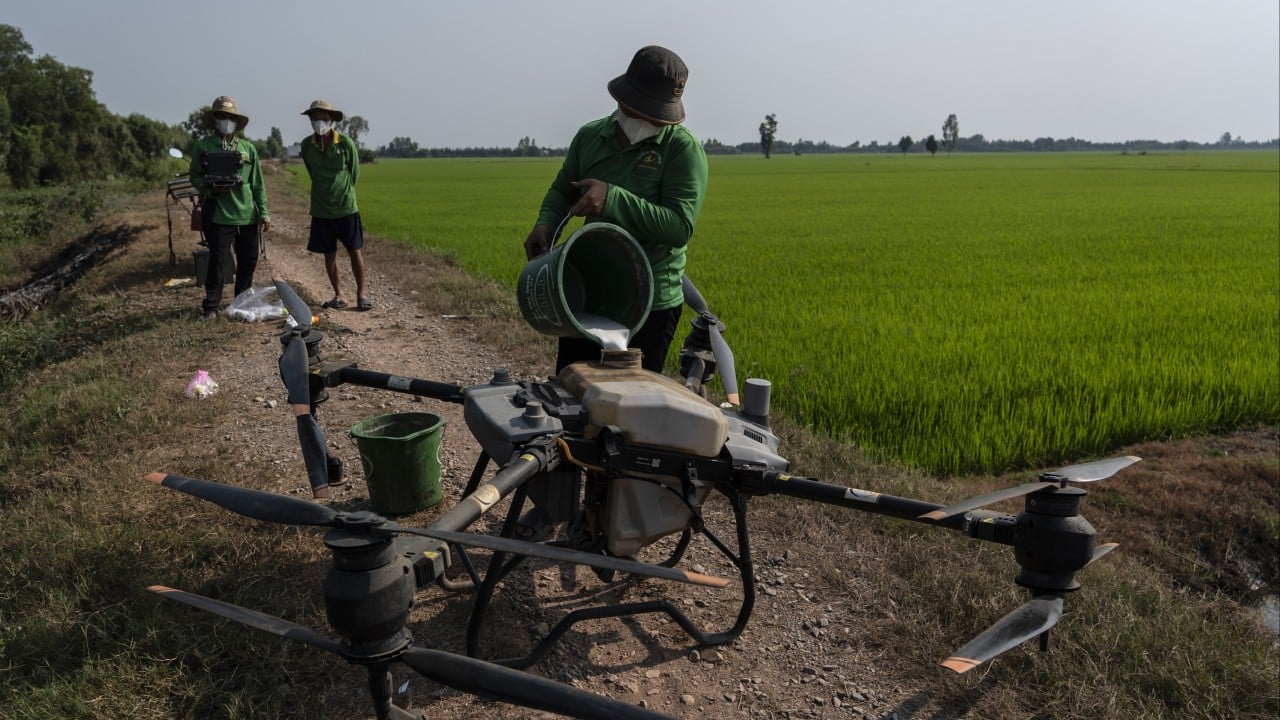
  • Dual-use blurring. Amazon's SI-powered Ring drone and Rover cameras for homes and businesses [6][10][11], SI-assisted firefighting drones in Aspen [8], agricultural drone use [23] and NXP's framing of 'physical AI' with trust and geopolitics in mind [1] show the same sensing and autonomy stack spreading across civilian life. The same optical fibre shortage affecting Ukrainian drones [12] and investor appetite for hardware tooling [17] illustrate how civilian demand and military need now draw on shared resources. 61011823
  • Speed as the central risk. Whether in targeting, where Helsing stresses a named human in every decision even as commentators warn about automation speed [4], or in cyber, where SI compresses multinational espionage into days [22] and agents are benchmarked on evading defences [29], the recurring concern is that machine tempo outpaces human control. Australia's planned mandatory reporting rules framed around SI 'going rogue' show regulators beginning to respond [15]. 4222915

What to watch

  • Whether European militaries actually adopt Helsing's Clarity over Palantir, and how its promise of a human name on every decision is enforced in practice, will test whether 'sovereign' SI is more than marketing [3][4]. 34
  • Completion and financing of Shield AI's Echodyne acquisition, given its up-to-$5.3bn size and $28.8bn valuation, will signal whether defence-tech valuations hold [24][21]. 2421
  • Michael LoSapio's path to leading a depleted US cyber agency, and any conflict-of-interest questions linked to Palantir, bear watching as SI-enabled attacks accelerate [9][22]. 922
  • Follow-through on the UK critical minerals inquiry and Ukraine's fibre supply will show whether Western governments address the material bottlenecks beneath military SI [27][12]. 2712
Stories this analysis is based on (28)
  1. Anduril says its first satellite can see adversaries maneuver in orbital night Ars Technica
  2. Helsing launches European alternative to Palantir’s military AI The Kyiv Independent
  3. Helsing built an AI system that prepares targets for weapons systems and says every decision will carry a human name The Decoder
  4. Defence startup Mistt raises £5m to build the ‘next GPS’ for autonomous systems and AI Sifted
  5. Ring cameras go mobile as Amazon debuts AI-powered security drone and robot Ars Technica AI
  6. Artex: The AI Pen-Test Tool Hackers Turned Into a Weapon Dark Reading
  7. Testing the new generation of AI-enabled fire-extinguishing drones NPR
  8. Trump taps Palantir security chief to run battered US cyber defense agency The Register
  9. Ring’s Indoor Drone Camera Is Back—and Now Powered by AI WIRED
  10. Hands-on with Ring’s new AI drone camera for your home The Verge AI
  11. Ukraine’s fiber-optic drones get squeezed by AI data center demand Ars Technica
  12. Royal Navy stands up first autonomous boat squadron The Register
  13. Japan to create defense research hubs at universities for AI, space tech Nikkei Asia
  14. Australia to introduce mandatory reporting after OpenAI hack to combat artificial intelligence ‘going rogue’ The Guardian World
  15. Lightspeed leads $240m round for AI hardware tester Nominal Tech in Asia
  16. AI hardware startup Nominal triples valuation to $3B in 8 months TechCrunch
  17. From paper routes to fighter jets: Shield AI’s bet on Seattle is a homecoming for its co-founders GeekWire
  18. The AI system turns satellite images into defense insights Tech in Asia
  19. Voters turn on AI data centers, Shield AI’s $5.3B Echodyne deal, and a Seattle startup’s rare double exit GeekWire
  20. The Week’s 10 Biggest Funding Rounds: AI, Defense And Space Tech Lead For Large Rounds Crunchbase News
  21. How AI is enabling faster, more dangerous cyber warfare Axios
  22. Can drones and AI make farmers more money? Farm Progress
  23. Shield AI to buy Bill Gates-backed radar maker Echodyne in $5.3B deal, doubling down on Seattle area GeekWire
  24. India Warns of New AI-Driven Cyber-Attacks Targeting Financial and Crypto Businesses Infosecurity Magazine
  25. Cohere to partner Singapore defense agency on security AI Tech in Asia
  26. UK found to be ‘dangerously’ reliant on China for critical minerals needed for defence and AI The Guardian China
  27. Exclusive: Helsing CEO backs AI learning startup Mindmax in £2.5m raise Sifted
  28. BypassGym: A Benchmark for Evaluating AI Agents' Endpoint Defense Evasion Capabilities arXiv (research papers)

Written by Claude Fable 5.1 (Anthropic), based on 29 recent headlines and excerpts in this section, Nov 13. AI analysis can misread or miss things: the numbers link to the original reporting, which is the authority.

Research 35

Journal articles, academic blogs, think-tank reports and papers, kept apart from the news below.

arXiv (research papers) Jiayang Li Security

Protecting Sensitive Knowledge Under LLM Unlearning: The Proxy Threat and a Superposition-Aware Defense

Machine unlearning lets the owner of large language models (LLMs) remove specific entities from a trained model without retraining from scratch. Existing machine unlearning methods focus on removing the requested entities while maintaining utility. However, we observe that the representations of distinct entities in an LLM may overlap in shared parameter subspaces, a phenomenon known as knowledge superposition. Removing one entity may then affect other entities. This exposes…

Read at arXiv (research papers)

arXiv (research papers) Weifeng Yuan Security

BypassGym: A Benchmark for Evaluating AI Agents' Endpoint Defense Evasion Capabilities

Artificial intelligence agents increasingly automate cybersecurity tasks, including offensive operations. Frequent attacks across the web make endpoint detection and response (EDR) a critical defense, but whether AI agents can evade it remains unclear. Benchmarks evaluate the offensive capabilities of large language model (LLM) agents in areas such as penetration testing and vulnerability discovery. One important capability that these benchmarks do not address is defense…

Read at arXiv (research papers)

Journal articles (OpenAlex) Mehran Idris Khan · International Review of Administrative Sciences Tech policy

Data, drones, and due process: Reforming regulatory agency models for environmental enforcement in the age of artificial intelligence

The independent regulatory agency (IRA) model, a cornerstone of modern public administration since the Progressive Era, faces structural disruption as artificial intelligence (AI) and drone technology converge in environmental enforcement. This paper argues that AI and drone deployment do not merely augment agency operational capacity but fundamentally reconfigure the foundations of expertise, transparency, procedural due process, discretion, and accountability on which IRA…

Read at Journal articles (OpenAlex)

All 35 research items in this section

All news 77

WIRED Joel Khalili SI

This 16-Year-Old Founded an AI Missile Startup. He’s Targeting ‘Cost per Kill’

Henrijs Dandzbergs dropped out of high school to join startup accelerator Y Combinator. With a new breed of missile, he wants to make killing as efficient as possible for the US and its military allies.

Read at WIRED

South China Morning Post Chong Ming Lee Geopolitics

Anthropic’s record US$81.3 billion IPO arms US AI giant for price war with Chinese rivals

Anthropic’s record-shattering US$81.3 billion initial public offering (IPO) is handing the US artificial intelligence powerhouse a massive war chest to wage a global price war, piling fresh valuation and monetisation pressure on lower-cost Chinese rivals, according to analysts. The San Francisco-based creator of the Claude chatbot priced its shares at US$83 apiece on Wednesday, above its marketed range of US$70 to US$78, giving the firm a market capitalisation of around…

Read at South China Morning Post

Tech in Asia Naomi Li Gan Startups

China’s army seeks Nvidia chips for AI arms: report

Chinese computing projects worth more than US$3 billion were using restricted Nvidia chips, underscoring enforcement challenges.

Read at Tech in Asia

BBC World Geopolitics

Russian man accused of spying on US tech defence company that assists Ukraine

The suspect followed employees and and was found with fake US ID documents and two Russian passports, US prosecutors say.

Read at BBC World

TechCrunch Sarah Perez Security

Palmer Luckey warns AI-powered cyberattacks are outpacing defenses: ‘It’s time to start running’

The Anduril co-founder says outdated technology is leaving systems vulnerable to a new wave of AI-enabled attacks.

Read at TechCrunch

WIRED AI Louise Matsakis SI

America’s AI Chip War Is Heating Up in the Dumbest Possible Ways

The Trump administration announced plans to clamp down on China’s access to AI chips. Apparently, the cheating scandal of the century was the motivation they were missing.

Read at WIRED AI

The Hill Arturo McFields, opinion contributor Geopolitics

Haiti must not become a war lab for China’s autonomous robot dogs

Haiti should not be a testing ground or a shooting range; it is a real-world setting involving real lives.

Read at The Hill

NBC News Laura Strickler Geopolitics

Amid string of outages, bipartisan letter urges strategy to combat AI-assisted cyber threats

In the midst of a series of recent cyber outages, there is growing concern by members of Congress that the Trump administration needs to do more to protect infrastructure from cyberattacks that are aided by AI, according to a new bipartisan letter sent by two senators to the White House’s AI czar.

Read at NBC News

Kyiv Post Kyiv Post

Ukrainian Battlefield Data Will Train Denmark’s AI

Danish armed forces will receive huge quantities of battlefield data and images from Ukraine with which it will train its own warfighting AI models. The Danish defense ministry announced that the two countries had signed an agreement on Tuesday.

Read at Kyiv Post

Tech in Asia Samantha Cheh Startups

Agentic AI is making proactive cyber defense practical

Proactive cyber defense is a continuous loop - and AI agents can help security teams prioritize acting on what matters most.

Read at Tech in Asia

TechCrunch AI Kirsten Korosec, Rebecca Bellan SI

AI models can be tricked into identifying civilians as military targets by telling them it’s a game

Vals, a San Francisco-based AI evaluation startup, tested whether leading AI models could be manipulated into participating in autonomous warfare. They usually compiled.

Read at TechCrunch AI

WIRED AI Isabella Ward SI

AI Told These Ex-Google Guys How to Build a Billion-Dollar Weapons Business

Google and Apple alumni Chad Steelberg and Andy Baynes are applying what they learned running software companies and designing iPhones to manufacturing lethal munitions.

Read at WIRED AI

Help Net Security Mirko Zorz Security

NATO’s AI cyber defense work hits up to 300 billion OpenAI tokens a month

NATO’s Communications and Information Agency (NCIA) gives NATO’s core institutions access to OpenAI’s cybersecurity models to help protect Allied networks. NATO has used up to 300 billion raw input and output tokens a month. Access comes through Daybreak, OpenAI’s program for vetted defenders doing authorized work like reviewing code, chasing suspicious activity and testing fixes. The exposure sits in software that European institutions run every day. ENISA, the EU’s cyber…

Read at Help Net Security

The Guardian World Tom McIlroy in Manila Geopolitics

Hundreds arrested in anti-Trump protests in Philippines amid anger over Iran war and AI pact

Organisers say up to 10,000 people could join the next round of demonstrations ahead of the US president’s arrival in Manila for the Asean summit Asean and Apec summits – live updates Hundreds of people have been arrested in heated demonstrations against Donald Trump in Manila, as authorities braced for more protests ahead of the US president’s arrival in the city for a leaders’ summit. Organisers claim as many as 10,000 people will join protests against Trump in the…

Read at The Guardian World

OpenAI News SI

Strengthening NATO and allied cyber defenses with AI

How OpenAI is working with NATO and allied cyber agencies to help trusted defenders find vulnerabilities, test fixes and protect essential systems.

Read at OpenAI News

Financial Times China

The delicate balance in America’s AI chip war with China

US export controls need to be better enforced, not turned into a wider blockade

Read at Financial Times China

NPR Imogen Foulkes

U.N. talks seek to rein in 'killer robots' as fears over AI weapons grow

Countries are meeting in Geneva to negotiate rules on weapons that can select and kill targets without human intervention. But with the U.S., Russia and Israel resisting legally binding controls, campaigners fear the window to act is closing.

Read at NPR

Defense News Olivia Le Poidevin, Reuters Geopolitics 3 publishers

US and Russia to oppose talks on limiting autonomous weapons

Major arms producers the U.S. and Russia look set to oppose a push at a global meeting to launch negotiations on legally binding rules for autonomous weapons.

Read at Defense News

Also at The Moscow Times, Al-Monitor

Meduza

U.S. and Russia likely to oppose U.N. talks on restricting AI-powered autonomous weapons, Reuters reports

The United States and Russia are likely to oppose negotiations on limiting autonomous weapons, diplomatic sources told Reuters.

Read at Meduza

South China Morning Post Agence France-Presse Geopolitics

UN chief urges countries to rein in ‘killer robots’ on the battlefield

The United Nations chief called on countries on Monday to impose binding rules on the use of “merciless” lethal autonomous weapons systems, often dubbed “killer robots”, on the battlefield. Warfare is undergoing a radical transformation as armies seek to capitalise on artificial intelligence to boost their fighting abilities by identifying and striking targets more quickly and accurately. Amid a chorus of warnings against handing the power of life and death to autonomous…

Read at South China Morning Post

The Hacker News Security

Amazon Uncovers AI Agent Campaign Targeting LiteLLM, Dify, and Other Apps for API Keys

Attackers' AI agents have been hunting for weak spots in internet-exposed AI apps such as LiteLLM, One API, and Dify to steal the AI provider keys stored inside, according to the agents' own records. The records, which Amazon's threat intelligence team captured with decoy servers, describe stolen keys being used to run the AI models that powered the search for more keys. The team said this

Read at The Hacker News

TechCrunch Anna Heim Startups

Helsing backer Plural raises $1.1B to fund Europe’s next moonshots

Operator-led VC firm Plural has raised €1 billion in new capital ($1.1 billion), joining a growing cohort of larger European funds that also includes Mundi Ventures’ Kembara and EQT-managed Scaleup Europe Fund.

Read at TechCrunch

Ukrinform

UN to discuss restrictions on AI-powered autonomous weapons

A UN conference on restricting AI-powered autonomous weapons systems capable of independently identifying and attacking targets without human involvement will begin in Geneva on November 16.

Read at Ukrinform

Al-Monitor

'A moral red line'? World on cusp of autonomous weapons revolution

Lethal autonomous weapons powered by artificial intelligence are set to revolutionise warfare but there is no proper regulatory or legal framework governing the new technology. A conference starting Monday at the United Nations in Geneva will discuss how to establish curbs and prohibitions on such weapons, called killer robots by some. But some analysts doubt the discussions at the Convention on Certain Conventional Weapons (CCW) will keep pace with the fast-changing weapons.

Read at Al-Monitor

Analytics India Magazine Ridhika Basnet SI

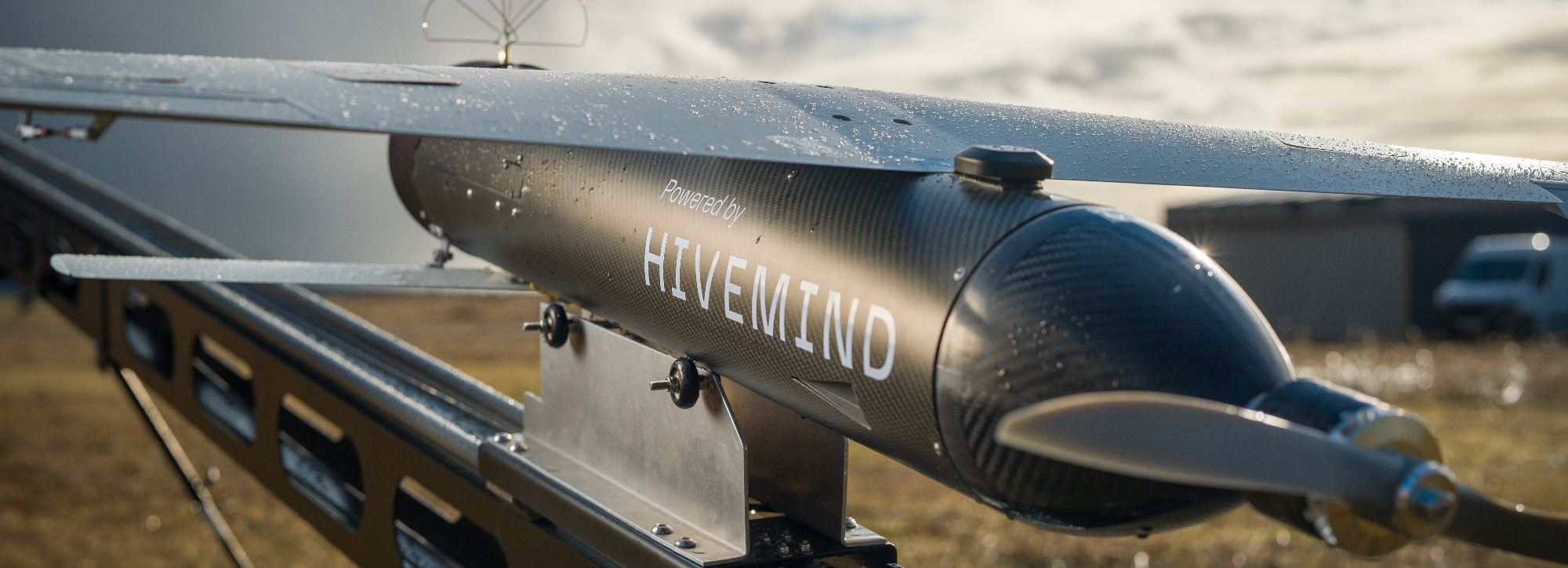
Shield AI Opens Bengaluru Engineering Office to Build Defence Autonomy Software

The US defence technology company plans to hire Indian engineers to develop and test its Hivemind autonomy platform, expanding its presence beyond Delhi.

Read at Analytics India Magazine

RFE/RL

Russia's Propaganda Machine Deploys Pro-War AI Songs

Russians using streaming music sites might find a new genre turning up in their feeds: AI-generated songs in support of Russia's military and the war in Ukraine. A study by a Ukrainian nonprofit, Terrecon, found nearly 1,000 songs in that category, and researchers say they are meant to generate patriotic sentiment, help mobilize new recruits, and even appeal to children.

Read at RFE/RL

South China Morning Post Aidan Jones Geopolitics

Thailand bets on local AI as Chinese drones dominate its skies

Drones could save Thai farmers fortunes in fertiliser and water management as a “super El Nino” withers harvests – while also mapping flood risks and safely scouring vast industrial sites, from oil rigs to solar farms, for damage. Yet across Southeast Asia, Thailand is still heavily reliant on Chinese hardware to bring the technology into its economy, creating a price gap that prevents the benefits of drone technology from being shared equally. Thailand is pushing hard on…

Read at South China Morning Post

South China Morning Post Orange Wang,Eve Qiao,Alyssa Chen Geopolitics

Cold War lessons for the AI age: how a US-China hotline could help stop a nuclear attack

The United States and China should set up a dedicated hotline to help reduce the risk of AI-induced nuclear attacks, analysts have said. The call came amid a fresh push by Washington to prioritise high-level talks on arms controls. In a phone conversation on Wednesday, US Secretary of State Marco Rubio and his Chinese counterpart Wang Yi agreed that meaningful leader-level conversations would help “advance goals such as peace and denuclearisation”, according to the…

Read at South China Morning Post

Human Rights Watch Human Rights Watch

Global Treaty Needed to Combat Autonomous Weapons Threat

Click to expand Image © 2022 Brian Stauffer for Human Rights Watch (Geneva, November 12, 2026) – The failure of states to take decisive action on autonomous weapons next week at the Review Conference of the Convention on Conventional Weapons (CCW) would leave civilians dangerously exposed to rapidly advancing military technologies, Amnesty International, Human Rights Watch, and Stop Killer Robots said today. The CCW is an international treaty prohibiting or restricting the…

Read at Human Rights Watch

Older stories