Capitalism and its critics: markets and private enterprise, the varieties of capitalism from the US and Europe to China's state capitalism, inequality, financialisation, monopoly and platform capitalism, and the debate between its defenders and critics, from Project Syndicate, the Adam Smith Institute, Phenomenal World, Jacobin, Monthly Review, journal research and the news. Opinion outlets are labelled with their viewpoint.
Summary
41 news articles and 182 research items in this section, back to 1 January 2026. Browse the news ↓Research ↓
2 stories from 2 publishers in the last 24 hours, 15 from 6 this week.
The FAA raised the alert and Microsoft restored its services, however, the events also raise a question for many: technological obsolescence in the main "capitalist power"?
Artificial intelligence has become the central battleground in the political economy of capitalism this week, with critics on the left framing it as speculative 'disaster capitalism' while liberal and free-market voices debate whether public listings, state capacity or market discipline can govern i
The week's items cluster around three debates: how AI's capital boom should be governed and who bears its financial and democratic risks (1, 9, 13, 15, 18, 24); a renewed contest over the proper scope of the state, pitting Mazzucato- and Weber-style interventionism against free-market defenders of growth and price signals (19, 20, 21, 22); and the fragmentation of class-based politics, visible in South Africa's ANC decline, Spain's housing-driven general strike and generational shifts in American attitudes towards socialism (2, 4, 12). Running underneath is the question of private infrastructural power, from Starlink's role in Ukraine to the financialisation of city governance (5, 23). Most items come from avowedly socialist (Jacobin) or free-market (Adam Smith Institute) outlets, so their diagnoses should be read as positions in an argument rather than settled findings.
Key developments
AI framed as the new disaster capitalism. Naomi Klein and Astra Taylor, in an Al Jazeera podcast, characterise the AI investment boom as a bubble built on authoritarian politics and ask what will burst it, while Jacobin argues that the 'misalignment' AI firms warn about is really a profit-driven 'predatory computational power' (1, 9). The significance is that the left has shifted from critiquing platform capitalism's data extraction to targeting AI's capital structure itself; a European populism-studies commentary offers a more Schumpeterian framing of 'creative destruction' with financial risks and democratic resilience at stake (18). 1918
Anthropic IPO and the financialisation of AI safety. Project Syndicate argues that when frontier labs go public, ordinary savers' pensions become tied to their valuations, so that catastrophic safety failures would destroy shareholder value as surely as over-regulation might stifle growth (13). This reframes AI safety as a question of corporate governance and systemic financial risk, connecting to concerns that a bursting bubble would socialise losses (1, 18) and to Jacobin's call for state and local regulation as a route to eventual federal action it says the midterms showed voters want (15). 1311815
Starlink and private control of strategic infrastructure. US Senators Shaheen and Coons demanded that Elon Musk preserve SpaceX records on restrictions to Ukraine's Starlink and Starshield access, with a 30 November deadline, while Congressmen Meeks and Smith warned the restrictions contributed to Ukrainian civilian deaths, a claim that remains an allegation rather than an established finding (5). The episode illustrates how privately owned networks have become quasi-sovereign actors, a theme Verfassungsblog develops in analysing 'tech power's violence' against democratic deliberation (24). 524
The scope-of-the-state debate reopens. An excerpt from Isabella Weber's Anti-Fascist Economics argues mainstream economics has ignored survival-level 'essentials' and advocates a politics of guaranteeing them, while the free-market Adam Smith Institute mocks both Weber and Mariana Mazzucato as reviving century-old planning ideas and defends growth and economic orthodoxy against Guardian-style critics (19, 20, 22). The Institute also frames free trade versus protectionism as the salient case where 'sound' economics meets political resistance (21), a framing that itself embeds a free-market viewpoint. 19202122
Class dealignment from South Africa to Spain. Jacobin reports that South Africa's local elections show the ANC losing its working-class base to right-wing parties after three decades of economic failure, and separately that Spain's general strike, following mass housing protests, has cohered a militant class-based movement (2, 12). Axios adds that American Gen Z is breaking with inherited orthodoxies on socialism, Israel and Christianity (4), suggesting that dissatisfaction with existing capitalist settlements is being channelled in sharply different partisan directions across regions. 2124
Dollar hegemony decoupled from oil. Jacobin argues the dollar's global role stemmed from US preeminence rather than petrodollar arrangements, and that slow erosion of US power will not automatically end the dollar system (17). This matters for debates on state capitalism and de-dollarisation, since it implies that challengers would need to replicate the institutional depth of US financial markets, not merely redirect commodity trade. 17
Debates over capitalism
Left critiques of AI capital. Klein and Taylor's 'disaster capitalism' framing and Jacobin's 'misalignment is capitalism' argument treat the AI boom as speculative and politically authoritarian, rejecting the industry's own safety discourse as misdirection (1, 9). Jacobin nonetheless advocates incremental state and local regulation as a stepping stone, indicating pragmatism alongside systemic critique (15). 1915
Free-market defence of growth and prices. The Adam Smith Institute, a free-market think tank, argues that disagreement with economics reflects ignorance rather than insight, that growth sceptics are mistaken, and that interventionists like Mazzucato and Weber would revive discredited price controls (19, 22). Its framing of protectionism as politics obstructing economic logic presents a contested normative position as settled science (21). 192122
Post-neoliberal interventionism. Weber's 'politics of essentials' and the implied Mazzucato programme argue that general-equilibrium economics obscured problems of survival and that the state should guarantee essentials, which Weber frames as anti-fascist economics (20, 19). Verfassungsblog's analysis of cities governing like financial actors supplies an institutionalist complement, locating financialisation in urban land regulation (23). 201923
Conservative self-reassessment. ConservativeHome's Jack Peters argues the Conservatives failed not from excess liberalism but from weakness, and that invoking Thatcher as a 'comfort blanket' misreads her success (10). This intra-right debate over whether to double down on market liberalism or project strength parallels the Gen Z shifts Axios describes, where old loyalties no longer bind (4). 104
Themes
Tech power as a sovereignty problem. Across the Starlink records dispute, critiques of AI as profit-driven computational power and analyses of social media corroding deliberation, the recurring concern is that privately owned infrastructure now exercises powers once reserved to states (5, 9, 24). Responses diverge between regulatory pressure through capital markets and public listing (13), subnational regulation (15) and more radical restructuring (1, 9). 59131524
Reform versus rupture on the left. Jacobin's critique of Katharina Pistor's 'code of capital' thesis insists that rewiring private law leaves the wage relation untouched, echoing its tribute to Marxist economist Guglielmo Carchedi and its reading of Debs as rooting socialism in American democratic traditions (11, 6, 8). The same tension shapes its treatment of reactionary feminists and of play under capitalism, where cultural critique is tested against a materialist standard (16, 3). 1168163
Contested lessons of economic failure. South Africa's post-apartheid settlement, Britain's Conservatives revisiting Thatcher and Spain's housing crisis are all read as verdicts on capitalist governance, yet the beneficiaries range from the far right to militant socialists to a reasserted free-market right (2, 10, 12). This supports the view that economic discontent is politically underdetermined and depends on which organisations can claim it. 21012
By region
North America. US debates centre on AI governance, from the Anthropic IPO to subnational regulation and the 'disaster capitalism' critique, alongside congressional scrutiny of Musk's Starlink decisions (13, 15, 1, 9, 5). Axios reports Gen Z abandoning inherited positions on socialism, while Jacobin revisits Debs to root socialism in American democratic traditions (4, 8). 1315195
Europe. Spain's general strike after housing protests marks a mobilisation of class politics, while British debate runs between the Adam Smith Institute's free-market defence and Weber's interventionism, and the Conservatives reassess their Thatcherite inheritance (12, 19, 20, 22, 10). Verfassungsblog contributes analyses of financialised city governance and tech power's corrosion of deliberation (23, 24). 1219202210
East Asia. Jacobin reviews Lee Chang-dong's Possible Love as a study of class in the aftermath of a real-life strike defeat in South Korea, a coordinated-capitalist economy where labour conflict has long been politically salient (7). It is the only East Asian item and reflects a cultural rather than policy register. 7
Africa. Jacobin argues South Africa's local elections show the ANC's working-class base defecting to right-wing parties after three decades of economic failure (2). The outlet's prescription of rebuilding working-class power is a socialist viewpoint; the underlying realignment nonetheless signals the exhaustion of the post-apartheid developmental compact. 2
Analytical lenses
Polanyi's double movement. The concept of society pushing back against market expansion illuminates Spain's housing strike, Weber's politics of essentials and the backlash against AI that Jacobin says the midterms revealed (12, 20, 15). It is less able to explain why, in South Africa, the counter-movement benefits the right rather than redistributive forces, which points to the role of organisational capacity and nativism (2). 1220152
Financialisation and shareholder governance. Treating AI firms as objects of pension-fund exposure, cities as financial actors, and the dollar as a product of institutional depth rather than oil, the financialisation lens explains how risk is distributed and why regulation now runs through capital markets (13, 23, 17). It captures incentives but says little about the labour and wage relation that Jacobin insists is capitalism's core (11, 6). 132317116
Infrastructural power and private sovereignty. Drawing on the concept of infrastructural power, the Starlink dispute and the analysis of tech power's violence show private firms exercising control over communications and deliberation that states once monopolised (5, 24, 9). The lens clarifies the governance gap but does not resolve whether the remedy is state capacity, as interventionists argue, or market competition, as free-marketeers prefer (20, 19). 52492019
What to watch
Whether SpaceX confirms preservation of Starlink records by the 30 November deadline, and whether congressional scrutiny extends into formal limits on private control of defence-critical networks (5). 5
How an Anthropic public listing is received by markets and regulators, since it would test whether shareholder exposure strengthens or dilutes AI safety incentives (13, 18). 1318
The outcome and follow-through of Spain's general strike and whether housing-based mobilisation translates into durable political organisation rather than a one-off protest (12). 12
Post-election realignment in South Africa, where the ANC's loss of working-class support to the right will shape whether economic frustration feeds nativist or redistributive programmes (2). 2
Written by Claude Fable 5.1 (Anthropic), based on 24 recent headlines and excerpts in this section, 1d ago. AI analysis can misread or miss things: the numbers link to the original reporting, which is the authority.
Research 182
Journal articles, academic blogs, think-tank reports and papers, kept apart from the news below.
In this commentary, Professor Ibrahim Ozturk examines the political economy of artificial intelligence (AI), highlighting its productive potential alongside
By Tim Worstall Professor Mazzucato tells us that much, much, more should be within the state. Professor Weber tells us that anti-fascist economics should be done by utilising the fascist economic tactics of a nominal market based capitalism but with the state setting all the prices. Given this revival of century old policies perhaps we could run with another one? Bristol could become home to the UK’s first “wetland city” thanks to a charity’s efforts to create vast wildlife…
An excerpt from Isabella Weber’s new book Anti-Fascist Economics. For decades, mainstream economics has diverted attention away from the problems it cannot solve—even a problem as fundamental as survival. In the 1950s, economists researching general equilibrium theory set out to demonstrate that decentralized market decisions, guided only by prices, would lead to a “Pareto optimal”
There are many real-world examples where economic logic runs into political walls. These are cases where sound economic decisions are hard to implement because of political resistance, short-term thinking, or public perceptions. The one most currently in the public eye is between free trade and protectionism. Economists from Adam Smith onwards have known that free trade leads to growth and prosperity. Public perception, unfortunately, is that cheap imports threaten local…
By Tim Worstall It’s not necessary to travel far - the opinion pages of The Guardian for example - to find people whining that economic growth just isn’t the thing. We need to concentrate upon the wider picture, leisure, externalities, the real and proper measures of consumption. Thus all conventional - for which read market, capitalist, non-socialist even - economics has to be disposed of. Well, yes: A major question raised by critics of economic growth is whether we have…
I suppose property professors are always on the lookout for unconventional uses of land. My work examines the transformation of various cities under financial capitalism. City governments regulate land to attract real estate investors just as they make governance decisions as if they were financial actors and not representatives of the public. I’ve argued that investors and their partner real estate developers exercise agency in the city. This has left cities less prone to…
The FAA raised the alert and Microsoft restored its services, however, the events also raise a question for many: technological obsolescence in the main "capitalist power"?
Under capitalism, people are often motivated to work by the threat of destitution. A feasible and desirable socialist system has to get people to work while respecting individual freedom.
The firm behind AI software Claude is offering shares to the public. It’s meant to boost confidence in Anthropic’s future at the moment when most Americans are turning against data centers.
A new book attempts to revive interest in peasants by casting them as humanity’s last defenders against ecological catastrophe. But this perspective misconceives the peasantry’s relationships to both nature and economic development.
Socialists’ recent electoral success has given the US left new life. But socialists need more than elections to achieve major change. Electoral politics must be just one part of a broader strategy to build working-class power inside and outside the state.
Anwar Shaikh, who died in October at 80, showed how capitalism really works: profit drives it, competition is a war, and crisis is the norm. Economist Clara Mattei argues that his work remains a guide to changing the world.
The African National Congress is losing its working-class base. The beneficiaries: parties of the Right. South Africa’s local elections expose the fallout of three decades of economic failure — and the need to rebuild working-class power.
Capitalism turns children’s play into preparation for work, but it cannot fully contain what play makes possible. In her new book, Susan Ferguson explores how the openness and pleasure of play can help us imagine other ways of being together.
Young Americans are challenging beliefs their parents and grandparents once considered sacred — from socialism and Israel to Christianity. Why it matters: Neither party can count on old political loyalties to win over a generation increasingly willing to break with the past. Socialism: 35 years after the Soviet Union collapsed, some 57% of Americans ages 18–34 view socialism positively, compared with 43% for capitalism, according to a September 2026 Gallup poll. Among…
Senators Jeanne Shaheen and Chris Coons demanded that Elon Musk preserve SpaceX records concerning restrictions on Ukraine’s Starlink and Starshield systems, setting a Nov. 30 deadline for confirmation. Separately, Congressmen Gregory Meeks and Adam Smith warned that the restrictions contributed to Ukrainian civilian deaths, including children, and strengthened Putin’s negotiating position.
Guglielmo Carchedi, who died in October at 85, was one of the great Marxist thinkers of our time. His early work on the new middle class and his later work on value theory and crises still offer the Left powerful tools.
Lee Chang-dong doesn’t have the same profile as fellow South Korean directors like Bong Joon-ho and Park Chan-wook, but his latest film should change that. Possible Love is a powerful study of class in the wake of a shattering real-life strike defeat.
Eugene Debs’s greatest achievement was not any particular vote tally. It was his making socialist partisans understand that the socialist movement arose out of the American political tradition’s most democratic currents.
Figures at top AI firms says that their frontier models are running out of control. It points to a problem Big Tech finds harder to admit: the rise of a predatory computational power driven solely by profit-seeking.
Margaret Thatcher famously said that “the Scots invented Thatcherism long before I was thought of.” The Conservative Party treats Thatcher like a comfort blanket, turning back to her battles and aesthetics in times of crisis. But Thatcher didn’t win by imitating anyone.
Katharina Pistor argues that capitalism is a legal regime we can transform by rewiring private law. But a reform program that ignores the wage relation and the exploitation of labor will leave the core of capitalism untouched.
Spain will see a general strike on Wednesday, following mass protests around housing. A member of Marxist group Coordinadora Juvenil Socialista discusses how these protests have cohered a militant class-based movement for more sweeping change.
When frontier AI labs go public, ordinary people’s investments and pensions become tied to their valuations and stock prices. While excessive regulation could undermine a firm’s growth, catastrophic accidents caused by inadequate safety measures could do the same—and wipe out shareholder value.
The midterms made clear that Americans are angry about the headlong rush into artificial intelligence. We are blocked from needed federal action for now, but states and localities have options that can move us toward eventual national regulation.
Reactionary feminist writers Mary Harrington and Louise Perry dress up arguments for marriage and sexual restraint in Marxist rhetoric. But they also point to the limits of liberal feminism — limits that the Left needs to grapple with.
The emergence of the dollar as the world’s currency was the result of the rise of the US as the preeminent global power. But the slow erosion of US economic and political power will not automatically spell the end of the dollar system.
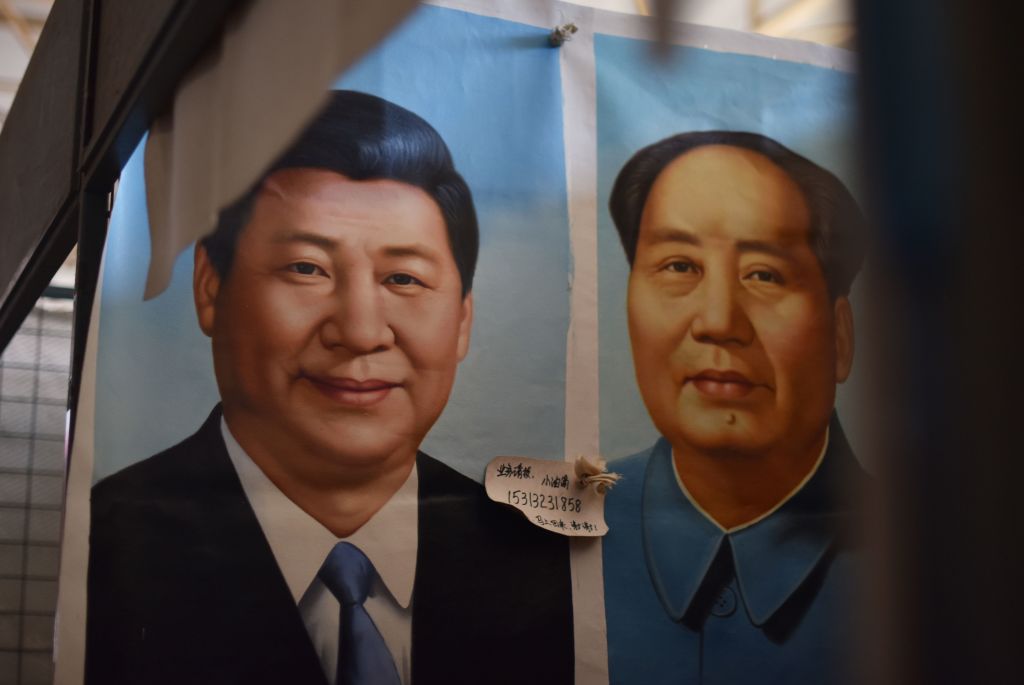
China’s leaders now appeal to the vision of a rejuvenated future rather than a revolutionary past. The new social contract between the people and the party state is a pragmatic one: social stability in return for continued economic growth.
In recent decades, the basis of US hegemony has shifted from domestic industrial strength to its ability to enforce the rules that organize global production, finance, and money. Today this imperial role is now increasingly under strain.
President has opposing views on many issues, and once called Leo’s predecessor the ‘representative of the Evil One’ Trees are being planted in the garden. The brightly coloured buildings are getting another coat of paint. The choir rehearses. Hundreds of other residents, several of them using wheelchairs, practise their positions outside the sanctuary. Excitement is in the air, because on Monday 9 November, the Cottolengo Don Orione – a Catholic-run home for disabled people…
Yascha Mounk and Martin Wolf discuss whether democracy can recover from the damage of populism, the risk of an AI bubble, and why France could spark the next euro crisis.