Political Islam: analysis of 13 November 2026
Back to the Chronology · Current news in this section
Analysis
The week's reporting shows Islamist actors governing and jihadists franchising: Islamic State is reported to be paying its West African affiliate for raids on military stockpiles, while Syria's new rulers and the Taliban confront the gap between seizing a state and commanding religious authority.
Two distinct dynamics run through the items. On one side, jihadist organisations remain networked, transactional and adaptive: Islamic State is described as incentivising ISWAP to attack Nigerian military bases for payment 4, US strikes hit its positions in Puntland 12, and online recruitment continues to generate arrests in the West 610 and meme-driven radicalisation in Indonesia 18. On the other, Islamist movements that have captured states face the ordinary problems of rule: Syria's former Salafi-jihadist leadership cannot simply convert political victory into religious authority 7, the Taliban administer property claims under Sharia pretexts while instrumentalising the ISKP threat 913, and the Houthis owe their regional weight as much to their enemies' mistakes as to Tehran 15. Meanwhile, in Western politics the Muslim Brotherhood 'infiltration' thesis advanced by a hawkish think tank 2 is contested by a pro-democracy journal arguing that Muslim officeholders' records do not support fears of an Islamist takeover 19, a debate with echoes in Cairo 17 and in Britain's turn against Kurdish migrants 1.
Key developments
- Islamic State pays ISWAP to raid Nigerian military stockpiles. An Institute for Security Studies analysis carried by AllAfrica reports that the Boko Haram faction ISWAP is targeting military bases for payment from Islamic State's core, rather than mounting opportunistic ambushes [4]. If accurate, this indicates a principal–agent relationship in which the centre buys specific tactical outcomes (weapons capture) from an affiliate, sustaining the network's materiel without territorial control. It connects to Benin's appointment of a new chief for Operation Mirador on its northern border [5] and to the broader picture of a decentralised but still coordinated Islamic State system [6][12]. 45612
- Syria's Salafist question: victory without religious authority. New Lines argues that asking whether Syria is becoming Salafist is unavoidable but misleading, because those who captured the state emerged from an Islamist trajectory yet cannot remake society in their own religious image; political victory is not religious authority [7]. The analytical point is that a jihadist-origin movement in government must now negotiate with existing scholarly networks, sectarian diversity and public expectations rather than impose doctrine. This parallels the Taliban's attempts to clothe property seizures in Sharia and administrative language [9], suggesting that Islamist rulers legitimate ordinary state coercion through religious vocabulary rather than through doctr 79
- Taliban governance: Sharia pretexts and the uses of ISKP. Residents of Kabul's Omar Gulistan Township report that the Taliban Ministry of Justice has declared their purchased homes 'usurped' property and demanded rent or eviction, citing Sharia, registration and administrative rules [9]. A separate Hasht-e Subh analysis argues that ISIS-Khorasan is a genuine threat but also a political opportunity, since the Taliban's handling of it shapes their domestic and international standing [13]. Both items come from an Afghan outlet critical of the Taliban, so the framing should be read as such, but together they describe a regime using legal-religious idiom for expropriation and a rival jihadist group as a bargaining asset. 913
- Gaza strike on Nasser hospital targets Hamas figure. An Israeli strike on Nasser hospital in southern Gaza killed six and wounded nearly thirty according to Gaza health officials, the deadliest single strike since Israel's election last month; the military said it targeted a senior Hamas figure and others [3]. The casualty figures and target claim come from opposed parties and are not independently confirmed in the item. The episode shows that the Hamas–Israel conflict continues post-election, with the targeting of an Islamist movement's cadres inside civilian infrastructure remaining the central legal and political fault line. 3
- Houthi power as a product of adversaries' choices. New Lines contends that the Houthis' rise owes less to Tehran than to their foes: former President Saleh's shifting allegiances, the Saudi–Emirati rift and a Western response that has normalised the Red Sea threat [15]. This cuts against the common framing of the movement as merely an Iranian proxy and instead explains it through local alliance politics and the failure of containment. It sits alongside Iranian drone strikes on Kurdish opposition groups in northern Iraq [16], a reminder that Tehran's regional reach is real but variably decisive. 1516
- Muslim Brotherhood influence debate in the United States. FDD's Long War Journal frames the Brotherhood's 'long game' as infiltration of Western politics and institutions raising free speech and security concerns [2], while the Journal of Democracy argues that the election of Abdul El-Sayed and other Muslim officeholders has stirred fears of an Islamist takeover that their records do not support [19]. The first is a national-security-hawkish viewpoint, the second a liberal-democratic one; neither item provides evidence of Brotherhood direction over elected officials. Egyptian reactions to El-Sayed's Senate win, ranging from celebration to rejection [17], show the same ambivalence refracted through a state that has suppressed the Brotherhood and now 2111719
Currents of political Islam
- Is 'Islamisation' of post-conflict states a category error?. New Lines argues that inferring societal Salafisation from the ideological origins of Syria's new rulers confuses political control with religious authority [7]. The Taliban items complicate this: religious idiom can be deployed coercively even without doctrinal hegemony [9], suggesting the debate should distinguish state use of Sharia language from genuine shifts in belief. 79
- Dialogue with jihadists as governance. A scholarly article treats talks with jihadist groups in Mali and Niger as a mechanism of governance and a site where reformist-Salafi and Sufi-Maliki repertoires are localised or refracted [23]. This stands in tension with the kinetic approach seen in Puntland [12] and Benin [5], and raises the question of whether negotiation entrenches jihadist authority or domesticates it. 51223
- Brotherhood 'long game' versus inclusion. The FDD framing of Brotherhood infiltration [2] and the Journal of Democracy's rebuttal that democracy can survive any group's participation [19] rehearse the inclusion–moderation debate in a US setting. Egypt, which crushed the Brotherhood and is now arresting fact-checkers [11], shows the exclusionary alternative and its costs for press freedom. 21119
- Sharia-based punishment and gendered enforcement. The reported sentence of 100 lashes for a Kenyan woman in Saudi Arabia for giving birth outside marriage, condemned by rights groups, is presented by the Guardian as evidence that women bear disproportionate criminal liability under the kingdom's Sharia system [8]. A linguistic study of Saudi judgments shows how such rulings construct authority through chains of intertextual citation [20], which helps explain their resistance to external criticism. 820
Themes
- Islamism in power is constrained by the state it inherits. Across Syria [7], Afghanistan [9][13] and Yemen [15], Islamist movements that have taken territory are shown bargaining with pre-existing social, religious and property structures rather than remaking them at will. The recurring finding is that doctrinal vocabulary becomes an instrument of administration and legitimation, not evidence of societal transformation. 791315
- Jihadism as a networked, incentivised and online enterprise. Islamic State's reported payments to ISWAP [4], the Puntland strikes [12], eight arrests or indictments across five countries [6], an 18-year US sentence [10] and jihadist meme culture on Indonesian platforms [18] together depict a movement sustained by transactions and digital subcultures rather than a caliphate. The Sahel dialogue literature [23] adds that where states cannot defeat such groups, they negotiate with them, making jihadists part of local governance. 46101218
- Securitisation of Muslim political participation and migration. The Brotherhood 'infiltration' thesis [2], the counter-argument on Muslim officeholders [19], and Jacobin's socialist reading of Kurds shifting from anti-ISIS heroes to demonised migrants in Britain [1] show how identity groups move in and out of the security frame according to political need. Egypt's reactions to El-Sayed [17] indicate that this ambivalence is not confined to Western publics. 121719
By region
- Middle East. Syria's rulers face the limits of converting jihadist origins into religious authority [7]; Israel struck Nasser hospital targeting a Hamas figure, the deadliest strike since the election [3]; the Houthis' regional rise is attributed to their enemies' errors [15]; Iranian drones hit Kurdish opposition groups in northern Iraq amid Islamic State operations and Sinjar disputes [16]. Saudi Arabia's reported flogging sentence [8] and Egypt's press crackdown [11] show the contrasting coercive faces of a monarchy governing by Sharia and a republic that suppressed the Brotherhood. 3781115
- Africa. Islamic State is reported to be paying ISWAP for raids on Nigerian military stockpiles [4], Benin has named a new commander for its northern anti-jihadist operation [5], and US strikes hit Islamic State positions in Puntland [12]. Scholarly work on Mali and Niger finds states negotiating with jihadists as a form of governance [23], indicating that the Sahelian security order mixes coercion and accommodation. 451223
- North America. An Idaho man received 18 years for an Islamic State support plot [10], part of a wider pattern of online-driven arrests [6]. The election of Abdul El-Sayed has triggered a debate between a hawkish 'Brotherhood infiltration' thesis [2] and a liberal rebuttal that Muslim officeholders' records show no Islamist agenda [19], with Egyptians reacting ambivalently [17]. 26101719
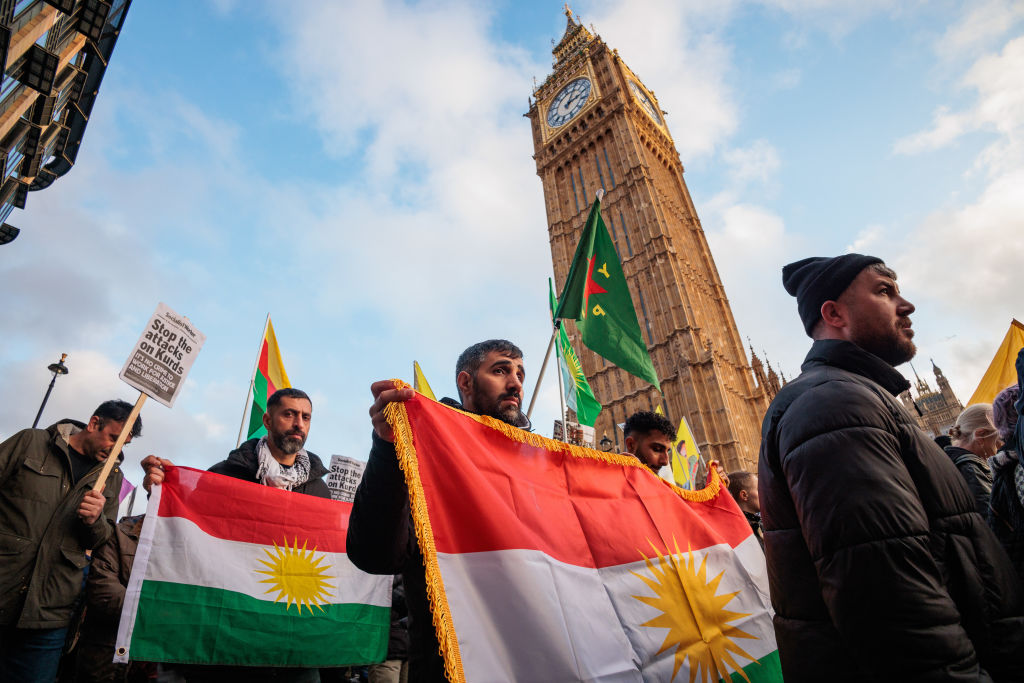
- Europe. France has put an Ingush man on trial for the 2023 murder of a teacher, with relatives previously suspected now cleared [14], a reminder of North Caucasus-linked jihadist violence in Western Europe. In Britain, a socialist outlet argues Kurds have shifted from celebrated anti-ISIS allies to demonised migrants [1], illustrating how security framing of a group can reverse. 114
- East Asia. In Southeast Asia, GNET documents a 'meme-to-radicalisation pipeline' on Indonesian TikTok and Instagram, with jihadist networks borrowing the far right's edgy-humour tactics to normalise extremist content [18]. This suggests convergence in digital extremist methods across ideologies and regions, consistent with Islamic State's continued online recruitment [6]. 618
Analytical lenses
- Rebel governance and the legitimacy gap. Rebel-governance theory holds that insurgents who take power must build legitimacy through service provision, law and symbolic authority, not just coercion. It explains why Syria's rulers cannot simply Salafise society [7], why the Taliban wrap expropriation in Sharia and administrative language [9], and why the Houthis' power rests on alliance management [15]. It misses the degree to which external actors, from Israeli strikes [3] to Iranian drones [16], shape these regimes' room for manoeuvre. 3791516
- Principal–agent and franchise models of jihadism. Treating Islamic State as a principal paying affiliates for outcomes explains the reported ISWAP arrangement [4], the persistence of the Somali branch under US strikes [12], and the diffuse online recruitment producing arrests in five countries [6][10][18]. The model clarifies incentives but says little about why local populations tolerate or negotiate with these groups, which the Sahel dialogue literature addresses [23]. 46101218
- Securitisation theory. Securitisation describes how political actors move an issue from ordinary politics into an existential security frame. It illuminates the Brotherhood 'infiltration' discourse [2], its rebuttal [19], and the reframing of Kurds in Britain from heroes to threats [1]. What it cannot settle is the empirical question of whether any Brotherhood influence exists, which none of the items demonstrates. 1219
What to watch
- Whether Nigerian and regional forces alter base defence in response to the reported Islamic State–ISWAP payment scheme, and whether Benin's new Mirador commander changes the northern border posture [4][5]. 45
- How Syria's leadership handles religious institutions and scholarly authority, since the New Lines argument implies that friction with established ulema, not doctrine, will determine whether 'Salafisation' is real [7]. 7
- Whether the Taliban's handling of ISKP produces international security cooperation, and whether property expropriations in Kabul provoke organised resistance [9][13]. 913
- Whether the Brotherhood-influence narrative gains traction in US policy following El-Sayed's election, and how Cairo exploits or resists it [2][17][19]. 21719
Stories this analysis is based on (21)
- Kurds Have Become Britain’s Latest Demonized Migrants Jacobin (socialist)
- The Muslim Brotherhood’s long game: Influence, infiltration, and Islamist politics FDD's Long War Journal
- Israeli strike on Gaza hospital deadliest since election Al-Monitor
- Africa: Islamic State Is Incentivising ISWAP to Target Military Stockpiles AllAfrica
- Benin Names New Mirador Anti-Terror Chief The Rio Times
- 8 Islamic State suspects arrested or indicted across 5 countries since October FDD's Long War Journal
- Is Syria Becoming Salafist? New Lines Magazine
- Woman in Saudi Arabia sentenced to 100 lashes for giving birth outside marriage The Guardian Human Rights
- Omar Gulistan Township Residents in Kabul: The Taliban Seized the Homes We Bought and Now Demand Rent Hasht-e Subh (8am)
- An Idaho man gets 18 years in prison for an Islamic State support plot ABC News
- UN rights office voices alarm on Egypt press freedom Al-Monitor
- Somalia: U.S. Airstrikes Target Islamic State Positions in Somalia's Puntland Region AllAfrica
- ISIS-Khorasan: A Real Threat to the People of Afghanistan and a Political Opportunity for the Taliban Hasht-e Subh (8am)
- France puts Ingush man on trial for 2023 murder of teacher OC Media
- How the Houthis’ Enemies Made Them a Regional Power New Lines Magazine
- Northern Iraq struggles with Kurdish political divisions and security FDD's Long War Journal
- Egypt Reacts to Abdul El-Sayed’s Win New Lines Magazine
- Meme-To-Radicalisation Pipeline: Unpacking the Jihadist-Themed Edgy Humour on Indonesian TikTok and Instagram GNET (Global Network on Extremism and Technology)
- America’s Islamist Future? Journal of Democracy
- Discourse-level evidentiality in Saudi legal judgments: intertextual authority chains in Islamic legal discourse Journal articles (OpenAlex)
- The return of the local: dialogues with jihadist groups as governance in the Sahelian security order Journal articles (OpenAlex)
Written by Claude Fable 5.1 (Anthropic), based on 24 recent headlines and excerpts in this section, Nov 13. AI analysis can misread or miss things: the numbers link to the original reporting, which is the authority.