Feminism and gender politics: analysis of 13 November 2026
Back to the Chronology · Current news in this section
Analysis
Hungary's reported break with Orbán-era abortion restrictions and the US manosphere's drift away from Trump suggest that gender politics is being re-sorted by regime change and coalition fracture rather than by a single global direction of travel.
The week's items point in opposite directions by region: DW reports that Hungary is scrapping the 'heartbeat regulation' and strengthening protection against violence under a post-Orbán government 2, while in the United States Idaho's abortion-rights measure failed and a Ninth Circuit panel sided with the state 18, even as Democratic women recorded midterm firsts 9. Masculinity itself has become an electoral and cultural object: The 19th frames the midterms through misogynist candidate conduct 20, the Guardian reports the manosphere turning on Trump as 'effeminate' 4, and a sports controversy exposes the same milieu's double standards 1. Gender-based violence remains the connective tissue, from a 65.7 per cent quarter-on-quarter rise in documented incidents in Mali since Q1 7 to Amnesty's campaign on 'gender apartheid' in Afghanistan 3 and operational procedures in Nigeria 5. Scholarship published this week on Turkey, Tunisia and Hungary supplies the analytical frame: feminist mobilisation as a form of democratic resilience under authoritarian constraint [23, 24, 27].
Key developments
- The manosphere breaks with Trump. The Guardian reports that figures in the manosphere now call 'Maga effeminate', linking the shift to changing public mood on Israel-Gaza and the Iran war, and notes Trump's appointment of UFC president Dana White as press secretary [4]. The 19th documents how misogynist online personas such as 'the AK Guy' ran for office in the 'masculinity midterms' [20], suggesting that the masculinist coalition which helped sustain Trump is both electorally active and increasingly unmoored from him. 420
- Abortion rights: setbacks in Idaho, gains elsewhere. Ms. reports a 'double blow' in Idaho, with Prop 1 failing at the ballot box and a divided Ninth Circuit panel ruling for the state on 30 October [18], while Jacobin reads the wider slate of ballot measures on abortion and trans rights as a window into the electorate's mood [11]. Ms. also records that the Trump administration is moving to weaken pregnancy protections even as Democratic women posted midterm firsts [9], underscoring the federalised, uneven geography of reproductive rights post-Dobbs. 18119
- Gender-based violence in conflict and fragile states. UNFPA's Mali report records 3,619 documented GBV incidents in Q3 2026, up 4.6 per cent on Q2 and 65.7 per cent on Q1 [7], while a GBV standard operating procedure was issued for Adamawa State in Nigeria [5]. Amnesty has launched a campaign under the '16 Days of Activism' banner to press decision-makers on 'gender apartheid' in Afghanistan [3], a term deliberately chosen to push for a new legal category rather than treating Taliban rule as a conventional human-rights violation. 753
- Orthodox churches and the politics of conservatism. In Georgia, Metropolitan Iob called the government 'faithless', alleged attempts to merge Church and state and questioned the Church's dependence on state funding [10, 12], while Novaya Gazeta Europe profiles Sorok Sorokov, the ultra-conservative Orthodox movement guarding Patriarch Kirill [19]. Neither report addresses gender directly, but church-state fusion and militant lay Orthodoxy are the institutional terrain on which anti-gender politics in the region is typically organised, so intra-church conflict over state capture bears watching. 101219
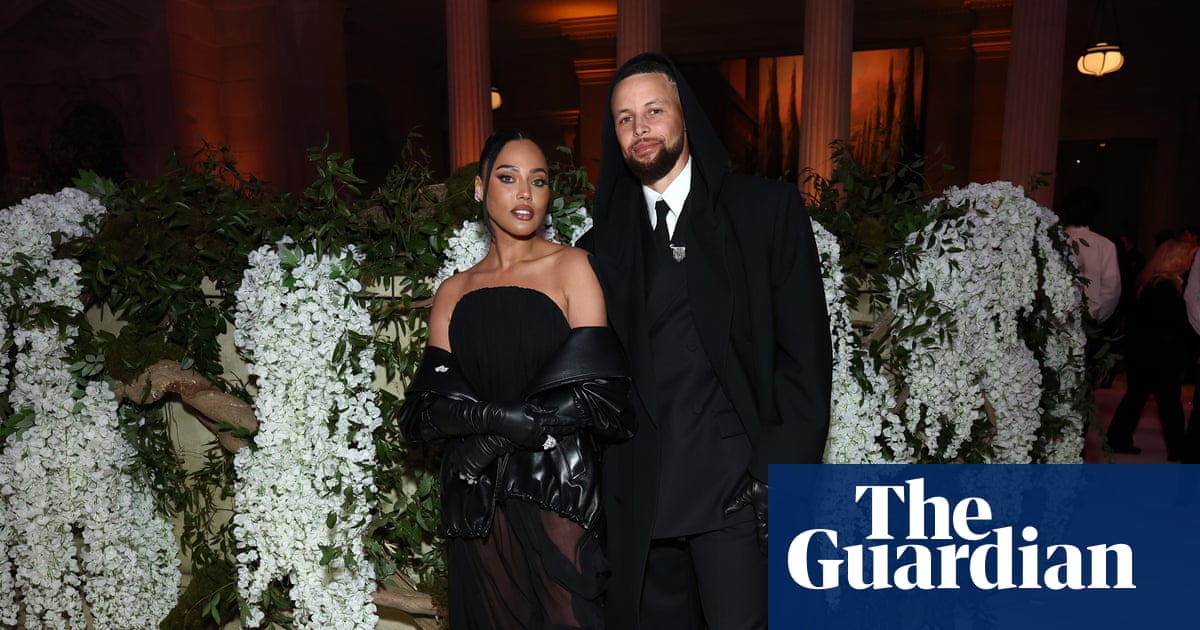
- Sport as a stage for gender contestation. Steph Curry's 90-second video defending his wife Ayesha over an on-screen kiss is read by the Guardian as exposing the 'fragile masculinity' and double standards of sport's manosphere [1], while Pakistan captain Fatima Sana publicly called for men's and women's cricket teams to be treated as equals [13]. Both show how elite athletes, rather than institutions, are carrying gender-equality claims into highly masculinised arenas. 113
Feminist currents and backlash
- Reactionary feminism versus the Left. Jacobin, writing from a socialist viewpoint, argues that Mary Harrington and Louise Perry dress up arguments for marriage and sexual restraint in Marxist rhetoric but nonetheless expose limits of liberal feminism the Left must address [16]. The debate matters because it concedes that part of the anti-gender appeal rests on real grievances about precarity and the sexual marketplace rather than pure backlash. 16
- Trans recognition as the frontier of equality. Liberal Currents casts trans liberation as 'the final struggle for equal recognition' [14], while Jacobin reads ballot measures on trans rights as a measure of the electorate's mood [11]. Both are advocacy framings; the contested empirical question is whether trans rights are now bundled with abortion rights in voter behaviour or treated separately. 1411
- Bringing men in. A Havana Times column argues Chile needs a national masculinity agency because years of equality talk have failed to engage men [21], echoed by Ms.'s observation that few well-known men speak out on men's violence [15]. This 'men as allies' current competes directly with the manosphere's claim to represent male grievance [4, 1]. 211541
- Carceral and state-aligned feminism. The Tunisia study revisits the global anti-violence movement's 'uneasy relationship with power', including alliances with the carceral state [27], a tension also implicit in Nigeria's SOP approach [5] and in campus enforcement debates [8]. The question is whether protection delivered through state apparatus strengthens or compromises feminist autonomy. 2758
Themes
- Masculinity as a political variable. Across the items, masculinity is no longer only a cultural backdrop but a mobilising frame: candidates campaign on it [20], online movements police it and withdraw loyalty on its basis [4, 1], and a Chilean columnist argues for a state 'national masculinity agency' to bring men into the equality conversation [21]. Ms.'s tribute to Patrick Stewart as a rare prominent man who spoke out on men's violence highlights how thin the pro-feminist male bench remains [15]. 20412115
- Feminist resilience under authoritarian or illiberal constraint. New research frames feminist mobilisation in Turkey as a component of democratic resilience [23], Instagram storytelling as feminist consciousness-raising in Türkiye [25], and Tunisian activism's ambivalent relationship with law and the state after the revolution [27]. Combined with the Hungary reversal [2] and Amnesty's Afghanistan campaign [3], the pattern is that feminist movements function as both survivors of and challengers to illiberal regimes. 23252723
- GBV governance from campus to war zone. The same problem is addressed at radically different scales: Ms. argues US colleges are both 'ripe' for sexual violence and uniquely placed to fix it [8], Nigeria issues state-level SOPs [5], UNFPA tracks sharp rises in Mali [7], and Brazilian researchers release a corpus for detecting online misogyny [22]. The common thread is institutionalisation, turning violence into something measured, coded and procedurally managed. 85722
By region
- North America. The United States shows a split screen: Democratic women's midterm firsts and victories on some ballot measures [9, 11] alongside Idaho's double defeat on abortion [18], federal moves to weaken pregnancy protections [9], and a masculinist politics visible in candidates and the manosphere's break with Trump [20, 4]. Ms. Magazine's award for its FEMINIST 250 project reflects a feminist media sector in a defensive but visible posture [17]. 91118204
- Europe. Hungary's reported reversal on abortion and violence [2] is the most consequential European development, contrasting with Georgian clerical attacks on government and Russian ultra-conservative Orthodox mobilisation [10, 12, 19]. Research from Spain on inequality regimes in solidarity-economy organisations shows feminist organisational change being pursued even within avowedly cooperative institutions [28]. 210121928
- Middle East. Scholarship on Turkey positions feminist mobilisation as a pillar of democratic resilience under authoritarian constraint [23, 25], while Tunisia's post-revolution activism is marked by ambivalence towards law and social media [27]. In adjacent South Asia, Amnesty's Afghanistan 'gender apartheid' campaign [3] and Fatima Sana's call for equality in Pakistani cricket [13] show the range from existential rights deprivation to symbolic parity claims. 232527313
- Africa. UNFPA documents a sharp rise in GBV incidents in Mali's northeast [7], and a protection-cluster SOP has been issued for Adamawa State, Nigeria [5]. Both reflect humanitarian rather than political-rights framings, with violence managed as a crisis-response function amid insecurity. 75
- Latin America. A Havana Times contributor proposes a Chilean national masculinity agency to engage men in gender equality [21], and Brazilian researchers release MISO-BR, an open corpus of 896 annotated texts for misogyny detection [22]. Together they signal a regional emphasis on prevention and digital harms rather than legal reform in this week's items. 2122
- East Asia. Vietnamese state media reports that President To Lam will attend the Francophonie Summit in Phnom Penh and that Vietnam showcases its gender-equality experience in that forum [6]. This is state-led soft-power framing, and the item offers no independent assessment of outcomes. 6
Analytical lenses
- Anti-gender movement and 'gender ideology' as symbolic glue. The concept of anti-gender politics as a transnational project that bundles abortion, trans rights and family policy explains why Hungary's reversal is framed as a break with an entire policy regime [2], why US ballot measures on abortion and trans rights are read together [11], and why Orthodox-state fusion in Georgia and Russia is politically salient [10, 19]. It is less able to explain the manosphere's turn against Trump on foreign-policy grounds [4], which suggests masculinist and religious-conservative anti-gender strands have distinct drivers. 21110194
- Hegemonic masculinity. The idea that a dominant model of masculinity is maintained through policing of other men explains the manosphere's double standards over Curry's defence of his wife [1], candidates' misogynist branding [20], and the 'effeminate' insult directed at Trump [4]; it also frames the Chilean proposal to institutionalise alternative masculinities [21]. The lens says little about why women's electoral gains and reproductive-rights outcomes diverge by state [9, 18], where institutional rules matter more than masculine culture. 1204219
- Gendered democratic resilience. The Turkey study explicitly reframes democratic resilience to include feminist agency [23], a lens that also captures Instagram consciousness-raising in Türkiye [25], Romani feminist resistance in Hungary [24], and Tunisian activists' negotiation with law and the state [27]. It illuminates how movements survive constraint but, as the Tunisia piece concedes, underplays the risks of feminist alignment with carceral or state power. 23252427
What to watch
- Whether Hungary's reported scrapping of the 'heartbeat regulation' and new violence protections pass into law and reach marginalised groups such as Romani women, given documented pronatalist pressures [2, 24]. 224
- Follow-on litigation and legislative moves in Idaho after Prop 1's failure and the Ninth Circuit ruling, as a bellwether for whether ballot measures remain a viable route for abortion rights in restrictive states [18, 11]. 1811
- Whether the manosphere's rupture with Trump, now in the White House communications shop via Dana White, translates into a distinct electoral or online faction, or is re-absorbed [4, 20]. 420
- Uptake of Amnesty's 'gender apartheid' framing by governments during the 16 Days of Activism, which would signal movement towards codifying the concept in international law [3]. 3
Stories this analysis is based on (26)
- Steph Curry’s defense of Ayesha exposes the ugly double standards of sports’ manosphere | Andrew Lawrence The Guardian US
- Hungary eases abortion restrictions in women's rights overhaul DW
- Amnesty International Launches Global Campaign to Highlight Gender Apartheid in Afghanistan KabulNow
- ‘Maga is dead, Maga is effeminate’: why has the manosphere rejected Trump? The Guardian US Politics
- Nigeria: GBV Standard Operating Procedures for Adamawa State ReliefWeb
- Top leader to attend 20th Francophonie Summit in Cambodia VietnamPlus (Vietnamese state media)
- UNFPA Situation Report: Crisis in Mali - September 2026 ReliefWeb
- College Campuses Are Ripe for Sexual Violence—and Uniquely Positioned to Fix It Ms. Magazine (feminist)
- Keeping Score: Trump Administration Moves to Weaken Pregnancy Protections, Prioritizes Military Spending Over Daycare and Healthcare; Midterm Firsts and Milestones Ms. Magazine (feminist)
- Metropolitan Iob Calls Government ‘Faithless’, Alleges ‘Attempts to Merge Church and Government’ Civil Georgia
- What Ballot Measures Told Us About America Jacobin (socialist)
- Senior Georgian bishop calls for government change, claims Georgian Dream has ‘exhausted potential’ OC Media
- Pakistan women’s captain Fatima Sana calls for gender equality in cricket Al Jazeera
- The Final Struggle for Equal Recognition Liberal Currents
- Rest in Power: Patrick Stewart, Who Used His Platform to Break Silence About Men’s Violence Ms. Magazine (feminist)
- Reactionary Feminists Offer Bad Solutions to Real Problems Jacobin (socialist)
- A Double Blow to Abortion Rights in Idaho: Prop 1 Fails at the Ballot Box, and a Federal Court Sides With the State Ms. Magazine (feminist)
- ‘The patriarch’s guards’ Novaya Gazeta Europe
- The masculinity midterms The 19th
- Chile Needs a National Masculinity Agency Havana Times
- MISO-BR: An Open Corpus for Misogyny Detection in Brazilian Portuguese arXiv (research papers)
- Gendered democratic resilience: feminist mobilization under authoritarian constraint in Turkey Journal articles (OpenAlex)
- My body, their decision: reproductive injustice, racialized pronatalism and Romani feminist resistance in Hungary Journal articles (OpenAlex)
- Digital oral history of the silent generation: Instagram storytelling as a catalyst for feminist consciousness-raising in Türkiye Journal articles (OpenAlex)
- States of Ambivalence: Feminist Activism, Law, and Social Media in Post‐revolution Tunisia Journal articles (OpenAlex)
- Making Inequality Regimes Visible in Solidarity Economy: Feminist Organizational Change Through Participatory Action Research Journal articles (OpenAlex)
Written by Claude Fable 5.1 (Anthropic), based on 28 recent headlines and excerpts in this section, Nov 13. AI analysis can misread or miss things: the numbers link to the original reporting, which is the authority.