Great-power competition in Latin America and Chile: analysis of 11 November 2026
Back to the Chronology · Current news in this section
Analysis
China deepens ties with Cuba and Latin American economies while a weakened Trump and a returning Europe reshape great-power competition in the region.
Over the past two weeks, great-power competition in Latin America has played out mostly through trade and diplomacy, not force. China is the most active outside power. It signed biotech and business deals with Cuba and hosted Cuba's foreign minister, bought a Brazilian cement business, started an archaeology project in Mexico, and mocked the US over the closure of a Chinese-run factory in the Dominican Republic. The US is reassessing after Trump's midterm defeat: analysts ask whether Rubio can still pursue regime change in Cuba and whether a weaker Trump is more dangerous to the region. Europe is trying to return, and Iran is courting Uruguay. In Venezuela, ExxonMobil signed a memorandum to return. Mexico is pressing its offensive against the Jalisco cartel. Chile is dealing with Codelco loans and a trade surplus.
Essay
A region between two powers
Latin America has long been described as the United States' 'backyard', but China is now its largest trading partner in South America and a major investor. This week's news shows how the competition works: through trade, deals and diplomacy rather than military force. Cuba and China signed biotech deals 24, a Brazilian steelmaker sold its cement arm to China 17, and Mexico and China launched a joint archaeological project 2. China's embassy mocked US 'congratulations' after the Dominican Republic closed a Chinese-run factory 3, showing open friction over US pressure on governments to limit Chinese business.
The US after the midterms
Washington's approach is being reassessed. Analysts ask whether Rubio can still achieve regime change in Cuba after the midterm defeat 5, what the elections mean for the region 37, and whether a weakened Trump is more or less dangerous 33. US leverage still matters: ExxonMobil signed a memorandum to return to Venezuela, which it left in 2007 7, a sign that energy interests can override political hostility. El Salvador's criticism of the State Department over Haiti 12 shows that even US-friendly governments push back.
Other players
Latin America is not a two-player game. Europe is trying to return to the region, though commentators ask whether it is too late 31. Iran is building commercial ties with Uruguay 10. The Pope's role adds a 'geopolitics of faith' 32, and his challenge to Milei's austerity shows how religious authority can shape national debates. Research on sovereignty claims in South America shows that leaders invoke sovereignty both against and in favour of outside powers 34.
What drives alignment
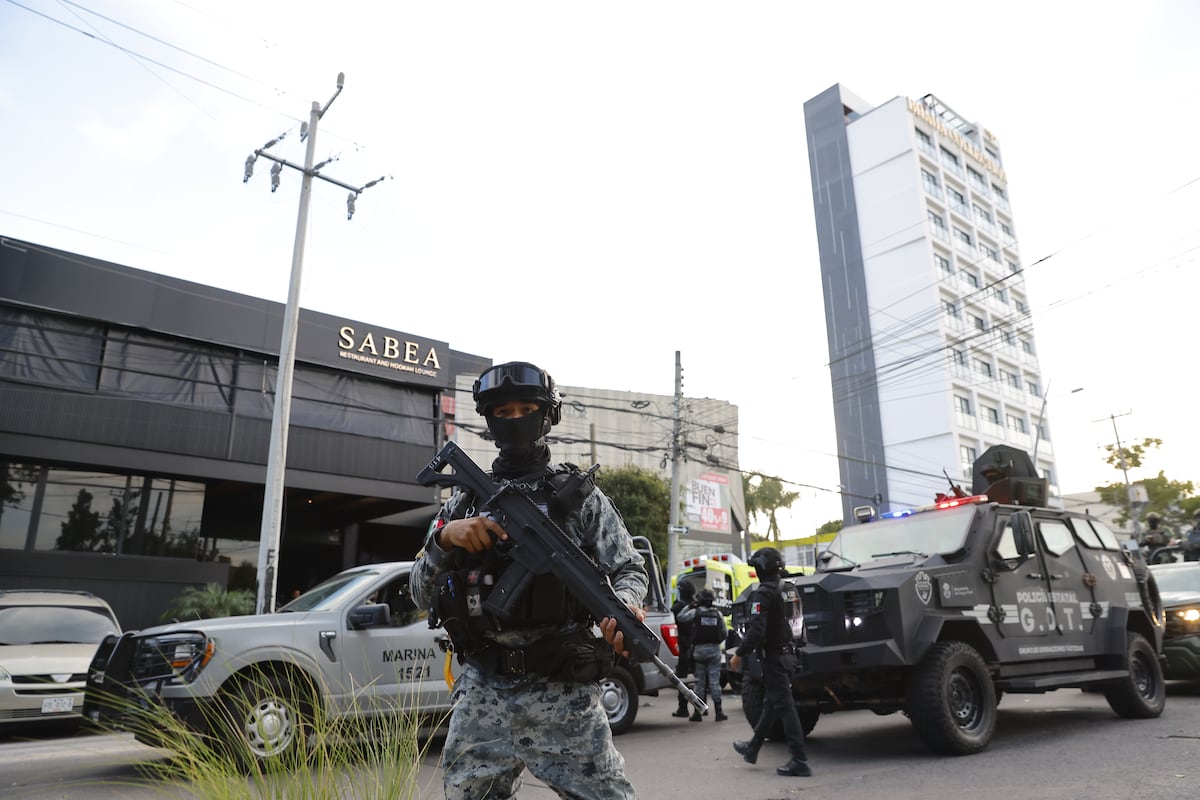
Most Latin American governments hedge. They welcome Chinese trade and investment while keeping security ties with the US. Mexico, deeply tied to the US economy, is pressing a military offensive against the Jalisco cartel 416 partly under US pressure. Chile, under a right-wing president, renewed its currency swap with China. Ideology matters less than economic interest and the need for investment. For outside powers, the lesson is that influence in Latin America is earned through markets and finance rather than imposed.
Key developments
- China and Cuba. Cuba and China signed three biotech deals and committed to more business cooperation during the Cuban foreign minister's visit, and Beijing insists its cooperation with Havana is 'legitimate and transparent'. 24201130
- China's wider footprint. A Brazilian steelmaker sold its cement arm to a Chinese buyer, Mexico and China launched a joint archaeology project, China's embassy mocked US 'congratulations' over a Dominican factory closure, and China's trade surplus weighs on Latin American exporters. 172322
- The US after the midterms. Analysts ask whether Rubio can still achieve regime change in Cuba after the midterm defeat, what the midterms mean for the region, and whether a defeated Trump is weaker or more dangerous. 53733
- Other outside powers. Europe is trying to return to Latin America, Iran and Uruguay plan a joint business committee, and Pope Leo XIV's role adds a geopolitics of faith. 311032
- Oil, cartels and security. Venezuela signed a memorandum for ExxonMobil's return after leaving in 2007, Mexico's navy arrested CJNG operator 'R2' and 19 others in its offensive against the cartel, and El Salvador attacked the US State Department over Haiti's gang war. 741612
- Sanctions on Cuba. Analysts discuss the humanitarian cost of Cuba's energy isolation and what the annual UN vote against the US embargo means for unilateral sanctions. 3635
Themes
- Economic competition over coercion. Chinese influence advances through trade, biotech and investment, while US leverage relies mainly on sanctions, a contrast the midterms may sharpen. 241736
- Sovereignty claims. Research compares sovereignist claims in South America and Mediterranean Europe, showing how sovereignty is invoked both against and for outside powers. 34
What it means for Chile
- Codelco and copper. Chile is probing US$25 million in union loans at state copper giant Codelco as copper output falls, issues that matter to a country whose main export draws Chinese and US interest. 1328
- Trade surplus. Chile's October trade surplus reached US$2.55 billion, while the fuel chief urged action to revive growth. 1415
Analytical lenses
- Hedging. Latin American states take Chinese investment while keeping US security ties, a classic hedge between powers. It explains Cuba's and Brazil's deals with China; it misses how hard US sanctions limit the options of states like Cuba and Venezuela. 24177
- Hegemonic decline. Commentary on 'crumbling' US bases and a weakened Trump reads the region through the decline of US hegemony. This explains China's and Europe's openings, but understates the US's continuing pull, seen in ExxonMobil's return to Venezuela. 2633317
Stories this analysis is based on (26)
- Mexico and China launch joint archaeological project in Yucatán Mexico News Daily
- China mocks US ‘congratulations’ over Dominican closure of Chinese-run factory South China Morning Post
- From El Mencho to R2: Mexico’s offensive against the Jalisco New Generation Cartel El País English
- After midterm disaster, can Rubio still get Cuba regime change? Responsible Statecraft
- Venezuela signs a memorandum with ExxonMobil for the oil major’s return after leaving in 2007 MercoPress
- Iran Chamber chief says joint committee with Uruguay in the works IRNA (Iranian state media)
- Cuba and China to strengthen special friendship with FM’s visit Prensa Latina (Cuban state media)
- Scoop: El Salvador blasts U.S. State Dept. over Haiti gang war Axios
- Chile Probes US$25M in Codelco Union Loans The Rio Times
- Chile October Trade Surplus Hits US$2.55B The Rio Times
- Chile Fuel Chief Urges Action on Growth The Rio Times
- CJNG operator ‘R2’ and 19 others arrested following shootout with Mexican Navy in Guadalajara Mexico News Daily
- Brazil Steelmaker Sells Cement Arm to China The Rio Times
- Cuba and China commit to strengthening business cooperation Prensa Latina (Cuban state media)
- China’s Trade Surplus and Latin American Exporters The Rio Times
- Cuba and China Sign Three Biotech Deals The Rio Times
- The Bases of US Empire Are Crumbling Jacobin (socialist)
- Copper Fund Rises 0.83% as Chile Output Falls | Copper Wrap, Nov 6 The Rio Times
- China: cooperation with Cuba is legitimate and transparent Granma (Cuban state media)
- Europe returns to Latin America: Is it too late? Latinoamérica21
- The return of the shepherd: Leo XIV and the geopolitics of faith in Latin America Latinoamérica21
- Trump defeated: Is he weaker or more dangerous to Latin America? Latinoamérica21
- Sovereignty for and against what? Varieties of sovereignist claims in Mediterranean Europe and South America Journal articles (OpenAlex)
- The UN Annually Votes on Ending the US Embargo on Cuba. What Does it Mean for Unilateral Sanctions and Their Impact on Human Rights? Stimson Center
- Cuba’s energy isolation: The humanitarian cost of a new sanctions strategy Latinoamérica21
- What Will the U.S. Midterms Mean for Latin America? Inter-American Dialogue
Written by Claude (Anthropic), based on 45 recent headlines and excerpts in this section, Nov 11. AI analysis can misread or miss things: the numbers link to the original reporting, which is the authority.