Tech policy: analysis of 17 November 2026
Back to the Chronology · Current news in this section
Analysis
The Nvidia spy scandal is reshaping US chip policy, with bipartisan calls in Congress to tighten AI chip export controls even as President Trump publicly downplays the national-security risk and floats Jensen Huang's return.
Washington's semiconductor politics dominated the period: following Jensen Huang's reported resignation as Nvidia CEO over an alleged affair with a suspected Chinese spy, lawmakers from both parties are pushing tougher export restrictions on AI chips, while Senator Maria Cantwell accused the Commerce Department of failing to enforce existing controls 681012. President Trump, by contrast, contradicted his own intelligence officials by saying the relationship posed no security threat and suggested Huang could return to the company 68. Separately, the chip sector faces mounting litigation, with shareholders suing Intel after a 28.6 percent one-day stock fall and a federal judge allowing a DRAM price-fixing class action against Samsung, SK hynix and Micron to proceed 151113. Other notable developments include a Supreme Court decision preserving an injunction against DEI grant defunding, an AT&T false-advertising suit against Comcast, and scrutiny of fragile federal infrastructure after an FAA outage 249.
Key developments
- Trump breaks with intelligence agencies on Nvidia affair. Trump told reporters that former Nvidia CEO Jensen Huang's reported affair with Alice Huang, whom US intelligence officials reportedly concluded is a Chinese spy, did not threaten national security, and said he was not certain she was a spy at all [6][8]. He added it 'certainly isn't a bad idea' for Huang to return to Nvidia following his resignation last week [8]. The intelligence assessment is reported rather than officially confirmed, but the president's stance puts him directly at odds with his own officials and with Congress [6][12]. 6812
- Congress and Cantwell push for tighter AI chip export enforcement. Lawmakers in both parties have voiced support for bills and measures to restrict AI chip exports further in the wake of the scandal, and have demanded answers from Huang and other Nvidia figures [12]. Senator Maria Cantwell, a senior Democrat on the commerce committee, wrote to Commerce Secretary Howard Lutnick on Sunday accusing the department of neglecting to enforce protections meant to keep Nvidia's AI chips out of China [10]. The combination of legislative pressure and oversight letters suggests export policy could tighten regardless of the White House's more relaxed public tone [6][10][12]. 10126
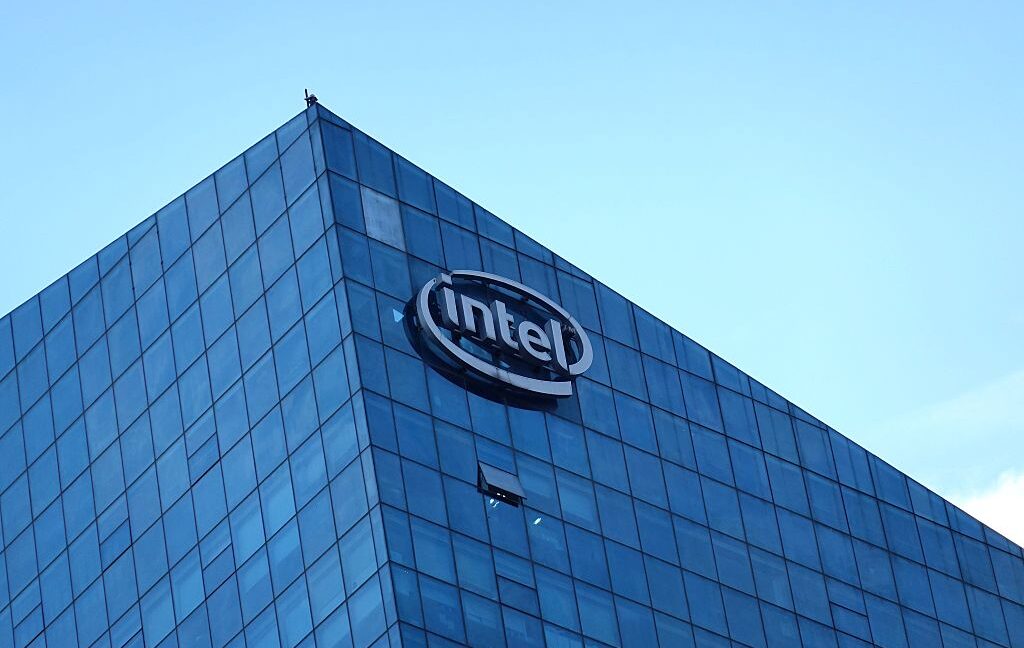
- Intel hit with shareholder class action after 28.6 percent stock drop. A class action filed on 13 November in federal court in San Jose names Intel, CEO Lip-Bu Tan and CFO David Zinsner, with a Michigan pension fund leading on behalf of investors who bought shares between 23 July and 29 October [5]. Shareholders allege the company failed to disclose that a PC sales slump 'more than offset' gains from the AI boom, a claim that followed a 28.6 percent single-day share price fall [1]. The suit underlines how uneven the AI-driven recovery is across the chip industry [1][5]. 15
- DRAM price-fixing suit against Samsung, SK hynix and Micron proceeds. On 14 November, US District Judge Noël Wise of the Northern District of California denied the three memory makers' joint motion to dismiss a class action alleging they restricted DRAM supply, finding the complaint plausibly alleges an unlawful agreement [11][13]. The ruling means the companies face discovery and potentially lengthy antitrust litigation at a time when memory demand is tied closely to AI build-outs [13]. 1113
- Supreme Court leaves injunction against DEI grant cuts in place. The Supreme Court kept in place an injunction blocking the defunding of DEI-related grants, after an appeals court rejected the cancellations on First Amendment grounds [4]. The decision is a setback for the administration's effort to withdraw funding on viewpoint-related criteria and signals the courts remain a check on grant-conditioning policy [4]. 4
- AT&T sues Comcast over 'fiber-powered' cable marketing. AT&T's lawsuit alleges Comcast falsely advertises cable internet as 'fiber-powered' and demands that Comcast hand over profits earned from the claim [2]. The case highlights intensifying rivalry over broadband marketing claims as fibre providers seek to differentiate themselves from cable networks [2]. 2
Themes
- Chip industry under legal and political siege. Nvidia, Intel and the three dominant DRAM makers all face serious legal or political exposure in the same week, spanning export-control scrutiny, securities fraud claims and antitrust litigation [1][5][10][11][12][13]. The pattern shows that the AI boom has raised the stakes for semiconductor firms on every front, not just commercially [1][12][13]. 15101112
- Executive branch versus Congress and the courts. Trump's dismissal of the Huang security concerns sits uneasily with bipartisan congressional moves to tighten export rules and with Cantwell's criticism of Commerce enforcement [6][10][12]. Meanwhile the Supreme Court's refusal to lift the DEI grant injunction is another instance of institutional pushback against executive policy [4]. 610124
- Surveillance and infrastructure fragility. EFF's critique of Amazon Ring's new indoor drone, which flies preset paths and activates on sensor triggers, revives concerns about pervasive home surveillance [7]. The Verge's account of a nationwide FAA communications failure traced to a single bad router shows how brittle critical public systems remain [9]. 79
What to watch
- Whether Congress advances concrete AI chip export legislation and how the Commerce Department responds to Cantwell's enforcement allegations, given the president's conflicting signals [10][12][6]. 10126
- Whether Jensen Huang actually returns to Nvidia, as Trump has encouraged, and whether official confirmation emerges on the intelligence assessment of Alice Huang [8][6]. 86
- Intel's response to the shareholder suit and any further disclosures about the PC sales slump, which could affect how the class period claims develop [1][5]. 15
- Progress of the DRAM antitrust case into discovery now that the dismissal motion has failed, and any spillover into regulatory scrutiny of memory pricing [11][13]. 1113
Stories this analysis is based on (12)
- Shareholders sue Intel, its CEO and CFO after stock drops 28.6 percent in one day Ars Technica Policy
- Comcast falsely advertises cable Internet as "fiber-powered," AT&T lawsuit says Ars Technica
- Supreme Court keeps injunction against DEI grant defunding in place Ars Technica
- Intel Faces Class Action Lawsuit Over PC Sales Slowdown Disclosures TechPowerUp
- Trump says ex-Nvidia CEO Jensen Huang’s affair with an alleged Chinese spy did not threaten national security TechCrunch Government & Policy
- Amazon Ring’s New Indoor Surveillance Drone Is Not Compatible with Privacy EFF
- Trump says it ‘certainly isn’t a bad idea’ for Jensen Huang to return to Nvidia The Verge
- America’s air traffic control system couldn’t handle a single bad router The Verge
- Senator slams Commerce Secretary for flow of Nvidia AI chips to China The Verge Policy
- DRAM companies fail to get price-fixing case dismissed Electronics Weekly
- Congress wants to tighten export rules on AI chips after Nvidia spy scandal The Verge Policy
- Samsung, SK hynix, and Micron Fail to Get DRAM Antitrust Suit Dismissed TechPowerUp
Written by Claude Fable 5.1 (Anthropic), based on 13 recent headlines and excerpts in this section, 3d ago. AI analysis can misread or miss things: the numbers link to the original reporting, which is the authority.