Poverty: analysis of 17 November 2026
Back to the Chronology · Current news in this section
Analysis
UN agencies report sharply worsening child malnutrition in Afghanistan—acute malnutrition up to 12% in the third quarter of 2026—as declining aid and large funding gaps constrain humanitarian responses from Central Africa to Asia.
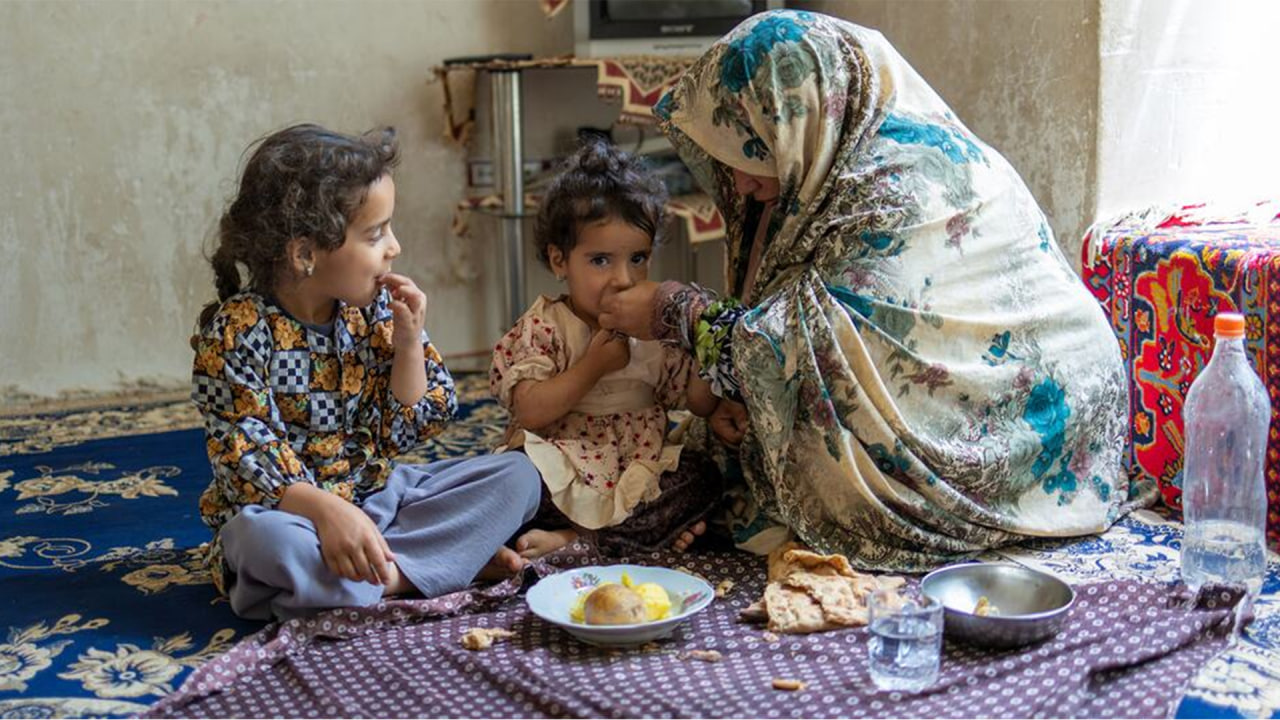
The dominant story of the fortnight is Afghanistan, where UNICEF reports acute child malnutrition rising from 9.3% to 12% between the second and third quarters of 2026, half of all children facing severe food poverty, and the UN warning that rights restrictions on women, mass returns of migrants, economic hardship and falling international assistance are compounding a fragile situation 127. Aid is still reaching large numbers—OCHA counts 9.9 million Afghans assisted between January and September—but the trajectory of need is outpacing it 6. Elsewhere, OCHA dashboards for the Central African Republic and West and Central Africa describe major gaps between needs and resources that limited assistance in 2026 81427, while displacement in eastern DRC, flooding in Cambodia and a protection emergency in Moyale, Kenya add to pressure on stretched systems 212829. In rich-country poverty, a UK debate over raising the state pension age above 70 to fund the triple lock has drawn warnings about pensioner poverty 5.
Key developments
- Afghan child malnutrition surges. UNICEF reports acute malnutrition among Afghan children rose to 12% in the third quarter of 2026, up from 9.3% in the previous quarter, and separately says half of the country's children face severe food poverty, lacking a diverse and nutritious diet [2][7]. The jump within a single quarter is steep and coincides with a UN warning that restrictions on women's rights, mass migrant returns, economic hardship and declining international assistance are deepening the crisis [1]. 127
- Afghan aid reach versus shrinking funding. OCHA says 9.9 million people in Afghanistan received at least one form of humanitarian assistance between January and September 2026 [6], and FAO has allocated $2 million, backed by the Asian Development Bank, for matching grants to agricultural businesses [26]. These figures show the system still delivering at scale, but the UN's own warning of declining assistance suggests reach may not keep pace with rising malnutrition [1][2]. 1626
- Funding gaps limit response in Central Africa. OCHA's inter-sectoral dashboard for the Central African Republic states that between January and August 2026 major gaps between humanitarian needs and available resources limited assistance to people in need; the summary references a figure of 1.3 million people, though the full context is truncated in the item [14][27]. A separate regional funding overview covering DRC, Burkina Faso, Cameroon, CAR, Chad, Mali, Niger and Nigeria underlines that this shortfall is region-wide [8]. 81427
- Conflict keeps driving displacement in eastern DRC. Mercy Corps' October 2026 displacement report finds armed conflict and deteriorating security remain the principal drivers of new displacement in eastern DRC, citing clashes between the FARDC, Wazalendo groups and various armed factions [21][22]. Continued displacement in an already underfunded region compounds the resource gaps flagged by OCHA [8]. 21228
- UK pension age debate and pensioner poverty. Responding to a report of Torsten Bell's suggestion that the Conservatives would need to raise the state pension age above 70 to meet the cost of keeping the triple lock, Joanna Elson of Independent Age warns that such a move would harm the poorest and urges ministers to think hard before making changes [5]. The exchange illustrates how the fiscal cost of pension indexation is being traded off against the risk of pushing older people into poverty. 5
- Child hunger missing from climate plans. World Vision's new analysis finds that 73% of countries recognise hunger in their climate plans but only 17% make it a priority, with children's hunger and nutrition needs largely overlooked in climate policy [11]. This matters as climate shocks—flooding in Cambodia and the forecast Southern Africa cyclone season—are themselves drivers of food insecurity [28][4]. 11284
Where poverty and hunger are worst
- Afghanistan. Acute child malnutrition rose to 12% in Q3 2026 from 9.3% the previous quarter, and UNICEF says half of all children face severe food poverty [2][7]. OCHA reports 9.9 million people received at least one form of assistance from January to September 2026, FAO has allocated $2 million for agricultural grants, and WHO counts 50 wild poliovirus type 1 cases in Afghanistan in 2026 out of 59 total (the other 9 in Pakistan) [6][26][25]. 126725
- Central African Republic and West/Central Africa. OCHA says major gaps between needs and resources limited assistance in CAR between January and August 2026, with a truncated reference to 1.3 million people [14][27]. A regional funding overview covering DRC, Burkina Faso, Cameroon, CAR, Chad, Mali, Niger and Nigeria tracks the 2026 shortfall [8]. 81427
- Democratic Republic of the Congo. Mercy Corps reports that armed conflict and deteriorating security, including clashes between the FARDC, Wazalendo groups and other armed factions, remained the principal drivers of new displacement in eastern DRC in October 2026 [21][22]. 2122
- Myanmar and Sudan. At least 1,979 attacks on health care occurred in Myanmar between the 1 February 2021 coup and 15 October 2026, over 65% attributed to the Myanmar Armed Forces [10]. In Sudan, Qatar Red Crescent launched a convoy to perform open-heart surgeries for 15 poor children at Ahmed Qasim Children's Hospital in Khartoum State [20]. 1020
- Kenya and Cambodia. A Government of Kenya and UNHCR rapid protection assessment on 7 November 2026 covered 10 locations in Moyale, including 8 displaced-population sites, amid an emergency linked to Ethiopia [29]. Cambodia continues to experience flooding after prolonged heavy rainfall, prompting World Vision's sixth situation report [28]. 2829
- United Kingdom. A suggestion attributed to Torsten Bell that the Conservatives would need to raise the state pension age above 70 to afford the triple lock has prompted Independent Age to warn of harm to the poorest pensioners [5]. 5
Aid, policy and money
- FAO Matching Grant Program in Afghanistan. FAO announced on 16 November a $2 million allocation to support agricultural businesses in Afghanistan through its Matching Grant Program, financed by the Asian Development Bank [26]. It is a modest livelihoods intervention set against a UN warning of declining international assistance and rising malnutrition [1][2]. 1226
- UK state pension age and triple lock. The reported proposal to raise the state pension age above 70 to sustain the triple lock is contested, with Independent Age arguing it would harm the poorest and that ministers should think hard before changing it [5]. No decision has been taken; the item reports a suggestion and a charity's response. 5
- Hunger in national climate plans. World Vision's analysis finds 73% of countries recognise hunger in climate plans but only 17% prioritise it, and calls for children's nutrition to be integrated into climate policy [11]. UN Women similarly presses for structural reform of women's access to land, decent work and care systems as part of climate and economic justice [16]. 1116
- German-funded health rehabilitation in Yemen. With funding from Germany's BMZ via KfW, Yamaan Foundation began rehabilitating the Psychiatric and Neurological Diseases Hospital in Aden in August 2026 [12]. It is an example of bilateral development finance sustaining basic services where humanitarian budgets are tight. 12
Themes
- Needs rising faster than resources. Across Afghanistan, CAR and West and Central Africa, UN reporting pairs rising or persistent need with explicit statements that assistance is declining or constrained by funding gaps [1][2][8][14][27]. The pattern suggests that even where millions are reached, as in Afghanistan, coverage is being rationed relative to need [6]. 126814
- Conflict and health-system attacks deepen vulnerability. Insecurity Insight records at least 1,979 attacks on health care in Myanmar since the February 2021 coup up to 15 October 2026, over 65% attributed to the Myanmar Armed Forces, while conflict drives displacement in eastern DRC [10][21]. Such attacks and displacement erode the services the poorest rely on, with Sudan reduced to one-off interventions such as a Qatar Red Crescent convoy performing open-heart surgery for 15 poor children in Khartoum State [20]. 102021
- Climate shocks as a poverty driver. Flooding in Cambodia, a multi-model cyclone forecast for Southern Africa and the Indian Ocean, and World Vision's finding that child hunger is largely absent from climate priorities point to climate as an under-addressed driver of food insecurity [4][11][28]. UN Women's work on climate, care and land likewise frames structural inequality in women's access to land and care systems as central to economic justice [16]. 4111628
What to watch
- Watch the next UNICEF quarterly figures for Afghanistan to see whether acute child malnutrition continues to climb beyond 12% as winter approaches and assistance declines [2][1]. 12
- Watch whether year-end funding updates for West and Central Africa and CAR narrow the gaps that OCHA says limited assistance through August 2026 [8][14][27]. 81427
- Watch the UK debate over the state pension age and triple lock, given charity warnings that a rise above 70 would hit the poorest pensioners [5]. 5
- Watch the Southern Africa cyclone season and continuing Cambodian flooding for new displacement and food-security impacts in regions where climate plans rarely prioritise hunger [4][28][11]. 41128
Stories this analysis is based on (20)
- UN: Afghanistan Faces Deepening Humanitarian Crisis Amid Rights Restrictions and Aid Cuts KabulNow
- UN: Acute Child Malnutrition Rises to 12% in Afghanistan Amid Deepening Food Insecurity KabulNow
- Botswana: Southern Africa and Indian Ocean (SAIO) region | 2026-2027 tropical cyclone season multi-model forecast - DG ECHO Daily Map | 16/11/2026 ReliefWeb
- Raising the state pension age above 70 would harm the poorest | Letters The Guardian Conservatives
- OCHA: More Than Nine Million People in Afghanistan Have Received Humanitarian Aid Hasht-e Subh (8am)
- UNICEF: Half of Afghanistan’s Children Face Severe Food Poverty Hasht-e Subh (8am)
- DR Congo: West and Central Africa: 2026 Regional Funding Status - General Overview (as of 16th November 2026) ReliefWeb
- Attacks on Health Care in Myanmar: 16 - 31 October 2026 ReliefWeb
- World: Youth-Led Participatory Research: Our Climate, Our Voices, Our Actions ReliefWeb
- Yemen: KfW-Funded Infrastructure Rehabilitation Advances at Aden’s Psychiatric and Neurological Diseases Hospital ReliefWeb
- CAR: République Centrafricaine : Tableau de bord humanitaire - Réponse Intersectorielle (janvier - août 2026) ReliefWeb
- World: The nexus between climate, care and land: An issue of women’s economic justice ReliefWeb
- Sudan: QRCS launches pediatric open-heart surgery convoy in Khartoum State [EN/AR] ReliefWeb
- DR Congo: Crisis Analysis Team - Monthly displacement report Eastern DRC (October 2026) ReliefWeb
- DR Congo: Crisis Analysis Team - Rapport mensuel sur les déplacements à l'Est de la RDC (octobre 2026) ReliefWeb
- Afghanistan: EMR Polio Bulletin - Issue No. 1467, Week 45 (ending on 15/11/2026) ReliefWeb
- FAO Allocates $2 Million to Support Agricultural Businesses in Afghanistan Hasht-e Subh (8am)
- Central African Republic: Humanitarian Dashboard - Inter-Sectoral Response (January - August 2026) ReliefWeb
- Cambodia: World Vision Situation Report #6: Humanitarian Response to Flooding (November 12, 2026) ReliefWeb
- Moyale Emergency: Government of Kenya's Multi-Agency Rapid Protection Assessment ReliefWeb
Written by Claude Fable 5.1 (Anthropic), based on 35 recent headlines and excerpts in this section, 3d ago. AI analysis can misread or miss things: the numbers link to the original reporting, which is the authority.