Poverty: analysis of 12 November 2026
Back to the Chronology · Current news in this section
Analysis
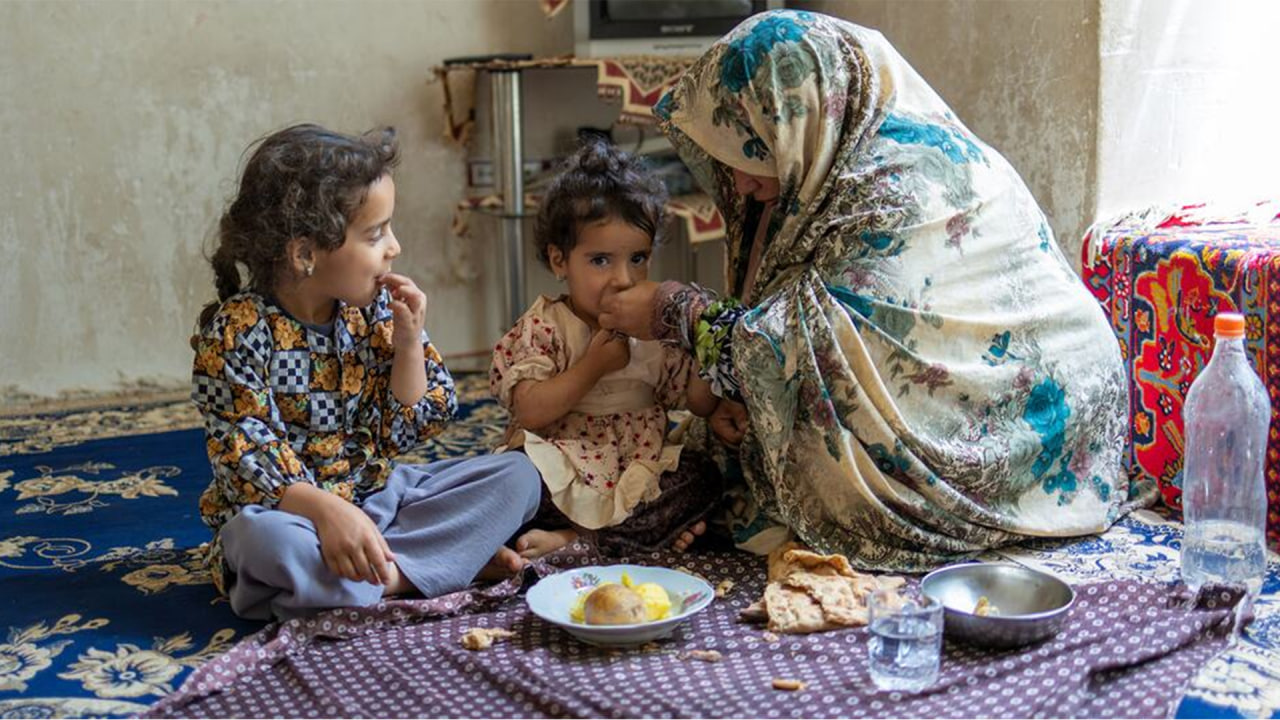
Child malnutrition in Afghanistan has climbed to 12% as aid declines, while a proposed US SNAP rule change that critics say could cut off more than 6 million people shows hunger pressures mounting in rich and poor countries alike.
The fortnight's reports describe hunger and displacement worsening in several protracted crises at the same time as international assistance is shrinking. UNICEF data show acute child malnutrition in Afghanistan rising from 9.3% to 12% between the second and third quarters of 2026 2, against a backdrop the UN describes as deepening economic hardship, mass returns of migrants and declining international assistance 1. In eastern DR Congo, preliminary estimates put more than 323,000 people displaced in just four days in Kalehe and Kabare 7, and Sudan's conflict continued to drive displacement across Blue Nile, Kordofan and Darfur through August and September 2425. Inside richer and middle-income states, a contested US SNAP proposal 5, Myanmar's record defence request while nearly 18 million live in poverty 28 and public anger in Iran over missile spending amid poverty 23 point to a common tension between state priorities and basic welfare.
Key developments
- Afghan child malnutrition jumps. UNICEF reports acute malnutrition among Afghan children rose to 12% in the third quarter of 2026, up from 9.3% in the previous quarter [2]. The UN links the broader deterioration to restrictions on women's rights, mass returns of migrants, economic hardship and declining international assistance, which together are straining already fragile services [1]. The combination of falling aid and rising need is the clearest example in these items of funding cuts translating into measurable nutrition outcomes. 12
- US SNAP rule change contested. Anti-hunger advocates are criticising a proposed change to SNAP rules that they say could cut off more than 6 million people from federal food aid [5]. The figure comes from critics rather than an official impact assessment, so it should be treated as contested [5]. It is nonetheless a significant development for poverty inside a rich country, given SNAP's role as the principal US food-assistance programme. 5
- Mass displacement in eastern DR Congo. OCHA's flash update reports more than 323,000 people displaced in four days in the Kalehe and Kabare territories of South Kivu following new armed violence, according to preliminary estimates [7]. Separately, the Education Cluster, Save the Children and UNICEF report 56 schools affected by renewed conflict and ADF attacks in the Grand Nord Kivu sub-divisions of Kirumba, Kitsumbiro, Njiapanda and Oicha [4], and have assessed needs among people expelled from the Kigonze displacement site in Bunia [3]. Rapid displacement on this scale typically precedes sharp rises in food insecurity and loss of schooling. 347
- Sudan conflict keeps driving displacement. UNHCR's updates for August and September 2026 describe persistent clashes, airstrikes and drone activity across Blue Nile, the Kordofans and Darfur, with intensified ground fighting in September triggering further displacement [24][25]. The crisis continues to spill into Central African Republic, Chad, Egypt, Ethiopia, Libya, South Sudan and Uganda, which host Sudanese refugees [24][25]. A separate UNHCR dashboard tracks Ethiopian refugees still inside Sudan as of 31 October 2026 [30]. 242530
- Gaza tents flooded by winter storms. The Norwegian Refugee Council reports that winter storms have flooded thousands of tents in Gaza, with a site-management staff member describing the situation as extremely difficult [27]. The onset of winter in a largely displaced population living under canvas raises the risk of disease and further deterioration in living conditions. 27
- Military budgets versus poverty. Myanmar's junta is seeking 10.53 trillion kyats for defence in 2026-27, more than three times the pre-coup level, while nearly 18 million people live in poverty [28]. In Iran, the Revolutionary Guards' unveiling of an underground missile facility prompted public anger over military spending amid growing poverty, energy shortages and a lack of civilian shelters [23]. Both cases illustrate how fiscal choices in sanctioned or conflict-affected states shape domestic deprivation. 2328
Where poverty and hunger are worst
- Afghanistan. Acute malnutrition among children rose to 12% in the third quarter of 2026 from 9.3% in the previous quarter, according to UNICEF [2]. The UN cites rights restrictions on women, mass returns of migrants, economic hardship and declining international assistance as compounding pressures [1]. 12
- DR Congo. Preliminary OCHA estimates put more than 323,000 people displaced in four days in Kalehe and Kabare, South Kivu [7]. In Grand Nord Kivu, 56 schools have been affected by renewed conflict and ADF attacks [4], and families expelled from the Kigonze displacement site in Bunia have been assessed for education and protection needs [3]. 347
- Sudan and neighbours. UNHCR reports intensified conflict across Blue Nile, the Kordofans and Darfur in August and September 2026, with ground clashes, drone strikes and airstrikes triggering further displacement [24][25]. Refugee flows continue to affect Central African Republic, Chad, Egypt, Ethiopia, Libya, South Sudan and Uganda [24][25]. 242530
- Myanmar. Nearly 18 million people live in poverty while the junta seeks 10.53 trillion kyats for defence in 2026-27, more than three times the pre-coup level [28]. 28
- Caribbean. WFP's real-time monitoring across Barbados, Belize, Dominica, Grenada, Guyana, Jamaica, Saint Lucia, Saint Vincent and the Grenadines, Suriname and Trinidad and Tobago found food consumption acceptable for 89.5% of households, leaving 10.5% with poor or borderline consumption [18]. 18
- Central African Republic. OCHA's Situation Report No. 93 notes humanitarian partners strengthening Ebola prevention in the south-east, and 357 households affected by heavy rainfall in Mbomou receiving emergency kits [12][14]. 1214
Aid, policy and money
- Proposed US SNAP rule change. A proposed change to SNAP eligibility rules has drawn criticism from anti-hunger advocates, who say it could cut off more than 6 million people from federal food aid and increase food insecurity [5]. The impact figure is the critics' estimate and the proposal's final form is not yet settled [5]. 5
- Declining aid to Afghanistan. The UN warns that falling international assistance, combined with rights restrictions and mass returns of migrants, is pushing Afghanistan's fragile services towards deeper crisis [1]. UNICEF's finding that acute child malnutrition reached 12% suggests the consequences of reduced funding are already visible [2]. 12
- Myanmar defence budget 2026-27. The junta's request for 10.53 trillion kyats for defence is more than three times the pre-coup level, at a time when nearly 18 million people live in poverty [28]. The allocation signals continued prioritisation of military spending over social protection. 28
- Early warning systems and humanitarian safeguards. The fifth edition of the WMO/UNDRR global status report finds record coverage of multi-hazard early warning systems but persistent gaps in the most disaster-vulnerable countries and communities [13][26]. In Chad, OCHA has revised and validated standard operating procedures for PSEA referrals and published a risk analysis focused on last-mile delivery and contact points between aid staff and affected communities [16][17][21][22]. 1316172122
Themes
- Aid cuts meeting rising need. The UN explicitly ties Afghanistan's worsening crisis to declining international assistance [1], at the same time as malnutrition indicators climb [2]. The US SNAP proposal [5] shows that retrenchment in food assistance is not confined to international aid budgets. 125
- Conflict as the main driver of hunger and displacement. DR Congo [3][4][7], Sudan [24][25] and Gaza [27] all feature fresh displacement or deteriorating conditions caused directly by fighting or its aftermath. These are the settings where food insecurity is most likely to escalate quickly and where access for aid agencies is hardest. 3472425
- Protection gaps for the most vulnerable. The WMO/UNDRR report finds more countries than ever have multi-hazard early warning systems, but major gaps remain in the countries and communities most exposed to disasters [13][26]. OCHA's work in Chad on protection from sexual exploitation and abuse at the 'last mile' of aid delivery [16][17][21][22] reflects a parallel concern that safeguards are weakest where people are poorest. 1316172122
What to watch
- Whether the US SNAP proposal is finalised and whether official estimates confirm or revise the more-than-6-million figure cited by critics [5]. 5
- The next UNICEF or IPC data for Afghanistan, to see whether the rise in acute child malnutrition from 9.3% to 12% continues into the fourth quarter [2] as aid keeps declining [1]. 12
- Updated OCHA figures for South Kivu, since the 323,000 displacement estimate is preliminary and may be revised as access improves [7]. 7
- Myanmar's parliamentary handling of the 10.53 trillion kyat defence request and any corresponding squeeze on social spending while nearly 18 million people remain in poverty [28]. 28
Stories this analysis is based on (20)
- UN: Afghanistan Faces Deepening Humanitarian Crisis Amid Rights Restrictions and Aid Cuts KabulNow
- UN: Acute Child Malnutrition Rises to 12% in Afghanistan Amid Deepening Food Insecurity KabulNow
- DR Congo: RAPPORT D'EVALUATION MULTISECTORIELLE RAPIDE DES BESOINS EN EDUCATION EN SITUATION D'URGENCE ET PROTECTION ReliefWeb
- DR Congo: Dégradation de la situation sécuritaire dans le Grand Nord Kivu_ Impact sur l’Education_ Nov 2026 ReliefWeb
- SNAP proposal would increase food insecurity, critics say CBS News
- DR Congo: RD Congo - Sud-Kivu : Flash Update #1 : De nouvelles violences armées entraînent des déplacements de population ReliefWeb
- Central African Republic: Situation Report No. 93, as of 10 November 2026 ReliefWeb
- World: Global Status of Multi-Hazard Early Warning Systems 2026 ReliefWeb
- CAR: République centrafricaine : Rapport de situation N° 93 au 10 novembre 2026 ReliefWeb
- Tchad : SOP SEARP Référencement PSEA Révisées et Validées EHP Septembre 2026 ReliefWeb
- TCHAD : Mémo sur la mise en conformité en matière de PSEA et la PSEA au dernier kilomètre – Juin 2026 ReliefWeb
- Barbados: Caribbean Real-Time Food Security Monitoring Report | World Food Programme ReliefWeb
- Analyse hybride SEARO/IARA des RIsques PSEA au Tchad I Approche basée sur les risques au Last Mile Delivery et aux Flash Points entre personnel d'assistance et communautés affectées Juin 2026 ReliefWeb
- TCHAD : Rapport Final _Analyse_ Risques PSEA SEARO IARA Juin 2026 ReliefWeb
- Missile city unveiling sparks anger over poverty, lack of shelters Iran International
- Sudan Situation: UNHCR Monthly External Update #123 - September 2026 ReliefWeb
- Sudan Situation: UNHCR Monthly External Update #122 - August 2026 ReliefWeb
- oPt: Gaza: Winter storms flood thousands of tents | NRC ReliefWeb
- Myanmar Junta Seeks Record Military Budget as Millions Struggle With Poverty The Irrawaddy
- UNHCR Sudan - Ethiopian Refugees in Sudan Dashboard as of 31 October 2026 ReliefWeb
Written by Claude Fable 5.1 (Anthropic), based on 36 recent headlines and excerpts in this section, Nov 12. AI analysis can misread or miss things: the numbers link to the original reporting, which is the authority.