Lebanon news: analysis of 12 November 2026
Back to the Chronology · Current news in this section
Analysis
Lebanon faces a converging crisis as the UN warns more than a million people are acutely food-insecure, the state moves against Hezbollah members and the G7 scrambles to design a security arrangement before UNIFIL's mandate ends.
The week's reporting shows a country squeezed on several fronts at once. Humanitarian conditions are deteriorating, with the UN warning that almost a quarter of the population faces acute food shortages and that Lebanese wheat production has been badly hit by war damage in the south and the Bekaa 23, while Israeli strikes on construction and water equipment are reported to be blocking recovery in the south 11. Politically, the Lebanese government has detained Hezbollah members and the prime minister has pledged an end to impunity, raising concern about internal strife 4, while Hezbollah's leader frames foreign election results as a possible opening for Lebanese sovereignty 1. Internationally, the G7 is seeking to avoid a 'security void' once UN peacekeepers withdraw 9, against a regional backdrop of the Israeli-US war on Iran, Gulf crackdowns on alleged IRGC and Hezbollah networks, and spillover from Iraqi factional politics, including the unexplained death of a former Iraqi MP in Beirut 56810.
Key developments
- Hunger crisis deepens. The UN says more than one million people in Lebanon, almost a quarter of the population, face acute food shortages and warns the crisis could escalate without urgent action [2]. Reporting on agriculture links this directly to the war: wheat production has been hit as farmland in the south and the Bekaa Valley suffers severe destruction, which Al Jazeera characterises as Israel 'disrupting entire ecosystems' [3]. Together these items suggest the food emergency is structural rather than a short-term supply shock. 23
- Reconstruction blocked in the south. WIRED reports that Israeli strikes on construction equipment and water infrastructure in South Lebanon have stalled recovery efforts and are keeping displaced families from returning home [11]. This connects to the food and livelihoods picture, since farmland and water systems are precisely what southern communities need to resume production [3][11]. It also raises the stakes of any post-UNIFIL security arrangement, as a prolonged absence of residents and rebuilding would entrench de facto depopulation along the border [9][11]. 1139
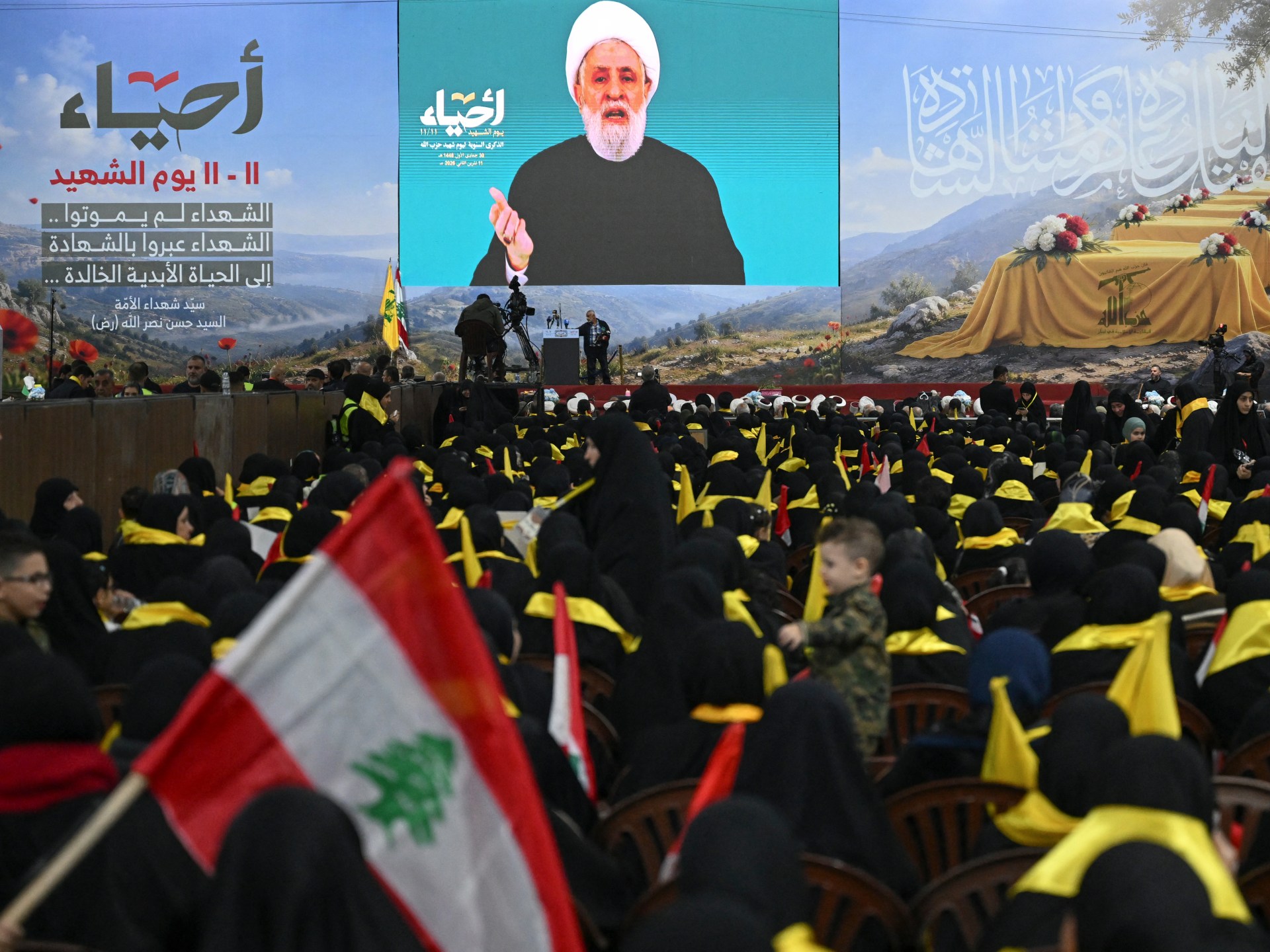
- State confronts Hezbollah. Lebanese authorities have detained Hezbollah members, with the prime minister pledging an end to impunity, and Al-Monitor reports growing concern about internal strife as tensions rise between the state and the movement [4]. Hezbollah's secretary-general Naim Qassem, meanwhile, has argued that Republican losses in the US elections and Israel's election result could help Lebanon maintain its sovereignty, a framing that casts the group as aligned with national sovereignty rather than at odds with the state [1]. How these two narratives collide will shape whether the detentions remain a legal process or become a political confrontation. 41
- G7 seeks post-UNIFIL 'security architecture'. G7 foreign ministers meeting in Paris agreed on the need to avoid a security void in Lebanon after UN peacekeepers pull out and backed moving quickly toward a new security architecture once UNIFIL's mandate ends, according to French Foreign Minister Jean-Noël Barrot [9]. The urgency was underlined the same day when UNIFIL said about a dozen rounds were fired at one of its patrols in southern Lebanon, without identifying the assailants [7]. The G7 statement, as reported, does not specify what the new architecture would be or who would provide it. 97
- Former Iraqi MP found dead in Beirut. Ahmed al-Alwani, a prominent leader of Iraqi Sunni anti-government protests in 2013 who was released from prison last year, was found dead in a Beirut apartment, and Lebanese authorities are investigating the killing [6][8]. No perpetrator or motive has been reported, and the circumstances remain unconfirmed [6]. The case lands as Iraq's prime minister is locked in an escalating feud with the Iran-backed Kata'ib Hezbollah, highlighting how Lebanon continues to serve as a stage for wider regional rivalries [5]. 685
- Gulf states expose alleged Hezbollah-linked networks. Amwaj.media reports that since the Israeli-US war on Iran began in late February, Gulf Arab states have announced the dismantling of at least nine purported espionage networks linked to the IRGC and Lebanese Hezbollah, with courts handing down lengthy sentences for spying and planned sabotage [10]. This points to Hezbollah's regional isolation deepening at the same time as it faces pressure at home from the Lebanese state [4][10]. 104
Themes
- War damage becoming a humanitarian emergency. Across several items, the physical destruction of farmland, water systems and construction equipment is translating into hunger and prolonged displacement rather than remaining a military matter [2][3][11]. The UN's warning of escalation suggests that without recovery in the south and the Bekaa, food insecurity will worsen regardless of the ceasefire's status [2][3]. 2311
- Hezbollah under pressure from multiple directions. The movement faces detentions and an anti-impunity pledge from Beirut, exposure of allegedly linked networks in the Gulf, and a regional environment defined by the Israeli-US war on Iran [4][10]. Qassem's attempt to read foreign election results as favourable indicates the group is looking externally for relief it is not finding at home [1]. 4101
- Security vacuum and regional spillover. The approaching end of UNIFIL's mandate, fire on a UN patrol and an unexplained killing of a foreign political figure in Beirut all point to a thinning security environment [7][9][6]. Iraq's internal feud between the prime minister and Kata'ib Hezbollah shows how neighbouring factional conflicts can reach into Lebanon [5][6]. 7965
What to watch
- Whether the Hezbollah detentions escalate into open confrontation or broader arrests, and how Hezbollah responds to the prime minister's pledge to end impunity [4]. 4
- Concrete proposals from the G7 or France on the 'new security architecture' for southern Lebanon, and whether attacks on UNIFIL patrols recur as the mandate winds down [9][7]. 97
- The outcome of the Lebanese investigation into Ahmed al-Alwani's death, which could implicate Iraqi factional politics and further strain Beirut's regional relations [6][8][5]. 685
- Whether the UN's call for urgent action produces new food aid or access for rebuilding in the south, given reports that strikes on equipment and water infrastructure continue to block recovery [2][11]. 211
Stories this analysis is based on (11)
- US election results could be positive for Lebanon, Hezbollah chief says Al Jazeera
- More than one million people in Lebanon face acute food shortages, UN says Al Jazeera
- Israel is ‘disrupting entire ecosystems’, including Lebanon’s wheat crop Al Jazeera
- Lebanon detains Hezbollah members as PM pledges end to impunity Al-Monitor
- Warrant, smuggling claims widen Iraqi PM-Kata'ib Hezbollah feud Amwaj.media
- Former Iraqi lawmaker Ahmed al-Alwani found dead in Beirut Al Jazeera
- UNIFIL patrol comes under fire in southern Lebanon Al Jazeera
- Ex-Iraqi MP Ahmed Alwani found dead in Lebanon: What to know Al-Monitor
- G7 agrees on need to avoid 'security void' in Lebanon after UN force mandate ends: Paris Al-Monitor
- Why GCC states are outing alleged Iranian intelligence networks Amwaj.media
- Israel Is Destroying the Machinery South Lebanon Needs to Rebuild WIRED
Written by Claude Fable 5.1 (Anthropic), based on 11 recent headlines and excerpts in this section, Nov 12. AI analysis can misread or miss things: the numbers link to the original reporting, which is the authority.