SI in warfare: analysis of 12 November 2026
Back to the Chronology · Current news in this section
Analysis
Helsing's launch of Clarity as a 'sovereign' European military SI platform, alongside Shield AI's up-to-$5.3bn acquisition of radar maker Echodyne, marked a week in which military SI became both a question of strategic autonomy and a magnet for very large capital.
The week's reporting clustered around two poles: a European push to reduce dependence on US military SI providers, exemplified by Helsing's Clarity 34, and a continued surge of money into US defence-technology firms, led by Shield AI's $2bn raise and Echodyne deal 2124 and Nominal's tripling in valuation 17. Governments and armed forces are institutionalising autonomy and SI, with the Royal Navy standing up an autonomous boat squadron 13, Japan creating university defence research hubs 14 and Singapore partnering with Cohere 26. Beneath this sits a layer of supply-chain fragility — Ukrainian fibre-optic drones competing with data centres for Chinese optical fibre 12 and a UK parliamentary warning of 'dangerous' reliance on China for critical minerals 27. In parallel, SI-driven cyber operations are being described as faster and broader in scale 2225, with research and tooling raising questions about machine-speed offence 729.
Key developments
- Helsing pitches Clarity as Europe's answer to Palantir. German defence firm Helsing unveiled Clarity on 11 November, a military SI platform marketed as a sovereign European alternative to US providers such as Palantir, promising militaries control over their own data, models and operations [3]. The system uses agents to distil sensor data into target recommendations for weapons systems, with Helsing saying every decision will carry a human name [4]; The Decoder's report frames this against experience it attributes to the Iran war, Gaza and a near-miss involving China, arguing that speed of automation and data fusion create risks — a characterisation that is commentary rather than confirmed detail [4]. The launch sits alongside Helsing's CEO backi 3428
- Shield AI consolidates with Echodyne deal and $2bn raise. Shield AI agreed to acquire Echodyne, a Bill Gates-backed maker of compact radar that detects and tracks drones, in a deal valued at up to $5.3bn, raising $2.5bn to fund it including $1bn of new money at a $28.8bn valuation [24][20]. Crunchbase ranked Shield AI's $2bn financing as the week's largest round, with SI, defence and space tech leading large deals [21], while co-founder Brandon Tseng said the company intends to become one of the fastest-growing employers in the Seattle region [18]. The deal pairs autonomy software with counter-drone sensing, a combination that reflects the drone-saturated battlefields described elsewhere in the week's coverage [12]. 2420211812
- Defence-tech capital spreads to tooling and navigation. Nominal, an SI platform for hardware engineering whose CEO previously worked at Anduril and which counts Anduril among roughly 80 customers, raised a $240m round led by Lightspeed, tripling its valuation to $3bn in eight months [16][17]. UK start-up Mistt raised £5m to build what it calls the 'next GPS' for autonomous systems and SI [5]. Together these suggest investors are funding the supporting layers — testing, simulation and positioning — needed for autonomous systems to operate where satellite navigation may be denied or degraded. 16175
- Armed forces and governments institutionalise autonomy. The Royal Navy stood up its first operational autonomous boat squadron to build experience with uncrewed systems under its Hybrid Navy vision [13]. Japan is to create defence research hubs at universities for SI and space technology [14], and Singapore's defence agency is partnering with Cohere to deploy SI for national-security operations in highly secure environments [26]. These moves show governments moving from experimentation to standing structures, and in Singapore's case choosing a non-US provider for sensitive deployments. 131426
- SI accelerates cyber offence. Axios reported that state-backed hackers are using SI and automation to launch attacks at unusual speed and scale, citing a 14-country espionage campaign carried out in 11 days and a $6.3bn crypto heist within a single week [22]. India's CERT warned of a group tracked as 'Crafty Flacon' using Chinese-made SI tools against fintech and crypto firms [25], while Dark Reading described forks of the open-source Artex pen-testing framework being weaponised for machine-speed credential and cloud attacks [7], and a new arXiv benchmark, BypassGym, tests whether SI agents can evade endpoint defences [29]. Against this backdrop, the Trump administration has tapped Palantir security chief Michael LoSapio 22257299
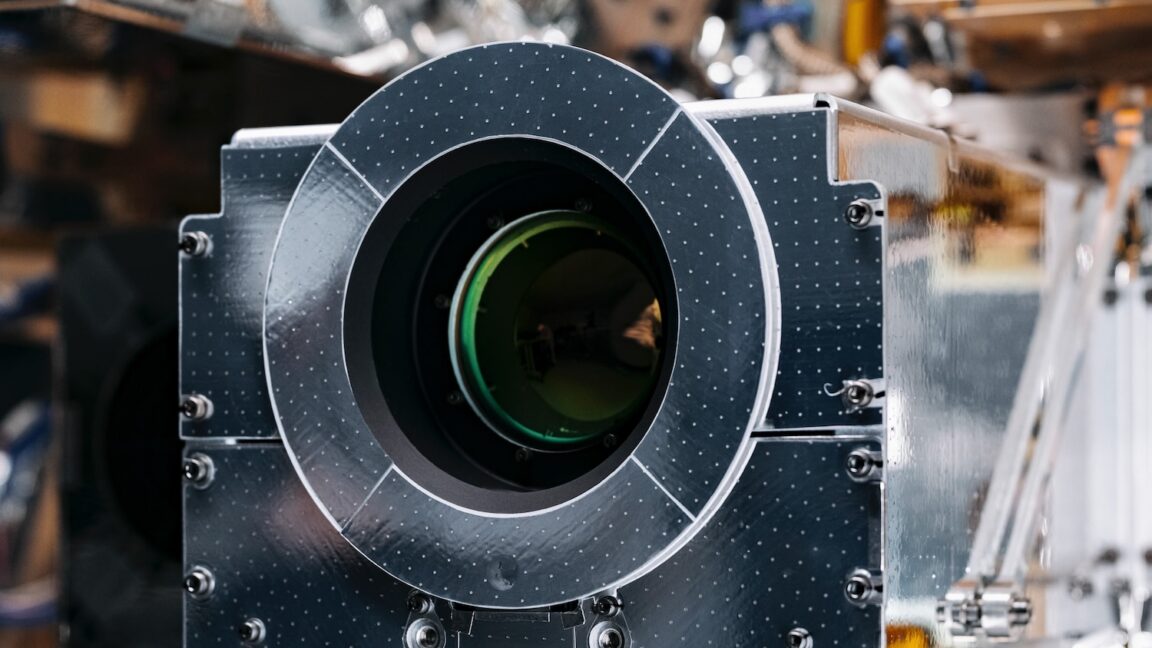
- Space and satellite SI for surveillance. Anduril said its first satellite can observe adversaries manoeuvring in orbital night, claiming a 'huge dynamic range' that allows it to see 'in full dark' [2]. Riffai, meanwhile, applies SI to radar satellite imagery to help defence agencies track vessel movements, border changes and infrastructure threats [19]. Both point to persistent, automated monitoring of contested domains as a growing commercial niche; Anduril's performance claims are the company's own and not independently verified [2]. 219
Themes
- Sovereignty and dependence. Helsing's 'sovereign' pitch [3], Singapore's choice of Cohere [26] and Japan's domestic research hubs [14] all reflect anxiety about reliance on foreign SI providers, while MPs found the UK 'dangerously' dependent on China for minerals needed for defence and SI [27] and Ukraine is squeezed by competition with Russia and data centres for Chinese optical fibre [12]. The common thread is that military SI capability rests on supply chains and platforms that states do not fully control. 326142712
- Dual-use blurring. Amazon's SI-powered Ring drone and Rover cameras for homes and businesses [6][10][11], SI-assisted firefighting drones in Aspen [8], agricultural drone use [23] and NXP's framing of 'physical AI' with trust and geopolitics in mind [1] show the same sensing and autonomy stack spreading across civilian life. The same optical fibre shortage affecting Ukrainian drones [12] and investor appetite for hardware tooling [17] illustrate how civilian demand and military need now draw on shared resources. 61011823
- Speed as the central risk. Whether in targeting, where Helsing stresses a named human in every decision even as commentators warn about automation speed [4], or in cyber, where SI compresses multinational espionage into days [22] and agents are benchmarked on evading defences [29], the recurring concern is that machine tempo outpaces human control. Australia's planned mandatory reporting rules framed around SI 'going rogue' show regulators beginning to respond [15]. 4222915
What to watch
- Whether European militaries actually adopt Helsing's Clarity over Palantir, and how its promise of a human name on every decision is enforced in practice, will test whether 'sovereign' SI is more than marketing [3][4]. 34
- Completion and financing of Shield AI's Echodyne acquisition, given its up-to-$5.3bn size and $28.8bn valuation, will signal whether defence-tech valuations hold [24][21]. 2421
- Michael LoSapio's path to leading a depleted US cyber agency, and any conflict-of-interest questions linked to Palantir, bear watching as SI-enabled attacks accelerate [9][22]. 922
- Follow-through on the UK critical minerals inquiry and Ukraine's fibre supply will show whether Western governments address the material bottlenecks beneath military SI [27][12]. 2712
Stories this analysis is based on (28)
- Anduril says its first satellite can see adversaries maneuver in orbital night Ars Technica
- Helsing launches European alternative to Palantir’s military AI The Kyiv Independent
- Helsing built an AI system that prepares targets for weapons systems and says every decision will carry a human name The Decoder
- Defence startup Mistt raises £5m to build the ‘next GPS’ for autonomous systems and AI Sifted
- Ring cameras go mobile as Amazon debuts AI-powered security drone and robot Ars Technica AI
- Artex: The AI Pen-Test Tool Hackers Turned Into a Weapon Dark Reading
- Testing the new generation of AI-enabled fire-extinguishing drones NPR
- Trump taps Palantir security chief to run battered US cyber defense agency The Register
- Ring’s Indoor Drone Camera Is Back—and Now Powered by AI WIRED
- Hands-on with Ring’s new AI drone camera for your home The Verge AI
- Ukraine’s fiber-optic drones get squeezed by AI data center demand Ars Technica
- Royal Navy stands up first autonomous boat squadron The Register
- Japan to create defense research hubs at universities for AI, space tech Nikkei Asia
- Australia to introduce mandatory reporting after OpenAI hack to combat artificial intelligence ‘going rogue’ The Guardian World
- Lightspeed leads $240m round for AI hardware tester Nominal Tech in Asia
- AI hardware startup Nominal triples valuation to $3B in 8 months TechCrunch
- From paper routes to fighter jets: Shield AI’s bet on Seattle is a homecoming for its co-founders GeekWire
- The AI system turns satellite images into defense insights Tech in Asia
- Voters turn on AI data centers, Shield AI’s $5.3B Echodyne deal, and a Seattle startup’s rare double exit GeekWire
- The Week’s 10 Biggest Funding Rounds: AI, Defense And Space Tech Lead For Large Rounds Crunchbase News
- How AI is enabling faster, more dangerous cyber warfare Axios
- Can drones and AI make farmers more money? Farm Progress
- Shield AI to buy Bill Gates-backed radar maker Echodyne in $5.3B deal, doubling down on Seattle area GeekWire
- India Warns of New AI-Driven Cyber-Attacks Targeting Financial and Crypto Businesses Infosecurity Magazine
- Cohere to partner Singapore defense agency on security AI Tech in Asia
- UK found to be ‘dangerously’ reliant on China for critical minerals needed for defence and AI The Guardian China
- Exclusive: Helsing CEO backs AI learning startup Mindmax in £2.5m raise Sifted
- BypassGym: A Benchmark for Evaluating AI Agents' Endpoint Defense Evasion Capabilities arXiv (research papers)
Written by Claude Fable 5.1 (Anthropic), based on 29 recent headlines and excerpts in this section, Nov 12. AI analysis can misread or miss things: the numbers link to the original reporting, which is the authority.