Results for “China”
Strategic Ambiguity in Development Finance: How Developing States Leverage US‐China Rivalry
ABSTRACT Does intensifying US‐China rivalry in development finance empower developing countries, or deepen their dependence? This article argues that it does both, through a mechanism called strategic ambiguity: the deliberate maintenance of relationships with multiple, competing creditors, maximizing access to resources while avoiding binding political commitments to any single patron. Three developments have made this strategy viable at scale: record Belt and Road…
The New World Order and National Security Dynamics of African States: Case Studies of Cameroon and Mali
ABSTRACT The move from unipolarity to a fluid and contested multipolar world order has significantly changed the way African nations form national security policy due to changes in the nature of the strategic environment of those states. Much of the literature has focused on how the actions of major world powers ‐ the United States, China and Russia shape their respective national security strategy. There is relatively little literature on how African states develop…
Beyond non-interference? Understanding the transformation of ASEAN’s Myanmar policy since 2021
ASEAN has long adhered to the non-interference doctrine in members’ domestic political crises. What explains its unusually assertive response to Myanmar’s 2021 coup and subsequent civil war, including the adoption of the Five-Point Consensus and the exclusion of junta leaders from ASEAN summits? This article explains this shift through the interaction between US–China strategic competition and the Myanmar crisis’ spillover effects. It argues that US–China strategic…
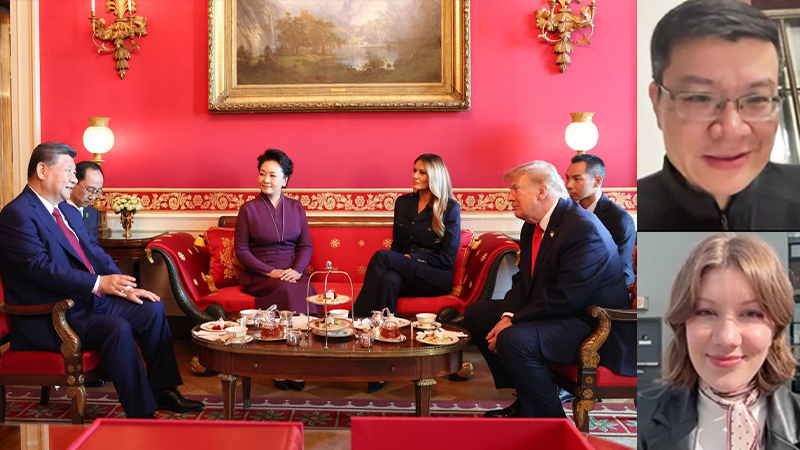
Signals Received. But Can U.S.-China Stability Last? | Da Wei
Following the Washington summit between President Xi Jinping and his U.S. counterpart Donald Trump, Prof. Da Wei of Tsinghua University sees a modest but meaningful step toward greater stability in U.S.-China relations.
Stock Market Reactions to the Russo-Ukrainian War: Evidence from Selected Emerging Markets
This study investigates stock market reactions in selected emerging markets to the Russian invasion of Ukraine. The primary objective is to evaluate the impact of the war on stock market indices in Poland, Hungary, Turkey, China, and India. Using the Autoregressive Distributed Lag (ARDL) model, the study incorporates control variables such as inflation, interest rates, exchange rates, and the S&P 500 index to provide a comprehensive analysis of market dynamics, along with…
Trade without trust: procedural coexistence and trade-security in international economic law
Purpose This paper aims to identify a predispute governance gap at the trade-security interface and develops an institutional architecture for lawful US-China trade and investment under strategic rivalry and limited trust. Design/methodology/approach It combines functional analysis of the conditions required to complete lawful transactions with comparative institutional analysis of WTO transparency and dispute settlement, investment screening, export controls, sanctions and…
Technology and the Global South: A US strategy for competitiveness
The United States and China are engaged in a strategic competition for scientific and technological leadership. To prevail, the United States must strengthen its tech-centric engagement with countries across the Global South.
Brazil Has No Answers for Its China Problem
The country’s troubling relationship to China is at the center of its presidential campaign.
Experts React: Takeaways from the Trump-Xi Summit
Stimson experts analyze what the Trump-Xi summit means for the future of US-China relations
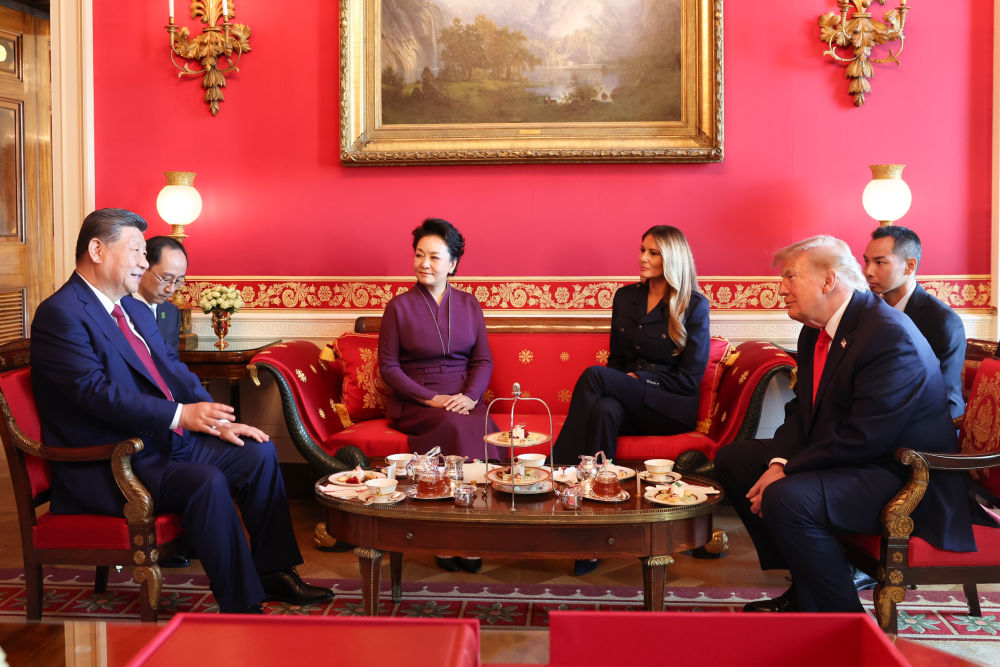
A Turning Point? Rebuilding the U.S.-China Relationship
The May and September reciprocal state visits by U.S. President Donald Trump and China’s President Xi Jinping have seemingly succeeded in cementing warm personal ties between the two leaders while stabilizing an unstable U.S.-China relationship. Historians may look back on these twin summits as per
China Conducts Military Exercise in South China Sea After Confrontation at Disputed Shoal
The "provisional understanding" between Beijing and Manila over the Philippine resupply of Second Thomas Shoal appears to have broken down.
Syndication with government and follow-on investment decision of private venture capital
Using a round-by-round dataset of China’s venture capital market between 2006 and 2024, we find that syndicating with Government Venture Capital (GVC) is significantly associated with a reduced probability of follow-on investment by incumbent Private Venture Capital (PVC). This negative association is inconsistent with generalized crowding-out by competition for high-quality assets, but rather correlates with concerns about risk and hold-up costs. This study advances…
China’s zonation strategy in the South China Sea: repurposing maritime zones for security interests
This article conceptualises zonation strategy as a state practice that repurposes maritime zones, including EEZs, straight baselines, internal waters and other administrative or quasi-legal demarcations, to produce strategic effects at sea. Existing scholarship explains how the sea came to be zoned; I ask what states do with that fact. Zonation strategy operates through three intertwined modalities: a legal-strategic modality operating both within UNCLOS and beyond it…
Agroecology as technoscience: knowledge, power, and Sino–American exchange in reform-era China
Agroecology has often been conceptualized as a bottom-up alternative to industrial agriculture, closely associated with peasant movements, food sovereignty, and grassroots resistance, particularly in Latin America. This article challenges that singular framing by examining the emergence of agroecology in China between the early 1970s and the early 1990s, with particular attention to Sino–American scientific exchange. Drawing on archival materials from South China…
Two Afghan Men and an Indian Man Jailed for Trafficking Thousands of Stolen Phones to China
KABUL, AFGHANISTAN - Three men have been sentenced to a combined 25 years in prison for their roles in what the Metropolitan Police described as the UK’s largest mobile phone smuggling network, which trafficked tens of thousands of stolen phones from Britain to China. Amir Muhammad Khadikhel, 35, Esmat Miakhel, 33, both from Afghanistan, and Mansoor Mohammad, 30, from India, were sentenced at Southwark Crown Court in London on Friday, September 25. Khadikhel received nine…
It’s an ADMM-Plus joint sail, but where were the Southeast Asians?
In an Philippine and Japan-hosted and ASEAN-led joint sail, most Southeast Asian navies were absent. So was China.
Military AI and the New Risks of US–China Competition
Volume 68, Issue 5, October 2026, Page 43-58 .
Japan’s new ambassador will test Manila’s China balancing act
As Manila and Tokyo mark the 70th anniversary of normalized diplomatic relations, elevate their ties to a Comprehensive Strategic Partnership, and face rising security tensions in the West Philippine Sea, the arrival of Kitagawa Katsuro as Japan’s new ambassador to the Philippines comes at a pivotal moment in regional geopolitics. He arrives not merely as
China ‘hinders’ PH resupply mission to Ayungin Shoal
(1st UPDATE) The PCG says a Chinese naval warship issued a radio challenge, warning it would take 'compulsory measures' to prevent the mission, while Chinese coast guard and maritime militia vessels were in the vicinity of Ayungin Shoal
Xi Jinping Goes to Washington, But Data Shows He Travels Less
A data-driven look at when, where, and why China's leader goes abroad as Trump and Xi meet.
A Comparative Legal Assessment of Renewable Energy Governance in Vietnam and China: A Five-Pillar Framework
Renewable energy transitions depend not only on capacity targets and financial incentives but also on coherent legal arrangements governing institutions, infrastructure, investment, environmental protection, and technological capability. This article develops a Five-Pillar Framework comprising Institutions and Policies, Infrastructure and Technology, Finance and Investment, Society and Environment, and Human Resources and Research and Development. It applies a comparative…
Recasting Islamic Thought in China: Conceptual Reconfiguration and Interreligious Dialogue in the Han Kitab Tradition
This article examines how Chinese Muslim scholars in the Han Kitab tradition reinterpreted Chinese concepts to articulate Islamic thought within the Chinese intellectual world. Drawing on close readings of the writings of Wang Daiyu (c.1584–1660 CE), Liu Zhi (c.1670–1724 CE), Ma Zhu (c.1640–1711 CE), and Ma Dexin (c.1794–1874 CE), it analyzes three sets of concepts: Tian; Taiji and Wuji; and sagehood, the Great Mandate, Xin, and Xing. The analysis shows that Han Kitab…
Perceived quality of AI-generated and human-written news: a cross-national experimental study among journalism students in China and Vietnam
Introduction: Generative artificial intelligence is reshaping news production, yet how journalism students evaluate AI-generated content and whether cultural-psychological factors systematically shape these evaluations remain poorly understood, particularly in non-Western contexts. Methods: This study employed a 2 (Country: China/Vietnam) × 2 (Author Type: AI/Human) × 4 (Topic: Nature/Health/Society/Finance) mixed-design ANOVA with 140 journalism and communication students…
China’s Belt and Road Initiative and U.S. Hegemonic Decline in Latin America and the Caribbean
Abstract Through trade, investment, diplomacy and technology, China has transitioned from low-end manufacturing to a Global South leader with advanced capitalist characteristics. The US has chosen confrontation over multilateral engagement to make up for its declining power and hegemony. This article critically examines the US–China rivalry in LAC as a 21st century inter-imperialist rivalry, where China has effectively penetrated the US ‘backyard’ with its Belt and Road…
Beyond “Chimerica”: U.S.–China strategic competition and African agency in a disordered world
The intensification of strategic competition between the United States and China has become one of the defining dynamics of 21st-century international relations, reshaping patterns of global governance, economic interdependence and geopolitical alignment. While existing scholarship has largely examined this rivalry through the lens of great-power competition, Africa is frequently portrayed as a passive arena in which external actors pursue competing interests. This article…
Copper, Lithium, and scholarships: Beijing’s quiet strategy in the region
China’s influence in Latin America goes beyond raw materials: it also extends, in less visible ways, to universities and scholarship programs. O post Copper, Lithium, and scholarships: Beijing’s quiet strategy in the region apareceu primeiro em Latinoamérica 21.