Results for “Russian”

The Guardian NATO Peter Beaumont Senior international correspondent

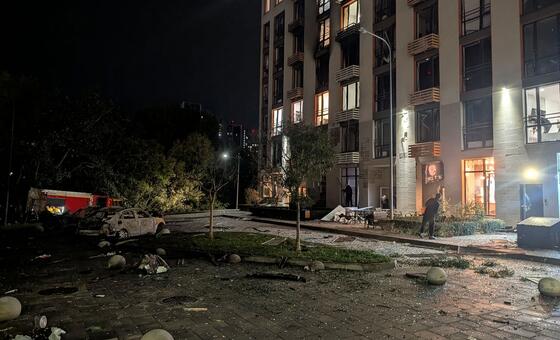
Nato increases Black Sea deployment amid escalating deadly Russian attacks

Mounting anxiety as Russia’s war on Ukraine reaches Nato’s borders with targeting of vessels transporting agricultural cargo Nato is deploying additional military assets to the Black Sea amid the recent deadly escalation of Russian attacks on merchant shipping, as five more vessels were attacked on Tuesday. Russia’s military said it ⁠struck ​three cargo vessels in Ukraine’s ⁠port of Reni and two ⁠other cargo vessels en ​route ‌to ‌Odesa.

Read at The Guardian NATO

Riddle Russia editor18 Geopolitics

Russian stakes in Serbia’s elections: ‘coloured revolution’ narrative versus ‘balancing act’

Denis Cenusa on how Moscow’s disinformation and energy leverage aim to keep Vučić in power and Serbia from becoming ‘another Hungary'

Read at Riddle Russia

Riddle Russia editor18 Geopolitics

Sanctions Without Incentives

Alexey Uvarov on how the EU’s sanctions against Russian businessmen work

Read at Riddle Russia

Hong Kong Free Press AFP Geopolitics

Trump says ready to meet with Putin, Xi in China ‘to negotiate on behalf of Ukraine’

US President Donald Trump indicated Monday he is ready to meet Russia’s Vladimir Putin and China’s Xi Jinping in China next month, saying any summit would focus on denuclearization but could also include the Ukraine war. Trump also renewed his criticism of Ukrainian President Volodymyr Zelensky — whose country has been fighting off a Russian

Read at Hong Kong Free Press

Journal articles (OpenAlex) Olivier Schmitt · Cooperation and Conflict Geopolitics

Transforming strategic culture: France after the Russian invasion of Ukraine

This article asks whether Russia’s 2022 full-scale invasion of Ukraine constitutes a critical juncture for French strategic culture. It argues that the answer is yes, but unevenly. Building on a dynamic, non-essentialist conception of strategic culture as a constellation of narratives and practices, the article distinguishes between two intertwined levels: the political–strategic level (national role conceptions, autonomy, deterrence, and institutional authority) and the…

Read at Journal articles (OpenAlex)

Journal articles (OpenAlex) Francesca Colli, Flavia Faraone, Chiara Jungbluth et al. · European Security Geopolitics

Guns, butter and the Russian threat: how European peace movements contest defence spending

As Europe ramps up its defence spending and public concern about security rises, a crucial part of the debate remains under-examined: how peace movement organisations (PMOs) position themselves in this shifting landscape. Despite their long-standing role in contesting militarisation, little is known about how PMOs engage with today’s dominant security narratives in Europe. This paper addresses this gap by analysing how PMOs in Europe frame their opposition to increased…

Read at Journal articles (OpenAlex)

Journal articles (OpenAlex) Natalia Wright · International Journal of Politics Culture and Society Geopolitics

‘London Goodbye’: How Russian Social Media Users Perceive the Securitisation of English

Abstract Russia’s securitisation of English needs to be understood within a broader geopolitical and ideological confrontation between Russia and the West. Western support for Ukraine following Russia’s 2022 invasion intensified Russia’s efforts to distance itself from Western influence and promote traditional values, with the Russian language increasingly positioned as a symbol of national identity. These efforts extended to English through measures including reductions in…

Read at Journal articles (OpenAlex)

The Guardian NATO Peter Beaumont Senior international correspondent

Intensifying drone attacks on ships in Black Sea bring war ever closer to Nato shores

Six attacks in 10 days by suspected Russian drones mark dramatic escalation in maritime conflict The first the crew of the Bulgarian ferry Dioscuria knew of an attack on a cargo ship in their country’s exclusive economic zone in the Black Sea in the early hours of 6 October was a distant explosion 70 miles off the coastal town of Byala. The Turkish-owned Alfa Watan, heading for the Romanian port of Sulina, had been struck by suspected Russian air and naval drones. Arriving…

Read at The Guardian NATO

UN News Human Rights

Ukraine: Civilian casualty rates among ‘deadliest’ in years, as energy attacks intensify

Civilian casualties in Ukraine remain at record levels, with intensified Russian attacks in September continuing a pattern of harm in 2026 far exceeding previous years, UN human rights monitors in Ukraine said on Friday.

Read at UN News Human Rights

The Guardian Poland Richard Partington in Warsaw

Poland’s ascent from communist state to top 20 economy reverses the brain drain

In the final part of our series on the country, Poles tell how wages have soared – along with the cost of living Will military spending help or hinder Poland’s growth story? Poland’s push for EU energy resilience amid Russian aggression Above the rain-soaked streets of Warsaw, the observation deck of the Varso tower overlooks Joseph Stalin’s gift to Poland that has divided opinion for decades. For some, the Soviet-era Palace of Culture and Science is a drunk confectioner’s…

Read at The Guardian Poland

Journal articles (OpenAlex) Bernardina Algieri, Lukas Kornher, Joachim von Braun · Agricultural Economics Geopolitics

Major Global Disruptions and Food Security Links–How the Iran War and Chokepoint Tensions May Affect Global Hunger

ABSTRACT The escalation of conflict in the Middle East in 2026 and the disruptions affecting major maritime chokepoints, particularly the Strait of Hormuz and the Bab el‐Mandeb/Red Sea corridor, threaten global food security through higher energy, fertilizer, and shipping costs. We argue that the shock is more structural than previous crises because it simultaneously affects core agricultural inputs and trade routes, unlike the 2022 price spike in the wake of the Russian…

Read at Journal articles (OpenAlex)

Journal articles (OpenAlex) Myrzantay Zhakyp · International Communication Gazette Geopolitics

Socioeconomic frames of Russia's post-2022 migration to Kazakhstan: A four-language news comparison

This article examines how Kazakh-, Russian-, Turkish-, and English-language news media framed migration from Russia to Kazakhstan after the 2022 full-scale invasion of Ukraine and Russia's September 2022 mobilization. A qualitative comparative framing analysis of 26 news texts published from September 2022 to February 2026 identifies five linked frames: urban economic pressure; entrepreneurial and labor opportunity; legal-economic incorporation; social stratification; and…

Read at Journal articles (OpenAlex)

Journal articles (OpenAlex) Bektosh Rahimov, Otabek Khaliyorovich Allayarov, Aslamkulova Parvina Jamshid qizi et al. · Interpersona An International Journal on Personal Relationships Geopolitics

Comparative review of the history of foreign companies in the Turkestan Governor-Generalship (1867–1917): colonial economic transformation, institutional networks, and imperial modernization

The history of foreign companies in the Turkestan Governor-Generalship (1867–1917) represents a significant yet insufficiently explored dimension of the Russian Empire’s colonial economy. Existing scholarship has predominantly examined individual enterprises, the cotton industry, or imperial administrative reforms, while comparative analyses of foreign commercial actors, their institutional strategies, and their contribution to colonial economic transformation remain…

Read at Journal articles (OpenAlex)

Just Security Michael Schmitt Geopolitics

Fueling Russia’s War: The Russian Diesel Deal and International Law

By lifting export restrictions on Russian diesel, the United States arguably bears responsibility for aiding and assisting Russia's unlawful use of force against Ukraine.

Read at Just Security

UN News Humanitarian Aid

Ukraine: Residents killed and dozens injured in attacks on Kharkiv and Kyiv

Russian attacks in recent days on on Ukraine’s two largest cities have again killed and injured civilians, damaged homes and civilian infrastructure, the UN aid coordination office (OCHA) said on Tuesday.

Read at UN News Humanitarian Aid

Journal articles (OpenAlex) Gina Alberola · The Polar Journal Geopolitics

Beyond the Northern Sea Route: can China sustain Arctic partnerships with Nordic states while maintaining cooperation with Russia?

This paper examines whether China can maintain cooperation with Nordic states in an era of sanctions, securitisation, and mistrust. The analysis begins from the observation that China’s access to Arctic resources, transport corridors, and industrial projects remains largely mediated through Russia’s Arctic regions (LNG, Northern Sea Route, port infrastructure). Nordic states have become increasingly cautious towards both Russian presence and Chinese strategic investment…

Read at Journal articles (OpenAlex)

Journal articles (OpenAlex) Małgorzata Głowacka-Grajper, Małgorzata Łukianow · Heritage & Society Geopolitics

(Un)Usable Past: Post-Imperial Russian Heritage in the Narratives of Multiculturality in Polish Cities

The paper examines how local heritage practitioners in two Polish towns, Białystok and Łódź, recount the nineteenth-century history of Tsarist rule, with a particular focus on two interconnected aspects of life in the Russian empire: modernization and cultural diversity. Both cities experienced tremendous economic development during Russian rule and became multicultural local metropolises. The authors analyze how these facets are remembered, forgotten, or strategically…

Read at Journal articles (OpenAlex)

Journal articles (OpenAlex) Gabriella Gricius · The Polar Journal Geopolitics

Desecuritizing Svalbard: the limits of expertise

Despite escalatory media coverage characterising Svalbard as a potential flashpoint between Russia and the West, official Norwegian and Russian policy has remained strikingly low-tension. This article argues that long-standing desecuritization practices, active state-directed efforts to frame Svalbard as a domestic administrative matter rather than a security concern, explain this persistence. Drawing on a discourse analysis of 48 Norwegian and Russian policy documents and…

Read at Journal articles (OpenAlex)

The Guardian Lebanon William Christou in Beit Chabab

Lebanon’s only church-bell maker on keeping a 300-year family tradition alive

Naffah Naffah makes the bells in the mountains near Beirut. His sons will take over the foundry when he retires The story of Lebanon’s last remaining church-bell maker begins with a rifle. In the 18th century, Youssef Gabriel, a local metalworker, was secretly making and equipping Arab revolutionaries with rifles to assist their revolt against the Ottoman empire, which controlled Lebanon at the time. Then, one day, a Russian engineer came to the Lebanese town of Beit Chabab…

Read at The Guardian Lebanon

IranWire

Baghaei: US Request for Russian Help Proof of Strait of Hormuz Crisis

Esmail Baghaei, the spokesperson for the Ministry of Foreign Affairs of the Islamic Republic, referring to the US request for assistance ...

Read at IranWire

Journal articles (OpenAlex) Andrey S. Makarychev, Giorgi Beridze · Global Discourse Geopolitics

The empire comes south: Russian migration, security and belonging in Georgia

The dramatic inversion of traditional postcolonial migration flows, in which citizens of a former empire seek refuge in a formerly colonised nation, challenges Georgia’s fundamental concern for existential security. This dynamic produces new regimes of belonging and mobility, creating room for selective biopolitical inclusion of those Russians who visibly reject Putin’s regime. The article identifies six ways in which the Georgian case challenges dominant scholarship on…

Read at Journal articles (OpenAlex)

Journal articles (OpenAlex) Andrea Blasco, Michal Wiktor Krawczyk, Hannah U. Nohlen · Journal of Experimental Political Science Geopolitics

How Do (Mis-)Perceptions of Refugee Gender Composition Shape Attitudes? Evidence from a Survey Experiment

Abstract People’s perceptions of others, particularly those from other countries, can shape their attitudes and willingness to offer solidarity. We study public beliefs about the gender composition of forcibly displaced populations in a large online survey experiment. Participants ( n = 13,008) representative of the adult population of six EU countries, consistently underestimated the share of women among the people displaced by the Russian war on Ukraine. We show that a…

Read at Journal articles (OpenAlex)

The Guardian NATO Robert Tait in Washington, and Oliver Holmes Geopolitics

Zelenskyy furious as Trump announces deal to buy Russian diesel

US president says agreement needed to lower fuel prices, but move likely to create fresh crisis with Ukraine and Nato allies Donald Trump is on a fresh collision course with Volodymyr Zelenskyy and European allies after his stunning agreement to buy Russian diesel upended years of US and western pressure on the Kremlin to end its war against Ukraine. Zelenskyy reacted furiously to Trump’s announcement of the deal with Vladimir Putin on Friday, calling it “absolutely…

Read at The Guardian NATO

The Guardian NATO Guardian staff and agencies Geopolitics

Ukraine war briefing: Kyiv blasts peace talks as just ‘smokescreen’ for Trump‘s Russian diesel deal

Trump’s announcement a betrayal of Ukraine, Democrats say; Ukraine strikes major datacentre in Russia. What we know on day 1,690 Ukrainian peace negotiators in Miami have been used as a “smokescreen” for a “weak” decision by Donald Trump to lift diesel sanctions on Russia, Volodymyr Zelenskyy said in a furious response to the US president’s backflip on Russian sanctions. In a move likely to create a fresh crisis with Washington’s Nato allies, Trump announced the deal with…

Read at The Guardian NATO

Journal articles (OpenAlex) Volha Kananovich · Digital Journalism Geopolitics

From Grassroots Sleuthing to Global Uptake: Epistemic Legitimation of Open-Source Investigations in Journalism Through Mediazona’s War Casualty Project in Russia’s War on Ukraine

This study examines how open-source investigation (OSINV) is legitimized within journalism through an analysis of a casualty-counting project by Mediazona, an exiled independent Russian newsroom documenting Russian military deaths in Ukraine. Drawing on Mediazona’s public-facing project materials and coverage by seven international news organizations, the analysis traces how epistemic authority is established and re-anchored as the project circulates across journalistic…

Read at Journal articles (OpenAlex)

Journal articles (OpenAlex) Mykola Makhortykh, Aytalina Kulichkina, Kateryna Maikovska · Information Communication & Society Geopolitics

From mobilization to diversion: a comparative study of wartime communication tactics of Ukrainian and Russian political elites on Telegram

This study examines how Ukrainian and Russian political elites communicate on Telegram during the ongoing Russo-Ukrainian war. Using a dataset of Telegram public posts from 2019 to 2024, we analyze changes in communication volume, thematic content, and actor engagement before and after Russia’s 2022 full-scale invasion. While the invasion triggered a massive spike in elites’ activity on Telegram in both countries—most notably among actors associated with Russia’s ruling…

Read at Journal articles (OpenAlex)

KabulNow Besmellah Zahidi Geopolitics

Taliban, Russian Officials Discuss Security Cooperation Amid Deepening Ties

Taliban Foreign Minister Amir Khan Muttaqi met Russian Security Council Secretary Sergei Shoigu in Moscow on Tuesday to discuss bilateral relations, regional security, counter-narcotics efforts and security cooperation, the Taliban foreign ministry said.

Read at KabulNow

Journal articles (OpenAlex) Kathrine Vitus, Shosha Raymond Katznelson, Nataliia Varha · Journal of Ethnic and Migration Studies Geopolitics

Displacement-youth transition junctures among Ukrainians in Denmark

This article examines how young Ukrainian people displaced to Denmark after the Russian invasion in February 2022 narrate their transitions into adulthood while resettling under temporary protection. Drawing on qualitative longitudinal interviews (2022–2025) with 15 participants aged 15–28, we combine the concept of mobile transitions with a narrative approach to analyse how young people link past, present, and future when conventional transition pathways are disrupted…

Read at Journal articles (OpenAlex)

Older stories