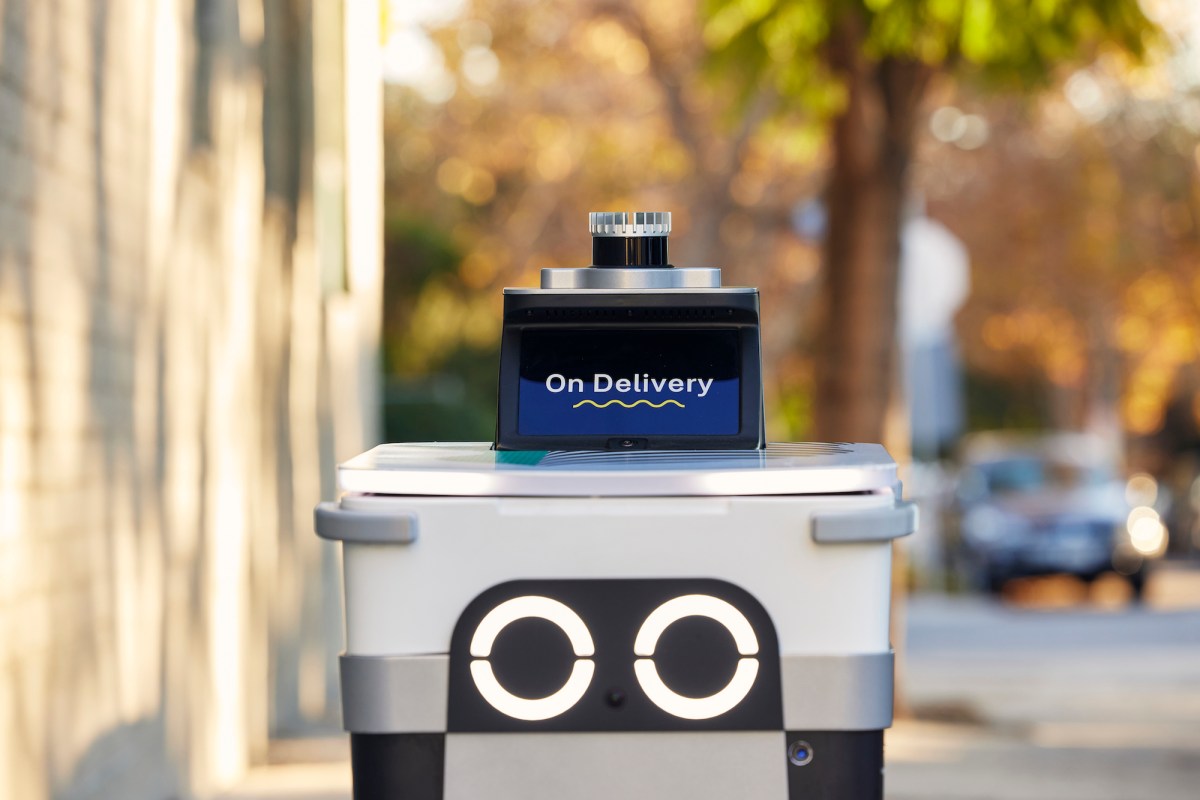
Serve Robotics launches new business to become the AWS for robots
Serve Robotics announced alonsgside its third-quarter earnings that it will launch a new business line called Physical AI Services to offer customers its connectivity and data tools.
Serve Robotics announced alonsgside its third-quarter earnings that it will launch a new business line called Physical AI Services to offer customers its connectivity and data tools.
US leader in deploying humanoid robots goes public on the Nasdaq stock exchange.
SoftBank Robotics develops humanoid and service robots. SoftBank said the acquisition would broaden its industrial automation capabilities.
HARTING will unveil new PCB versions of its Han Miniature Power Connector (MPC) at electronica 2026 in Munich, targeting humanoid robots and unmanned aerial vehicles (UAVs). The company will also showcase connectivity solutions for industrial automation, semiconductor manufacturing and AI infrastructure at the event, running November 10–13. The developments are relevant to electronics engineers looking
ABSTRACT Biohybrid robots combine engineered living tissues with synthetic materials and have emerged as a promising class of soft robotic systems capable of mimicking biological functions such as biodegradability, energy efficiency and flexible motions. By integrating biological and synthetic components, these systems leverage complementary properties to perform key robotic functions including locomotion and task execution. Despite rapid progress, important limitations…
Abstract Accurate dynamic models are essential for high-performance control, both for trajectory tracking and physical human–robot interaction involving collision detection, reaction, and force control. This work presents a comprehensive framework for dynamic modeling and identification of the KUKA LWR 4+ collaborative robot based on two complementary approaches. The first exploits signals provided by the KUKA Fast Research Interface, combined with nonlinear joint-friction…
Battery capacity is the binding constraint on how long a fleet of mobile robots can work between charges. In wirelessly connected fleets, the robot battery is shared between three competing consumers: locomotion, onboard computation, and the radio. All energy figures in this paper refer exclusively to the robot battery; the edge server is mains-powered and outside the optimisation scope. Offloading perception to the edge server removes computation from the battery, but it…
Terrestrial bioinspired robots emulate the locomotion strategies of land animals and have potential applications in disaster response, planetary exploration, and inspection of complex terrain. This review examines the biological basis of six representative locomotion modes: multi-legged walking and running, elastic jumping, ground-coupled gliding, interface-mediated climbing, peristaltic crawling, and adaptive morphogenesis. It introduces dimensionless descriptors of their…
Construction robots need space for travel, operation, charging, maintenance, and separation from workers, yet these requirements are rarely planned explicitly on construction sites. Building information modeling (BIM)-based site layout planning formalizes constraints for conventional facilities, and BIM–robot studies address task planning and navigation, but the relations among robot spatial requirements, the volumes reserved for them, and the conditions under which these…
Abstract Robotic systems are increasingly integrated across various sectors, from manufacturing to logistics, yet robot navigation in construction environments remains challenged by issues such as safety concerns, high energy consumption, and suboptimal operational efficiency. To address these challenges, this study introduces a global path-planning framework for mobile robots based on a four-wheel four-steering (4W4S) kinematic model. The proposed framework combines…
Teleoperating a five-fingered robot hand to collect demonstrations is costly and scales poorly, while human video is abundant yet contains neither robot commands nor robot images. Existing approaches overlay rendered robots on human video, mainly for parallel-jaw grippers; reconstruct object meshes or point clouds in place of the original RGB; or require a wearable exoskeleton during capture. We present a pipeline that composes stationary RGB-D video of a bare human hand…
Legged robots are increasingly inspired by insects’ ability to combine rigidity and compliance for agile, damage-tolerant locomotion in cluttered terrain. Herein, we introduce INSECTRON, a centimeter-scale hexapod robot that employs magnetic transmission to achieve robust mobility with minimal mechanical complexity. Each leg connects to the drivetrain via neodymium magnets, forming a self-aligning micro-clutch that transmits torque under normal load and safely slips under…
Amidst the fast-paced advancements in mobile robot technologies, route optimization, which forms the crux of autonomous navigation, must strike a balance between obstacle avoidance safety, travel distance, and movement efficiency. This study proposes a dual-layer hybrid route optimization model that combines an improved Beetle Antennae Search and an improved Sine Cosine Algorithm. The model uses Opposition-Based Learning to optimize the initial population. It applies an…
This paper presents a unified framework for trajectory tracking and static obstacle avoidance of differential-drive mobile robots. A nominal exact-decoupling controller achieves pure exponential longitudinal convergence and globally avoids angular singularities via a stereographic projection; its cascade structure is proved globally asymptotically stable, and a time-scale separation analysis yields an explicit lateral settling-time constant, enabling prescribed convergence…
Abstract Unmanned aerial vehicles (UAVs) require efficient and reliable path planning mechanisms for safe navigation in obstacle-constrained environments. This study presents an Adaptive Block Coordinate Descent Logistic Regression (ABCD-LoR) model for reactive path planning in static environments using low-cost sensor inputs. The proposed approach formulates obstacle avoidance as a three-class classification problem (no turn, left turn, right turn), where navigation…
Abstract Learning is the basis of both biological and artificial systems when it comes to mimicking intelligent behaviors. From the classical PPO (proximal policy optimization), there is a series of deep reinforcement learning algorithms which are widely used in training locomotion policies for quadrupedal robots because of their stability and sample efficiency. In this paper, we introduce entropy-controlled intrinsic-motivation (ECIM), an entropy-based reinforcement…
The development of athletic humanoid robots has gained increasing attention as advances in actuation, sensing, and control enable increasingly dynamic and practical capabilities. RoboCup, an international competition for fully autonomous robotic systems, provides a challenging benchmark for embodied intelligence, requiring robots to perceive, decide, and act in uncertain and dynamic scenarios. This paper presents the hardware and software innovations underlying an…
BACKGROUND: Autonomous agricultural robots support precision farming and improve operational efficiency; however, reliable navigation in complex field environments remains challenging because of inconsistent lighting, variable soil textures, irregular crop growth patterns, and visual occlusions. These conditions hinder accurate crop row detection, semantic segmentation, and navigation line extraction. This study proposes an Autonomous Agricultural Robot Framework Featuring…
Rick and Marcia LeCompte loved to watch the Cooper’s hawks that frequented a sweet-gum tree in their yard in Baton Rouge, La. But this October, the hawks were gone. Marcia LeCompte is convinced the birds were scared away by the same flying robots that have been vexing the couple since early September. The noise had them spending less time outside in their garden, and even inside their home, they couldn’t escape the near-constant buzzing. Angry and feeling harassed, the…
British robotics company Earth Rover has sold its first 10 CLAWS robots, with another 15 under construction. The autonomous machine kills weeds using concentrated pulses of light rather than lasers, herbicides or mechanical tools. The company claims lower energy consumption than laser-based systems.
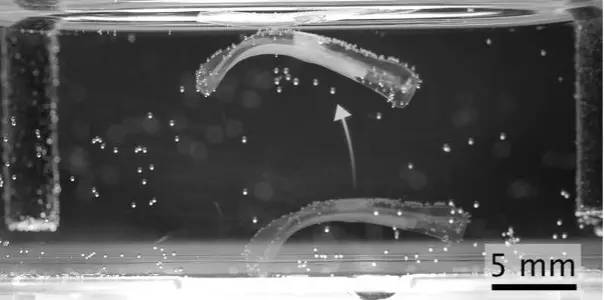
The biohybrid robot pushes off from the ground as soon as it is stimulated by an electrical impulse. Credit: Nature Communications (2026). By Emmet Cole In our monthly series, we showcase a selection of robotics stories from society, business, research and culture, as we track the field’s ongoing journey from specialized industrial machines to an
Modern robotic systems increasingly rely on transformer-based AI models to process sensor input and support high-level decision making. However, due to limited GPU resources in each ego robot, it is difficult to run a large model locally. Outsourcing the model inference to cloud providers could address this issue, which however suffers from limitations including unreliable network connection, high latency, and high monetary cost. In this work, we have developed an effective…
The diversity of industrial robot manufacturers, proprietary programming languages, and graphical interfaces complicates robotic system deployment and operation. This heterogeneity highlights the need for intuitive, accessible, and human-centric interaction methods. This paper presents a framework for natural language-based monitoring and selected control of autonomous mobile robots using a Large Language Model (LLM) interface, structured API communication, and digital twin…
Aircraft-skin maintenance requires complete surface-cell visitation, admissible cross-component transfers and local exclusion bypasses. This study develops an offline open complete-coverage planner on the NASA Common Research Model using a multi-strategy whale optimization algorithm (MSWOA). The method integrates aircraft-surface continuity preference with transition consistency (ASCP-TC) for topology-aware seeding, permutation-aware rank rejuvenation (PARR) for discrete…
The Robot4Plants consortium (intervention IRP38, Common Agricultural Policy (CAP) Strategic Plan of Slovenia) introduced agricultural robots and unmanned aerial systems (UASs) on partner farms and at public events in 2026. This Project Report documents that commissioning and demonstration phase at six purposively selected locations. Evidence comprises operator and advisor records, farm management records, an application record, robot telemetry, and photographs. An AgXeed…
For upper limb rehabilitation robots, surface electromyography (sEMG) is an essential signal source to assess motor-intent perception by the patients; however, the signals collected from patients are noisy and are different from person to person. Stable intent recognition is thus important with the use of reliable signal processing. This review poses the question of what denoising and information enhancement can do for sEMG-based motor-intent perception. It first outlines…
With the accelerating intelligent transformation of global manufacturing, industrial robots have become critical equipment in modern smart factories. However, the growing prevalence of multi-variety, small-batch production has made the high programming threshold, tedious reconfiguration, and limited environmental adaptability of traditional industrial robots increasingly prominent. Over the past few years, large language models (LLMs) have proven to have strong semantic…
This paper presents a trajectory tracking control strategy for non-holonomic mobile robots with unavailable orientation angle measurements. An observer is developed to reconstruct the trigonometric terms required by the controller, while the Fourier-series-based reinforcement learning scheme performs online estimation of unknown nonlinear terms, and the controller compensates for bounded external disturbances. The nonlinear system is transformed into lower dimensional…
The behaviour of humans when collaborating with other actors such as other humans or robots has been studied for decades and remains critical for unlocking mixed human-robot team performance. To achieve better, more effective human-robot collaboration (HRC) in industrial settings, a robot needs to have robust models to predict human behaviour when working towards a shared goal. Inferring and modelling human intentions is expected to play a pivotal role in accurately…