Results for “Strait”

Inquirer Global Nation dlejano Geopolitics

S. Korea to deploy military mission to help keep Strait of Hormuz open

SEOUL — South Korea’s defense ministry said Thursday it would deploy maritime patrol aircraft and an explosive ordnance disposal team to waters near the Strait of Hormuz as part of a mission to help keep the waterway open. The announcement comes as Seoul maintains it will not deploy troops to intervene militarily in the Iran war,
Read at Inquirer Global Nation

Asia Times Gabriel Honrada Geopolitics

China’s amphibious surge confronts a Taiwan invasion’s hard math

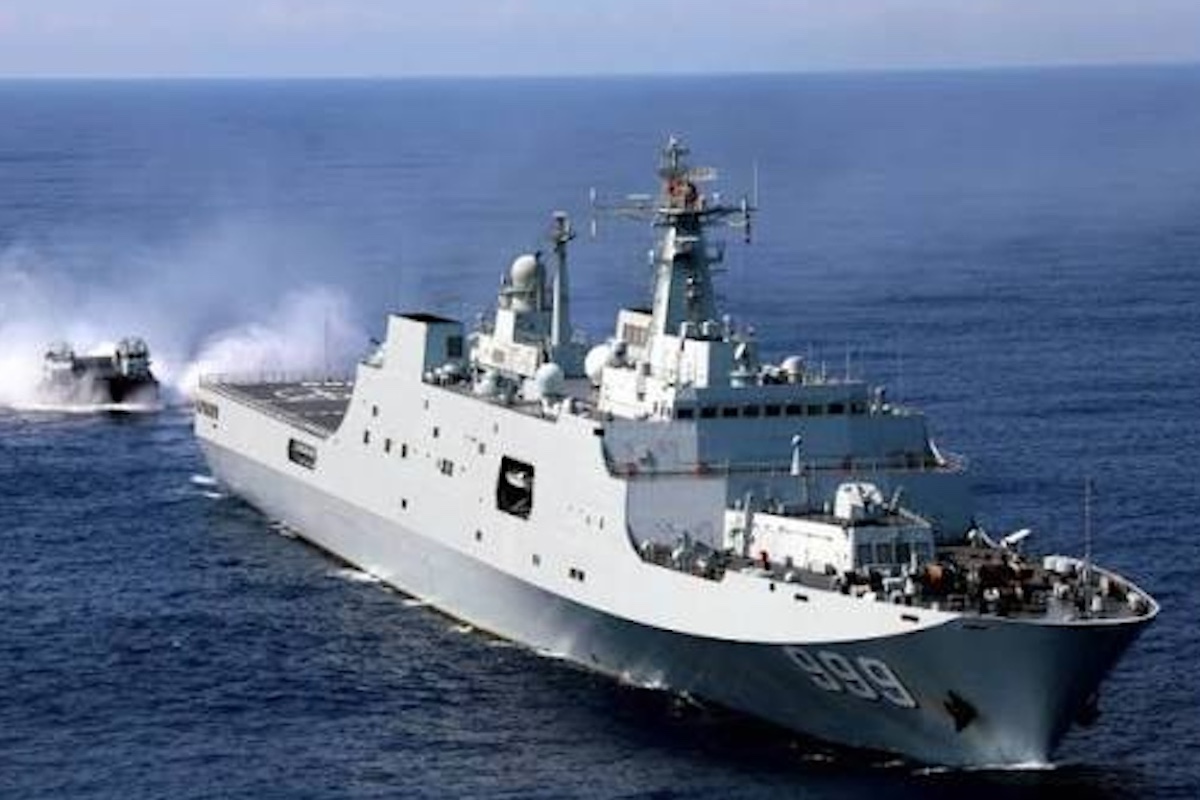
China’s sudden surge in amphibious warship construction has thrust a foundational military question to the forefront: can sheer industrial mass and converted civilian shipping overcome the lethal tactical choke points of a cross-strait invasion? The South China Morning Post (SCMP) reported that China is significantly expanding production of its Type 071 amphibious transport dock warships

Read at Asia Times

The Guardian Asia-Pacific Agencies Geopolitics

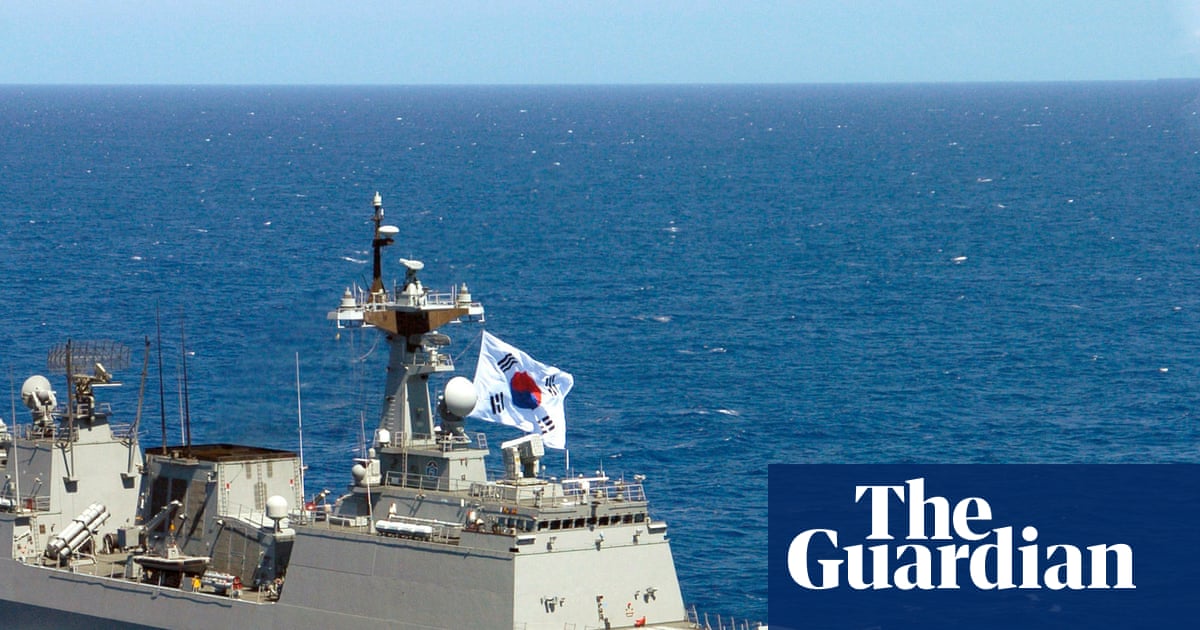
South Korea says it will expand naval operations closer to strait of Hormuz

Seoul to seek parliamentary approval to extend anti-piracy Cheonghae unit’s area to about 650km from the vital strait after criticism from Donald Trump on Iran war support South Korea plans to expand the operations ⁠of its anti-piracy unit to waters closer to the strait of Hormuz, its defence ministry has said, after pressure from Donald Trump to ⁠provide support for his war in Iran. The government is to submit a motion to parliament that would expand the Cheonghae unit’s…

Read at The Guardian Asia-Pacific

Inquirer Global Nation dlejano Geopolitics

Iran says tankers destroyed after hitting mines in Strait of Hormuz

TEHRAN — Four oil tankers caught fire after hitting mines while attempting to pass through the Strait of Hormuz, Iran said Wednesday, after it warned no one would benefit from a return to war. It came a day after President Donald Trump said the United States had launched strikes on the Islamic republic, following reports

Read at Inquirer Global Nation

Asia Times Jake Johnson Geopolitics

Hours before midterm elections, Trump bombs Iran’s Qeshm Island

The Trump administration launched a new bombing attack on Iranian territory Monday night, striking Qeshm Island in the Strait of Hormuz on the eve of the US midterms amid mounting fears of a massive post-election assault. The Wall Street Journal was first to report the strikes, which a US official characterized as a “defensive measure”

Read at Asia Times

Just Security Ammanuel Desta Geopolitics

Early Edition: November 2, 2026

Sign up to receive the Early Edition in your inbox here. A curated weekday guide to major news and developments over the weekend. Here’s today’s news: IRAN WAR Iran’s Islamic Revolutionary Guard Corps Navy yesterday said two oil tankers “exploded” after striking mines while travelling through an “unauthorized route” in the Strait of Hormuz. Yasmine Ghania

Read at Just Security

The Guardian Yemen Patrick Wintour Diplomatic editor Geopolitics

Gulf states working on multipart peace deal to avert renewal of US-Iran war

Talks are aimed at reopening strait of Hormuz and lifting sanctions on Iran, and for Houthis to withdraw in Yemen A multipronged peace deal to reopen the strait of Hormuz within four days of sanctions being lifted and for the Houthis to withdraw substantial forces inside Yemen are at the heart of Gulf states’ plans to avert what they regard as a disastrous renewal of war between Iran and the US. The US is aware of the talks’ progress but is holding out for a concession that…

Read at The Guardian Yemen

Amwaj.media Amwaj.media Staff

In Iran, Houthi gains seen as boost to ‘Axis of Resistance’

The story: Iranian media have seized on the Ansarullah movement’s rapid advance along Yemen’s Red Sea coast, portraying the gains as a major setback for the US and its Saudi ally—and a new source of leverage around the strategically important Bab Al-Mandab Strait. But while some of the most hardline commentary has cast the developments as part of the wider regional war, the messaging of...

Read at Amwaj.media

Amwaj.media Amwaj.media Staff

Iran War Sitrep: Backchannel contacts with US denied as Iran braces for fiery holiday

In collaboration with prominent Iranian academic and scholar Dr. Hamidreza Azizi, Amwaj.media endeavors to publish daily situation reports on the Iran War on Mondays-Fridays. The focus will be on Iranian strategic narratives. The economy-related dimensions Iranian tankers carrying crude destined for China continue to pass through the Strait of Hormuz even as the waterway remains effectively...

Read at Amwaj.media

Amwaj.media Amwaj.media Staff Geopolitics

Conservatives in Tehran up pressure as Iranian, US negotiators gather in Geneva

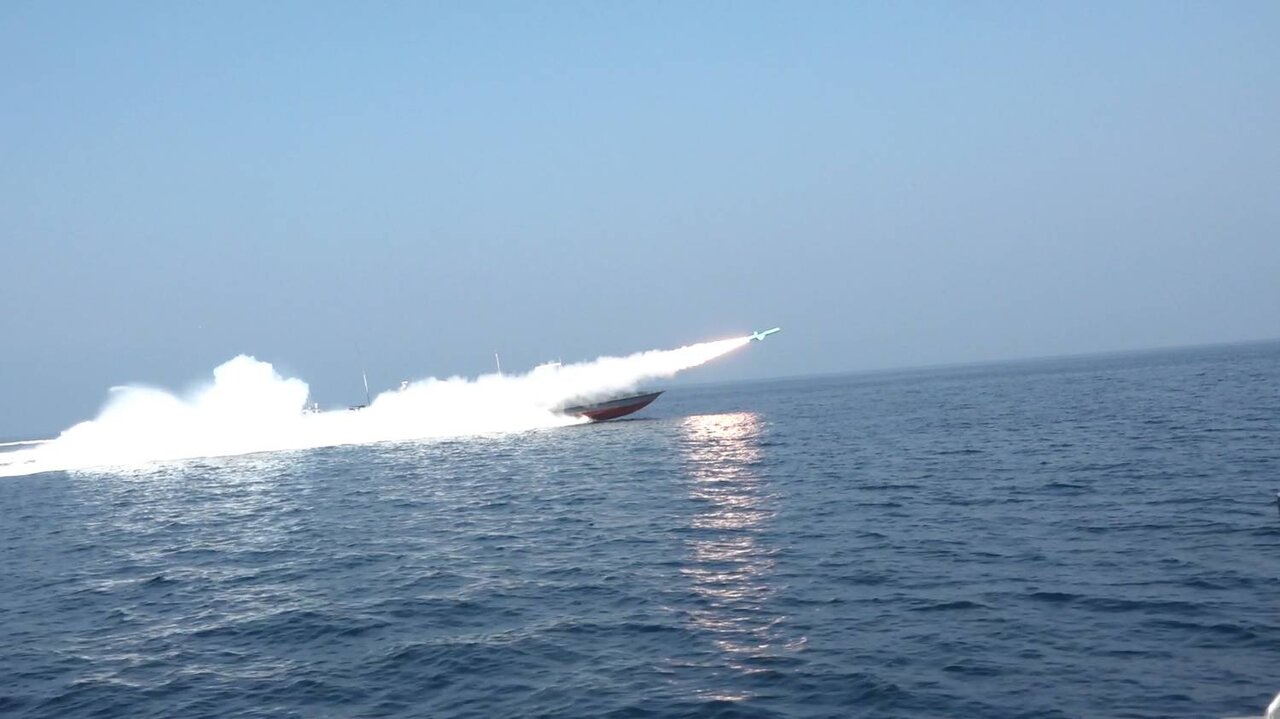
The story: Iran’s conservative-dominated judiciary is moving to prosecute individuals who were detained during the recent nationwide unrest. Several of the defendants are said to be facing potential death sentences. This is while US President Donald Trump has been suggesting that Iran’s Reformist administration will hold back on executions of detainees. In parallel, the Islamic Revolutionary Guard Corps (IRGC) has launched naval maneuvers in the strategic Strait of Hormuz…

Read at Amwaj.media

Journal articles (OpenAlex) Bernardina Algieri, Lukas Kornher, Joachim von Braun · Agricultural Economics Geopolitics

Major Global Disruptions and Food Security Links–How the Iran War and Chokepoint Tensions May Affect Global Hunger

ABSTRACT The escalation of conflict in the Middle East in 2026 and the disruptions affecting major maritime chokepoints, particularly the Strait of Hormuz and the Bab el‐Mandeb/Red Sea corridor, threaten global food security through higher energy, fertilizer, and shipping costs. We argue that the shock is more structural than previous crises because it simultaneously affects core agricultural inputs and trade routes, unlike the 2022 price spike in the wake of the Russian…

Read at Journal articles (OpenAlex)

Just Security Ammanuel Desta Geopolitics

Early Edition: October 14, 2026

Sign up to receive the Early Edition in your inbox here. A curated weekday guide to major news and developments over the last 24 hours. Here’s today’s news: IRAN WAR Iran is deploying new tactics to target ships sailing through the Strait of Hormuz as it seeks to keep oil prices high and influence the U.S.

Read at Just Security

Journal articles (OpenAlex) Shuangling Wu · Asian Security Geopolitics

Taiwan and Ukraine: reassessing the analogy through realist and constructivist lenses

Since the 2022 Russia–Ukraine war, scholars and political commentators have drawn parallels between Ukraine and Taiwan. Yet no comparable conflict has occurred in the Taiwan Strait. This article applies a realist lens of power transition and a constructivist lens of legitimacy and identity to reassess the analogy. It asks why Russia has used force against Ukraine while the PRC has not, and whether the conditions that shaped Ukraine’s wartime experience could be reproduced in…

Read at Journal articles (OpenAlex)

IranWire

Tanker Struck in Strait of Hormuz Amid Fresh IRGC Maritime Threats

The United Kingdom Maritime Trade Operations (UKMTO) announced on Monday, October 12, 2026, that an oil tanker was struck by an unidenti ...

Read at IranWire

IranWire

IRGC Targets Third Tanker in Strait of Hormuz, Warns US Allies

The Islamic Revolutionary Guard Corps (IRGC) Navy announced that, on the morning of Monday, October 12, it targeted another large oil ta ...

Read at IranWire

IranWire

Baghaei: US Request for Russian Help Proof of Strait of Hormuz Crisis

Esmail Baghaei, the spokesperson for the Ministry of Foreign Affairs of the Islamic Republic, referring to the US request for assistance ...

Read at IranWire

IranWire

IRGC Navy Warns Ships Turning Off Navigation Systems in Strait of Hormuz

Concurrent with a drone attack on an oil tanker near the Port of Sohar in Oman, the Commander of the Islamic Revolutionary Guard Corps ( ...

Read at IranWire

Journal articles (OpenAlex) Sungmin Cho · Pacific Affairs Geopolitics

Accidental Conflict in the Taiwan Strait and on the Korean Peninsula: A Comparative Analysis

The potential for simultaneous conflicts in the Taiwan Strait and on the Korean Peninsula has emerged as one of the most critical security challenges in East Asia. While analysts have primarily focused on how North Korea might respond to a Taiwan contingency, less attention has been paid to the reverse scenario: how China might react in the Taiwan Strait if North Korea attacks South Korea. For a more balanced analysis, this article compares the structural and political…

Read at Journal articles (OpenAlex)

Journal articles (OpenAlex) Ibraheem T. AlAskar, Ahmad Bash, Ibrahim Naser Khatatbeh · Cogent Economics & Finance Geopolitics

From Strait of Hormuz to KOSPI: sectoral responses of the South Korean stock market to the 2026 Iran strikes

This paper examines how the South Korean stock market responded to the 28 February 2026 U.S.–Israel strikes on Iran, asking whether an oil-supply shock is priced mainly through Korea's status as an oil importer or through firm-level characteristics, particularly in petroleum refining and energy. Using a market-model event study of 784 firms on the Korea Composite Stock Price Index (KOSPI), we estimate abnormal returns over a 250-day window, with 200-day and 100-day windows…

Read at Journal articles (OpenAlex)

Journal articles (OpenAlex) Henry Kankwamba, Ruth Magreta-Jambo, Beston B. Maonga et al. · Applied Economics Letters Geopolitics

Impact of the 2026 Iran War on Malawi: an economy‑wide perspective

The 2026 Iran War closed the Strait of Hormuz, which handles about one-fifth of the world’s seaborne oil and fertilizer trade. Using a Computable General Equilibrium (CGE) model calibrated to Malawi’s 2022 Nexus Social Accounting Matrix (SAM) and linked to a nationally representative household survey, we quantify the impacts of the resulting fuel and fertilizer price increases. Because Malawi imports refined products rather than crude, we pass the observed 45% rise in the…

Read at Journal articles (OpenAlex)

The Guardian Lebanon Patrick Wintour in New York Geopolitics

Trump faces tough choices as Iran dangles deal to reopen Hormuz before US midterms

Iran’s seven-day timetable would restart nuclear talks, but will the US be willing to deliver on terms that include reining in Israel in Lebanon? Iran’s seven-day timetable to reopen the strait of Hormuz and start talks on its nuclear programme has been pitched as a deal that could rapidly extricate Donald Trump from a political crisis but requires the US president to make difficult concessions. In the five days left before the proposed reopening of the strait, which is…

Read at The Guardian Lebanon

Journal articles (OpenAlex) Raquel Marta, Anne L. Bartlett, Vinnarasan Aruldoss · Social Sciences & Humanities Open Geopolitics

Remote vulnerability: Risk and geopolitically transmitted harm in the 2026 Strait of Hormuz crisis

In this short communication, we introduce the concept of ‘remote vulnerability’ to describe how individuals and communities are harmed by distant geopolitical events through global economic connections. Although spatially removed from conflict, these populations suffer harm through material linkages amplified by structural inequities and their inability to mitigate risk. This creates a geopolitical vulnerability spectrum of three harm positions—proximate, intermediate, and…

Read at Journal articles (OpenAlex)

Journal articles (OpenAlex) Siou-wun Ji, Wei‐Chung Chen, Chunyi Li et al. · Frontiers in Marine Science South China Sea

Safeguarding freedom of navigation in the Taiwan strait: arbitration pathways and policy models for regional stability

The Taiwan Strait serves as a crucial maritime corridor for both East Asian and global trade. However, ongoing territorial disputes between China and Taiwan present significant challenges to navigational safety and transport efficiency. This study examines the potential of legal dispute resolution mechanisms, particularly arbitration, to mitigate risks associated with maritime transport in the Strait. By referencing international legal frameworks such as UNCLOS and examining…

Read at Journal articles (OpenAlex)

Journal articles (OpenAlex) Zsuzsa R. Huszár, Balazs Bence Kotro, Anita Lovas · Finance research letters Geopolitics

Geopolitical volatility and energy market uncertainty: The 2026 Iran war and its impact on Asia–Pacific energy security

We examine the implications of oil price shocks for 18 local exchange rates (FX) in Asia-Pacific economies with high energy import dependency. Using exogenous supply disruptions in the Strait of Hormuz in the spring of 2026, we first conduct event studies to document short-term exchange rate reactions at the onset of the conflict and at the ceasefire. In a panel regression setting with an extended sample period from January 2025 to mid-April 2026, we report significant…

Read at Journal articles (OpenAlex)

Journal articles (OpenAlex) Adil Zareef Khan, Cheng-Wen Lee, Ping‐Hung Chen · Systems Geopolitics

The Macroeconomic Effects of Strait of Hormuz Disruptions: Evidence on Trade, Inflation, and Exposure Heterogeneity

This study examines whether and how disruptions in the Strait of Hormuz are associated with trade growth and inflation across countries with different levels of structural exposure. We construct a continuous Hormuz Disruption Index (HDX) from observable corridor stress indicators, including oil throughput, vessel traffic, LNG flows, and tanker congestion, and combine it with a monthly panel of 60 countries covering January 2018–March 2026. To capture heterogeneous…

Read at Journal articles (OpenAlex)

Journal articles (OpenAlex) Achmad Rifa'i · Global Change Peace & Security Geopolitics

Economic impacts of disruption in a critical maritime chokepoint: Evidence from the Strait of Hormuz

This study investigates the global economic impacts of geopolitical disruption in the Strait of Hormuz, focusing on how disruptions in a critical maritime chokepoint affect trade, energy markets, and global economic reallocation. This study employs a Computable General Equilibrium (CGE) model based on the Global Trade Analysis Project (GTAP) with the latest database version 12. Four simulation scenarios of increasing maritime trade costs are introduced to represent…

Read at Journal articles (OpenAlex)

Journal articles (OpenAlex) Min Pan, Henry P. Huntington · Environment Science and Policy for Sustainable Development Geopolitics

Conservation as an Alternative Pathway for China and the United States in the Arctic

The Arctic environment is changing rapidly. Some recent international efforts are designed, at least in part, to reduce additional human impacts in the region. These efforts include the designation of shipping lanes in the Bering Strait and the agreement not to open the Central Arctic Ocean to fishing until at least 2037. At the same time, several countries have placed increasing emphasis on the Arctic regarding national security concerns and geopolitical competition…

Read at Journal articles (OpenAlex)

Journal articles (OpenAlex) Titus Chih-Chieh Chen, Nien‐chung Chang‐Liao · International Interactions Geopolitics

Sunk costs without tying hands: Multiple signaling in China’s coercive diplomacy during the 2022 Taiwan Strait Crisis

This paper investigates China’s coercive diplomacy during the 2022 Taiwan Strait Crisis. Using quantitative natural language processing techniques, we unveil the key emotional, operational, and semantic characteristics of China’s propaganda campaigns during Pelosi’s Taiwan visit. While the literature focuses on how China signals its resolve in diplomatic disputes by generating audience costs, we find that Beijing’s coercive diplomacy relies on sunk-cost rather than…

Read at Journal articles (OpenAlex)

Journal articles (OpenAlex) Suleman Ibrahim Lazarus, G. Sarkar · Deviant Behavior Geopolitics

Strait of Hormuz: The Geopolitical to Cybercrime Cascade Framework and the 2026 US-Israel-Iran Conflict

War rarely stays contained; like dominoes, its effects can fall far beyond the battlefield. This conceptual paper develops the Geopolitical to Cybercrime Cascade Framework (GCCF) to explain how geopolitical conflict may generate downstream civilian cybercrime vulnerability in noncombatant settings. Weaving together insights from cybercrime research, hybrid warfare scholarship, and critical infrastructure studies, the framework shows how supply chain disruption, public…

Read at Journal articles (OpenAlex)

Older stories