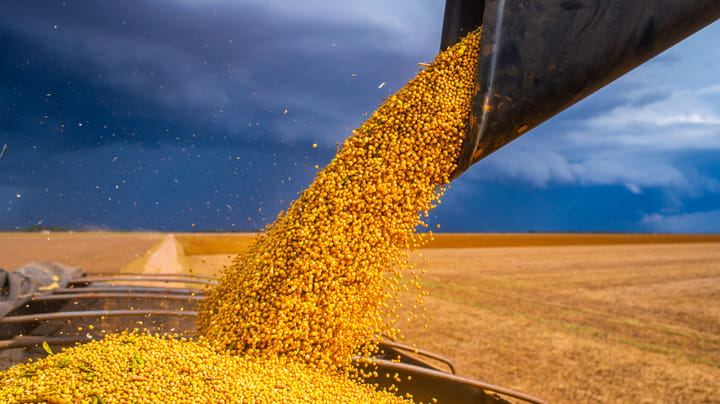
China holds soybean imports at ports as domestic supplies swell
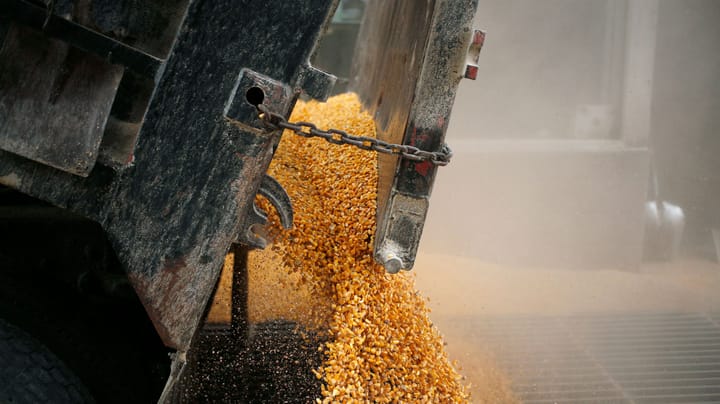
China delays soybean clearance at ports as oversupply and weak pig-farm demand pressure prices amid US-China trade talks.
China delays soybean clearance at ports as oversupply and weak pig-farm demand pressure prices amid US-China trade talks.
It’s not easy, but adding small grains to a corn-soybean rotation can increase overall rotational returns. However, it’s crucial to nail down a market before you plant them.
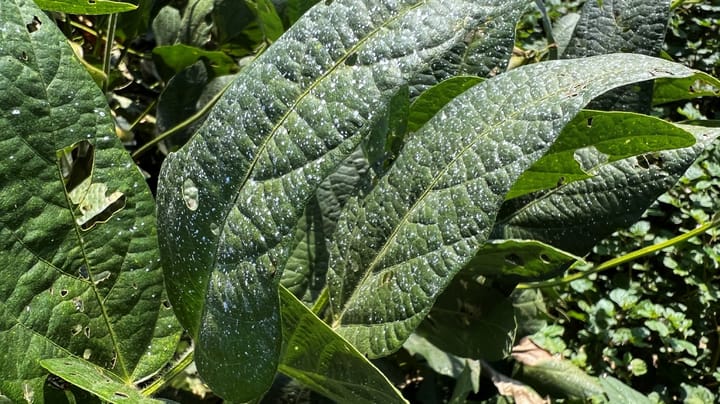
A pair of studies suggest kaolin clay reduces insect damage and heat stress in soybean crops.
Mixed with water and sprayed as a fine particle film on plants, kaolin clay powder is well known in Florida for protecting citrus orchards from insects and heat stress, but how would it work on a row crop like soybeans in the Mississippi Delta?
Thailand nears U.S. trade deal, agrees to buy American soybeans and open its market to U.S. pork and farm goods.
Some soybean growers who plant genetically modified dicamba-resistant soybeans have no intention of spraying the herbicide. Among other reasons, they're hedging against damaging dicamba exposure arising from neighboring fields.
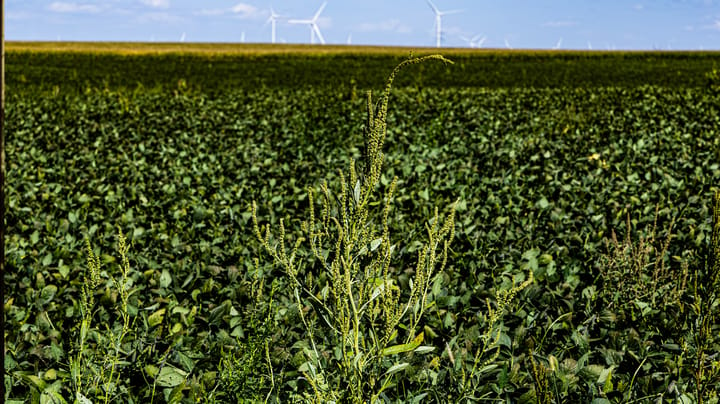
Soybean Source: Iowa State University researchers have confirmed waterhemp that resists glufosinate, glyphosate, 2,4-D, dicamba, atrazine, ALS inhibitors and HPPD inhibitor herbicides. However, diverse mixes of preemergence herbicide and residual postemergence herbicide applications can help farmers manage waterhemp before it gets to this point.
Soybean Outlook: With U.S. stocks at a four-year low, farmers face high-stakes calls on pricing unpriced bushels and planning 2027 acres amid global wild cards.
Ag Marketing IQ In Depth: Nick Tsiolis of Farmer’s Keeper breaks down corn and soybean export demand, basis strength and smart cash flow for farmers going into 2027 planting.
Farm Business: Before you solidify your corn and soybean acreage for 2027, examine these relative profitability trends.
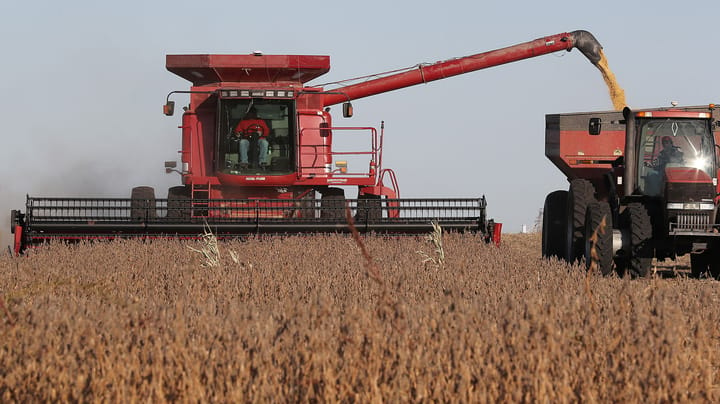
Corn and soybean harvests inch closer to the finish line.
Ag Marketing IQ: USDA’s baseline and cost forecasts point to more soybean acres, steady corn prices and falling input costs for 2027, but China and fuel are volatile variables.
An expert on China’s military has advanced an intriguing thesis that should interest soybean growers. In a recent article in Foreign Affairs, Joel Wuthnow of the National Defense University in Washington maintains China’s dependence on imported soybeans could deter it from trying to take Taiwan by force. His reasoning? In a shooting war over Taiwan,
Farm Progress America: Chevron reopens idled Ralston, Iowa biodiesel plant as renewable fuel demand hits record highs, creating new soybean oil markets for farmers.
This week features biodiesel's price impact, Ohio's record harvest, soybean tech, organic grower profile and more.
Morning Market Analysis: Corn and soybean futures fell overnight in a corrective pullback from Tuesday’s USDA-driven rally, while the U.S. dollar index hit a four-week high.
Field Fodder: University of Wisconsin researchers used 20 years of soil and crop data to revise nutrient recommendations for corn and soybeans.
Afternoon Market Recap: Corn and winter wheat prices also pushed higher on Tuesday.
Four out of every 5 corn acres have been harvested so far this season.
The 2026-27 marketing year for corn and soybeans began Sept. 1
Ag Marketing IQ: The recent $1-per-bushel price dip is a warning to market your 2026 soybean crop. Brazil’s record crop and strong exports are knowns. Weather impacts on the next crop are uncertain.
Ag Marketing IQ: Model suggests tighter corn supplies, higher piles of soybeans and lower prices for both grain crops than USDA’s forecast.
Abstract Land-based enhanced rock weathering (ERW)─applying ground silicate rock to soils─is being explored for sequestration of CO2 from the atmosphere, with impacts beyond carbon storage. Weathering of basalt releases base cations increasing alkalinity and soil pH, which we hypothesized would reduce N2O emissions. Repeated applications of basalt to a heavily fertilized annual Zea mays and Glycine max rotation (maize and soybean) and the low-fertilized perennial bioenergy…
Introduction Soy sauce is a traditional fermented condiment with widespread global consumption, and its authenticity depends on the requisite use of soybeans as a primary ingredient. However, for economic gain, soybean has been partially or completely substituted with cheaper materials, including other legumes such as pea or peanut, or non‐soybean nitrogen sources such as acid‐hydrolysed animal protein derived from feathers or hair. Such practices constitute economic fraud…