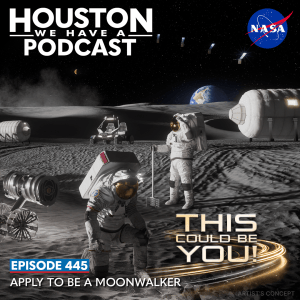
Apply to be a Moonwalker
NASA astronaut Nichole Stilwell and Acting Human Resources Director Tamsin Abotteen discuss the astronaut application process and what it takes to join NASA’s next class of explorers. Episode 445.
Recent stories from NASA Science.
NASA astronaut Nichole Stilwell and Acting Human Resources Director Tamsin Abotteen discuss the astronaut application process and what it takes to join NASA’s next class of explorers. Episode 445.
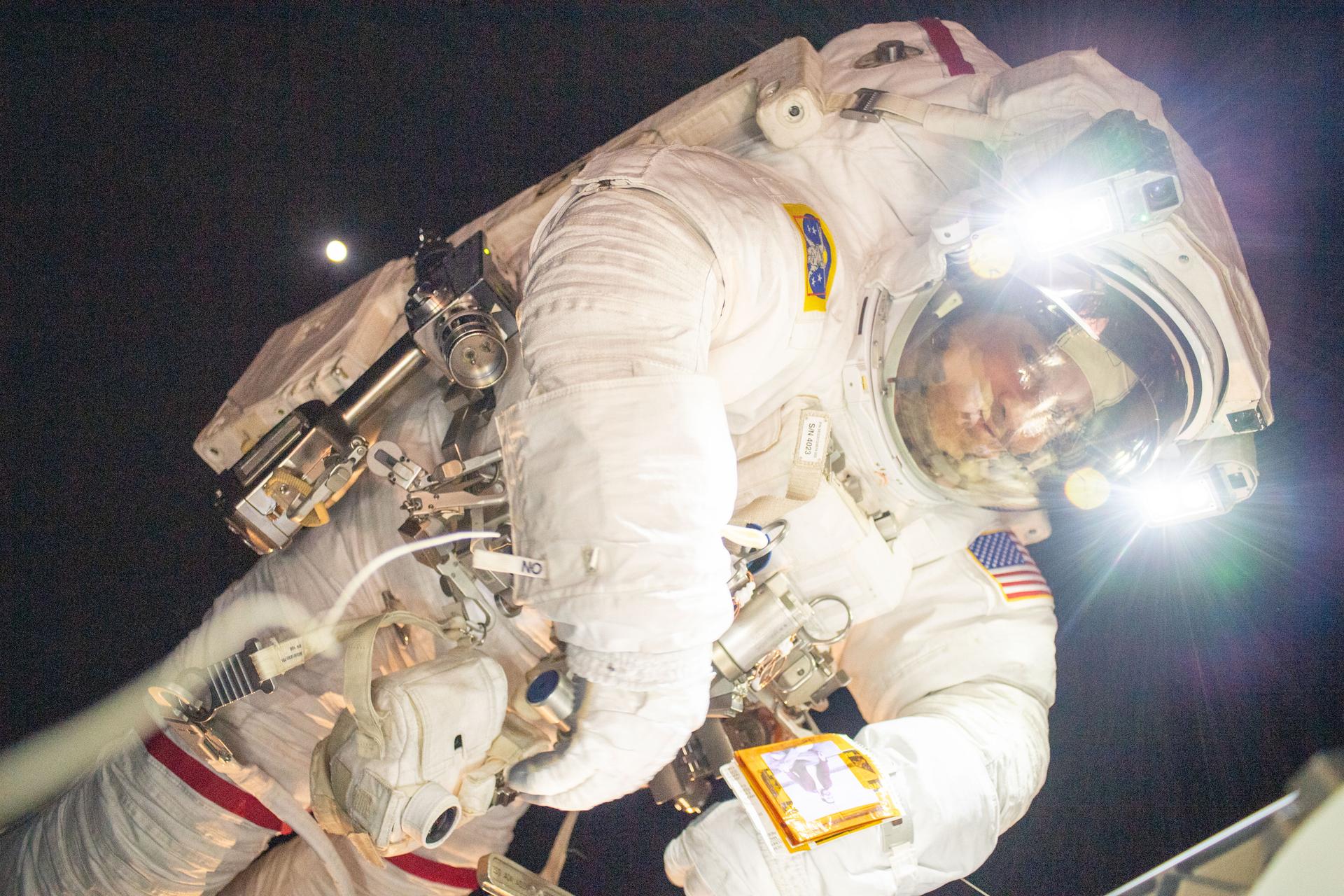
Expedition 75 had a busy shift on Thursday primarily focusing on packing a U.S. cargo craft for its upcoming departure and cleaning a pair of spacesuits. Thursday’s research topics aboard the International Space Station included space agriculture and super intelligence.
TYC 4998-437-1 b is a gas giant exoplanet that orbits a -type star. Its mass is 28.81 Jupiters, it takes 1.5 years to complete one orbit of its star, and is 1.27 AU from its star. Its discovery was announced in 2026.
HIP 105707 b is a gas giant exoplanet that orbits a -type star. Its mass is 24.55 Jupiters, it takes 1.8 years to complete one orbit of its star, and is 1.34 AU from its star. Its discovery was announced in 2026.
KMT-2026-BLG-0083L c is a gas giant exoplanet that orbits a -type star. Its mass is 1.54 Jupiters, it takes 3.1 years to complete one orbit of its star, and is 1.65 AU from its star. Its discovery was announced in 2026.
KMT-2026-BLG-0083L b is a gas giant exoplanet that orbits a -type star. Its mass is 2.65 Jupiters, it takes 49.6 years to complete one orbit of its star, and is 10.57 AU from its star. Its discovery was announced in 2026.
TIC 220432308 b is a Neptune-like exoplanet that orbits a -type star. Its mass is 5.73 Earths, it takes 3.3 days to complete one orbit of its star, and is 0.0445 AU from its star. Its discovery was announced in 2026.
TOI-4596 b is a Neptune-like exoplanet that orbits a -type star. Its mass is 7.68 Earths, it takes 4.1 days to complete one orbit of its star, and is 0.050624196325765 AU from its star. Its discovery was announced in 2026.
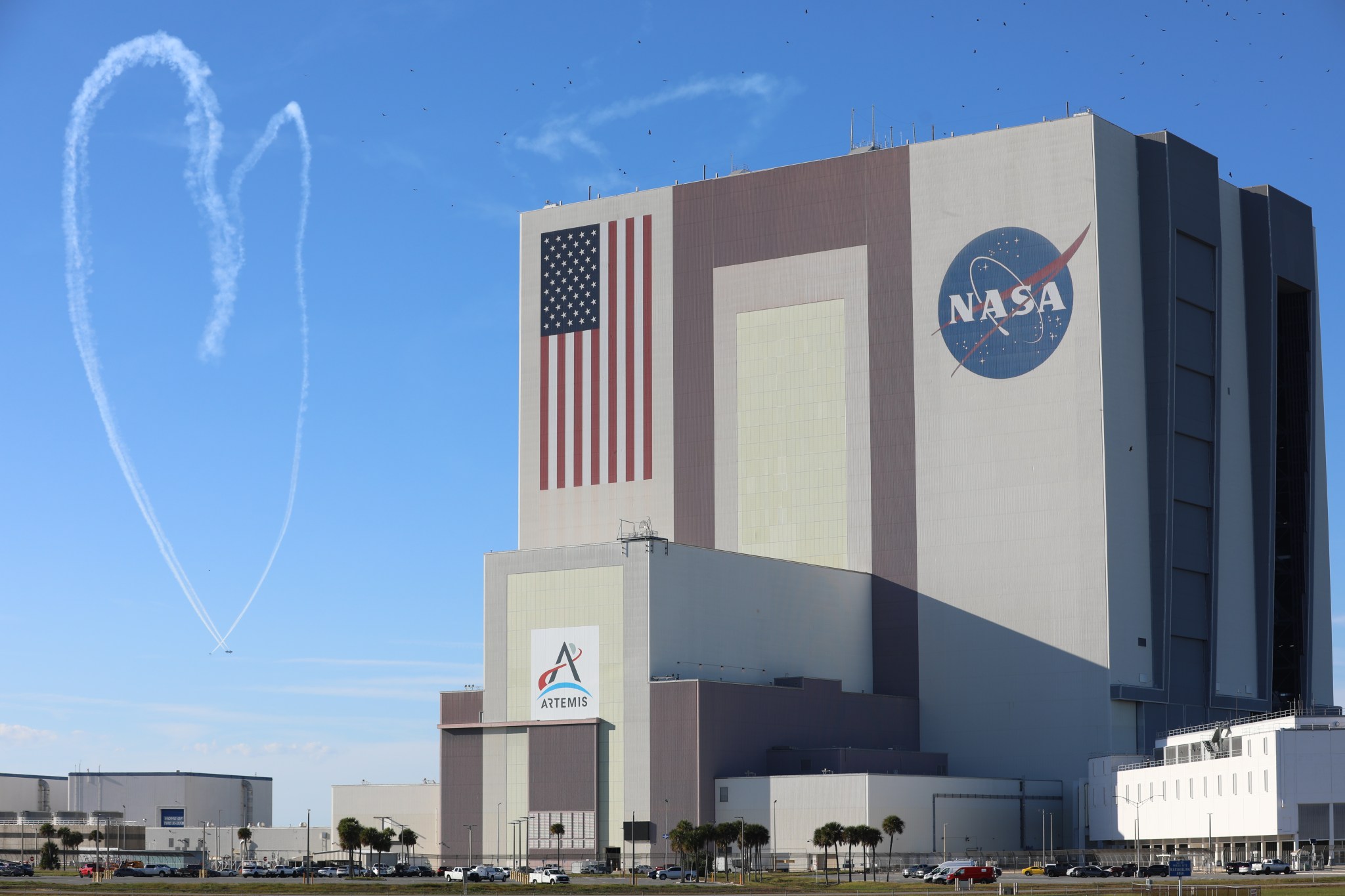
The U.S. Air Force Thunderbirds create a heart-shaped smoke trail during a flight maneuver near NASA’s Vehicle Assembly Building during the agency’s MAX POWER expo and air show on Sunday, Nov. 8, 2026, at NASA’s Kennedy Space Center in Florida. NASA’s MAX POWER is an aerospace festival celebrating the past, present, and future of flight
Technologies to Support a Future Silicon + Scintillator Based Gamma-Ray Telescope Speaker Regina Caputo Abstract The All-sky Medium Energy Gamma-ray Observatory was a mission concept developed in response to previous decadal survey efforts implementing the best technologies 2015 had to offer. I would like to discuss some of the technology development that has gone into
The Cross Section for Cosmic Rays Science Analysis Group (XS SAG)
Blanket bogs in the Scottish Highlands store vast amounts of carbon.
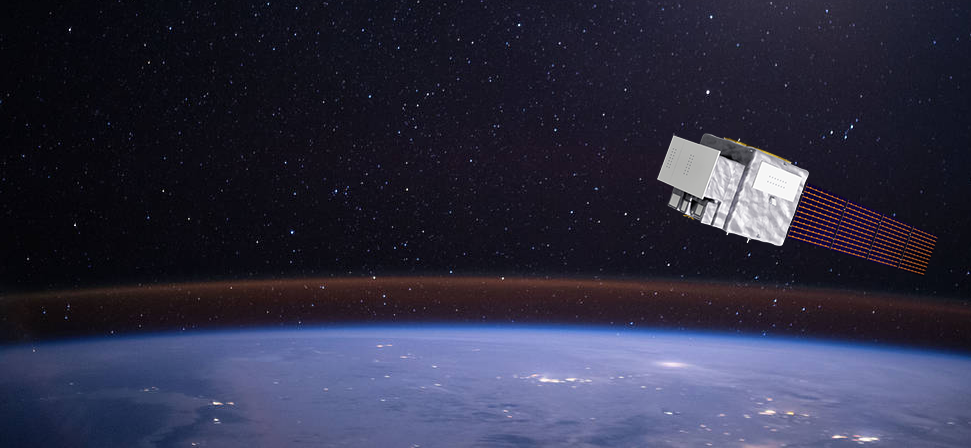
The STRIVE (Stratosphere Troposphere Response using Infrared Vertically-resolved light Explorer) mission doesn’t merely replace existing observations—it fills a critical data gap and opens a new window on stratosphere-troposphere interactions. STRIVE will deliver the missing data required for smarter forecasts, advancing the next-generation of weather, climate, and air-quality forecasting models and extending predictive skills from days
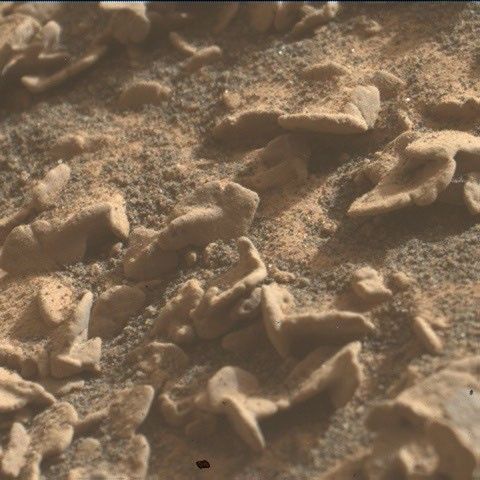
Written by William Farrand, Senior Research Scientist, Space Science Institute Earth planning date: Friday, Nov. 6, 2026 This week Curiosity has been completing its drill campaign at the “Nazca” drill hole. This is an area characterized by bedrock containing disk-shaped (or in a liberal interpretation, potato chip shaped … see linked image) crystal forms. A
Seasoned pilots, aerospace engineers, and U.S. military veterans, NASA’s X-59 test pilots bring decades of service, technical expertise, and flight experience to the agency’s Quesst mission. NASA X-59 pilots Jim “Clue” Less and Nils Larson served in the U.S. Air Force, while Mike Lippert served in the U.S. Marine Corps. Today, the three pilots continue
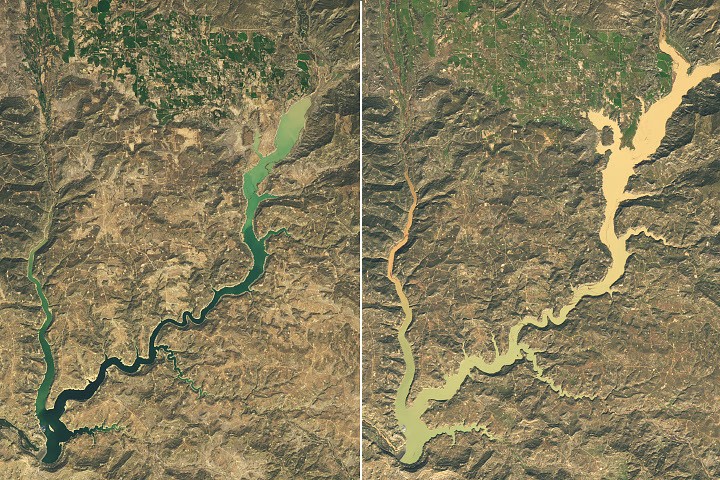
Rounds of heavy rain in the U.S. Southwest flooded rivers and rapidly raised New Mexico’s second-largest reservoir.
Dr. Marian Nemec, chief of the Computational Physics Branch at NASA Ames Research Center in Silicon Valley, California, takes us inside the world of NASA Advanced Supercomputing.
Microbiology and spacesuit maintenance kept the Expedition 75 crew busy aboard the International Space Station on Tuesday. The orbital residents are also preparing for upcoming cargo missions at the orbital outpost.
Launched nearly 50 years ago in 1977, NASA’s Voyager 1 on Wednesday, Nov. 18 will have traveled one light-day from Earth, which is more than 16 billion miles (25.9 billion kilometers). Voyager 1 is the most distant human-made object, and any light from Earth would take 24 hours to reach the spacecraft. NASA will highlight
The LISA (Laser Interferometer Space Antenna) observatory, now in development, will detect gravitational waves, the tiny ripples in space-time caused by orbiting masses. Now two studies led by NASA astrophysicists show in new detail how LISA could reveal a new and unique population of exoplanets — worlds beyond our solar system — throughout our galaxy.