Ideologies around the world: research

Journal articles, academic blogs, think-tank reports and papers in this section, newest first. Back to the news.

Journal articles (OpenAlex) Thao Dinh, Tuong Vu · Journal of Current Southeast Asian Affairs Geopolitics

Between the Party-State and the Global Order: The Evolution of Civil Society in Vietnam in Historical Perspective

This article examines the broad evolution of civil society in Vietnam in the last three decades within the context of global and domestic political changes. As the country became closely tied to the global economy and society, civil society underwent a rapid expansion before the ruling communist party recently deemed it a threat and suppressed it. The dramatic rise and recent retreat of civil society raise important questions about the possibility and extent of political…
Read at Journal articles (OpenAlex)

Journal articles (OpenAlex) Özge Derman · Current Sociology Geopolitics

Cartography of performative imaginaries in climate movement: How creative activists perform disobedience in cultural spaces

This article constructs a dynamic cartography of the performative imaginaries shaping climate activism, analyzing the wave of creative and artistic direct actions targeting cultural spaces in Western Europe and North America. It documents and examines how activists, from groups like Extinction Rebellion and Dernière Rénovation to artivist collectives such as Fossil Free Culture NL, mobilize museums and heritage sites as stages for creative disobedience. By employing embodied…

Read at Journal articles (OpenAlex)

Journal articles (OpenAlex) Juan Guijarro · Critical Sociology Geopolitics

The state, the common, and the fracture of Latin America’s anti-neoliberal cycle: A critique of García Linera’s late state theory

This article reconstructs the return of the “state question” in Latin America after the rise and fracture of the anti-neoliberal cycle. It first maps regional debates on the state, dependency, neo-extractivism, neoliberal subjectivation, and the micro-politics of securitized consent. It then analyzes Venezuela, Ecuador, and Bolivia as a “vanguard triangle” of neoconstitutional experimentation, where constituent power sought to refound sovereignty, rights, territory, and…

Read at Journal articles (OpenAlex)

Journal articles (OpenAlex) Menxiang Hu, Seyyed‐Abdolhamid Mirhosseini · System Geopolitics

English for a dream job: Language teachers and their institution co-constructing neoliberalism

The pervasive influence of neoliberal ideologies has arguably shaped language education in various ways, with most pertinent research focusing on macro-level policy analysis and an emerging body of studies examining how teachers resist these policies. However, a significant concern that remains underexplored is whether and how language teachers may negotiate or co-construct these neoliberal realities in collaboration with their institutions. This critical ethnographic study…

Read at Journal articles (OpenAlex)

Journal of Democracy Geopolitics

Why Political Polarization Is Rising, and How to Reverse It

Democratic politics depends on the messy, sometimes bitter competition of parties and ideas — opposition is how citizens hold power to account. But in democracies around the world, healthy rivalry is hardening into something more corrosive: the tendency to see political opponents as enemies, not rivals. Source

Read at Journal of Democracy

Illiberalism Studies Program (GWU) Pauline Picco Geopolitics

Pierre-Édouard Stérin’s Cultural Battle: How a French Tycoon Invests Culture and Education to Change Politics

Photo: Made using “Le Mans – Abbaye St Vincent int 29” by Selbymay licensed under CC BY-SA 3.0 The contents of articles published are the sole responsibility of the author(s)....

Read at Illiberalism Studies Program (GWU)

GNET (Global Network on Extremism and Technology) Carl Peterson Geopolitics

From Propaganda to Practice: Instructional Media and the Diffusion of Drone Capabilities in Jihadist Ecosystems

On 1 May 2026, Marvin Aneer Jalo was sentenced in Phoenix, Arizona, in the United States for an Islamic State (IS)-inspired plot. A year prior, while still a minor, he planned a complex attack on the Phoenix Pride Parade; intending to first use triacetone triperoxide (TATP) and C-4 explosives on a building, he would then use a “bomb drone” to

Read at GNET (Global Network on Extremism and Technology)

Journal articles (OpenAlex) Kenneth Nolan Daniels · The Review of Black Political Economy Geopolitics

Market Discipline or Racial Capitalism? Municipal Bond Spreads, the Black Tax, and the Political Economy of Public Debt Markets

Abstract This paper examines whether municipal bond credit spreads in the United States reflect efficient market discipline or systematic pricing inefficiencies related to issuer racial composition. Using a panel of approximately 145,000 tax-exempt municipal bond issues from 2010–2023, we estimate spread regressions with extensive controls for credit ratings, fiscal fundamentals, bond structure, and macro conditions. We decompose observed spreads into components attributable…

Read at Journal articles (OpenAlex)

Journal articles (OpenAlex) Raúl Delgado Wise · Ethnic and Racial Studies Geopolitics

The “migration industry” through the lens of the political economy of international migration in contemporary capitalism

Contemporary international migration is characterised by new infrastructures, institutions, agents and companies, with large multinational corporations playing a particularly prominent role. In partnership with leading imperialist powers, these corporations fulfil a strategic role. This emerging configuration is often referred to as the “migration industry” and exists within a broader context characterised by new and severe forms of unequal exchange, with surplus being…

Read at Journal articles (OpenAlex)

Journal articles (OpenAlex) Laurent Cordonnier, Jacques Mazier · European Journal of Economics and Economic Policies Intervention Geopolitics

Long-term sustainability of zero-growth capitalism: activity, employment and unemployment according to different modes of income distribution

This paper studies long-term consequences of a zero-growth regime on the evolution of employment and unemployment, depending on the assumptions made about the evolution of the working population, labor productivity and working hours. These consequences are examined through three scenarios, corresponding to three different types of institutionalized compromises concerning income distribution and employment management in a world without growth. These institutionalized…

Read at Journal articles (OpenAlex)

Journal articles (OpenAlex) Ariel Koch · Terrorism and Political Violence Geopolitics

Beyond the Anglosphere: Siege, Neo-Nazi Accelerationism, and the Transnationalization of Hate

This article examines the global spread of neo-Nazism, focusing on the adaptation of “Siege culture” and neo-Nazi accelerationism. It explores how James Mason’s Siege and the Atomwaffen Division influence neo-Nazi groups worldwide, shaping digital ecosystems on Telegram and social media. The study analyses content promoting neo-Nazi accelerationist propaganda, identifying key narratives, symbols, and behaviors. Based on a dataset of 80 groups, this article explores the…

Read at Journal articles (OpenAlex)

Journal articles (OpenAlex) Matteo Capasso, Walaa Alqaisiya · Sociology Lens Geopolitics

The Arab/Iranian Region and the Multipolar Dilemma

ABSTRACT Since the era of decolonization, the emergence of multipolarity has opened a structural space for developmental autonomy grounded in the sovereign equality of states. This article asks why that opening has coincided with an intensification of unilateral military violence, especially in the Arab/Iranian region, and makes two interconnected theoretical contributions. First, drawing on Dimitrov’s theorization of fascism, it conceptualizes violent unilateralism as the…

Read at Journal articles (OpenAlex)

Journal articles (OpenAlex) Krystof Dolezal · Political Studies Review Geopolitics

Who holds the line? Liberalism beyond its adversaries in post-socialist Eastern Europe

Liberalism in post-socialist Eastern Europe remains understudied. Existing comparative scholarship portrays regional liberalism primarily in the negative, through its authoritarian, populist, and illiberal adversaries, both internal and external, leaving a critical gap in understanding liberalism itself: its meaning, practices, and persistence. Drawing on research in comparative politics and conceptual history, this state-of-the-art review highlights how the backsliding…

Read at Journal articles (OpenAlex)

Journal articles (OpenAlex) Nishant Upadhyay · Capitalism Nature Socialism Geopolitics

Desire, Ruin, and Ecological Resistance: Reading Sanduk Through Eco-socialism and Eco-feminism

This study examines Siddhartha Chanakya’s SandukFootnote1 (2025), an independent Indian film that transforms the imagery of war into a radical ecological allegory of life at the limits of the Anthropocene. Set in a post-nuclear wasteland stripped of history and national identity, the film depicts conflict not between states but between forms of life – human, alien, and material – that persist after civilisation's collapse. Rejecting the hyper-nationalist and hyper-masculine…

Read at Journal articles (OpenAlex)

Journal articles (OpenAlex) Caroline Hasselgren, Anna Brydsten, Linda Kridahl · Longitudinal and Life Course Studies Geopolitics

The influence of post-socialist transition hardship in adulthood on subsequent work trajectories: findings from 11 Central and Eastern European countries

The transition from socialism to a market economy in Central and Eastern Europe (CEE) brought significant societal and economic disruptions. While the shift restructured economies and integrated the region into the broader European market, it left a legacy of hardship that continues to shape individuals' lives. This study adopts a life-course perspective to examine how extended employment gaps, financial hardship and significant stress during the transition years (1987-93)…

Read at Journal articles (OpenAlex)

Journal articles (OpenAlex) Mauro-Rafael Jarquín-Ramírez · Journal of International Cooperation in Education Geopolitics

Critical community solidarity against neoliberal governance in the Americas: Red SEPA and the struggle to transform education systems

Purpose This article analyzes the formation of the SEPA, a network of various grassroots organizations, teachers’ unions and student organizations created in 1999 as a counterweight to neoliberal educational governance in the Americas, founded on critical community solidarity (CCS). Design/methodology/approach The article is a qualitative study based on Critical Discourse Analysis, in which two main sources of data are used: semi-structured interviews with participants of…

Read at Journal articles (OpenAlex)

Journal articles (OpenAlex) Stevo Đurašković · European Politics and Society Geopolitics

The trajectory of the post-2000 Croatian radical right ideas: from anti-communism to anti-liberalism

This study examines post-2000 anti-liberal ideological production in Croatia and its links to the rise of radical-right politics. It also places Croatian anti-liberal ideas within the broader anti-liberal ideological trends in Central and Eastern Europe. The article shows that the emergence of anti-liberal ideas corresponded with the country’s successful EU accession in 2013. Anti-liberal ideology first appeared as a backlash against the moderate-right turn of Croatia’s main…

Read at Journal articles (OpenAlex)

Phenomenal World Stephan Gruber Geopolitics

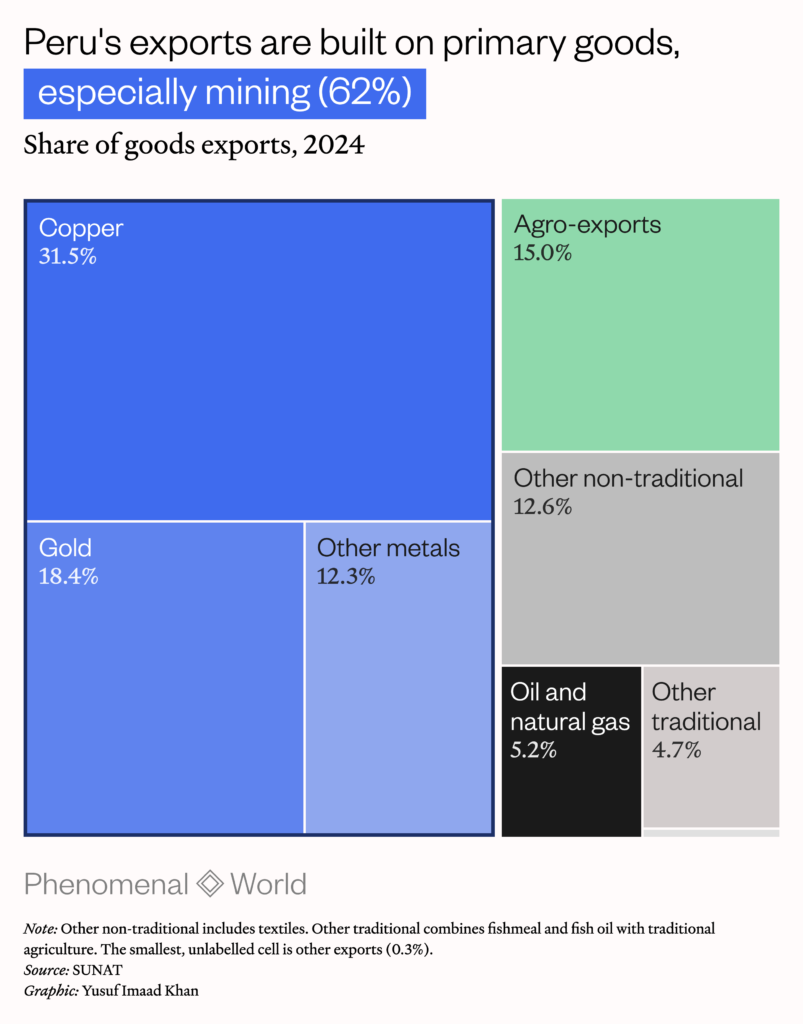
Peru’s So-Called Paradox

On July 28, Keiko Fujimori, daughter of Peru’s former dictator Alberto Fujimori, was inaugurated as the country’s incoming president. After three previous failed attempts at the office, Fujimori succeeded by promising to bring an end to a decade of intensifying crises in Peruvian politics: she will be the tenth president to serve in the past

Read at Phenomenal World

Journal articles (OpenAlex) Jeremy R. Levine, Paige L. Sweet · Qualitative Sociology Geopolitics

Who’s a “Good” Victim of Gender-Based Violence?: Credibility, Worthiness, and Ideal Victimhood in Victim Compensation Law

Abstract Scholars have argued that institutions privilege “good” victims of gender-based violence – those deemed sympathetic, morally upstanding, and worthy of public support. We extend existing research by synthesizing theories of good victimhood and theoretically distinguishing victims’ credibility in relation to the crime from their worthiness in relation to the state . Both credibility and worthiness are tied up in expectations of normative femininity. We then show how…

Read at Journal articles (OpenAlex)

Illiberalism Studies Program (GWU) illiberalism.org Geopolitics

Sébastien Broca on the Ideological Realignment of Big Tech and the Emergence of a New Phase of Digital Capitalism

Sébastien, thank you for joining us! Interest in “tech ideologies” has been growing at an exceptional rate, as evidenced by the many books and articles published about techno-fascism and the...

Read at Illiberalism Studies Program (GWU)

Journal articles (OpenAlex) Muh. Azhar Mubarak, Erni Kurniawati, Puji Juliati et al. · Journal of Environmental Psychology Geopolitics

Youth climate activism and the Global South gap in environmental citizenship research

Read at Journal articles (OpenAlex)

Journal articles (OpenAlex) Ariel Paz-Sawicki, Lior Herman · Environmental Politics Geopolitics

Are liberal democracies immune to the democratic resource curse?

The ‘democratic resource curse’ refers to negative effects on democracy of natural resource discovery, given a positive correlation between authoritarianism and resources. Most scholars agree that resources have little effect on liberal democracies, viewing the ‘curse’ as relevant primarily to authoritarian regimes. We challenge this, arguing that democratic institutions may be weakened given the extractive industry’s extensive efforts to promote favorable regulations. We…

Read at Journal articles (OpenAlex)

Journal articles (OpenAlex) Paula Keller · Constellations Geopolitics

Permission to Dream: The Marxist Ban on Imagining Utopia Reconsidered

Utopia is a strange concept.In one sense, it refers to the ideal society, to a way of living together that we long for and dream about; in another, utopia is used as an epithet to discredit "utopian" policy proposals or to ridicule "utopian" ambitions.What could be wrong with the ideal society?It is, after all, ideal.For Marxists, something seems to be very wrong with it."German communism is the most determined opponent of all utopianism," Karl Marx himself commands in…

Read at Journal articles (OpenAlex)

Journal articles (OpenAlex) Hau Trung Ho · The International Journal of Interdisciplinary Social and Community Studies South China Sea

The Digital Battlefield and the Mirror of History

In the context of ongoing South China Sea disputes, economic interdependence, and the growing influence of digital media, questions of national identity have become salient for young people in Vietnam. Exploring how Vietnamese youth construct national identity amid contemporary Sino-Vietnamese geopolitical tensions, this qualitative study focuses on patriotism, historical memory, cultural identity, and regional cooperation. The sample comprised eighteen social sciences and…

Read at Journal articles (OpenAlex)

Journal of Democracy Geopolitics

Why Political Violence Is Rising

Democratic government — ideally — provides channels for resolving conflict among competing groups and interests, defusing hostilities before they explode into physical violence. It has never worked perfectly. Source

Read at Journal of Democracy

Journal articles (OpenAlex) Chun I. Lin, Joseph C. P. Shieh, Hao Fang et al. · Economics and Politics Geopolitics

Leverage Adjustments, Executive Incentives, and the Market Valuation of Acquisitions Under State Capitalism: Evidence From China

ABSTRACT We examine how state ownership and CEO financial incentives jointly condition the market valuation of acquisition‐related leverage adjustments in 2251 completed M&A deals by Chinese A‐share listed acquirers (2013–2023). Acquirers draw on spare financing capacity at deal completion, with larger leverage increases among underleveraged firms. In the pooled sample, leverage changes are not systematically associated with announcement returns. Within state‐owned…

Read at Journal articles (OpenAlex)

Journal articles (OpenAlex) Dániel Oross, Dániel Mikecz, Dominik Rákos · Environmental Communication Geopolitics

Visual Framing and Politicization of Climate Change: The Case of Fridays for Future and Extinction Rebellion in Hungary

This paper addresses how the visual framing practices of the youth climate movement in Hungary challenge or reinforce post-political environmental discourse. Our analysis focuses on two social movement organizations that emerged in Hungary during the 2018–2019 global wave of climate activism: Fridays For Future Hungary (FFFH) and Extinction Rebellion Hungary (XRH), with particular attention to the forms, issue frames, and emotional frames they employ. To investigate the…

Read at Journal articles (OpenAlex)

Journal articles (OpenAlex) Silvia Pianta, Paula Rettl · American Journal of Political Science Geopolitics

Global harms, local profits: How the uneven costs of natural disasters affect support for green political platforms

Abstract Large‐scale fires are becoming increasingly common due to climate change. While conventional wisdom suggests that firsthand experiences with natural disasters foster green coalitions by raising awareness of environmental degradation, we propose an alternative view: Natural disasters can heighten the perceived trade‐off between economic development and environmental policies. This study examines the case of Brazil, where large‐scale fires, by clearing natural…

Read at Journal articles (OpenAlex)

Older stories