Great-power competition in Latin America and Chile: research

Journal articles, academic blogs, think-tank reports and papers in this section, newest first. Back to the news.

Atlantic Council Katherine Walla Geopolitics

Bringing US investment to Latin America’s growth agenda

On the sidelines of the United Nations General Assembly in New York, government officials and investors convene to discuss how US capital can positively impact the region's economic development.
Read at Atlantic Council

Inter-American Dialogue Yifang Wang Geopolitics

When Financial Infrastructure Becomes Humanitarian Infrastructure—How remittances can speed Venezuela’s humanitarian and economic recovery

Last month, the U.S. Treasury provided much-needed regulatory relief for financial institutions supporting Venezuela’s economic recovery and reconstruction after the recent devastating earthquakes. Together with sanctions licenses issued earlier this year, the measure shows that Washington understands that jump-starting Venezuela’s economy will require more than humanitarian and post-disaster assistance. However, these measures might not be

Read at Inter-American Dialogue

Latinoamérica21 Marcelo Halperín Geopolitics

AI: The tangled umbilical cord between two worlds

The AI “uprising” exposes a global state of anomie in which the weakening of multilateralism leaves Latin America vulnerable to the technological and economic power of the major powers. O post AI: The tangled umbilical cord between two worlds apareceu primeiro em Latinoamérica 21.

Read at Latinoamérica21

Phenomenal World Stephan Gruber Geopolitics

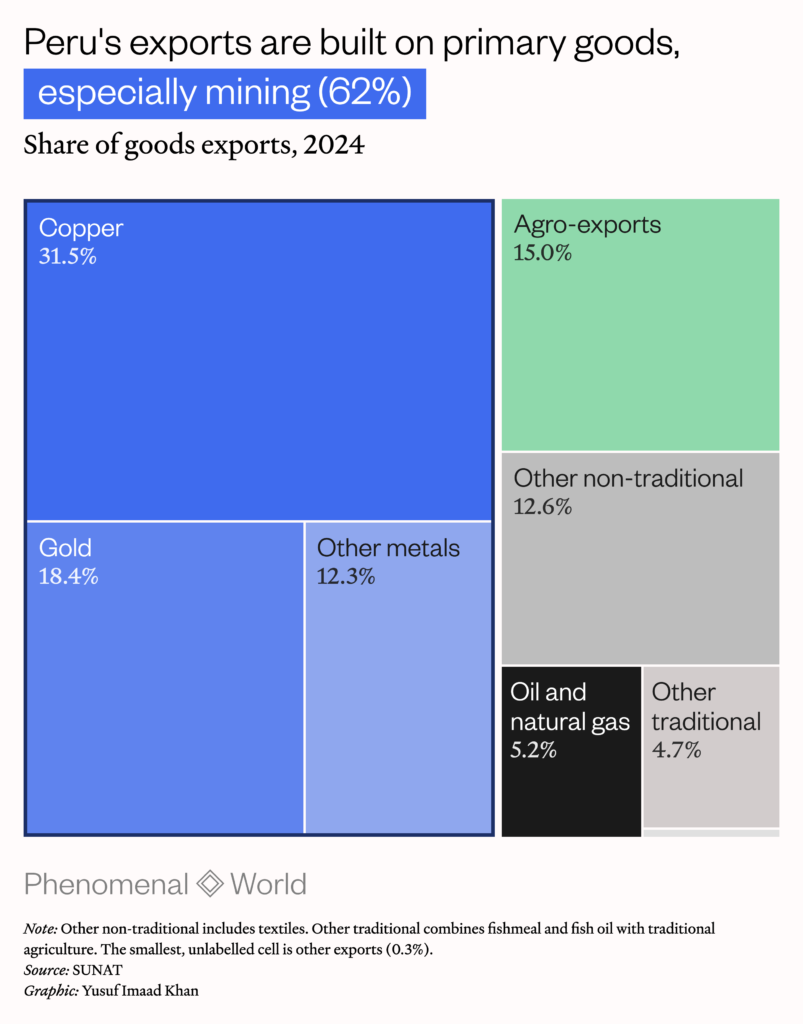
Peru’s So-Called Paradox

On July 28, Keiko Fujimori, daughter of Peru’s former dictator Alberto Fujimori, was inaugurated as the country’s incoming president. After three previous failed attempts at the office, Fujimori succeeded by promising to bring an end to a decade of intensifying crises in Peruvian politics: she will be the tenth president to serve in the past

Read at Phenomenal World

Journal articles (OpenAlex) Diana Panke, Lukas Grundsfeld, Pawel Tverskoi · Journal of Latin American Studies Geopolitics

After the Pink Tide: How Increased Ideological Divergence Leads to Severe Contestations of Regional International Organisations in Latin America

Abstract Latin America is characterised by the existence of a large number of overlapping regional international organisations (RIOs). From the late 1990s onward, a ‘Pink Tide’ brought many left-wing governments into office. This development also manifested itself in the creation of new ‘post-liberal’ or ‘post-hegemonic’ RIOs, including ALBA, CELAC and UNASUR, and the transformation of existing organisations. Once the ‘Pink Tide’ began to ebb in the mid-2010s, left-leaning…

Read at Journal articles (OpenAlex)

Atlantic Council Jose Antonio Gonzalez Anaya, Martin Cassinelli Geopolitics

Mapeo de la inversión estadounidense en América Latina y el Caribe

Las inversiones de China en América Latina y el Caribe acaparan los titulares pero, aunque Estados Unidos ha sido durante mucho tiempo el mayor inversionista de la región, se sabe menos sobre hacia dónde van sus inversiones. Nuevos datos muestran qué países y sectores reciben la mayor inversión estadounidense, y cómo esa inversión afecta a las economías locales.

Read at Atlantic Council

Journal articles (OpenAlex) Fabricio Rodríguez · Environment and Planning C Politics and Space Geopolitics

(De)carbonizing energy? Strategic para-coloniality and counter-hegemonic space-making in China’s expansion into Latin America

This article examines China’s expanding presence in Latin America’s energy sectors through three contrasting cases: Brazil’s Pré-Sal offshore oil, Peru’s Las Bambas copper mine, and Ecuador’s Coca Codo Sinclair hydropower plant. It introduces the concepts of strategic para-coloniality and spatial counter-hegemony to analyze how Chinese state-led interventions simultaneously challenge Western dominance while operating through extractive logics forged under European…

Read at Journal articles (OpenAlex)

Journal articles (OpenAlex) Salar Abbasi · Religions Geopolitics

From Latin American Liberation Theology to Islamic Coalition Theology: The Case of the Islamic Revolution of 1979 in Iran

This article will offer a comparative analysis between Latin American Liberation Theology (LALT) and Islamic Coalition Theology in the broader literature on liberation theology. The purpose of this comparison is to highlight a fundamental structural divergence in their political and theological orientations. The 1979 Islamic revolution in Iran is elaborated in this conceptual context to situate the debate in a recent practical example of the Islamic Coalition Theology that…

Read at Journal articles (OpenAlex)

Inter-American Dialogue Daniel Maffey Geopolitics

What Is the Impact of U.S. Military Policy in the Region?

A Latin America Advisor Q&A featuring expert analysis of the impact of U.S. military policy on Latin America.

Read at Inter-American Dialogue

Stimson Center Joaquin Matamis Geopolitics

Assumption Testing: The Iran War Is a Case of Alliance Entanglement

Evaluating whether the Iran war is a case of alliance entanglement by the United States’ Middle East allies.

Read at Stimson Center

Latinoamérica21 Ariel Dulitzky Geopolitics

No Fair Play: Taking Stock of the World Cup

Beyond Spain's victory, the World Cup once again exposed FIFA's contradictions: politicized decision-making, a lack of transparency, commercial interests, and the uneven enforcement of its rules on human rights, discrimination, and freedom of expression. O post No Fair Play: Taking Stock of the World Cup apareceu primeiro em Latinoamérica 21.

Read at Latinoamérica21

Latinoamérica21 Danilo Desiderio Geopolitics

Financial Redundancy: The New Architecture of Development Finance

As global development finance becomes increasingly fragmented, developing countries are seeking to establish alternative channels to secure the flow of capital. Yet this financial redundancy also brings risks: rising debt burdens, greater administrative complexity, and a persistent dependence on the world's leading reserve currencies. O post Financial Redundancy: The New Architecture of Development Finance apareceu primeiro em Latinoamérica 21.

Read at Latinoamérica21

Stimson Center Joaquin Matamis Geopolitics

Nuclear Security News and Member Updates Roundup, July 2026

As conflict in Iran flares again, U.S. and Saudi Arabia strike a controversial civil nuclear deal; drone strike reportedly kills Zaporizhzhya NPP chief engineer; and a contractor at India’s largest nuclear plant reports a data security breach.

Read at Stimson Center

Journal articles (OpenAlex) Ada Celsa Cabrera García, Giuseppe Lo Brutto · Frontiers in Political Science Geopolitics

Latin America in the face of the expansion of BRICS plus: geopolitical tensions in a transforming world order

The expansion of the BRICS forum scheme to BRICS Plus in 2024 represents a turning point in the reconfiguration of the contemporary world system, strengthening South–South cooperation and challenging the historical hegemony of the United States, with significant effects for Latin America and the Caribbean. In this context, the new National Security Policy implemented by the Trump administration in December 2025 represents another critical juncture that highlights the way in…

Read at Journal articles (OpenAlex)

Journal articles (OpenAlex) Walter Bazán-Palomino, Diego Winkelried · Financial Innovation Geopolitics

Volatility spillovers from the United States and China to Latin American stock markets

Abstract Traditionally, the United States has been the major trading and financial partner of Latin America. However, since 2000 it has lost its hegemony in the region due to China’s growing influence. China’s emergence as a source of capital for Latin America has increasingly integrated both financial markets, potentially increasing the risk of volatility spillovers. Using a heterogeneous ARDL model, we study volatility transmission from the USA and China to six main Latin…

Read at Journal articles (OpenAlex)

Stimson Center Joaquin Matamis Geopolitics

Taiwan’s Frozen Diplomacy: Why President Lai Still Hasn’t Visited Latin America

Halfway through his presidential term, Lai has yet to visit Latin America. That’s a problem for him and for Taiwan.

Read at Stimson Center

Inter-American Dialogue Giulia Branco Spiess Geopolitics

Q&A with Igor Patrick: “The dispute over who processes Brazilian rare earths—not who digs them—will define whether this moment becomes strategic autonomy or just another commodity boom.”

This Q&A is part of the Brazil Program's ongoing efforts to examine the evolving geopolitical and economic dynamics shaping Brazil's role in global supply chains, particularly in the context of critical minerals, strategic competition, and Brazil's relations with the United States and China.

Read at Inter-American Dialogue

Inter-American Dialogue Daniel Domsky Geopolitics

USMCA at a Crossroads: What’s Next for North America? Launch of Executive Report Findings on Labor, Digital Trade and AI, and Energy

The Mexico Program launched the Executive Report Findings on Labor, Digital Trade and AI, and Energy and convened a high-level discussion on the joint review of the USMCA.

Read at Inter-American Dialogue

Latinoamérica21 Johannes Hügel | Nikolaus Rischbieter Geopolitics

How far can U.S. pressure on the Cuban regime go?

The Cuban regime’s deepest crisis coincides with a strategy of maximum pressure driven by Washington. The objective is to force a political transition, but the use of force no longer appears to be an implausible scenario. O post How far can U.S. pressure on the Cuban regime go? apareceu primeiro em Latinoamérica 21.

Read at Latinoamérica21

Phenomenal World Fernando Rugitsky Geopolitics

A Fragile Food Regime

As food inflation worsens, governments intervene while growing unrest challenges the inequities embedded in global food systems.

Read at Phenomenal World

Stimson Center Joaquin Matamis Geopolitics

The Next UN Secretary-General Must Deliver

The next Secretary-General must shift the UN from negotiating commitments to delivering on them.

Read at Stimson Center

Atlantic Council Enrique Millán-Mejía and Raúl González-Pietrogiovanna Geopolitics

Colombia’s next president wants to work with the US. Here’s how Washington should respond.

The Trump administration can support the next phase of the relationship by presenting a real alternative to Chinese financing for critical projects.

Read at Atlantic Council

Journal articles (OpenAlex) Lluís Mundet i Cerdán, Eduardo Salinas Chávez, Maité Echarri Chávez et al. · Geoforum Geopolitics

State, space, and geopolitical struggle: A political economy of Cuban tourism (1925–2026)

Cuba presents a profound anomaly within tourism geographies: a state-socialist system deeply embedded within the global tourism economy. While the existing literature has documented the economic dimensions of Cuban tourism, it has largely failed to theorise the territorial and social transformations the industry has produced within the island’s singular geopolitical context. This article addresses that gap. We argue that Cuban tourism development is best understood, through…

Read at Journal articles (OpenAlex)

Latinoamérica21 Florencia Davidzon Geopolitics

The last ownerless territory: Antarctica and the 2048 window

As 2048 approaches, Antarctica's greatest challenge is no longer sovereignty, but the construction of a global framework to protect the last territory without an owner. O post The last ownerless territory: Antarctica and the 2048 window apareceu primeiro em Latinoamérica 21.

Read at Latinoamérica21

Journal articles (OpenAlex) Anna Ayuso · Frontiers in Political Science Geopolitics

Reframing European Union instruments toward Latin America and the Caribbean in a multipolar context and the emergence of the global south

The reconfiguration of international economic relations, competition for technological leadership, the struggle for strategic resources, and the rise of defensive protectionism are reshaping the bi-regional agenda between the European Union and Latin America and the Caribbean. Political dialog, trade and investment, and cooperation remain the three pillars of the bi-regional relationship, but each must be adapted to a context marked by geopolitical competition…

Read at Journal articles (OpenAlex)

Inter-American Dialogue Yifang Wang Geopolitics

New Currents in Climate Diplomacy: Resilience, Partnership, and the Evolving Global Landscape—Approaches from the Caribbean and the Pacific

On May 21, 2026, the Inter-American Dialogue's Asia & Latin America Program held "New Currents in Climate Diplomacy: Resilience, Partnership, and the Evolving Global Landscape," the first event in its "Comparative Policymaking in a Shifting Global Architecture: Approaches from the Caribbean and the Pacific" private roundtable series.

Read at Inter-American Dialogue

Latinoamérica21 Sebastián Godínez Rivera Geopolitics

De la Espriella and greater North America

Abelardo de la Espriella’s victory in Colombia strengthens the advance of the right across Latin America and brings Bogotá closer to the hemispheric project promoted by the United States. O post De la Espriella and greater North America apareceu primeiro em Latinoamérica 21.

Read at Latinoamérica21

Journal articles (OpenAlex) Rubrick Biegon · Millennium Journal of International Studies Geopolitics

Framing the Havana Syndrome Mystery: Imaginaries of the Second Cold War?

This article explores the ‘mysterious’ phenomenon known as ‘Havana Syndrome’ in the context of IR’s growing interest in imagination and imaginaries. It argues that the social-psychological imaginary of Havana Syndrome is illustrative of the emerging geopolitical imaginary of the Second Cold War. To examine these imaginaries and the relationship between them, the study’s primary methodology is based on an interpretivist frame analysis of the Havana Syndrome discourse in US…

Read at Journal articles (OpenAlex)

Older stories