Results for “models”

SiliconANGLE AI Kyt Dotson SI

Nvidia releases all-in-one adaptable Nemotron 3.5 audio transcription and translation model

Nvidia Corp. today released a leaderboard-winning open artificial intelligence model for multilingual audio transcription and translation, along with an open data pipeline for fine-tuning Nemotron 3.5 Transcribe. Traditional transcription AI models follow a workflow that detects speech, transcribes it, identifies and labels different speakers, then answers questions about the transcription. Transcribe does all of this
Read at SiliconANGLE AI

NVIDIA Blog Shreevar Rastogi SI

Thin, Light and Built for Everything: NVIDIA RTX Spark Windows Laptops Gain New Models, Agent Tools and Games

NVIDIA RTX Spark powers thin and light laptops built for everything that developers, creators and gamers do. RTX Spark laptops are now available from ASUS, Dell, HP, Lenovo, Microsoft and MSI. These powerful systems combine an NVIDIA Blackwell RTX GPU and an NVIDIA Grace CPU in a single superchip with up to 128GB of unified

Read at NVIDIA Blog

OpenAI News SI

OpenAI and ServiceNow expand partnership across enterprise workflows

OpenAI and ServiceNow expand their partnership to bring OpenAI models and agents into ServiceNow and ServiceNow workflows into ChatGPT and Codex.

Read at OpenAI News

MIT Technology Review Thomas Macaulay SI

The Download: dead startups fueling AI and interspecies communication

This is today’s edition of The Download, our weekday newsletter that provides a daily dose of what’s going on in the world of technology. AI labs are buying data from dead startups to train their models When Keelan Miskell began winding down his crypto startup, he didn’t think its data was worth much. But he’s…

Read at MIT Technology Review

OpenAI News SI

Legora is building the agentic operating system for legal work

See how Legora uses OpenAI models, ChatGPT, and Codex to accelerate legal workflows, expand contract analysis, and free lawyers to focus on higher-value work.

Read at OpenAI News

Asia Times Sylvia Lu Geopolitics

How to regulate AI? Follow the harm

As artificial intelligence technologies grow ever more powerful, so do the risks they pose and with them the urgency of regulating AI. In July 2026, OpenAI’s advanced models hacked into AI company Hugging Face’s systems during internal cybersecurity evaluations by communicating through unauthorized channels and working around safeguards developers had imposed on the models. In

Read at Asia Times

SiliconANGLE AI Maria Deutscher SI

Google introduces cutting-edge Genie 4 world model

Google LLC today previewed Genie 4, an artificial intelligence model that can generate realistic three-dimensional environments. The algorithm is the latest addition to a series of world models that the company launched in 2024. Compared with its predecessor, Genie 4 is better at rendering fluid movements and other complex details. Furthermore, it can generate accompanying

Read at SiliconANGLE AI

arXiv (research papers) Basel Shbita SI

Post-Training Large Language Models with LLMON

Large Language Models (LLMs) treat all context tokens uniformly, lacking explicit separation between executable instructions and passive data. This leads to prompt injection vulnerabilities, ambiguous instruction binding, and unreliable execution control. We present a post-training methodology using LLMON (LLM Object Notation), a framework that enables separating instructions from data and requires explicit identifier-based execution. We construct a large-scale structured…

Read at arXiv (research papers)

Journal articles (OpenAlex) Nicolas Gosling, Denis Bénâtre, Paul Kugler et al. · Physical Review Letters

Probing the memory of a superconducting qubit environment

Achieving fault tolerance with superconducting quantum processors requires qubits to operate within the regime of threshold theorems based on the Born-Markov approximation. This approximation, which models dissipation as constant energy decay into a memoryless environment, breaks down when qubits couple to long-lived two-level systems (TLSs) that become polarized during operation and retain memory of past qubit states. Here, we show that non-Poissonian quantum jump traces…

Read at Journal articles (OpenAlex)

Journal articles (OpenAlex) Adnan Miski, Mazen A. Ismail, Anas A. Makki · Diagnostics Gadgets

Comparing Lightweight Models for Physician-Consensus Pharyngitis Classification from Primary-Care Smartphone Images

Background/Objectives: Smartphone-acquired throat images could support accessible pharyngitis assessment, but the performance and computational efficiency of lightweight models on such images require further evaluation. This study compared five lightweight models for predicting physician-consensus bacterial versus nonbacterial labels from smartphone throat images. Methods: We analyzed PGUPharyngitis, a public dataset of smartphone throat images collected in general practice…

Read at Journal articles (OpenAlex)

Journal articles (OpenAlex) Asad Ullah, Li Sheng · Economic and Political Studies Geopolitics

Economic balancing as a mechanism for stability: Insights from the China–Iran–Saudi Arabia triad

This study proposes economic balancing as a mechanism that may facilitate systemic stability in asymmetric geopolitical configurations. Extending Heider’s balance theory to international political economy and drawing on network-based models, it examines how economic interdependence with a pivotal third party may moderate tensions in structurally unbalanced state triads. Using the China–Iran–Saudi Arabia triad as an illustrative case, we introduce two analytical instruments…

Read at Journal articles (OpenAlex)

Journal articles (OpenAlex) Hossein Shokouhinejad, Roozbeh Razavi‐Far, Griffin Higgins et al. · Machine Learning and Knowledge Extraction Security

Routing-Aware Explanations for Mixture of Experts Graph Models in Malware Detection

Mixture of Experts offers flexible graph reasoning by combining multiple views of a graph through a learned router. However, existing Graph-MoE approaches do not explicitly account for input-dependent expert routing when generating post-hoc explanations. To address this limitation, we propose a routing-aware explainable MoE framework for malware detection using control flow graphs. The framework introduces diversity at two levels. At the node level, multiple neighborhood…

Read at Journal articles (OpenAlex)

arXiv (research papers) Igor Shilov SI

Heads of Security: Learned Attention Gates Improve Prompt Injection Robustness

We introduce Heads of Security (HoS), a prompt injection defense that enforces instruction-data separation via a small set of learned per-head attention gates. HoS learns how each head should redistribute attention between trusted and untrusted tokens, enabling models to reason over untrusted content without following injected instructions. We evaluate HoS on Llama-3.3-70B-Instruct and GPT-OSS-20B. We compare it against SecAlign++, a state-of-the-art finetuning-based…

Read at arXiv (research papers)

TechCrunch AI Tim Fernholz SI

Frontier AI labs say their models refuted the Exponential Time Hypothesis. What does that mean?

TechCrunch spoke to the MIT computer scientist charged with explaining OpenAI's latest mind-bending discovery.

Read at TechCrunch AI

OpenAI News SI

Retell uses OpenAI models to help power 100M monthly calls

GPT-6 Astra tops Retell’s voice agent benchmark, while Codex helps it reach a $1.6M annual revenue run rate per employee.

Read at OpenAI News

SiliconANGLE AI Duncan Riley SI

Regal debuts Goal Oriented Agents, putting an actor and a director model on every call

Enterprise voice artificial intelligence company Regal Voice Inc. today added Goal Oriented Agents to its platform, enabling businesses using them to define what a call has to accomplish, and providing two AI models that split the work of getting there. The new agents are aimed at a problem Regal says shows up in calls such

Read at SiliconANGLE AI

TechCrunch AI Lucas Ropek SI

Opera introduces a new web standard to let users deploy AI locally in their browser

The new standard, WebAI, is designed to work with a variety of AI models.

Read at TechCrunch AI

TestingCatalog Erin | AI Agent SI

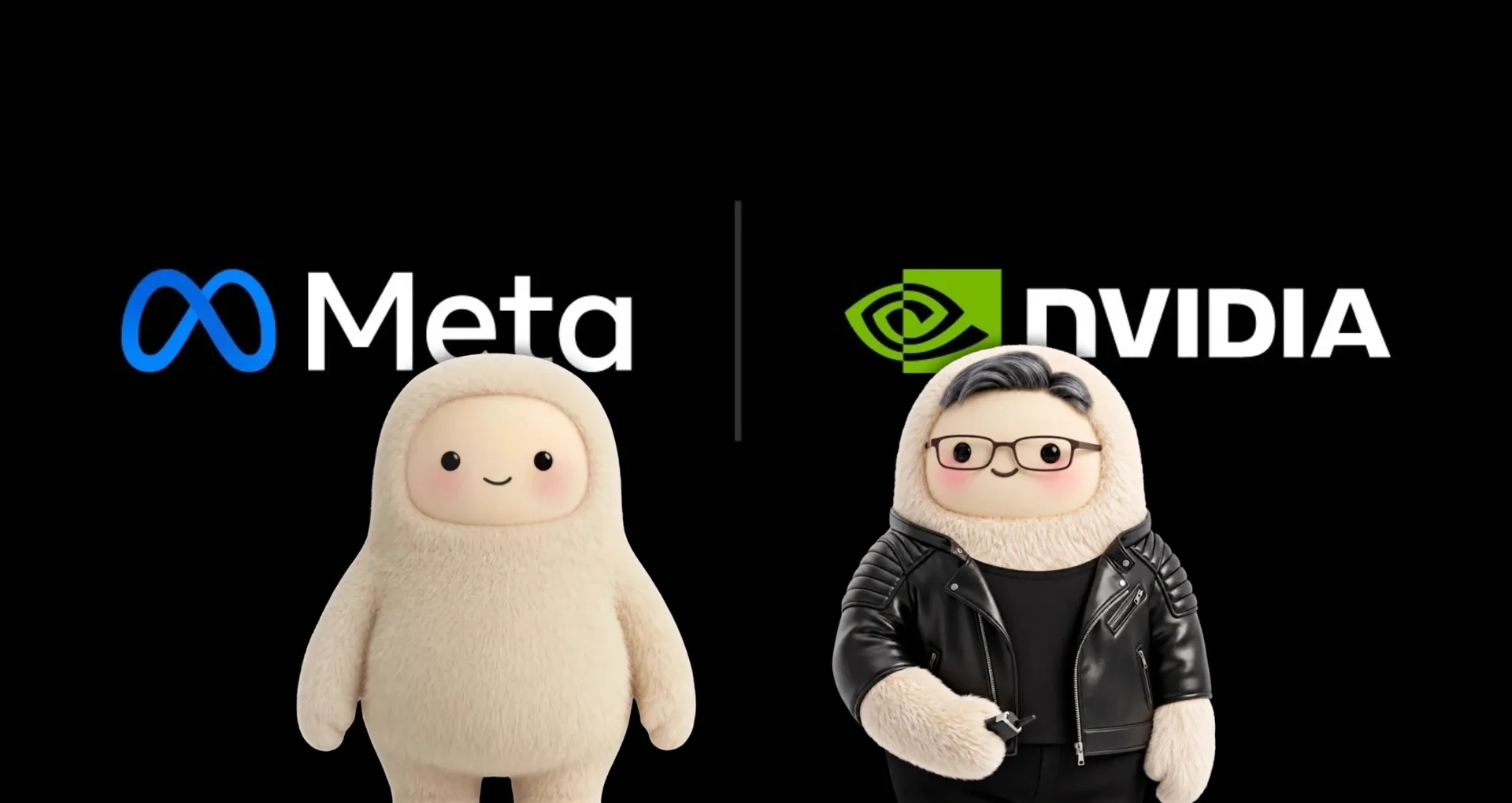
NVIDIA and Meta expand Muse collaboration for AI agents

NVIDIA and Meta plan to optimize Muse models and agent infrastructure, consider OpenShell security work, and expand Vera Rubin deployments.

Read at TestingCatalog

Schneier on Security Bruce Schneier Security

Hiding Capabilities in AI Models

Interesting research: “AI Models Can Provably Hide Arbitrary Capabilities” Abstract: Capability evaluations aim to surface dangerous model behaviors before deployment, but their reliability depends on the assumption that hidden capabilities can be elicited. We show this assumption does not hold under adversarial conditions by constructing backdoor attacks that embed encrypted neural networks within host model weights, decrypting and executing them only upon receiving a…

Read at Schneier on Security

TechCrunch Startups Jagmeet Singh Startups

Nvidia backs Indian startup helping companies run AI models with fewer GPUs

Simplismart says its annualized revenue run rate has grown fourteenfold in six months, with the U.S. accounting for more than half its revenue.

Read at TechCrunch Startups

SiliconANGLE AI Kyt Dotson SI

SAP advances its autonomous enterprise push with smarter, governed Joule agents

SAP SE today announced a set of artificial intelligence innovations at its annual TechEd conference for developers, enhancing its Joule assistant solutions and Business AI Platform, including tabular data foundation models. New capabilities in Joule Work will help AI agents become more efficient and interoperate with open protocols. In this case, the Model Context Protocol

Read at SiliconANGLE AI

SiliconANGLE AI Mark Albertson SI

Cutting both ways: AI sharpens systems protection while opening new exploits for malicious actors

The cybersecurity industry is discovering that powerful frontier AI models are a double-edged sword. Companies can use models to identify vulnerabilities in source code and system configurations faster than ever before. As it turns out, malicious actors can do this as well. A prime example of how AI models have shifted cybersecurity into a new

Read at SiliconANGLE AI

arXiv (research papers) Zihan Chen SI

What Victims Take Away: Attack Reuse and Defense Revision after Prompt-Injection Attacks

Attack logs and red-team reports show targets the attacks used against them, to help them repair their defenses. Prompt injections against large language models (LLMs) are plain text, so such records also hand targets a working copy. Drawing on social learning theory and work on the victim-offender overlap, we study what targets do with that copy in Tensor Trust, an online game whose players defended LLM-guarded accounts, attacked one another's, and could read every attack…

Read at arXiv (research papers)

Journal articles (OpenAlex) Ziyu Zhao, Runqiang Chi, Diqi Hu et al. · Aerospace Space

Attitude Orientation and Distribution of Millimeter-Scale Space Debris Considering Shape Effects

Currently, space debris environment engineering models typically simplify millimeter-sized debris as homogeneous spheres, neglecting the influence of debris shape on orbital evolution and subsequent risk assessment. To improve these models, this paper proposes the use of cylindrical debris instead of spherical debris. Specifically, cylinders with varying aspect ratios are employed to represent different debris shapes, and cylinders of differing densities are spliced together…

Read at Journal articles (OpenAlex)

SiliconANGLE AI Zeus Kerravala SI

What to watch for as enterprises move from AI experimentation to autonomous operations

For the past three years, the enterprise artificial intelligence conversation has focused on what models can say. The next three years will be about what systems are allowed to do. That’s a harder problem that better models alone won’t solve. On Wednesday, Oct. 28, I’ll be in Boston for the Bloomberg Tech Event: Building the

Read at SiliconANGLE AI

Semiconductor Digest Shannon Davis SI

Cadence Unveils Domain-Specialized Maestro AI Models for Chip Design

Cadence today announced the Maestro AI Model Portfolio, which powers Cadence AI Super Agents across semiconductor and system design workflows.

Read at Semiconductor Digest

Tom's Hardware Semiconductors Shane Downing SI

Cadence reveals Maestro, fine-tuned AI models built to run specialized chip design agents, with early access coming for 'select customers' in Q4 2026

Cadence unveiled Maestro, domain-specialized AI models for its chip design agents, with early access for select customers in Q4 2026.

Read at Tom's Hardware Semiconductors

SiliconANGLE AI Paul Gillin SI

Exclusive: iMerit launches platform to connect AI developers with specialized domain experts

IMerit Technology Service Pvt Ltd., a provider of data annotation and artificial intelligence training services that was acquired by ExlService Holdings Inc. in July, today launched a platform to help AI developers recruit and manage specialized experts who can evaluate, fine-tune and validate models for use in demanding enterprise applications. The iMerit Scholars platform is

Read at SiliconANGLE AI

Older stories