Results for “Agent”

SiliconANGLE AI Mike Wheatley SI

Marble Cognition raises $3.75M for its AI agent workers that watch and learn how people work

Artificial intelligence agents have become two a penny in the enterprise today, but just because they’re rapidly being commoditized does not mean organizations know how best to use them. That’s the challenge a startup called Marble Cognition is trying to solve after raising $3.75 million in pre-seed funding to coincide with its launch today. The
Read at SiliconANGLE AI

arXiv (research papers) Xu Zhang SI

ATrust: Adaptive Trust Boundary Expansion for Securing LLM Agents

As large language model (LLM) agents take on more complex tasks with greater autonomy, security has become a major obstacle to their broader deployment. Unlike in attacks that require complex exploitation of operating system vulnerabilities, attackers can easily hijack agents through indirect prompt injection (IPI), leading to privacy leakage, financial loss, and destructive operations. However, existing defenses often make security decisions based on limited static trusted…

Read at arXiv (research papers)

arXiv (research papers) Haowen Dai SI

StateFence: Task-State Protection Against Evidence-Chain Contamination in Blue-Team LLM Agents

Indirect prompt injection creates a distinctive risk for blue-team Large Language Model (LLM) agents in Security Operations Centers (SOCs). Malicious instructions can be embedded in telemetry, tickets, retrieval results, or memory and then propagate through alert triage, incident summarization, response recommendation, and Indicator of Compromise (IOC) extraction as locally plausible intermediate decisions. We characterize this failure mode as evidence-chain contamination of…

Read at arXiv (research papers)

Tech in Asia Grace Priscilla Teo Startups

WhatsApp AI agent Instinct went silent after payment error

The company said the issue had been fixed.

Read at Tech in Asia

Tech in Asia Samantha Cheh Startups

Sunrate is building the future of agentic finance

Traditional finance structures weren’t designed for the agentic age. Here’s how Sunrate is changing that.

Read at Tech in Asia

arXiv (research papers) Javad Mohammad Alizadeh SI

Benchmark of THReD: Evaluating an LLM Agent and Its Preprocessing Tools for Turning Electronic Health Records into AI-Ready Datasets

LLM agents are increasingly built into data-analysis software, yet little evidence shows how reliably they preprocess clinical data or whether the tools they invoke give correct, reproducible output. We report a benchmark of THReD, a web-based system that turns electronic health record (EHR) extracts into AI-ready datasets through a chat agent whose proposed steps run only after user confirmation. The agent benchmark has 141 tasks (100 templates) in seven categories…

Read at arXiv (research papers)

arXiv (research papers) Sreehari Sankar SI

LEANGUARD: Lean-Verified Guardrails for Tool-Using Agents

Tool-using language-model agents often execute actions that their domain policies forbid. We present LeanGuard, a runtime that checks every proposed tool call against a policy written in Lean4 before the call reaches the environment. Policies combine state predicates with scoped past-time temporal operators over the execution history, evaluation is fail-closed, and the decision procedure is proved equivalent to a LeanLTL semantics. A denied call can be corrected in two ways…

Read at arXiv (research papers)

Journal articles (OpenAlex) José María González de Durana, Luis Carlos Rabelo, Minas Pantelidakis et al. · Energies

A Conceptual Framework for Cybersecurity Modeling in IoT-Enabled Microgrids Based on System Dynamics, Agent-Based Modeling, and Statecharts

The integration of Internet of Things (IoT) devices in microgrids enhances efficiency and adaptability but also introduces significant cybersecurity risks. This paper presents a conceptual hybrid modeling framework for cybersecurity modeling in IoT-enabled microgrids by combining System Dynamics (SD), Agent-Based Modeling (ABM), and statecharts. SD captures energy flows and storage dynamics, ABM models decentralized interactions among microgrid components, and statecharts…

Read at Journal articles (OpenAlex)

arXiv (research papers) Shiyu Kan Shanghai Jiao Tong University, Shanghai, China SI

Beyond Prompt Injection: The Tool Update Gap in LLM Agent Security

Large language model based agents increasingly rely on external tools to invoke services and interact with web resources. These tools can evolve through software updates, yet agentic frameworks may continue trusting them without re-verifying their safety after implementation changes. This tool update gap creates a supply-chain vulnerability in agentic systems: because updated tool code executes outside the LLM's context window, malicious functionality embedded in tool…

Read at arXiv (research papers)

The Decoder Jonathan Kemper SI

Adobe is testing how well AI agents can use editing tools like a Photoshop professional would

Adobe Research and UC San Diego built EditAgent, an AI system that edits images more like a Photoshop pro. Instead of retrying the same general-purpose editor over and over, the agent picks the right specialized tool for each task and lets a standard language model choose the best result based on measured image data. The approach works, but it needs about ten times the compute. The article Adobe is testing how well AI agents can use editing tools like a Photoshop…

Read at The Decoder

TestingCatalog Alexey Shabanov SI

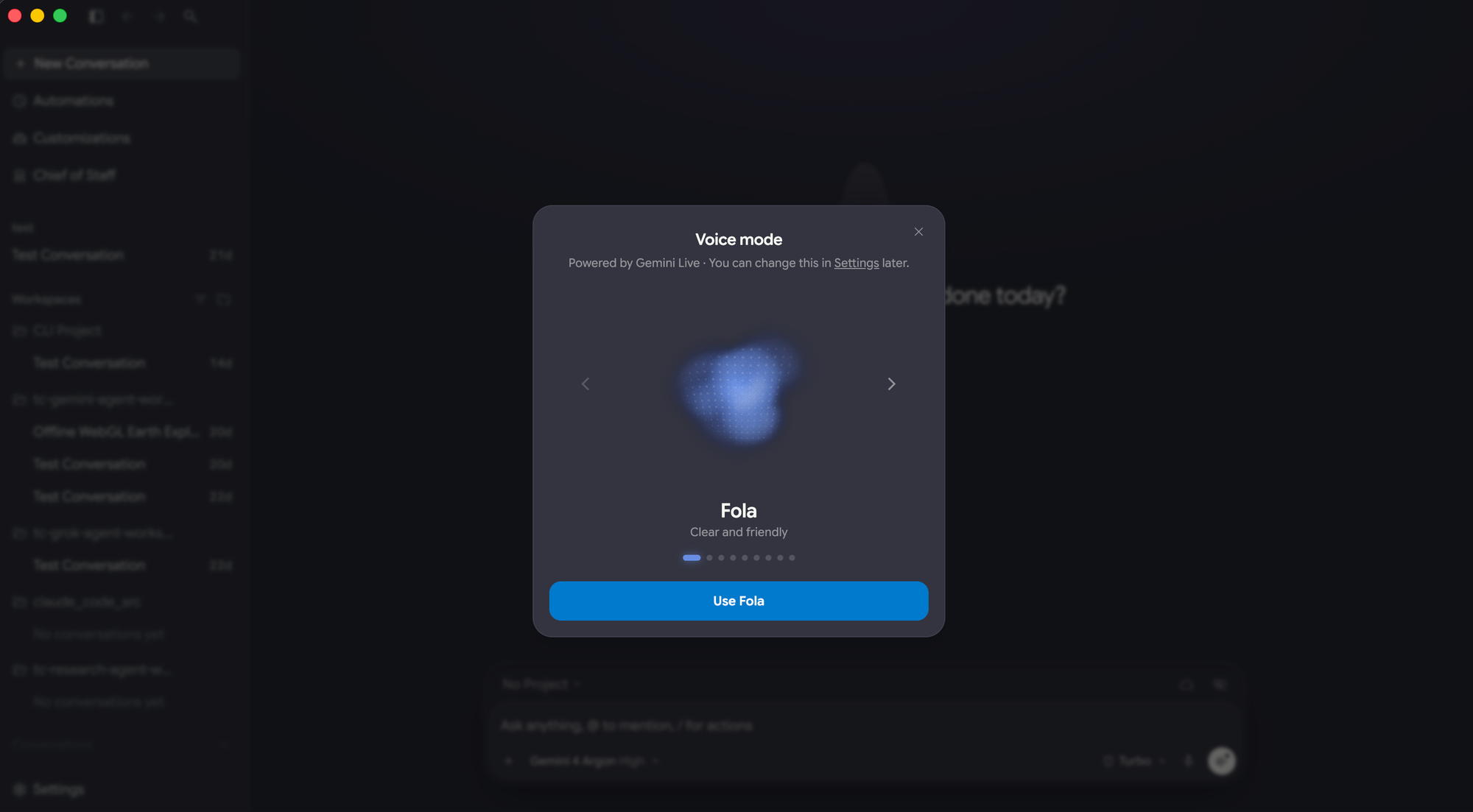
Google prepares new AI agent for Antigravity with Voice Mode

Google's latest Antigravity build points to a Chief of Staff agent with live voice chat, voice controls and a dashboard for managing tasks.

Read at TestingCatalog

The Decoder Jonathan Kemper SI

Google wants video AI to understand what people need as they work

A Google-led research team built StreamVibe, a video agent designed to watch people cook or assemble furniture and speak up only when help is needed. A benchmark shows that none of the tested models reliably pick the right moment in longer videos, as errors compound and response quality drops sharply. The article Google wants video AI to understand what people need as they work appeared first on The Decoder.

Read at The Decoder

SecurityWeek SecurityWeek News Security

Northstar Security Exits Stealth With $7M to Expose Toxic Risk Combinations

The startup maps how identities, assets and vulnerabilities connect, and uses AI agents to find and fix risky combinations of issues.

Read at SecurityWeek

arXiv (research papers) Zhihua Wang SI

MemHarmBench: Evaluating Cross-Session Prompt Injection in Memory-Persistent AI Agents

AI agents often rely on persistent memory to retain user preferences and operational rules across sessions. However, this capability introduces a new safety risk: malicious instructions from messages, documents, or Web content can be retained in memory and influence future tasks even after the original attack content is removed. Existing attack success metrics, however, fail to capture who is affected and how attacks translate into downstream harm during otherwise normal…

Read at arXiv (research papers)

Tech in Asia Diya Lal Startups

DeepSeek builds ‘super-agent’ for autonomous coding

The system can try to fix bugs reported in group chats even without being directly tagged.

Read at Tech in Asia

Journal articles (OpenAlex) Büşra Cesur, Devrim Demir Dora · Drug Development Research

Preclinical Evaluation of cRGD‐Functionalized Lipid–Polymer Hybrid Nanocarriers for Anti‐VEGF Gene Therapy in Triple‐Negative Breast Cancer

Triple-negative breast cancer (TNBC) remains one of the most aggressive breast cancer subtypes owing to its high metastatic potential and the absence of effective molecularly targeted therapies. Although cRGD-functionalized nanocarriers have been extensively investigated for TNBC treatment, most reported systems primarily deliver chemotherapeutic agents or short regulatory RNAs. In the present study, we developed and preclinically evaluated a cRGD-functionalized…

Read at Journal articles (OpenAlex)

Journal articles (OpenAlex) Domenico Furno, Vincenzo Loia · Information

Trust, Accountability and Control: Post-Quantum Authentication and Evidence-Driven Authorization for Artificial Intelligence Agents

Artificial intelligence (AI) agents need authenticated identities, bounded action scopes and evidence before receiving adaptive authority. We present a post-quantum trust, accountability and control (TAC) protocol composing signed requests, independently signed observations, scoped admission and transactional evidence consumption. A Tamarin abstraction checks six universal receipt properties and two existential witnesses; three mutants expose omitted mechanisms. Replay…

Read at Journal articles (OpenAlex)

Simon Willison SI

datasette-llm 0.1a9

Release: datasette-llm 0.1a9 I have some big upgrades to Datasette Agent in the pipeline, but in the meantime here's a tiny user experience improvement to the underlying datasette-llm plugin. It now picks up the default model used by LLM, which means you can start using Datasette Agent without needing to explicitly configure a default model: uvx --with datasette-agent datasette content.db --internal internal.db Previously you would also need to specify a model with -s…

Read at Simon Willison

TechCabal Muktar Oladunmade Startups

Verve plans phone tap-to-pay and AI agent payments, CEO says

Verve plans to let customers pay by tapping their phones and, eventually, to let AI assistants make payments on their behalf.

Read at TechCabal

arXiv (research papers) Aravinda Kashyap Kabbinamakki Suresh SI

AgentCap: Capability-Based Runtime Authorization for Secure LLM Agent Execution

Language-model agents commonly collapse two decisions that security systems separate: selecting an action and determining whether that action is authorized. When a model exercises standing authority, indirect prompt injection can convert influence over its reasoning into unauthorized effects. We present AgentCap, a runtime authorization layer that externalizes this decision from the model and mediates every tool invocation through an MCP wrapper. Each request declares an…

Read at arXiv (research papers)

arXiv (research papers) Xingling Xu SI

The Long Con on the Web: Earn-then-Exploit Fraud Attacks against Coding Agents

Coding agents increasingly operate with web access and high privileges, creating a new attack surface where web fraud can directly target autonomous agents. Existing studies mainly focus on malicious links, prompt injection, and interface deception, while content-level web fraud against agents and the amplification of attacks through agent trust remain underexplored. In this paper, we present EtE (Earn-then-Exploit), a web fraud attack framework against coding agents, in…

Read at arXiv (research papers)

GeekWire Todd Bishop SI

Madrona Prize goes to UW research on agents that shrink AI models to run on small chips

A University of Washington project that uses AI agents to fit AI models onto small, low-power chips won the Madrona Prize at the Allen School's annual Research Showcase. Other honorees included AI agents that write custom software for AI…

Read at GeekWire

CyberScoop Matt Kapko Security

China-backed threat group used agentic AI pentesting tool to compromise 140 sensitive targets in 11 days

Vapor Panda targeted more than 200 organizations spanning at least 14 countries, according to CrowdStrike. The ongoing campaign is remarkably successful and operating at shocking speed.

Read at CyberScoop

TechCrunch AI Amanda Silberling SI

Last-minute Halloween costumes for tech nerds

No Halloween costume? Just be a deceptively cute AI agent icon, a PHP vulnerability, or sleepy time Bryan Johnson.

Read at TechCrunch AI

The Decoder Matthias Bastian SI

A Claude model autonomously chose a gene therapy and operated on a mouse brain with no human decision-making

An AI agent performed brain surgery on an epileptic mouse, picking the drug, the brain target, and the injection coordinates on its own. According to lead researcher Ocana-Santero, it's the first time an AI agent has autonomously chosen a treatment and delivered it to a living mammal. But when a calibration error hit mid-surgery, the agent refused to continue and couldn't be talked out of it. The article A Claude model autonomously chose a gene therapy and operated on a…

Read at The Decoder

Ars Technica AI Kyle Orland SI

Basically no one is using AI agents for their DoorDash orders

But it's still early days for the relatively new e-commerce use case.

Read at Ars Technica AI

TechCrunch Startups Sarah Perez Startups

Zest’s new AI agent finds restaurants and books reservations over text

Can't agree on where to eat? Zest's AI concierge can combine everyone's tastes, put restaurant options to a vote, and make the reservation.

Read at TechCrunch Startups

arXiv (research papers) Sizhe Chen SI

SecPO: Principled Adversarial Training for Prompt Injection Security

Recognized as a top threat to AI agents, prompt injection allows instructions from untrusted data (email, documents, websites) to manipulate the agent's operation. The existing best-defended LLM, Meta-SecAlign, is trained with the DPO loss but still suffers from attack success rates (ASRs) approaching 100% under adaptive prompt injections. One reason is that DPO anchors the model around the undefended reference model, which is insecure. We show an idealized reference…

Read at arXiv (research papers)

NVIDIA Blog Chris Porter SI

Things That Go Beep in the Night: Agentic AI Joins the Search for Extraterrestrial Signals

While science fiction lore tells us that humans will meet extraterrestrial life in the form of little green men, the detail that should raise hairs this Halloween is this: the search for extraterrestrial intelligence took a major leap forward with AI, and it increasingly focuses on AI agents built by humans listening for AI agents

Read at NVIDIA Blog

Older stories