Uranium cubes reveal why the German nuclear project failed
"Our calculations suggest Heisenberg significantly underestimated the materials required."
"Our calculations suggest Heisenberg significantly underestimated the materials required."
A deal with China hasn’t been settled yet but still, Astana hopes to complete both its first and second nuclear power plants within a decade.
SEOUL — North Korea fired several missiles off its east coast Wednesday, Seoul’s military said, extending a burst of weapons testing as Pyongyang hardens its stance toward South Korea and the United States. The nuclear-equipped North has carried out a flurry of weapons tests in recent days, which come during heightened tensions between Pyongyang and Seoul
Nuclear weapons are commonly regarded as the ultimate deterrent. The Nuclear Nonproliferation Treaty (NPT) requires the nuclear weapon states – the US, Russia, the UK, France, and China – to eliminate their nuclear weapons. More recently, the Treaty on the Prohibition of Nuclear Weapons (TPNW) has declared nuclear weapons illegal. The nuclear-armed states – including India, Pakistan, Israel, and North Korea (that are not part of the NPT) – are reluctant to give up their…
Experts analyze the US-Israel Iran military conflicts - covering nuclear diplomacy; strategic, security, and regional implications; and domestic and international law.
Nuclear decommissioning increasingly relies on digital technologies to support characterisation, planning, monitoring, and decision-making in environments where access is limited by radiation, contamination, or other operational constraints. Digital twins provide a framework for integrating geometric, radiological, and operational information, while robotic systems acquire data and perform tasks with reduced human exposure. Although often treated separately, the two are…
From a nuclear revival to qubits, the MIT Energy Initiative’s annual research conference tracked deployment of today’s technologies to discovery of tomorrow’s breakthroughs.
As President Donald Trump and Iranian officials traded threats over the weekend, and with the Trump administration reportedly considering renewed attacks against an underground complex it claims is a nuclear site – which Iran denies – critics of the US-Israeli war on the Middle Eastern country called on Democrats to take decisive action to end
Within minutes of a ceasefire lifting in Kherson, Ukraine’s citizens were pummelled with threatening notifications
President Trump’s efforts to maintain stable U.S.-China relations face resistance from anti-China hawks within his own party. Despite positive developments from recent bilateral summits, disagreements over Taiwan, nuclear weapons, and China’s growing global influence raise questions about whether
Originally published by Pacific Forum, this article is republished with permission. A central problem in US nuclear thinking is that it is fragmented. Washington is laser-focused on the “three-body problem”: It considers the US-Russia-China triangle fundamental, and when it does not ignore the China-India-Pakistan triangle, it treats it as a mere “Southern Asia” issue. Washington,
Chemical, biological, radiological, and nuclear (CBRN) terrorism has been deterred by barriers running from knowledge to execution. This article argues that generative AI acts on only one: it collapses the information barrier to CBRN-relevant activity, not the execution barrier for physical attacks. Across a structured comparison of six institution-verified AI-enabled cases (2022–2025), the information barrier degrades in every case, whereas the execution barrier gives way…
Constellation Energy will get $5 billion in government loans to modernize nuclear reactors. Most of the new capacity is already committed to Google, Amazon, and Meta.
Between 2005 and 2013, Iran adapted its use of soft power in the Gulf region in response to tensions over its nuclear program and the Arab Spring. In Bahrain, Iran emphasized ideological and religious influence, focusing on political disenfranchisement and Shiite rights. However, this influence triggered a defensive securitization response from the Bahraini regime, supported by Saudi intervention. Conversely, Iran took a pragmatic approach toward Qatar, fostering political…
Nuclear infrastructure development highlights an important empirical case in environmental governance: nuclear facilities concentrate environmental and social burdens locally, yet many projects proceed without sustained opposition. In the context of China, this paper argues that such outcomes are produced through county-level scalar governance strategies. Focusing on the Zhangzhou Nuclear Power Project, the study reconstructs how local authorities designed four concentric…
Seattle startup Emerald Nuclear is leading a Norwegian project backed by a $2.1 million award to develop nuclear power for ships and offshore uses. The team is starting with a non-nuclear prototype, with its first commercial deployment targeted for 2031 and financing, fuel supplies and regulatory approvals still ahead.
This is today’s edition of The Download, our weekday newsletter that provides a daily dose of what’s going on in the world of technology. Opinion: The focus on AI safety disasters ignores everyday harms —Sam Hiner, cofounder of the Young People’s Alliance, and Emma Leiken, executive director of the Responsible Technology Youth Power Fund at…
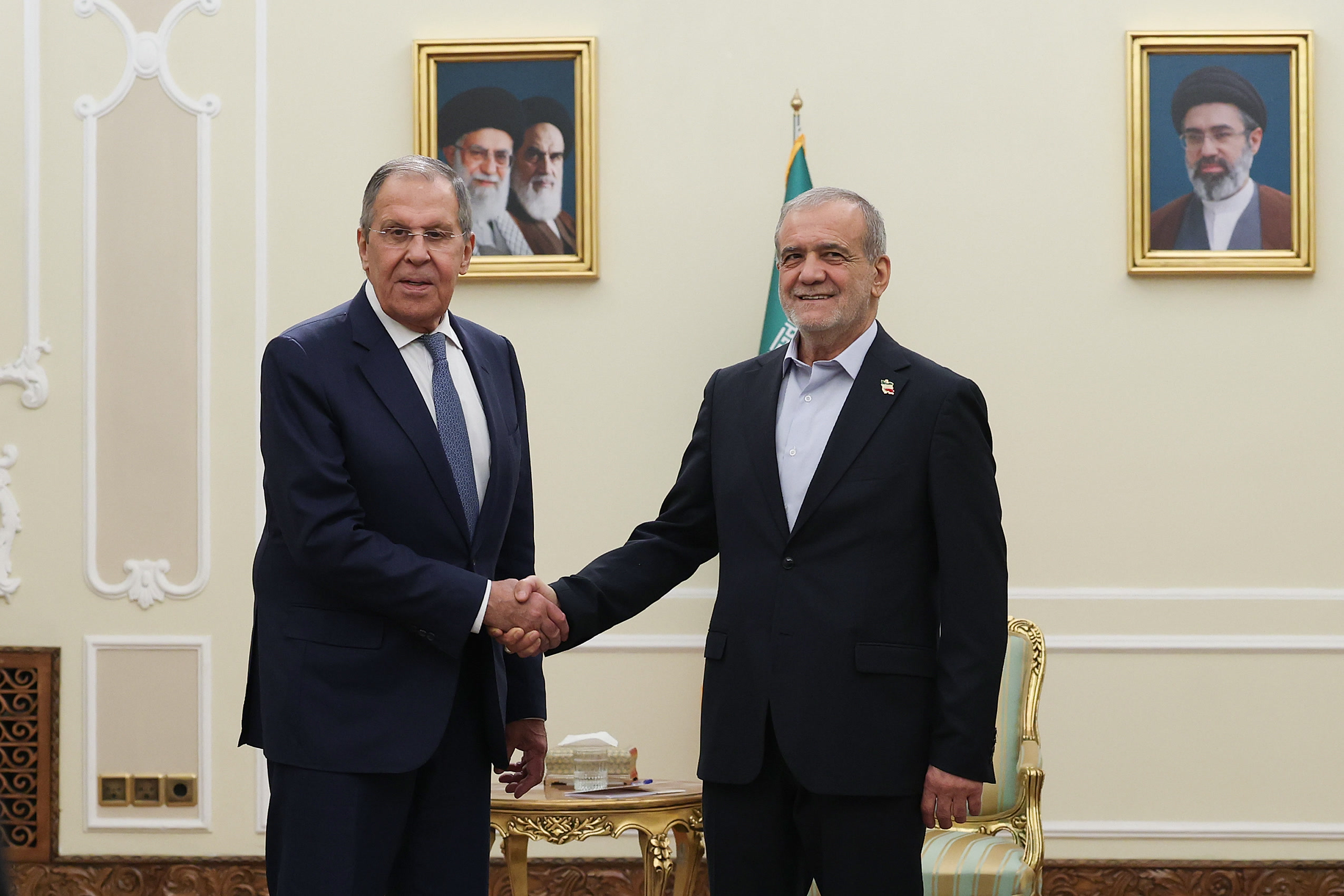
The story: Russian Foreign Minister Sergey Lavrov has traveled to Tehran, his first trip to Iran since the start of the Israeli-US war on the Islamic Republic. The chief diplomat offered Moscow's help in brokering a diplomatic resolution to the conflict, alongside a pledge to continue economic and nuclear cooperation with Iran. The visit comes as Russia seeks a key role, alongside China and Iran, in shaping a new regional order. The coverage: Lavrov held a joint press…
The Western military strategy debate on the Ukraine War has focused on defeating Russian forces inside Ukraine militarily and the associated risk of Russian nuclear escalation. Too little attention has been given to the possibility of Ukraine achieving victory-by-coercion, a negotiated outcome carrying a lower risk of nuclear escalation than victory-by-defeat. This article fills this gap by outlining the conditions for victory-by-coercion and applying them to the Ukraine…
"Many of the geopolitical issues that we see in the nuclear weapons space are replicated when it comes to space security issues," he said.
This article analyses the strategies of the US and Israel towards Iran, moving beyond the traditional military deterrence paradigm, within the framework of the concepts of demographic engineering, emotional provocation and post-colonial theory. The power struggle centred on Iran in the Middle East exhibits a hybrid character, conducted not only through nuclear capabilities or regional military presence, but also through the management of social perceptions, the manipulation…
Tories plan to scrap low-carbon housebuilding, Greens back new nuclear reactors, and Labour put oil-drilling decisions on hold New homes could be built without solar panels, heat pumps and high-grade insulation, leading to higher household bills if the Conservative party wins the next general election. Kemi Badenoch made scrapping the future homes standard (FHS) one of the central planks of her bid to become the next prime minister at the Tory party conference this week.
The Indo-Pacific is entering a phase of nuclear multipolarity in which the United States may face simultaneous crises involving China and North Korea. Existing deterrence theory, largely developed in bilateral settings, offers limited guidance for understanding horizontal escalation dynamics. This article examines whether an escalation-dominance-oriented US nuclear posture can manage horizontal escalation dynamics in a dual-crisis setting. The study provides an analytical…
In this work we show that approximately 60–70 kg of 60%-enriched uranium can be used to build a crude nuclear weapon with a kiloton yield. While too large to fit on a missile, such a weapon could be delivered by a shipping container. This analysis is motivated by the June 2025 Israeli and US attacks on Iran, especially the bombings of the nuclear facilities at Natanz, Fordow and Isfahan. The Iranian stockpile of approximately 440 kg of 60%-enriched uranium is, at the time of…
For eighty years, the Western alliance has anchored its strength in moral legitimacy, shared values, and the resulting credibility to shape international norms. NATO’s durability through the Cold War rested on more than nuclear deterrence alone: a shared conviction that the alliance represented a rules-based order worth sustaining, in which the use of force was bounded by law, constrained by democratic accountability, and subject to independent scrutiny. Dozens of nations…
Volume 49, Issue 3, September 2026, Page 163-180 .
Volume 49, Issue 3, September 2026, Page 127-146 .
Volume 49, Issue 3, September 2026, Page 87-102 .
Volume 49, Issue 3, September 2026, Page 69-86 .