Results for “Iraq”

FDD's Long War Journal Seth Frantzman Geopolitics

Northern Iraq struggles with Kurdish political divisions and security

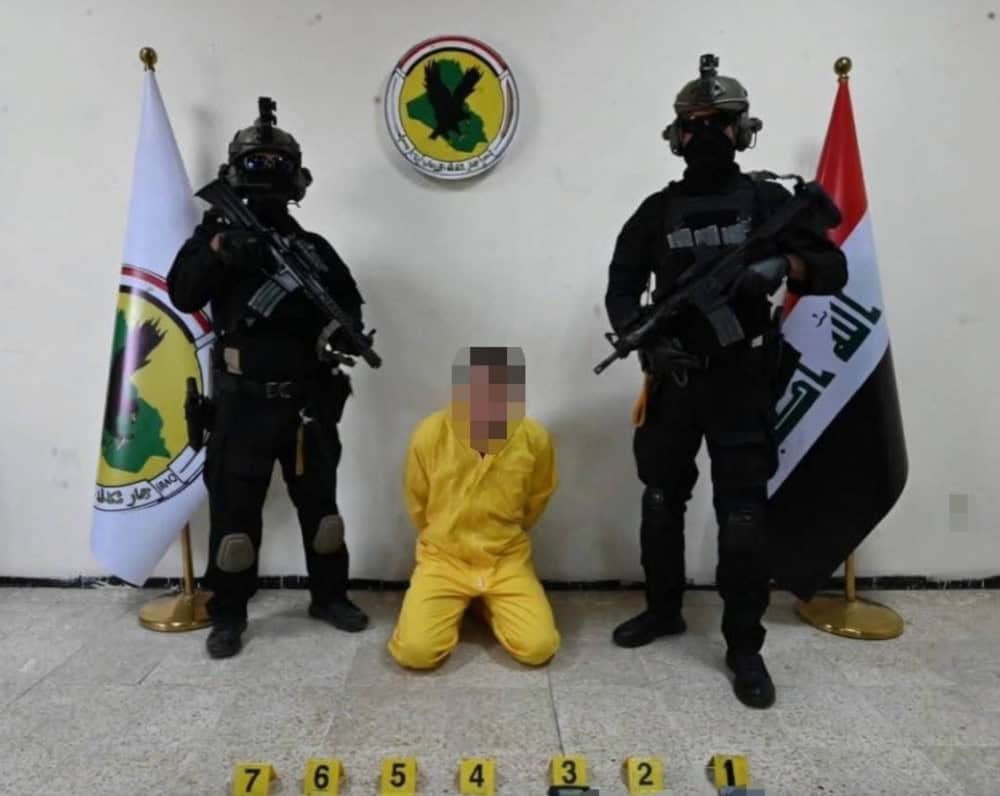
Northern Iraq faces mounting security and political challenges as Iranian drone attacks continue to target Kurdish Iranian opposition groups, Iraqi forces conduct operations against the Islamic State, and political disputes threaten stability in Sinjar. These developments come amid growing tensions between the Kurdistan Democratic Party and the Patriotic Union of Kurdistan, complicating efforts to strengthen security and political stability following the withdrawal of US…
Read at FDD's Long War Journal

Asia Times Bilal Habib Qazi Geopolitics

Iran’s Hormuz toll regime to punish weakened Trump’s Asian allies

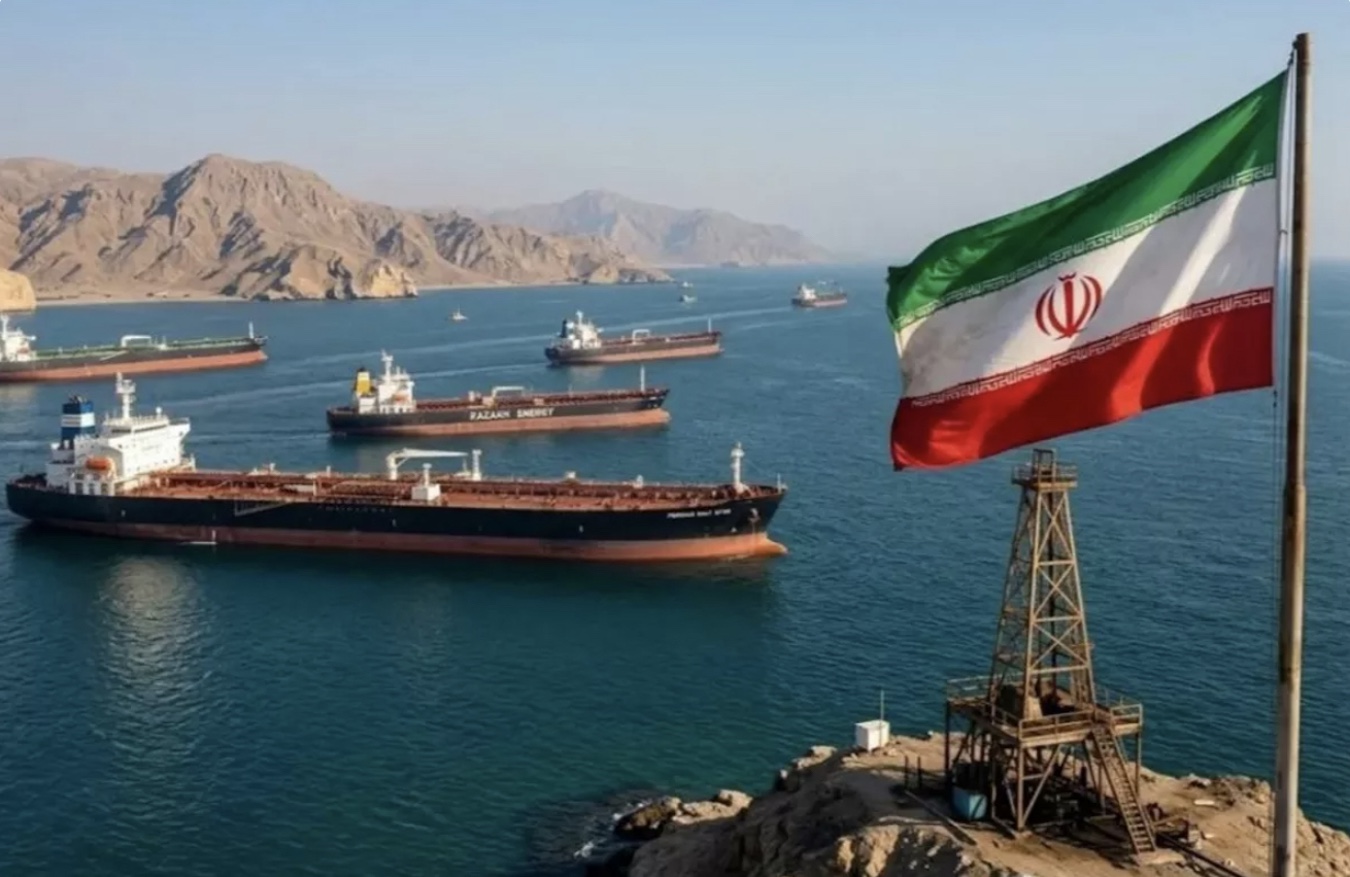
On November 3, as Americans voted in the midterm elections, Tehran announced which states may use the Strait of Hormuz. Amir Hayat Moqaddam, deputy chairman of the Iranian parliament’s National Security and Foreign Policy Committee, stated that vessels from India, China, Iraq and Qatar are exempt from its transit restrictions. These ships “pass freely,” he

Read at Asia Times

Amwaj.media Amwaj.media Staff

'Iran out' chant revives clash over who speaks for Iraqi protesters

The story: Slogans targeting Iran from Iraqi protesters marking the seventh anniversary of the 2019 Tishreen (October) uprising have caused a stir in Iraqi media. On social media, the chant “Iran out, Baghdad stays free” has been hailed as the Tishreen movement's central sovereignty demand. Critics have dismissed such language as one-sided, but leading figures associated with the protests counter that it is a rejection of all foreign interference. The coverage: Footage of…

Read at Amwaj.media

Amwaj.media Dana Taib Menmy

Talk of Iranian peace process with Kurdish factions meets deep distrust

Talk of a peace process between Iran and its Kurdish foes based in Iraqi Kurdistan has resurfaced, but the groups at the center seem to have little faith in it. The Patriotic Union of Kurdistan (PUK) says it has discussed with officials in Tehran a plan modeled on Turkiye's peace process with the Kurdistan Workers' Party (PKK). Long seen as the Islamic Republic's closest partner in the semi-autonomous region, the Sulaimaniyah-based party is well positioned to act as a…

Read at Amwaj.media

Journal articles (OpenAlex) Zakeyeh Aftabi, Mohammadnabi Jalali, Hossein Salehi et al. · Results in Engineering Geopolitics

Coupling hydroclimatic evidence and water conflict analysis: A TWINS–GMCR+ assessment of Iran–Iraq hydropolitical relations in the Tigris–Euphrates Transboundary Hydrosystem

The Tigris–Euphrates Transboundary Hydrosystem (TETH) is shaped by hydroclimatic drivers, large-scale water infrastructure, and complex hydropolitical relations among riparian states. This study uses a multi-stage analytical framework that combines independent hydroclimatic and hydrological evidence with the Transboundary Water Interaction Nexus (TWINS), the Graph Model for Conflict Resolution (GMCR+), and post-equilibrium social-choice screening to examine Iran–Iraq…

Read at Journal articles (OpenAlex)

Amwaj.media Amwaj.media Staff Geopolitics

Iran signals readiness for war amid claims that strikes have already begun

The story: Iranian officials are warning that renewed war with Israel and the US could trigger retaliation far beyond the region. This comes as suspected Israeli strikes on Iran-aligned Shiite armed groups in Iraq and Tel Aviv’s military preparations fuel fears of escalation. With Qatari mediators reportedly in Tehran and reports of Israeli-US plans to strike again after the US midterm elections, diplomacy and preparations for renewed righting are running side by side. The…

Read at Amwaj.media

Journal articles (OpenAlex) Hilde Van Meegdenburg, Ivan Bakalov · Journal of International Relations and Development Geopolitics

Pre-invasion narratives: how the invasions of Iraq and Ukraine were constructed as logical and righteous

Abstract Invasions are narrated. They are narrated afterwards, when it comes to the construction of their meaning and legacy, and they are narrated in advance, when their logic and supposed necessity are first established. In fact, invasions—notwithstanding their very real and horrific physical and social consequences—cannot be fully understood without studying the stories that are told about them. In this paper we are interested in pre-invasion narratives; in the narratives…

Read at Journal articles (OpenAlex)

FDD's Long War Journal Seth Frantzman Geopolitics

Syria hosts Iraqi PM for visit amid security challenges in north and south

Syrian President Ahmad al Sharaa hosted Iraqi Prime Minister Ali al Zaidi in Damascus on October 28 for talks aimed at strengthening bilateral relations, expanding trade, and reviving energy cooperation. The historic visit came as Syria faces continuing security challenges, including a deadly Jordanian airstrike in the south, clashes with foreign jihadists in Idlib, and tensions surrounding the return of displaced Kurds in northern Syria.

Read at FDD's Long War Journal

Amwaj.media Amwaj.media Staff

Iraqi explanations for shuttering of Iran crossing fail to quiet US pressure claims

The story: Iraq has closed the Al-Shaib-Chazabeh border crossing with Iran. Baghdad has offered a string of explanations amid ambiguity over the motives. Authorities cite technical shortfalls and risks of smuggling. However, Iraqi politicians and commentators have blamed US influence. Officials in Maysan Governorate, where the crossing is located, have threatened civil disobedience and asked why Shaib is singled out as the closure disrupts local livelihoods. The coverage…

Read at Amwaj.media

Amwaj.media Amwaj.media Staff

Iran's reported execution of Iraqi for spying meets public outrage, official silence

The story: Reports that Iran has executed a young man from Iraq’s Anbar Governorate on espionage charges have sparked outrage among Iraqi commentators. Iranian rights groups say Ayoub Mohammed Nabil, a 28-year-old caretaker from Haditha, was hanged on Oct. 11. The response online has taken on a sectarian dimension, with some accusing Tehran of executing the caretaker for being a Sunni Arab, and asking why Baghdad has remained silent. The coverage: On Oct. 16, the independent…

Read at Amwaj.media

Amwaj.media Amwaj.media Staff Geopolitics

Iran’s ‘Missile Man’ wins parliament’s confidence as defense minister

The story: Iran’s conservative-dominated parliament has voted overwhelmingly to approve Mehrdad Akhlaqi as defense minister. Observers say the appointment of a veteran of missile production signals Iran’s intention to double down on its missile capabilities. This comes amid a flare-up in clashes between the Islamic Revolutionary Guard Corps (IRGC) and Iraq-based Kurdish opposition groups, which are reportedly using more advanced weaponry. The coverage: Lawmakers on Oct. 18…

Read at Amwaj.media

POMEPS (Project on Middle East Political Science) Prerna BalaEddy Geopolitics

A Victor’s Peace in Iraq: ISIS and the Mediated State (S. 16, Ep. 3)

On this week’s episode of the podcast, Jacob Eriksson of University of York joins Marc Lynch to discuss his book, A Victor’s Peace in Iraq: ISIS and the Mediated State. This book explores the nature of the prevailing peace in Iraq and the peacebuilding processes behind it, focusing on political power-sharing, security provision, transitional justice,

Read at POMEPS (Project on Middle East Political Science)

Journal articles (OpenAlex) Ksenia A. Naumova, Ol'ga Aleksandrovna Solopova, Abdel Rahman Mitib Altakhaineh · Cogent Social Sciences Geopolitics

Legitimizing war: continuity and change in US just war discourse on Iraq (2003) and Iran (2026)

This article examines the continuity and transformation of US just war discourse by comparing George W. Bush’s 2003 Iraq address and Donald Trump’s 2026 Iran remarks. It investigates whether the 2003 pattern of just war legitimation persists in 2026 and how its discursive realization has shifted. Using Critical Discourse Analysis and the Discourse-Historical Approach, the study reconstructs a five-element pattern of just war discourse: conflict management, negative…

Read at Journal articles (OpenAlex)

FDD's Long War Journal Seth Frantzman Geopolitics

Iraqi commander killed by Islamic State following Iraqi airstrikes against the group

An Iraqi brigadier general and two other military personnel were killed by an explosive device linked to the Islamic State near Kirkuk on October 14, a day after Iraqi F-16s carried out airstrikes against Islamic State positions in the area. The incident underscores the continued threat posed by the remnants of the jihadist group in northern Iraq, where militants have exploited security gaps.

Read at FDD's Long War Journal

GNET (Global Network on Extremism and Technology) Aamir Hayat Geopolitics

ISKP’s QR Codes and the Limits of Text-Based Monitoring

On 1 July 2026, the US Treasury’s Office of Foreign Assets Control added 134 cryptocurrency addresses (131 TRON and three Monero) to its existing entry for Islamic State of Iraq and the Levant-Khorasan (ISIL Khorasan), an organisation designated as a Foreign Terrorist Organization since January 2016. Chainalysis reported on the same day that the TRON wallets had received over US$1.4

Read at GNET (Global Network on Extremism and Technology)

KabulNow Nazanin Mohseni

OIC to Discuss Afghanistan Crisis as Envoy Urges Taliban to Restore Girls’ Access to Education

KABUL, AFGHANISTAN - The Organization of Islamic Cooperation (OIC) has said the crisis in Afghanistan will be among the key issues discussed at its 52nd Council of Foreign Ministers meeting in Baghdad, Iraq, as the organization’s special envoy has urged Taliban officials to uphold girls’ right to education, including access to medical studies. The two-day meeting is scheduled for October 17 and 18. In a post on X on Wednesday, the OIC said the agenda would include major…

Read at KabulNow

POMEPS (Project on Middle East Political Science) Prerna BalaEddy Geopolitics

Iraq’s Shi’a warriors: From Battlefield to Parliament (S. 16, Ep. 1)

On this week’s episode of the podcast, Inna Rudolf of Kings College London joins Marc Lynch to discuss her book, Iraq’s Shi’a Warriors: From Battlefield to Parliament. By examining the PMU’s self-positioning as a pillar of Iraq’s defence infrastructure, this book offers a critical perspective on the prospects for Security Sector Reform (SSR) and highlights

Read at POMEPS (Project on Middle East Political Science)

FDD's Long War Journal Seth Frantzman Geopolitics

Syria faces infrastructure sabotage, Islamic State activity amid utility shortages

Syria has restored a sabotaged gas pipeline near Deir Ezzor and is repairing another line near Damascus as authorities confront threats to the country’s energy infrastructure. The repairs come amid wider challenges, including Islamic State activity and electricity, water, and fuel shortages, even as Syria expands energy trade with Iraq and works to restore regional oil and gas links.

Read at FDD's Long War Journal

FDD's Long War Journal Seth Frantzman Geopolitics

US forces complete departure from Iraq as anti-Islamic State mission in Iraq ends

US and other anti-Islamic State coalition forces completed their withdrawal from Iraq on September 30, ending Operation Inherent Resolve as Baghdad marked what it called a restoration of Iraqi sovereignty. The departure comes amid concerns about Iran-backed militias, air-defense gaps in the Kurdistan Region, and the future of US-Iraq security cooperation.

Read at FDD's Long War Journal

Journal articles (OpenAlex) Ahmed Al‐Rawi · Games and Culture Geopolitics

The United States’ Strategic Political Communication and the Production of a Strategy Video Game “With an Authentic Iraqi Feel”

This article deals with a unique case study that has never been studied before in which the U.S. Department of Defense funded the production and distribution of a strategy video game during its occupation of Iraq between 2003–2011. Using a freedom of information request, a number of unclassified documents were obtained by the author, which included details of vast media campaigns, including the production of a prodemocracy strategy video game. There was never any attribution…

Read at Journal articles (OpenAlex)

Journal articles (OpenAlex) Umud Shokri · World Water Policy Geopolitics

Decarbonization and the Rescaling of Water–Energy Bargaining: How Renewable Expansion Is Reshaping Iran–Iraq–Türkiye Transboundary Water Politics

ABSTRACT This article examines how renewable‐energy expansion is changing water–energy bargaining among Iran, Iraq, and Türkiye in the Tigris–Euphrates basin. Much of the existing literature on transboundary water politics focuses on territorial control, upstream–downstream power asymmetries, legal rules, and hydro‐hegemony but gives less attention to how energy transitions change the sources of leverage among riparian states. Using a qualitative comparative approach, the…

Read at Journal articles (OpenAlex)

Journal articles (OpenAlex) Mac Skelton, Zmkan Ali Saleem, Craig Jones · Security Dialogue Geopolitics

Politicising civilian protection in Iraq: negotiating (in)security across scales in the war against the Islamic State of Iraq and Syria

Abstract This article examines civilian protection in Iraq during and after the war against the Islamic State of Iraq and Syria, with a focus on Mosul. It builds on the long-standing literature on civilian protection, but argues that existing scholarship has not adequately grasped how security and insecurity are negotiated across co-constituted scales, including local, national, and international scales. The article highlights a series of complex and sometimes contradictory…

Read at Journal articles (OpenAlex)

Journal articles (OpenAlex) Philipp O. Amour · Journal of Balkan and Near Eastern Studies Geopolitics

Iran’s Multi-Theatre Strategy After October 7: Ambiguity as Deterrence Infrastructure

Since the Hamas assault of 7 October 2023, Tehran has confronted a strategic problem: how to affirm its revolutionary commitment to the resistance against Israel while avoiding a direct war with adversaries it could not defeat. This article asks how Iran managed that problem across four theatres (Gaza, Lebanon, Yemen, and Iraq–Syria). It argues that strategic ambiguity formed the basis of Tehran's deterrence infrastructure. Using the lenses of alliance bargaining and…

Read at Journal articles (OpenAlex)

Journal articles (OpenAlex) Adrian López Fleming · Dynamics of Asymmetric Conflict Geopolitics

Network warriors of God a social network analysis of the Quds Force and Iran-aligned actors

Despite limited resources, Iran has become a significant regional and global player in the twenty-first century, largely due to its influence over primarily Shi’a political and military organizations through the Quds Force. Its support for groups like Hezbollah has advanced its geostrategic goals in Palestine, Syria, Iraq, Yemen, and beyond. This study employs network analysis, using OSINT, ACLED, UCDP databases, and primary research, to examine Quds Force aligned armed…

Read at Journal articles (OpenAlex)

Journal articles (OpenAlex) Elena Zhirukhina · Post-Soviet Affairs Geopolitics

When society, identity, and security align: repatriation strategies in Central Asia

Thousands of nationals, referred to as foreign terrorist fighters and their families, who travelled to Syria and Iraq with the Islamic State and other groups, had remained in detention sites in north-east Syria from 2019 to 2026. This situation created humanitarian and security dilemmas for states of origin. While many governments resisted large-scale returns, Central Asian states repeatedly repatriated their nationals, though their approaches differed in scale, scope, and…

Read at Journal articles (OpenAlex)

Journal articles (OpenAlex) Hassan Noorali, A. Mani Irannejad, Virginie Mamadouh · Political Geography Geopolitics

The sacred imagination of geographical spaces: The geopolitical spiritualization of the Islamic Republic of Iran

The Islamic Republic of Iran (IRI), established after the 1979 Islamic Revolution under Ayatollah Ruhollah Khomeini (founder and Supreme Leader until 1989), blended Islamic theocracy with anti-imperialist ideology. Regionally, in the post-Khomeini era, it supported Mehvar-e Moghāvemat “Axis of Resistance”—a network including Shia-majority Iraq, Alawite-led Syria (under Assad until 2024), Lebanese Hezbollah, Sunni Hamas, and Yemen's Houthis—against American, Israeli, and…

Read at Journal articles (OpenAlex)

Older stories