Results for “model”

arXiv (research papers) William Thompson Space

The Brown Dwarf Desert is a Mass-Ratio Desert: Astrometric Demographics of 63,254 Stars

Brown dwarfs are rare as close companions to stars compared to planets and stellar companions, a paucity known as the brown dwarf desert. Whether the desert sits at a fixed companion mass or a fixed companion-to-star mass-ratio $q$ has been difficult to test, because microlensing, radial velocities, and direct imaging have sampled comparatively narrow slices of stellar mass and separation. Here we apply a novel joint-modelling method to Hipparcos and Gaia DR2/DR3 astrometry…

Read at arXiv (research papers)

arXiv (research papers) William Thompson Space

The Brown Dwarf Desert is a Mass-Ratio Desert: Astrometric Demographics of 63,254 Stars

Brown dwarfs are rare as close companions to stars compared to planets and stellar companions, a paucity known as the brown dwarf desert. Whether the desert sits at a fixed companion mass or a fixed companion-to-star mass-ratio $q$ has been difficult to test, because microlensing, radial velocities, and direct imaging have sampled comparatively narrow slices of stellar mass and separation. Here we apply a novel joint-modelling method to Hipparcos and Gaia DR2/DR3 astrometry…

Read at arXiv (research papers)

AWS Machine Learning Blog Raphael Simon SI

How CrossnoKaye grounds physical AI with Amazon Bedrock AgentCore

CrossnoKaye brought physical AI to heavy industry with Amazon Bedrock AgentCore. Its ATLAS platform and AURA agentic system ground AI reasoning in live plant data and run verifiable Python in isolated AgentCore sandboxes, giving plant engineers checkable, math-backed answers instead of model guesses.

Read at AWS Machine Learning Blog

The Decoder Matthias Bastian SI

Bytedance's Seedream 5.5 promises pixel-stable image editing across 100 rounds without color drift

Bytedance Seed has introduced Seedream 5.5, an image model built for professional production workflows. It supports stable multi-pass editing over up to 100 iterations, generates native RGBA images with transparent backgrounds, and, according to Bytedance, outperforms GPT-Image-2.5 Sunburst in realism. A Pro version is planned. The article Bytedance's Seedream 5.5 promises pixel-stable image editing across 100 rounds without color drift appeared first on The Decoder.

Read at The Decoder

arXiv (research papers) William Thompson Space

Joint Gaia-Hipparcos astrometry, RV, and Imaging posteriors from the G23H Hipparcos sample

We present uniform posteriors indicating the presence or absence of stellar and planetary companions over a sample of $10^5$ stars in Hipparcos and Gaia. We use the "G23H" catalog to fit a model that incorporates absolute astrometry constraints from Hipparcos, Gaia DR2, and Gaia DR3, as well as Gaia DR3 photometry, excess RV variability, and includes information from the presence or absence of common-proper motion companions. The resulting posteriors can be used directly to…

Read at arXiv (research papers)

arXiv (research papers) Priya Dhawka SI

Programming Prescience: Issues in Human Construction of Forecasting Bots

AI models' growing capacity for complex reasoning has made them attractive tools for forecasting, or the systematic prediction of the future based on past and present data. However, should AI forecasting systems be adopted, human builders will shoulder the work of building and evaluating them. In this paper, we explore what this work looks like with a qualitative interview study with 15 builders of forecasting bots, sampled from among successful participants in a recent AI…

Read at arXiv (research papers)

arXiv (research papers) Matthew Flathers Tech policy

Curbside Chatbots: Auditing the Mental Health Interventions Large Language Models Recommend to Clinicians, Caregivers, and Patients

Users are asking language models mental health questions and are receiving answers. We audited what 41 language models recommend to users when the same clinical information reaches them from three footings: a clinician describing a patient, a caregiver describing a loved one, or a person describing themselves. Across 19 case vignettes and five questions, we collected 35,055 free-text responses, extracted every intervention named with a validated judge, and had 29 models rate…

Read at arXiv (research papers)

arXiv (research papers) Junsheng Fu Security

Suppression Is Not Erasure: Mechanistic Analysis and Reactivation Boundaries of Subspace Projection for LoRA Backdoor Defense

Low-Rank Adaptation (LoRA) is the standard paradigm for customizing large language models, yet third-party LoRA adapters pose a supply-chain risk: modifying less than 1% of model parameters suffices to implant stealthy backdoors. Recent defenses project adapter weights onto estimated backdoor subspaces, reporting near-zero static Attack Success Rates (ASR). We audit subspace-projection defenses across four model scales (Qwen2.5-0.5B/1.5B/3B/7B) and three architectures…

Read at arXiv (research papers)

The New Stack Frederic Lardinois

Meta launches Muse Ember to take on Claude Haiku and GPT-6 Luna

Meta on Monday debuted Muse Ember, a smaller, more efficient multimodal member of its Muse model family. The company is

Read at The New Stack

TechCrunch Russell Brandom SI

Meta releases Muse Ember, a new lightweight model for agent execution

At 10 cents per million input tokens, Ember is significantly cheaper than frontier competitors like Haiku and Luna.

Read at TechCrunch

MacRumors Mitchel Broussard Gadgets

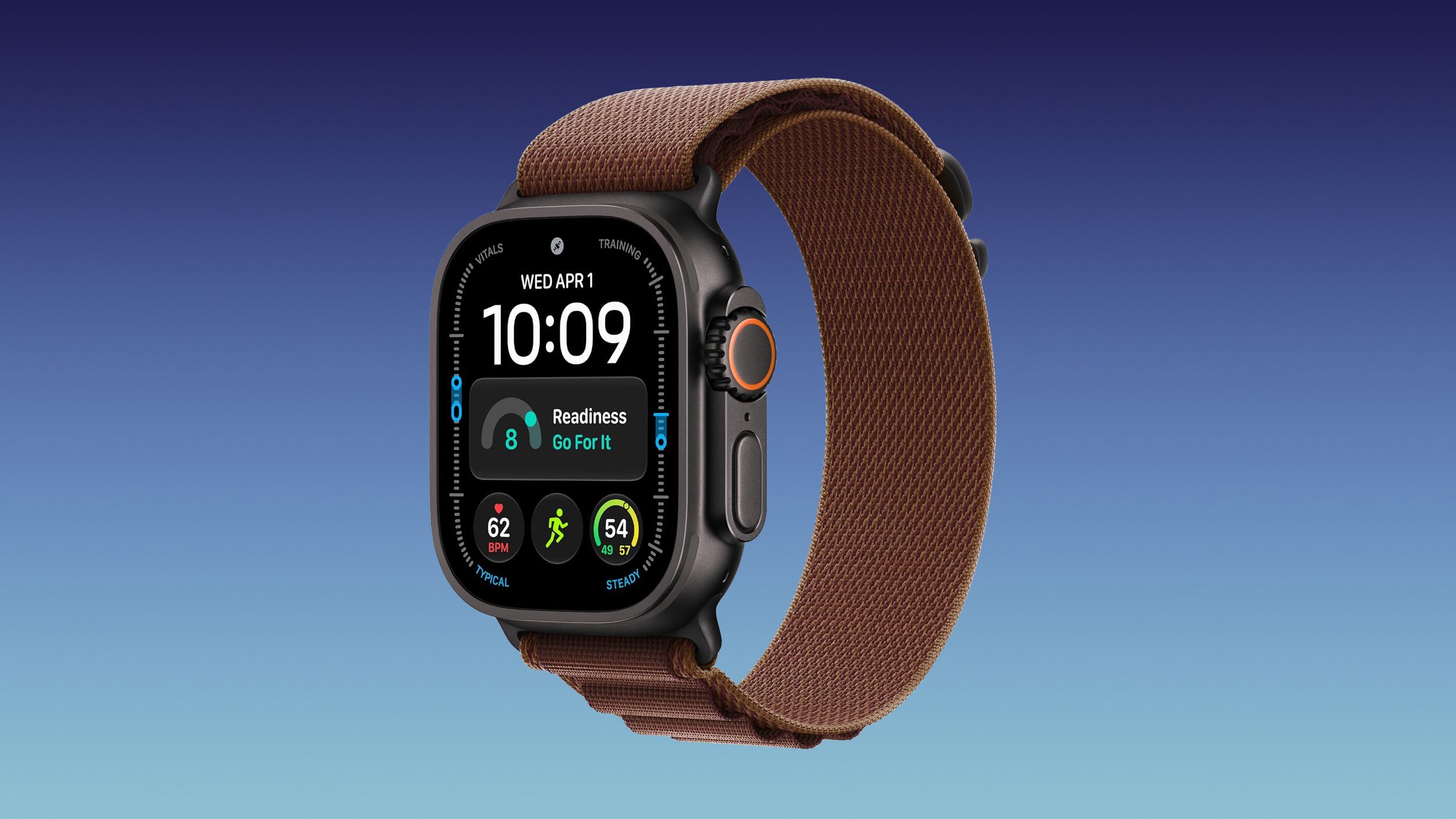
Apple Watch Ultra 4 Gets $99 Amazon Discounts, Starting at $699.99

The Apple Watch Ultra 4 has dropped to $699.99 on Amazon, down from $799.00. This is a match of the all-time low price on the new Ultra 4, which launched in September. Note: MacRumors is an affiliate partner with some of these vendors. When you click a link and make a purchase, we may receive a small payment, which helps us keep the site running. There are six Ultra 4 models that are on sale at this price, including the Black model with Burgundy Alpine Loop (Large), the…

Read at MacRumors

arXiv (research papers) Sebastian Mengwall Space

MarsNet: Learning the Martian Atmosphere from Observations Alone

We present MarsNet, a machine-learned model of the Martian atmosphere trained only on observations. Existing reanalyses assimilate spacecraft retrievals into general circulation models (GCMs), so where observations are sparse their fields largely reflect the model. We therefore use extant reanalyses only for evaluation. MarsNet alternates a two-hour forecast with an update that assimilates the observations of each window, and both steps are learned jointly. Because the…

Read at arXiv (research papers)

TechPowerUp Nomad76 SI

(PR) Google Extends Tensor Processor Unit Series with TPU 8tx and 8i Max

While we've always co-designed our TPUs in partnership with Google DeepMind, we're now increasingly getting feedback from external organizations on their specific needs. With computing moving from human to agent scale, businesses are asking for accelerators that can reason across AI models' massive context windows. In addition, some highly regulated customers are asking for specialized encryption capabilities for unique workloads. The new TPU systems we are announcing today…

Read at TechPowerUp

arXiv (research papers) Suryansh Talukdar SI

LogCDM: Interpretable Log Anomaly Detection via Behavioral Graph Drift and Adaptive Signal Fusion

Log-based anomaly detection is increasingly dominated by large pretrained models, from BERT-scale encoders to 8B-parameter language models, which require GPUs at inference time and are difficult to deploy on the monitoring nodes where logs are produced. We present LogCDM, a compact detector that scores each log session using three complementary signals: the next-event surprise of a small causal Transformer, the distance between a graph-attention embedding of the session's…

Read at arXiv (research papers)

AgFunderNews Stephen Wood and Steve Rosenzweig

Guest article: A landscape-scale strategy for regenerative agriculture

Growth of regenerative agriculture depends less on scaling a single model and more on understanding how change unfolds in different places.

Read at AgFunderNews

arXiv (research papers) Ding Zhu SI

PORT: Preference Optimization via Robust Token-Level Reweighting

Preference optimization has become a central approach for aligning large language models with human values, but its effectiveness depends heavily on the quality of preference annotations. In practice, preference data is often noisy due to annotation errors and ambiguity. Existing robust preference optimization methods primarily operate at the sequence level, implicitly treating entire responses as uniformly correct or incorrect. However, rejected responses may still contain…

Read at arXiv (research papers)

arXiv (research papers) Nikhil Sharma SI

The Narrative Gap: Can LLMs Help Us Navigate Diverse Narratives Across Languages?

Large language models (LLMs) increasingly mediate how people seek and consume information, including accounts that differ across languages and regions, especially on contested topics. Supporting diverse information seeking requires models to help users navigate competing narratives across languages and information streams. We define six capabilities necessary for diverse multilingual information seeking: three foundational capabilities for narrative inclusion, narrative…

Read at arXiv (research papers)

9to5Google Will Sattelberg Gadgets

Samsung bets that you’ll either buy a Galaxy S27 Pro or Ultra next year

Samsung is teeing up to kick off 2027 with an all-new lineup of flagship smartphones, and despite rising prices at your local Best Buy, the brand is still hedging that you’re going to pony up for the most premium model available.

Read at 9to5Google

arXiv (research papers) Xinrui Zu SI

$Σ$-LeWM: Learning World Models via S-Information for Robot Control

World models have increasingly been applied as a model-based control method for robotics tasks such as manipulation and locomotion. While early world model architectures relied on decoders to prevent mode collapse and learn a predictable latent space, recent works on world models, such as Joint Embedding Predictive Architecture or LeWorldModel, increasingly aim to learn embeddings without a grounding decoder, utilising only a latent forward dynamics predictor and a…

Read at arXiv (research papers)

arXiv (research papers) Brendan P. Murphy SI

Safe Reinforcement Learning for Multi-Turn Clinical Agents: When Dense Rewards Beat Outcome Rewards

Reinforcement learning with verifiable rewards is increasingly used to improve language model reasoning, yet its effects on sequential decision procedures remain poorly understood. We study this problem in clinical multi-turn agents that must decide what information to request, when to stop gathering evidence, and which action to take. We introduce three controlled environments: medication refill triage, acute diagnostic work-up, and dosing titration, each with hidden…

Read at arXiv (research papers)

arXiv (research papers) Bernat Homs

Will AI mess my RTL? A snapshot-based approach to verifying AI-written RTL

With the growing interest in using AI (Artificial Intelligence) for RTL (Register-Transfer Level) hardware development, robust and comprehensive verification has become more important than ever. As Large Language Models (LLMs) increasingly assist in creating and modifying RTL designs, ensuring that these changes preserve existing functionality is paramount for building trust in AI-driven workflows. We present SVApshot, a fully automated framework that leverages LLMs to…

Read at arXiv (research papers)

arXiv (research papers) Valentin Burkin Tech policy

A local language model layered with rule-based and neural detectors for clinical text de-identification: an open-source toolkit and evaluation

Objectives: To measure whether a locally hosted large language model (LLM), stacked with deterministic and clinical named-entity recognition (NER) detectors, finds more protected health information (PHI) than open tools, and at what precision. Materials and Methods: DeidSharp, an open-source .NET toolkit, combines the findings of pluggable detectors (patterns, a clinical NER model, a local 26B mixture-of-experts LLM) and fails closed on any detector error. Configurations…

Read at arXiv (research papers)

The Register Thomas Claburn SI

Machine learning researchers build a better world model

Leibniz lives! Insight about how 'nature makes no leaps' promises better robot predictions

Read at The Register

arXiv (research papers) Guohui Deng SI

GeoScope: Training-Free Program Execution beyond the Counting Horizon for Ultra-High-Resolution Remote Sensing Question Answering

In ultra-high-resolution (UHR) remote sensing images, the objects that questions count in a region or relate by direction often span only a few pixels. Existing methods mainly decide where a vision-language model (VLM) should look and trust its answer in the chosen view. We show that this assumption fails for counting, and measure VLMs as one calibrates a sensor. All eight open VLMs tested fall increasingly short once a view holds more than a certain number of objects, about…

Read at arXiv (research papers)

The Decoder Maximilian Schreiner SI

Disney bets on Adobe's Firefly to create brand-safe AI models for its entertainment empire

Disney and Adobe are building custom AI tools together for the entertainment giant's productions. The article Disney bets on Adobe's Firefly to create brand-safe AI models for its entertainment empire appeared first on The Decoder.

Read at The Decoder

arXiv (research papers) Susie S. Y. Li SI

reComposer: Editable Planning for Controllable Image Generation

Prompt-based image generation makes it easy to produce visual assets, but offers little support for engaging with the creative process. Prompting collapses interdependent creative decisions into a monolithic instruction and returns a finished image, leaving control limited to revising the prompt or correcting the model's output. We present reComposer, a process-oriented image-generation interface built around editable planning, which decomposes users' evolving intent into…

Read at arXiv (research papers)

arXiv (research papers) Hasaan Ahmad SI

Library of Hands: Fix the Hands, Not the World Model

A world model predicts how a scene changes after an action, and a planner uses it to search for actions that reach a goal. If the camera moves or the controller changes, the same command moves the robot differently: when its commands are turned by 90 degrees, a frozen planner with the LeWM world model that succeeds in 77.5% of episodes succeeds in only 7.8%. Current fixes retrain the model, need training data, or forget a set-up when it returns. We propose Library of Hands…

Read at arXiv (research papers)

arXiv (research papers) Marcus Armstrong SI

Interpretability Is Not Model-Specific

Interpretability tools are usually built for one model at a time: a refusal direction, a truthfulness probe, or a steering vector is found with labeled data inside the model it explains. We ask whether such tools can be carried to other models through a map between residual streams fit only on unlabeled prompts. We transfer a refusal direction, tested causally by addition and ablation, and two read-out tools, a correctness direction and a sentiment probe, across 110 pairs of…

Read at arXiv (research papers)

arXiv (research papers) Fabiola Antonietta Gerosa Space

Testing Models of Disk Formation and Gravito-Viscous Evolution Against Observations of Young Protoplanetary Disks

Young protoplanetary disks have received increasing attention in recent years, due to observations revealing the presence of substructures in disks younger than one million years, suggesting that planet formation may begin earlier than previously thought. Other recent observations have provided new insights into the evolution of gas and dust in these early stages, enabling comparisons with evolved Class II disks. Yet the physical processes governing the earliest stages of…

Read at arXiv (research papers)

The Verge Tom Warren Gadgets

Sony’s new PlayStation Portal handheld includes ‘additional’ internal storage

Sony is launching a new version of its PlayStation Portal exclusively in Japan next month. The updated model will launch in the midnight black color option we've seen before, and will include "additional" internal storage for…

Read at The Verge

Older stories