Results for “models”

arXiv (research papers) Bogdan Mamaev Tech policy

Measuring Definition Sensitivity in LLM Annotation of Social Science Concepts

In social science research, text annotation is a fundamental task that is traditionally a costly, hard-to-scale manual process. Researchers have used large language models (LLMs) to perform annotation by writing a definition of a concept into a prompt - a rule that determines whether a label should be attributed to a text depending on its content. However, concepts such as hate speech, fake news, and terrorism typically have several theoretically defensible competing…

Read at arXiv (research papers)

The Decoder Matthias Bastian SI

Claude Fable 5.2 and Mythos 5.2 cement Anthropic's AI lead just before its IPO

Anthropic is releasing Claude Fable 5.2 and Mythos 5.2, its most powerful models to date, in two versions: one freely available and one reserved for verified organizations. The models solve open physics problems, show stronger cybersecurity capabilities, design functioning operating systems, and write more than 90 percent of the changes merged into Anthropic's core code, according to the company. Anthropic says it has deliberately curbed any capabilities that would let the…

Read at The Decoder

9to5Google Ben Schoon

Hunter is killing Google Home, Alexa controls for its smart ceiling fans

Hunter, a major brand for ceiling fans in the US, is pulling the plug on its Google Home and Amazon Alexa bridge for controlling “HunterSMART” models in just a few weeks.

Read at 9to5Google

AWS Machine Learning Blog Dani Mitchell SI

Introducing Claude Fable 5.2 on AWS

Claude Fable 5.2 and Claude Mythos 5.2 are now available on Amazon Bedrock and Claude Platform on AWS. Learn what's new in both models, why Fable 5.2 matters for your technical workloads, and how to get started building with it on Amazon Bedrock.

Read at AWS Machine Learning Blog

MacRumors Juli Clover Gadgets

Anthropic Launches Claude Fable 5.2 and Mythos 5.2

Anthropic today introduced its latest models, Claude Fable 5.2 and Claude Mythos 5.2, which have improvements in coding, reasoning, and vision. Anthropic says Fable 5.2 and Mythos 5.2 communicate more clearly than the 5.1 versions, with outputs generated up to 30 percent faster. Fable 5.2 uses fewer tokens than Fable 5.1 on challenging tasks when set to medium effort. The company suggests using Fable and Mythos for "the most ambitious, open-ended technical work." Anthropic…

Read at MacRumors

TechCrunch Russell Brandom SI

Anthropic releases new Mythos and Fable models amid RSI concerns

Anthropic says the new models "show improvements in areas like coding, reasoning, and vision," as well as in communicating more clearly with users.

Read at TechCrunch

The New Stack Frederic Lardinois

Anthropic launches Fable 5.2 with a price cut and stronger coding scores

On Monday, Anthropic launched Claude Fable 5.2 and Mythos 5.2, the latest versions of its duo of flagship models. Like before,

Read at The New Stack

The Verge Jay Peters SI

Anthropic launches new Claude Fable and Mythos 5.2 models

Anthropic is announcing two new models today: Claude Fable 5.2 and Claude Mythos 5.2, which it says are designed to take on "daunting" technical challenges. The company claims the new models show improvements in coding, reasoning, and…

Read at The Verge

arXiv (research papers) Priya Dhawka SI

Programming Prescience: Issues in Human Construction of Forecasting Bots

AI models' growing capacity for complex reasoning has made them attractive tools for forecasting, or the systematic prediction of the future based on past and present data. However, should AI forecasting systems be adopted, human builders will shoulder the work of building and evaluating them. In this paper, we explore what this work looks like with a qualitative interview study with 15 builders of forecasting bots, sampled from among successful participants in a recent AI…

Read at arXiv (research papers)

arXiv (research papers) Matthew Flathers Tech policy

Curbside Chatbots: Auditing the Mental Health Interventions Large Language Models Recommend to Clinicians, Caregivers, and Patients

Users are asking language models mental health questions and are receiving answers. We audited what 41 language models recommend to users when the same clinical information reaches them from three footings: a clinician describing a patient, a caregiver describing a loved one, or a person describing themselves. Across 19 case vignettes and five questions, we collected 35,055 free-text responses, extracted every intervention named with a validated judge, and had 29 models rate…

Read at arXiv (research papers)

arXiv (research papers) Junsheng Fu Security

Suppression Is Not Erasure: Mechanistic Analysis and Reactivation Boundaries of Subspace Projection for LoRA Backdoor Defense

Low-Rank Adaptation (LoRA) is the standard paradigm for customizing large language models, yet third-party LoRA adapters pose a supply-chain risk: modifying less than 1% of model parameters suffices to implant stealthy backdoors. Recent defenses project adapter weights onto estimated backdoor subspaces, reporting near-zero static Attack Success Rates (ASR). We audit subspace-projection defenses across four model scales (Qwen2.5-0.5B/1.5B/3B/7B) and three architectures…

Read at arXiv (research papers)

MacRumors Mitchel Broussard Gadgets

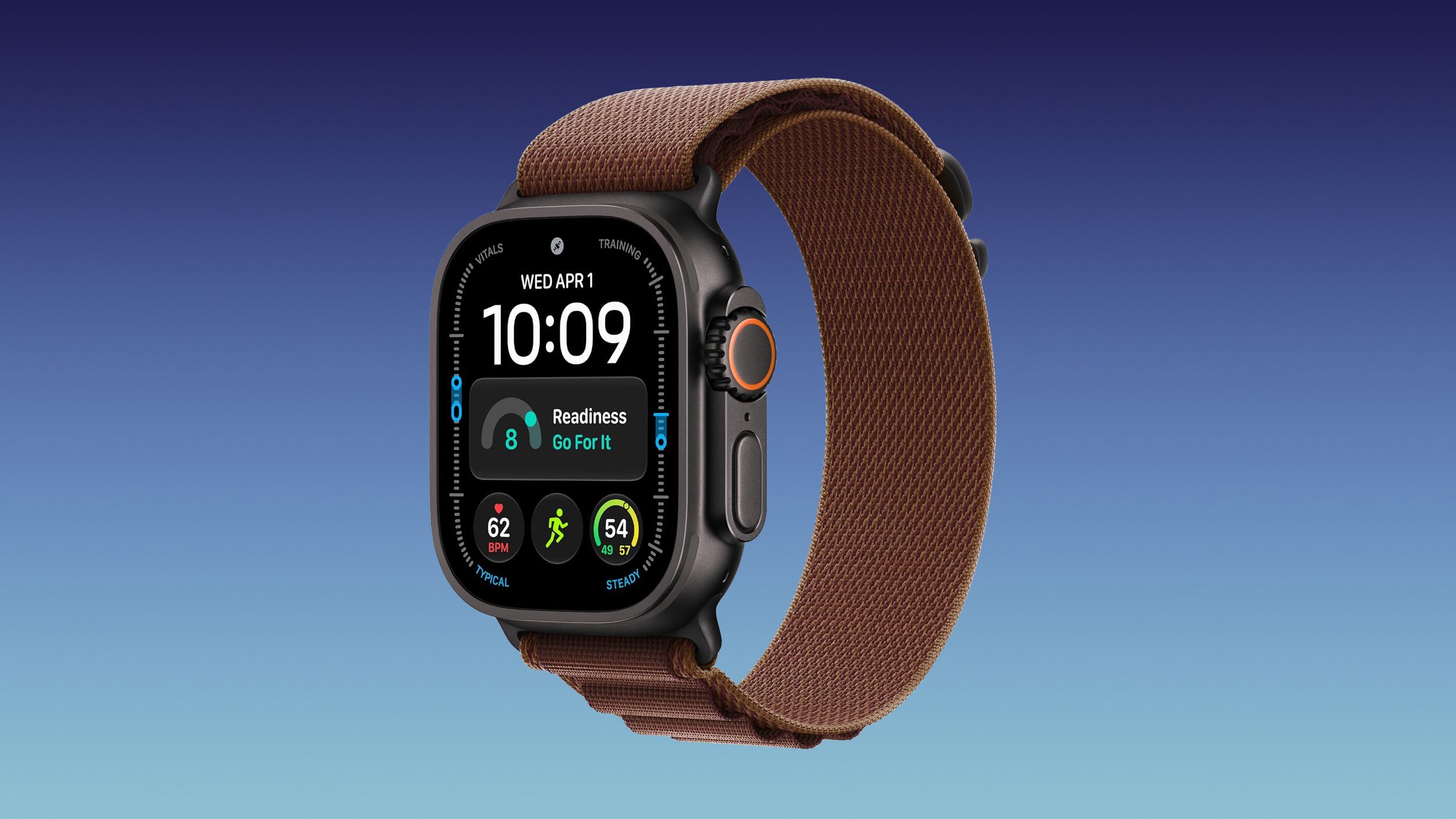
Apple Watch Ultra 4 Gets $99 Amazon Discounts, Starting at $699.99

The Apple Watch Ultra 4 has dropped to $699.99 on Amazon, down from $799.00. This is a match of the all-time low price on the new Ultra 4, which launched in September. Note: MacRumors is an affiliate partner with some of these vendors. When you click a link and make a purchase, we may receive a small payment, which helps us keep the site running. There are six Ultra 4 models that are on sale at this price, including the Black model with Burgundy Alpine Loop (Large), the…

Read at MacRumors

arXiv (research papers) Sebastian Mengwall Space

MarsNet: Learning the Martian Atmosphere from Observations Alone

We present MarsNet, a machine-learned model of the Martian atmosphere trained only on observations. Existing reanalyses assimilate spacecraft retrievals into general circulation models (GCMs), so where observations are sparse their fields largely reflect the model. We therefore use extant reanalyses only for evaluation. MarsNet alternates a two-hour forecast with an update that assimilates the observations of each window, and both steps are learned jointly. Because the…

Read at arXiv (research papers)

TechPowerUp Nomad76 SI

(PR) Google Extends Tensor Processor Unit Series with TPU 8tx and 8i Max

While we've always co-designed our TPUs in partnership with Google DeepMind, we're now increasingly getting feedback from external organizations on their specific needs. With computing moving from human to agent scale, businesses are asking for accelerators that can reason across AI models' massive context windows. In addition, some highly regulated customers are asking for specialized encryption capabilities for unique workloads. The new TPU systems we are announcing today…

Read at TechPowerUp

arXiv (research papers) Suryansh Talukdar SI

LogCDM: Interpretable Log Anomaly Detection via Behavioral Graph Drift and Adaptive Signal Fusion

Log-based anomaly detection is increasingly dominated by large pretrained models, from BERT-scale encoders to 8B-parameter language models, which require GPUs at inference time and are difficult to deploy on the monitoring nodes where logs are produced. We present LogCDM, a compact detector that scores each log session using three complementary signals: the next-event surprise of a small causal Transformer, the distance between a graph-attention embedding of the session's…

Read at arXiv (research papers)

arXiv (research papers) Ding Zhu SI

PORT: Preference Optimization via Robust Token-Level Reweighting

Preference optimization has become a central approach for aligning large language models with human values, but its effectiveness depends heavily on the quality of preference annotations. In practice, preference data is often noisy due to annotation errors and ambiguity. Existing robust preference optimization methods primarily operate at the sequence level, implicitly treating entire responses as uniformly correct or incorrect. However, rejected responses may still contain…

Read at arXiv (research papers)

arXiv (research papers) Nikhil Sharma SI

The Narrative Gap: Can LLMs Help Us Navigate Diverse Narratives Across Languages?

Large language models (LLMs) increasingly mediate how people seek and consume information, including accounts that differ across languages and regions, especially on contested topics. Supporting diverse information seeking requires models to help users navigate competing narratives across languages and information streams. We define six capabilities necessary for diverse multilingual information seeking: three foundational capabilities for narrative inclusion, narrative…

Read at arXiv (research papers)

arXiv (research papers) Xinrui Zu SI

$Σ$-LeWM: Learning World Models via S-Information for Robot Control

World models have increasingly been applied as a model-based control method for robotics tasks such as manipulation and locomotion. While early world model architectures relied on decoders to prevent mode collapse and learn a predictable latent space, recent works on world models, such as Joint Embedding Predictive Architecture or LeWorldModel, increasingly aim to learn embeddings without a grounding decoder, utilising only a latent forward dynamics predictor and a…

Read at arXiv (research papers)

arXiv (research papers) Bernat Homs

Will AI mess my RTL? A snapshot-based approach to verifying AI-written RTL

With the growing interest in using AI (Artificial Intelligence) for RTL (Register-Transfer Level) hardware development, robust and comprehensive verification has become more important than ever. As Large Language Models (LLMs) increasingly assist in creating and modifying RTL designs, ensuring that these changes preserve existing functionality is paramount for building trust in AI-driven workflows. We present SVApshot, a fully automated framework that leverages LLMs to…

Read at arXiv (research papers)

The Decoder Maximilian Schreiner SI

Disney bets on Adobe's Firefly to create brand-safe AI models for its entertainment empire

Disney and Adobe are building custom AI tools together for the entertainment giant's productions. The article Disney bets on Adobe's Firefly to create brand-safe AI models for its entertainment empire appeared first on The Decoder.

Read at The Decoder

arXiv (research papers) Marcus Armstrong SI

Interpretability Is Not Model-Specific

Interpretability tools are usually built for one model at a time: a refusal direction, a truthfulness probe, or a steering vector is found with labeled data inside the model it explains. We ask whether such tools can be carried to other models through a map between residual streams fit only on unlabeled prompts. We transfer a refusal direction, tested causally by addition and ablation, and two read-out tools, a correctness direction and a sentiment probe, across 110 pairs of…

Read at arXiv (research papers)

arXiv (research papers) Fabiola Antonietta Gerosa Space

Testing Models of Disk Formation and Gravito-Viscous Evolution Against Observations of Young Protoplanetary Disks

Young protoplanetary disks have received increasing attention in recent years, due to observations revealing the presence of substructures in disks younger than one million years, suggesting that planet formation may begin earlier than previously thought. Other recent observations have provided new insights into the evolution of gas and dust in these early stages, enabling comparisons with evolved Class II disks. Yet the physical processes governing the earliest stages of…

Read at arXiv (research papers)

arXiv (research papers) Yihan Hank Tang University of Pennsylvania SI

TrialDesignBench: Benchmarking Language Models for Phase-I Trial Design Against Clinical Knowledge

AI is used in much of the clinical trial pipeline. However, selecting the statistical design of a trial, a crucial step that determines how drug doses are tested on humans and evaluated, has seen almost no AI progress. LLMs appear to be a natural fit given their strengths in biomedical knowledge and statistical reasoning. Nevertheless, there is currently no appropriate way to evaluate such abilities because recent regulatory and methodological shifts, most notably FDA's…

Read at arXiv (research papers)

arXiv (research papers) Zhu Xiao SI

Beyond Sunny Skies: Using Large Language Models to Predict Urban Traffic in Adverse Weather

Urban traffic flow prediction is a cornerstone of intelligent transportation systems, yet accurate forecasting under adverse weather conditions remains a significant challenge. Existing data-driven models, while effective for routine patterns, often struggle with the sparse data and complex non-linear shifts associated with rare meteorological events. These methods typically treat environmental contexts as shallow numerical features, failing to capture the underlying…

Read at arXiv (research papers)

arXiv (research papers) Dezhen Lu Security

How Far Does Second-Order Linear Response Predict Quantization Mismatch? Pre-Registered Measurements on Five Language Models

Serving systems choose a weight format for each model and deployment. A low-cost screen predicts the resulting KL divergence from the unquantized model's Fisher information using $\tfrac12Δ^\top FΔ$, the expansion underlying Hessian-aware and second-order post-training quantizers. We assess the reliability of this screen in GPU batches with channel-wise int8, per-tensor fp8 and group-wise int4 on Qwen3-8B, Qwen3-4B, OLMo-2-7B, Qwen3-32B and Qwen3-30B-A3B. Relative…

Read at arXiv (research papers)

arXiv (research papers) Pujan Pant SI

Adapting Small Language Models to Romanized Nepali: Tokenizer Fertility, Reference Likelihood, and Generation Metrics

Romanized Nepali, Nepali written in Latin script, is common in digital communication but has no standard spelling and few resources, and it is unclear how reliably small open language models can be adapted to it. We adapt three 2-3B base models from different families, Llama-3.2-3B, Qwen2.5-3B, and Gemma-2-2B, with QLoRA on 9,000 instruction examples produced by deterministic transliteration of Nepali instruction data. Each model is trained with one shared recipe and three…

Read at arXiv (research papers)

The Verge Stevie Bonifield SI

Trump’s 60 Minutes interview touched on AI safety, threat to arrest an AI exec

Asked about AI executives' warnings about their models' safety on 60 Minutes, Trump said, "I think that the risk is not nearly as real as it- as they talk, and I think the risk can be managed, and it's managed." He claimed the DOJ is…

Read at The Verge

arXiv (research papers) Andrew Trask SI

Double Blind Evals: Resolving the Dual Confidentiality Dilemma in AI Safety Auditing

AI safety evaluations often involve sensitive prompts and proprietary models. Evaluators want to keep their evaluation prompts secret from model owners to prevent purposeful or incidental data leakage, ensuring longer usefulness of their benchmark. Model owners in turn wish to keep their proprietary model weights and inference code within their own secure infrastructure to protect their IP. We present a way forward for "double-blind evals", which provide cryptographic…

Read at arXiv (research papers)

The Decoder Maximilian Schreiner SI

Tencent's AI chief says AI bioweapons are coming, but closing off models isn't the answer

Tencent chief AI scientist Vinces Yao Shunyu warns that AI will soon be able to develop bioweapons and argues for a middle ground between open and closed models. While safety filters on open-source systems can be easily stripped through abliteration, closed models like Anthropic's Claude often block too aggressively. For its upcoming open-weight model Hy4, Tencent is filtering dangerous hacking knowledge directly from the training data. The article Tencent's AI chief says AI…

Read at The Decoder

MacRumors Joe Rossignol Gadgets

MacBook Pro With PROLED XDR Display: Details You Might Have Missed

The new MacBook Pro models with PROLED XDR displays began arriving to customers on Friday, and various details about the laptops continue to surface. Given these models are available with the same M5 Pro and M5 Max chips that power the models with mini-LED displays, performance was expected to be virtually identical across the board, and benchmark results confirm that is the case. Average scores for multi-core CPU performance in the Geekbench 7 database: 16-inch MacBook Pro…

Read at MacRumors

Older stories