Vodafone IoT and Skylo launch commercial satellite connectivity service
Skylo launches its NTN NB-IoT satellite service commercially for Vodafone IoT customers, letting devices switch between cellular and satellite on one SIM.
Skylo launches its NTN NB-IoT satellite service commercially for Vodafone IoT customers, letting devices switch between cellular and satellite on one SIM.
In the Saudi Arabian desert, Wialon transformed a Dakar-inspired off-road challenge into a live stress test for fleet IoT infrastructure. Darya Chumak, Head of Partner Success at Wialon, who took part in the challenge, explains how combining GSM, satellite telemetry, geofencing, and API-driven automation, the deployment demonstrated how modern fleet platforms can maintain resilient, real-time…
Key trends and statistics on malware targeting Windows and macOS computers and Internet of Things (IoT) devices in Q3 2026.
Jim Morrish and emnify’s Artur Michalczyk explore SGP.32, bootstrap connectivity and what IoT buyers should test before scaling eSIM deployments.
M5Stack's new Core Matrix packs 256 LEDs, Wi-Fi 6, motion sensing, and an ESP32-C61 into a tiny $30 IoT development kit.
The development of Post-Quantum Cryptography (PQC) is directly motivated by the necessity to secure information in the face of the quantum threat. This paper provides an overview of recent developments relevant to PQC adoption across several industrial applications, including IoT, healthcare, civil and infrastructure engineering, and defense. We present a brief, self-contained overview of PQC and its market positioning. We perform implementation experiments on selected…
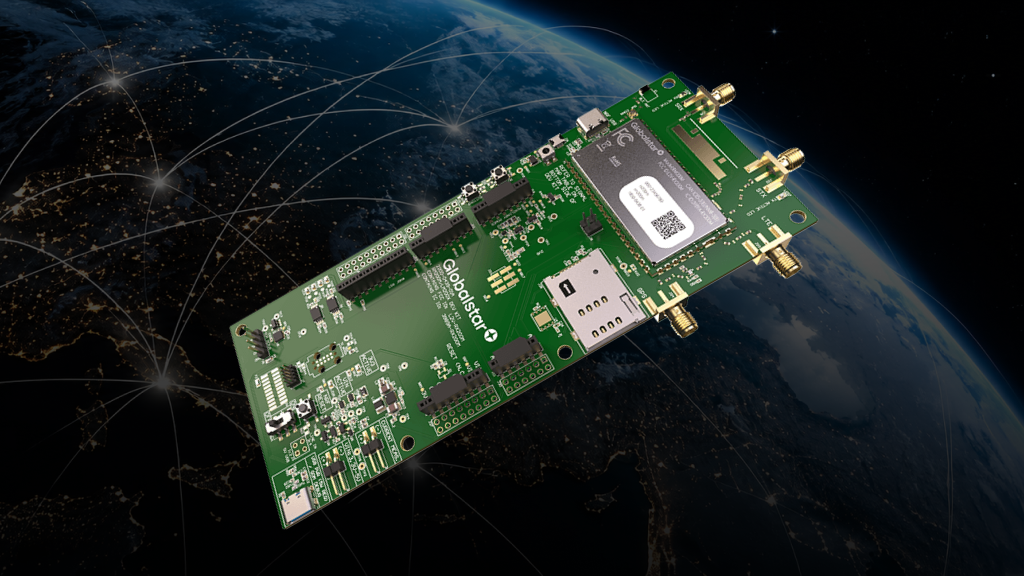
Globalstar has announced the three winners of its RM200M Satellite IoT Development Kit giveaway: Hydro-Québec, Impact42 LLC and Connectivia Labs. Each winning organisation receives an RM200M development kit together with … Continued
Zephyr now offers full TCP, UDP, HTTP, MQTT, and CoAP connectivity on the ST87M01, as well as Wi-Fi and GNSS positioning.
MikroTik's KNOT Gateway HL9 boasts Wi-Fi HaLow and BLE for sensor connectivity, with Wi-Fi, Ethernet, and LTE cellular backhaul.
Growing Internet of Things (IoT) deployments require access control for heterogeneous and resource-constrained devices without excessive repeated-authorization overhead. This study proposes and evaluates a blockchain-based hybrid access-control framework that combines Attribute-Based Access Control (ABAC) and Capability-Based Access Control (CapBAC) using Hyperledger Fabric. ABAC evaluates initial requests using certificate-derived user attributes and the requested device…
Adaptive network communication architectures (ANCAs) for Internet of Things (IoT) environmental monitoring face significant challenges arising from intermittent connectivity, limited energy availability, and hardware-level power instability in rural and resource-constrained environments. Although existing adaptive communication frameworks improve network utilization through protocol selection, they frequently assume ideal power conditions and overlook transient current…
In intelligent Internet of Things (IoT) systems with split analytic functions, time-critical applications perform tasks that require instant data processing and immediate physical responses within milliseconds to prevent danger, injury, or system failure, and time-tolerant applications perform non-urgent background tasks that do not need an immediate response. Conflicts between applications occur when two or more applications send opposite or incompatible commands to the…
Precision agriculture is a transformative approach in modern farming that leverages advanced technologies such as the Internet of Things (IoT), GPS mapping, and big data analytics to optimize crop yield and reduce resource wastage. This paper presents a secure and efficient model for precision agriculture that integrates Wireless Sensor Networks (WSNs), remote sensing, and information technology. The proposed system comprises two primary components: sensor node clustering…
Accurate and early identification of diseases remains a major challenge in modern healthcare, where diagnostic delays can lead to critical outcomes. The shortage of medical specialists and the growing demand for rapid and reliable diagnosis highlight the need for intelligent and automated decision-support frameworks. This paper introduces a novel Medical Intelligence for Accurate Disease Detection using Deep Learning and Feature Fusion Strategies (MIADD-DLFFS) model designed…
The rise of Internet of Things (IoT) ecosystems and the New Paradigm of low-latency edge data processing. IoT ecosystems are growing exponentially, and this growth brings a new challenge: low-latency data processing at the network edge. Because cloud-based architectures cannot meet this real-time requirement due to network delay, connectivity issues, and increasing bandwidth contention, deploying deep learning-based, high-computational-load pattern detection on…
Timely detection of a multistage cyberattack in an IoT network depends on the chosen monitoring architecture, execution time, and the transition behavior of subprocesses within that architecture. This paper introduces a probabilistic temporal model to evaluate an NSMS for both known and unknown multi-stage attacks. First, we introduce a conceptual monitoring architecture that organizes streaming-data processing, temporal analysis, attack classification, attack prediction…
The energy transition is driving the global shift from fossil fuels to renewable power sources. It represents a change in how electricity is generated and delivered, since solar farms and wind turbines now feed the grid from more locations than traditional power stations did. Network operators therefore need to see and respond to conditions across…
Smart cities rely on Internet of Things (IoT) technologies across transportation, energy, healthcare, and public safety, but adopting IoT at city scale introduces security challenges that a network perimeter can no longer address. Zero Trust (ZT) has been widely proposed as a remedy, and the Kindervag/Palo Alto five-step implementation methodology has been reviewed for smart home and generic IoT settings and applied, as practitioner guidance, to IoT within a single…
Blind channel estimation in Narrowband Internet of Things links is challenged by weak coverage, multipath superposition, and locally non-uniform complex-domain observations. Manually tuned density clustering and global-bandwidth kernel density estimation may therefore produce unstable cluster structures and oversmooth weak propagation modes. To address these problems, a K-Nearest Adaptive Neighborhood and Density-Based Spatial Clustering of Applications with Noise blind…
A photonic band gap (PBG) substrate-based 1 × 2 multiple-input and multiple-output (MIMO) antenna is presented for terahertz (THz) 6 G and Internet of Things (IoT) applications. The proposed radiating element comprises a graphene patch and ground plane on a polyimide substrate, and a hybrid slot-elliptical PBG unit cell with a slotted decoupling wall is introduced to reduce the mutual coupling. It demonstrates four resonant frequencies (2.35, 3.6, 4.51, and 6.42 THz)…
There has been significant growth in the number of heterogeneous components configured within the Internet of Things (IoT) to allow effective data communication. However, IoT components are resource-constrained, and there are no standardized security procedures for communication within IoT platforms. While various solutions have been developed to secure communication in the IoT ecosystem, the existing approaches are not always reliable enough to address cyber threats and…