Results for “Robot”

GeekWire Todd Bishop

Amazon’s Ring tries again with a $250 flying home security drone and a $1,000 patrol robot

Amazon’s Ring unveiled the Ring Drone Cam, a $249.99 flying indoor security camera, and the Ring Rover Cam, a $999.99 patrol robot for businesses, trying again with two ideas that stalled at Amazon in earlier versions.


Read at GeekWire

arXiv (research papers) Jinhua Chen

A human-in-the-loop Control Paradigm for Construction Robotics: From VR-Guided Teleoperation to Semi-Autonomous Dual-Arm Operation

Construction tasks in hazardous and unstructured environments require both human adaptability and robotic precision, yet existing approaches often treat teleoperation and autonomy as separate control modes. This paper presents a human-in-the-loop control paradigm that enables structured transitions among VR-guided teleoperation, semi-autonomous shared control, and rule-based autonomous execution for contact-rich dual-arm construction tasks. The proposed system combines…

Read at arXiv (research papers)

About Amazon

Ring announces Ring Robotics, ushering in a new era of security

Ring Robotics is launching with two robots: Ring Drone Cam and Ring Rover Cam, providing mobile, proactive protection whenever and wherever you need it.

Read at About Amazon

arXiv (research papers) Xuheng Zhang

LaST0.5: A Generalist World Action Model with Interaction-Centric Latent Reasoning

World Action Models (WAMs) have recently emerged as a promising paradigm for robotic manipulation, endowing policies with strong capabilities for modeling temporal and physical dynamics. Existing WAMs, encompassing both video-first action prediction and joint video-action modeling, directly transfer global physical representations from world models to action generation. However, global scene representations may underemphasize local robot-object interactions, creating a…

Read at arXiv (research papers)

arXiv (research papers) Haiyang Wu

HiPFuse: Real-Time LiDAR Semantic Segmentation for Robotic Perception on Edge Devices

Real-time robotic perception requires accurate LiDAR semantics under limited resources. Bird's-eye-view (BEV) aggregation is efficient but can mix differently labeled surfaces in columns. We present HiPFuse, a point-BEV fusion framework that exchanges point and height-partitioned BEV features across horizontal scales, combining point-wise detail with 2D spatial context from one LiDAR scan. Fixed height assignments preserve separate vertical aggregation groups, with auxiliary…

Read at arXiv (research papers)

arXiv (research papers) Shiva Ganesh Murali

Optimization-Based Path Planning for Industrial Manipulators: Experimental Validation in Additive Manufacturing

Robotic additive manufacturing requires joint paths that reconcile robot feasibility with process-specific geometry. We develop an offline optimization-based path planner that combines joint-path regularity and self-collision penalties with process costs and constraints, so that a new process enters through its own reference, residuals, and tolerances. Full-path and boundary-coupled chunked optimization handle references of different lengths. Iterative Weight Tuning (IWT)…

Read at arXiv (research papers)

arXiv (research papers) Niran Nataraj SI

TransGHOST: Real-Time, Synthesis-Free Reconstruction of Instrument-Occluded Regions in Ophthalmic Microsurgery

Intraoperative scene perception in ophthalmic microsurgery is limited by instrument occlusion: when a tool enters the high-magnification field, it conceals tissue from both the surgeon and the perception components of robot-assisted systems that process the video. Generative inpainting can remove the occluder but replaces the missing image content with synthesis, which is unsuitable when visual provenance matters. Many video inpainters also depend on future frames and cannot…

Read at arXiv (research papers)

IoT Now Marion Webber

Scaling IoT across APAC: Why one global approach falls short and what to do instead

Asia-Pacific is one of the fastest-growing regions for IoT but it is also one of the hardest to scale in. Connected vehicles, robotics, autonomous systems and physical AI are moving … Continued

Read at IoT Now

arXiv (research papers) Kim Alexander Christensen

Persistent Metric-Semantic Maritime Scene Memory from Open-Vocabulary 3D Scene Graphs

Three-dimensional scene graphs (3DSGs) can provide robots with persistent metric-semantic representations for spatial reasoning, but the existing methods have primarily been developed for indoor and terrestrial environments. In this paper we investigate how a representative outdoor open-vocabulary method transfers to maritime environments and which adaptations are needed. Our experiments show that zero-shot representative outdoor 3DSG descriptions agree with our labeled…

Read at arXiv (research papers)

Al Jazeera Geopolitics

Humanoid robot takes on Antarctic ultra-marathon… and fails

A humanoid robot has made history by competing against runners in Antarctica's gruelling ultra-marathon.

Read at Al Jazeera

arXiv (research papers) Bastien Dussard LAAS-RIS, LAAS

Taxonomy-Agnostic Neurosymbolic Grounding of Robot Kinematics

While symbolic reasoning for task allocation requires grounding a robot's physical capabilities, standard Unified Robot Description Format (URDF) files provide only low-level kinematics without the formal semantic context needed for reasoning. We present URDF2Ontology, an automated, taxonomy-agnostic neurosymbolic framework that transforms raw URDF files into populated, grounded OWL ontologies. It leverages a Large Language Model (LLM) for targeted semantic reasoning…

Read at arXiv (research papers)

Tech.eu Tamara Djurickovic Startups

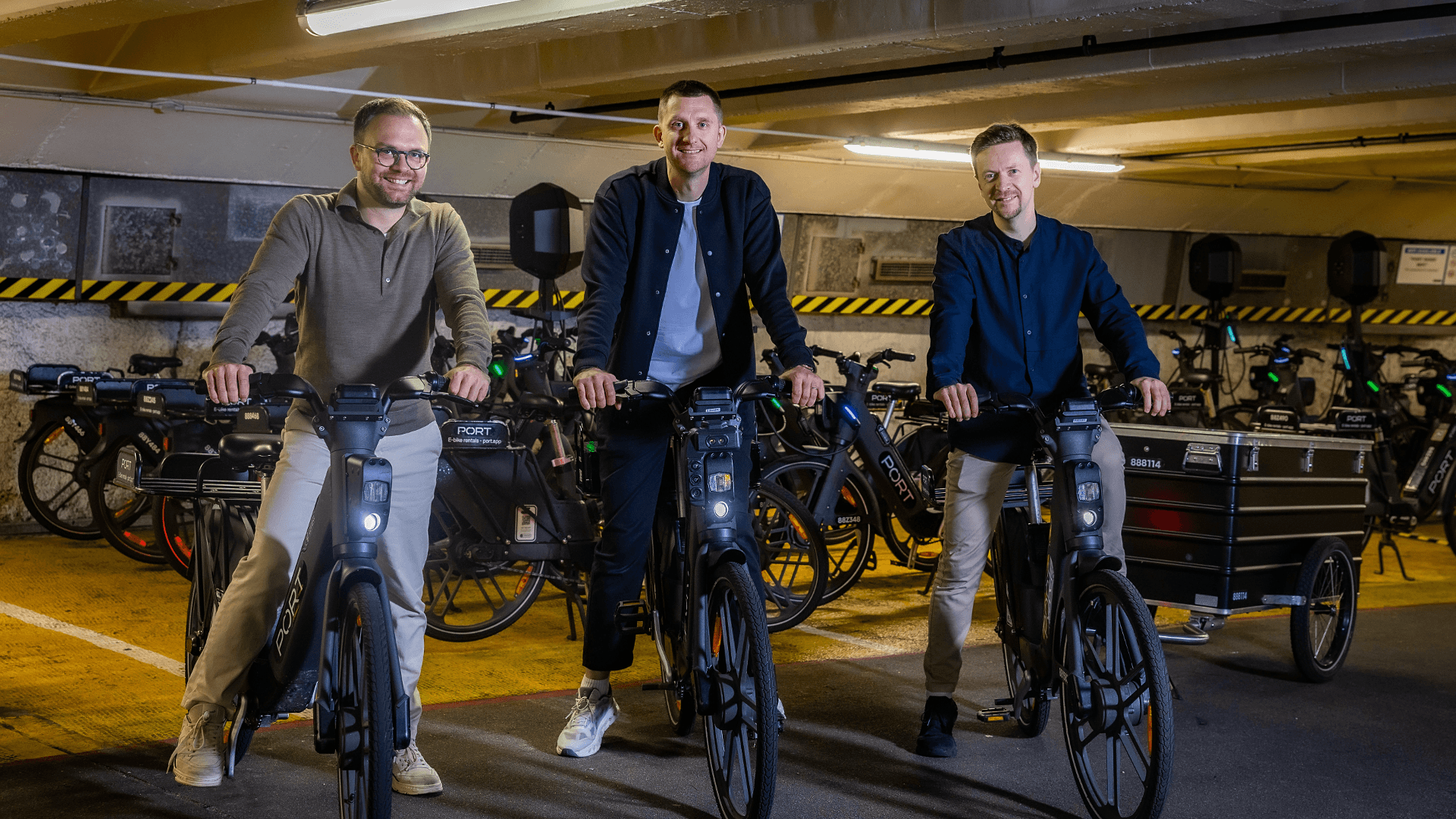
PORT raises €14.5M to take urban logistics from e-bikes to autonomous robots

Urban logistics company PORT has raised €14.5 million in afunding round led by the European Bank for Reconstruction and Development(EBRD) and Balnord, with participation from existing and new investor...

Read at Tech.eu

Future Farming René Groeneveld

Naïo extends robot Oz with new plug-planting implement

French company Naïo has presented the latest evolution of its agricultural robot, Oz. Known for its mechanical weeding capabilities, Oz is now expanding further into the crop cycle with a new plug-planting solution for vegetable transplants.

Read at Future Farming

Tech in Asia Minh Le Startups

Ant Group’s Robbyant open-sources tactile AI model

The model helps robots process touch signals from different sensor types through a shared representation.

Read at Tech in Asia

Android Authority Akshay Gangwar Gadgets

Claude Fable 5.2 brings big gains in coding and robotics at a lower price

Claude Fable 5.2 is also faster and more affordable than Fable 5.1.

Read at Android Authority

Sixth Tone Wu Huiyuan

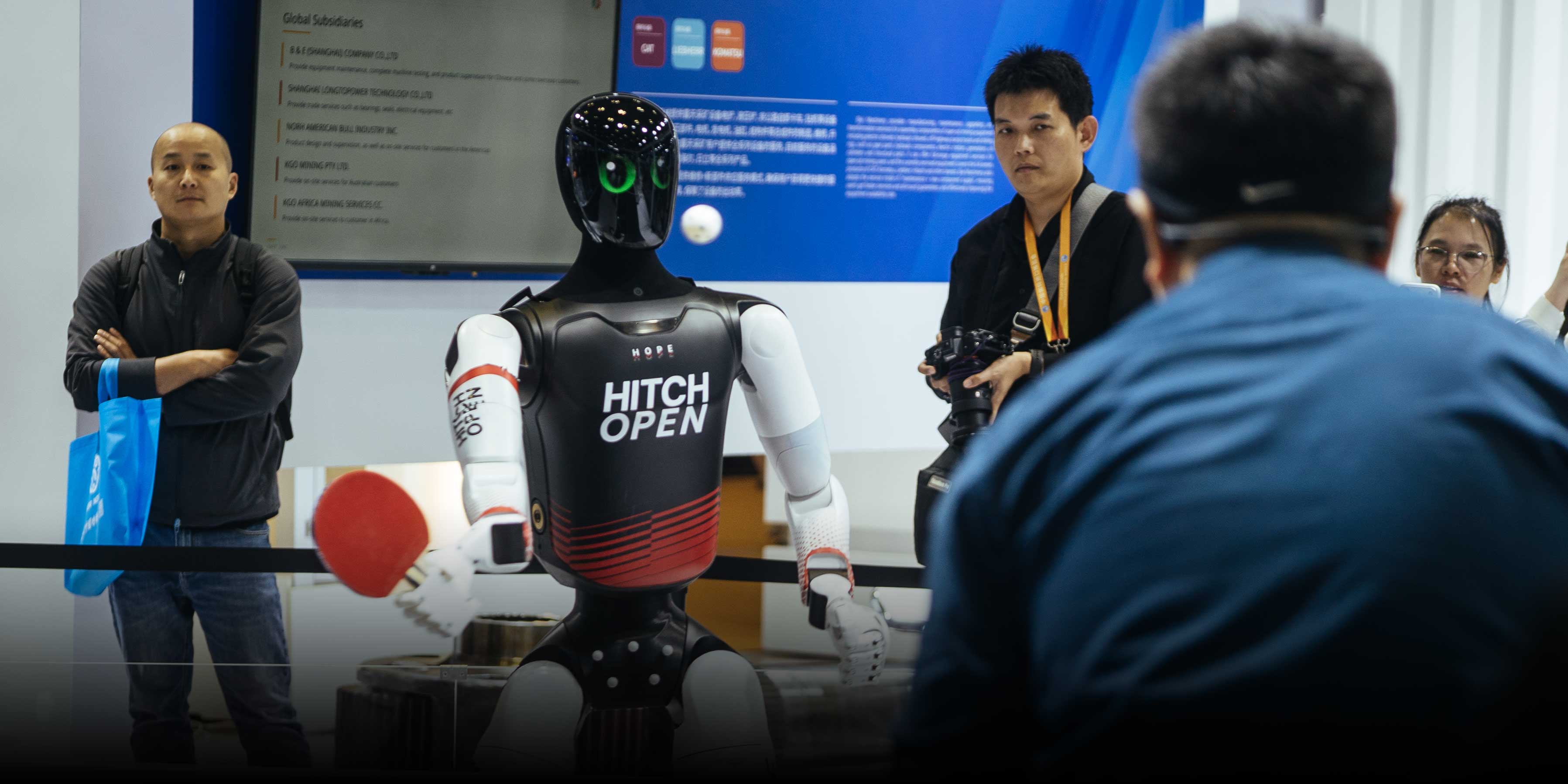
Collage: Robots, Health and New Tech at China Expo

From humanoid robots taking on human tasks to advances in medical technology, snapshots of the products, innovations, and experiences on display at the ninth China International Import Expo.

Read at Sixth Tone

Universe Today Matthew Williams Space

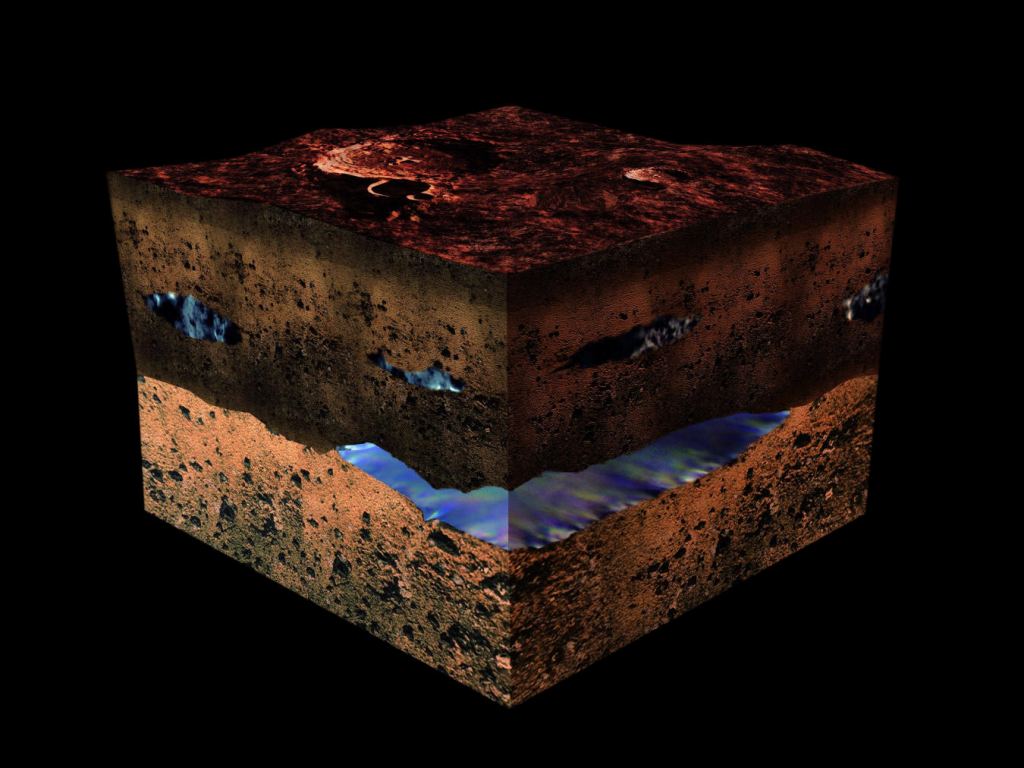
Using Vibrations and AI, Future Robotic Missions Could Handle Buried Rocks Autonomously

Mechanical engineering assistant professor Erik Komendera developed a method that combines vibrations and AI to determine how deeply a rock is buried, helping robots clear terrain more efficiently.

Read at Universe Today

NASA Science Space

SeaSTAR

Overview SeaSTAR, which stands for Sea-going Sky-Scanning Sun-tracking Atmospheric Research Radiometer, is a robotic ship-mounted instrument designed to measure aerosol optical depth and aerosol optical properties across multiple wavelengths. The instrument will collect high-resolution atmospheric measurements at sea to support validation of observations from the PACE satellite. What is SeaSTAR? SeaSTAR aims to provide precise

Read at NASA Science

Google DeepMind blog SI

Gemini Robotics 2.5 accelerates real-world general dexterity

Our most capable vision-language-action model enhances robot dexterity, reliability, and safety

Read at Google DeepMind blog

arXiv (research papers) Juliana García-Mejía Space

The Tierras Observatory: Ultra-Precise Photometry for Characterizing Exoplanets and Their Host Stars

The Tierras Observatory is a fully robotic 1.3-m telescope at the Fred Lawrence Whipple Observatory in southern Arizona. Tierras achieves sub-part-per-thousand (ppt) photometric precision on two timescales: intra-night, to detect and characterize transits of planets around nearby mid-to-late M dwarfs, and night-to-night across an observing season, to characterize the long-term variability of their host stars. We describe the facility and instrument design, our photometric…

Read at arXiv (research papers)

arXiv (research papers) Xinrui Zu SI

$Σ$-LeWM: Learning World Models via S-Information for Robot Control

World models have increasingly been applied as a model-based control method for robotics tasks such as manipulation and locomotion. While early world model architectures relied on decoders to prevent mode collapse and learn a predictable latent space, recent works on world models, such as Joint Embedding Predictive Architecture or LeWorldModel, increasingly aim to learn embeddings without a grounding decoder, utilising only a latent forward dynamics predictor and a…

Read at arXiv (research papers)

Dark Reading Kristina Beek Security

PwC's CISO on AI, Robots & What's Next for Security

As AI accelerates change across the enterprise, PwC's James Shira explains why security teams must rethink their approach to risk and adapt their strategies.

Read at Dark Reading

TechCrunch Kirsten Korosec Startups

Uber launches parking service following SpotHero acquisition, with an eye on robotaxis

Uber Parking is the latest example of the company offering products beyond its core ride-hailing service.

Read at TechCrunch

The Register Thomas Claburn SI

Machine learning researchers build a better world model

Leibniz lives! Insight about how 'nature makes no leaps' promises better robot predictions

Read at The Register

arXiv (research papers) Hasaan Ahmad SI

Library of Hands: Fix the Hands, Not the World Model

A world model predicts how a scene changes after an action, and a planner uses it to search for actions that reach a goal. If the camera moves or the controller changes, the same command moves the robot differently: when its commands are turned by 90 degrees, a frozen planner with the LeWM world model that succeeds in 77.5% of episodes succeeds in only 7.8%. Current fixes retrain the model, need training data, or forget a set-up when it returns. We propose Library of Hands…

Read at arXiv (research papers)

Hackster.io Nick Bild https://www.hackster.io/nickbild

A Quadruped Robot That Takes to the Skies

Dorian Todd turned his open source quadruped robot into a 264-gram quadcopter that can walk, unfold its legs, and fly.

Read at Hackster.io

TechCrunch Kirsten Korosec

Waymo robotaxis kept illegally passing school buses after software fix, feds say

The update to Waymo's self-driving system was rolled out nearly a year ago.

Read at TechCrunch

Robohub AIhub

AIhub coffee corner: Are humanoids the future of embodied AI?

The AIhub coffee corner captures the musings of AI experts over a short conversation. This month we ask whether humanoids are the future of robotics. How has the technology evolved recently, and what can we expect in the years to come? Joining the conversation this time are: Joydeep Biswas (University of Texas at Austin), Sanmay

Read at Robohub

IEEE Spectrum Robotics Evan Ackerman

Can Agentic Robotics Solve Robotics’ Data-Scaling Problem?

Robotics companies are investing heavily in the belief that data will solve the most difficult problems in robotics. Once AI systems have ingested enough data from human demonstrations, the thinking goes, robots will be able to perform the vast majority of the manual tasks that humans now do. There are even robotics companies that exist solely to collect training data and sell it to other robotics companies in pursuit of this goal. But whether data will finally bring us…

Read at IEEE Spectrum Robotics

Older stories