Results for “Computing”

arXiv (research papers) Tushar Kumar Jain

Classical phase unwrapping enables large-time-step unitary quantum Krylov subspace diagonalization

For computing molecular energies on early fault-tolerant hardware, unitary quantum Krylov subspace diagonalization (UQKSD) avoids both the deep circuits of quantum phase estimation and the Pauli-term sampling of variational methods by extracting the energies from a projected real-time propagator. At a small time step $τ$, nearly linearly dependent Krylov vectors make the overlap matrix ill-conditioned. Our tests at fixed total evolution time show that additional Krylov…
Read at arXiv (research papers)

The Quantum Insider Mohib Ur Rehman

Xanadu and HyperLight Reduce Photonic Switch Loss to 7 mdB

Insider Brief PRESS RELEASE — Xanadu Quantum Technologies Limited (“Xanadu”; NASDAQ/TSX: XNDU), a leading photonic quantum computing company, in collaboration with HyperLight Corporation, a leading thin-film lithium niobate (TFLN) photonics company, today announced a significant hardware performance milestone using TFLN technology, reducing optical switch insertion loss to 7 millidecibels (mdB). This achievement represents a nearly

Read at The Quantum Insider

The Quantum Insider Mohib Ur Rehman

Gartner Names IonQ a Market Shaper in Quantum Computing

Insider Brief PRESS RELEASE — IonQ (NYSE: IONQ), the world’s leading full-stack quantum platform and foundry, today announced it has been positioned as a Market Shaper in the inaugural Gartner® Emerging Market Quadrant™ for Quantum Computing. IonQ appears in the Market Shapers quadrant of the graphic above. In the report, Gartner states: “Market Shapers have

Read at The Quantum Insider

South China Morning Post Chao Kong Geopolitics

Data link trial: Chinese team finds hollow-core fibre cuts lag 30% across 1,000km

Light travels through conventional optical fibres at about 200,000km per second – about two-thirds the speed it travels in a vacuum – because the signals are passing through solid glass. When vast amounts of data are exchanged between computing centres hundreds or thousands of kilometres apart, this difference amounts to a substantial delay. Now, Chinese researchers have unveiled optical fibre that replaces the solid glass core with air, cutting the data transmission delay…

Read at South China Morning Post

arXiv (research papers) Takumi Yuri

Quantum propagation of vibrational excitation in harmonically confined trapped-ion crystal

Vibrational excitations, or phonons, in trapped ions serve as useful resources for quantum information processing, including quantum simulation and computing. Localized excitations of ions' vibrational motion (local phonons) can be used for simulating quantum particles that propagate over a system. Here, we experimentally investigate the propagation of a localized vibrational excitation in a one-dimensional trapped-ion crystal. A 10-ion crystal confined in a harmonic…

Read at arXiv (research papers)

eeNews Europe SI

Analog in memory compute for low power AI inference

Analog In-Memory Compute (IMC) is driving the promise of achieving energy efficiencies on the order of one femtoJoule per operation in a computing system for AI. By performing certain computational tasks in place in memory, the need to shuttle data back and forth between the processing and memory units is avoided, slashing the energy consumption

Read at eeNews Europe

arXiv (research papers) Ziwen Wang

Exploiting What NVIDIA Profilers Hide: Fast and Accurate Analytical GPU Performance Modeling

GPUs have become essential to many fields, including AI and scientific computing. As GPUs grow more complex, the design space of their hardware configurations becomes increasingly large, yet cycle-level simulators remain too slow to explore it. Analytical models make this exploration much faster. However, existing GPU analytical models fall short of accurately predicting performance across hardware configurations, because they re-estimate or scale every stall of a warp on…

Read at arXiv (research papers)

arXiv (research papers) Daniel Barter

Machine-learning decoders for fusion-based quantum computing in real time

Fault-tolerant quantum computation requires decoders that combine accuracy, throughput, low latency, and scalability to large numbers of physical qubits. In photonic fusion-based architectures, erasures from photon loss and probabilistic fusion measurements are a dominant error mechanism, motivating decoders that remain accurate at high erasure rates. We introduce PRISM, a transformer-based machine-learning decoder designed to exploit the known locations of erasures in…

Read at arXiv (research papers)

Tech in Asia Minh Le Startups

Google unveils 2 new AI chips to rival Nvidia

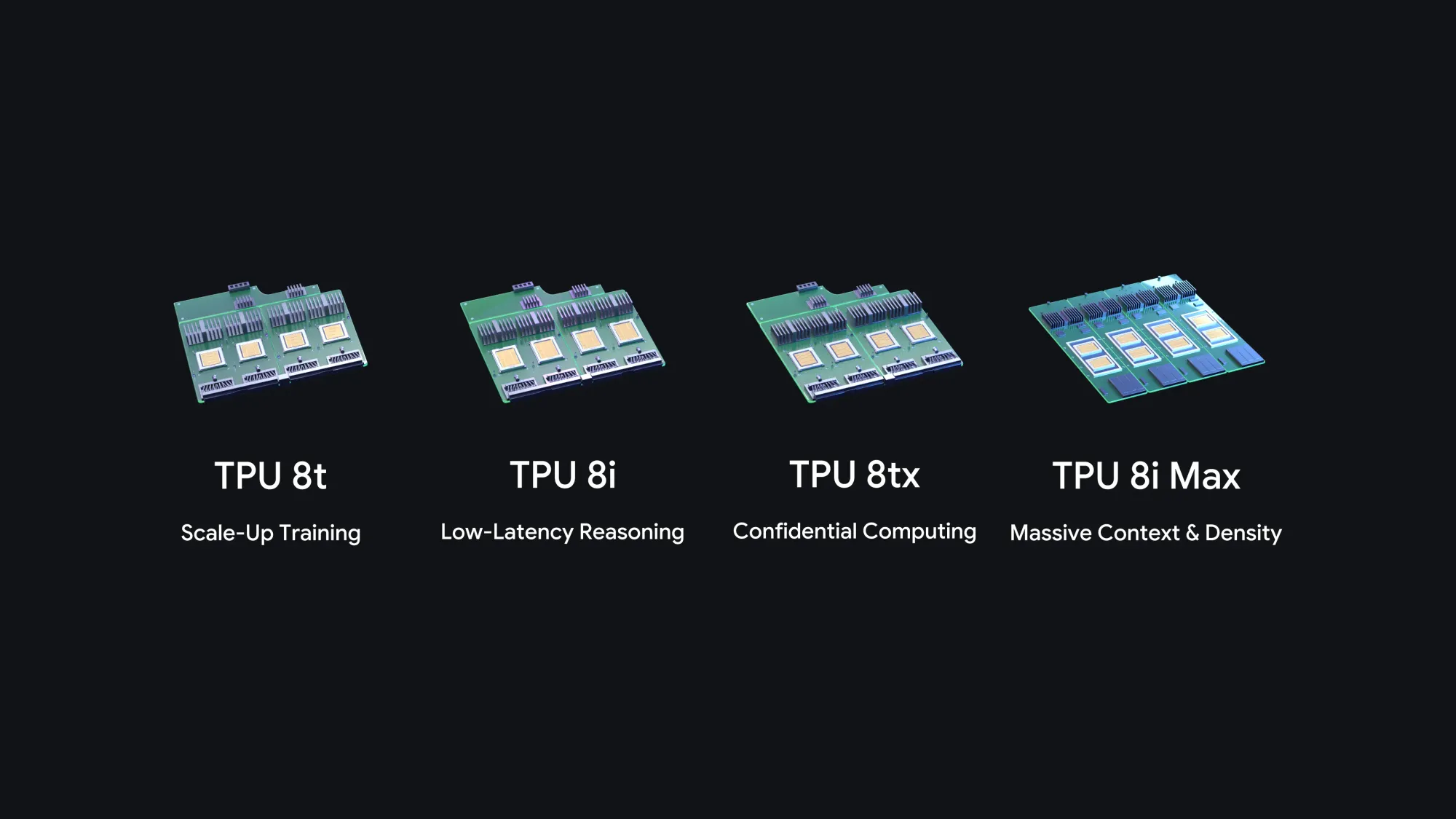
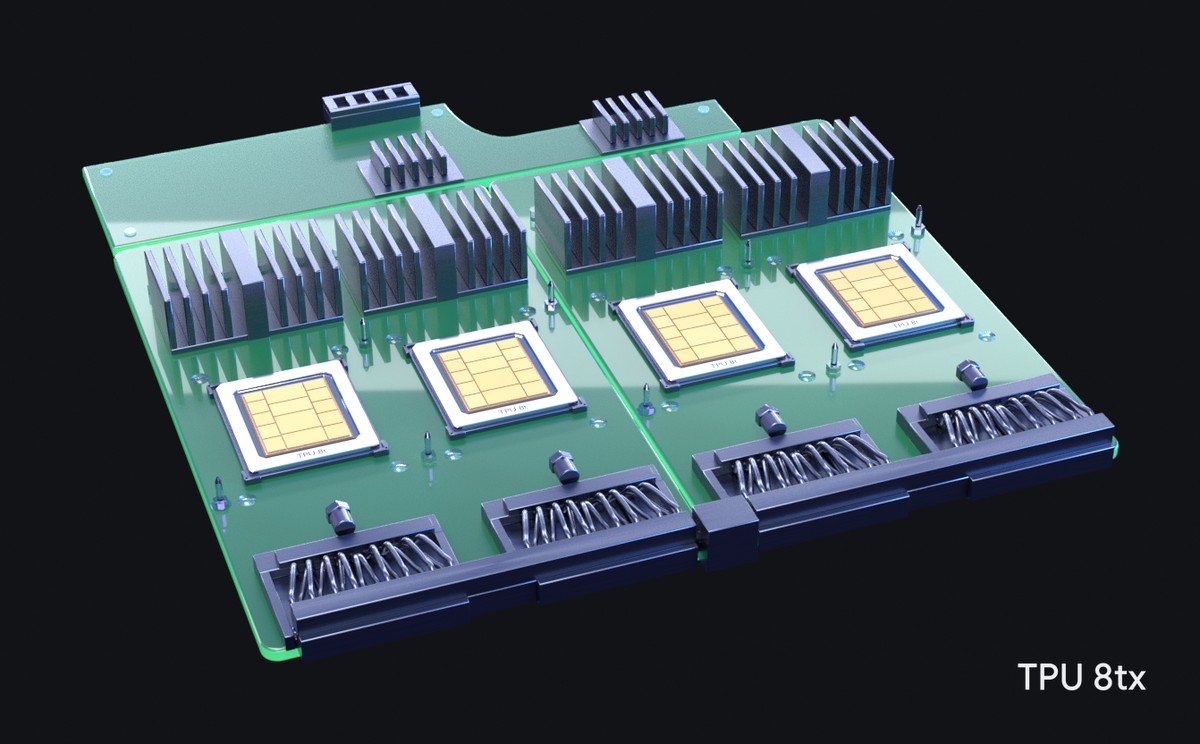
Google's TPU 8tx pairs with an AMD CPU for confidential computing in regulated industries.

Read at Tech in Asia

Axios Herb Scribner

What we know about the mystery woman at the center of Nvidia's spy scandal

Alice Huang, a former executive of a Singapore-based AI computing company, is at the center of a suspected Chinese espionage scandal after Nvidia CEO Jensen Huang acknowledged an extramarital affair. Why it matters: The investigation raises questions about whether Chinese intelligence sought access to Nvidia's technology and CEO through Alice Huang as the U.S. and China compete in the AI race. Driving the news: Over the weekend, Jensen Huang admitted in a letter to Nvidia…

Read at Axios

ServeTheHome Vic A

Google TPU 8tx Pairs AMD EPYC Turin Hosts with Confidential Computing while TPU 8i Max Doubles Memory Bandwidth

The new Google TPU 8tx pairs AMD EPYC Turin hosts with confidential computing while TPU 8i Max doubles memory bandwidth for inference

Read at ServeTheHome

Semiconductor Digest Shannon Davis

EV Group Advances Qubit Scaling Through Semiconductor Packaging Technology

EV Group today announced that it is supporting quantum chip developers and manufacturers in addressing the complex manufacturing requirements associated with scaling quantum computing systems.

Read at Semiconductor Digest

Semiconductor Digest Shannon Davis SI

SCHMID to Supply Equipment for Advanced Packaging Facility in South Asia

Order marks an important step on the industry’s path from pilot lines to volume manufacturing of glass core substrates for AI and high-performance computing.

Read at Semiconductor Digest

arXiv (research papers) Ritesh Kanchi Tech policy

Understanding Computing Instructors' Perceptions of Student Sense of Belonging

Students' sense of belonging has been described as a feeling of community acceptance, respect, inclusion, and membership. In computing, student belonging is shaped by psychological, social, academic, and environmental factors, including their relationships with instructors. However, despite prior work emphasizing instructors' influence on student belonging, limited research has examined how computing instructors perceive, understand, and attempt to support belonging. Through…

Read at arXiv (research papers)

SemiWiki Daniel Nenni SI

CTO Interview with Ed Plowman of Imagination Technologies

Ed Plowman is Chief Technology Officer at Imagination Technologies, where he leads technology strategy, advanced architecture research and long-term innovation initiatives. He focuses on the convergence of graphics, compute and artificial intelligence, helping shape the next generation of efficient and adaptable computing…

Read at SemiWiki

TechPowerUp Nomad76 SI

(PR) Google Extends Tensor Processor Unit Series with TPU 8tx and 8i Max

While we've always co-designed our TPUs in partnership with Google DeepMind, we're now increasingly getting feedback from external organizations on their specific needs. With computing moving from human to agent scale, businesses are asking for accelerators that can reason across AI models' massive context windows. In addition, some highly regulated customers are asking for specialized encryption capabilities for unique workloads. The new TPU systems we are announcing today…

Read at TechPowerUp

arXiv (research papers) Ahmed Nematallah Security

Hidden in Plain Sight: Privacy-Enhanced Computing Through Register Renaming

Privacy-Enhanced Computing (PEC) is a mechanism to hide program secrets from the outside world without paying the cost of fully-homomorphic encryption. Previous work has developed hardware mechanisms to achieve this goal but they require a dedicated processor enclave where all computations are done, requiring duplicate ALU resources and limiting the performance of PEC-utilizing applications due to not being able to access the full compute resources of the processor (e.g…

Read at arXiv (research papers)

arXiv (research papers) Sameer Deshmukh

To SIMD or Not to SIMD: Comparing RVV vs. CGRA SoCs for Non-Linear Functions in AI

Non-linear functions are an important class of operations in modern large language models. However, chip vendors building for AI have so far relied on traditional vector or scalar processing units for non-linear functions. The performance of these units has not kept pace with matrix multiplication units (MMUs), which can be found in both high-performance and edge-computing devices from almost every vendor. Reconfigurable units such as FPGAs and CGRAs have been proposed in…

Read at arXiv (research papers)

TestingCatalog Alexey Shabanov SI

Google adds new TPU 8tx and TPU 8i Max for AI workloads

Google expands its TPU lineup with confidential computing and dual-chip systems for agents handling large codebases and million-token contexts.

Read at TestingCatalog

MIT Technology Review MIT Technology Review Insights SI

Innovating with AI in the special chemicals industry

As companies look to accelerate innovation with artificial intelligence, cloud computing, and advanced modeling, the primary challenge is connecting new technologies to reliable data, scientific expertise, and the practical realities of…

Read at MIT Technology Review

Tech.eu Cate Lawrence Startups

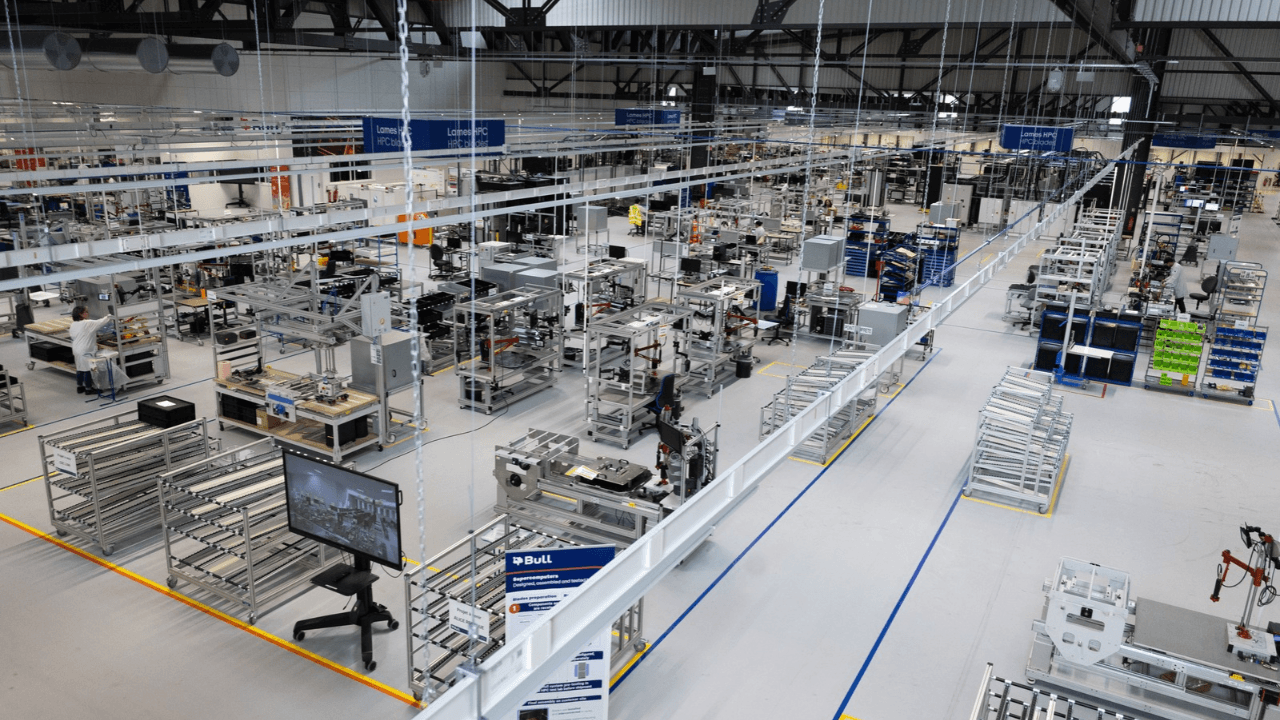
Bull's €80M factory expansion puts European supercomputing and startups in the spotlight

French computing company Bull has opened a new production building at its historic Angers site in France following an €80 million redevelopment. Bull specialises in high-performance computing, AI and ...

Read at Tech.eu

NVIDIA Blog NVIDIA Writers SI

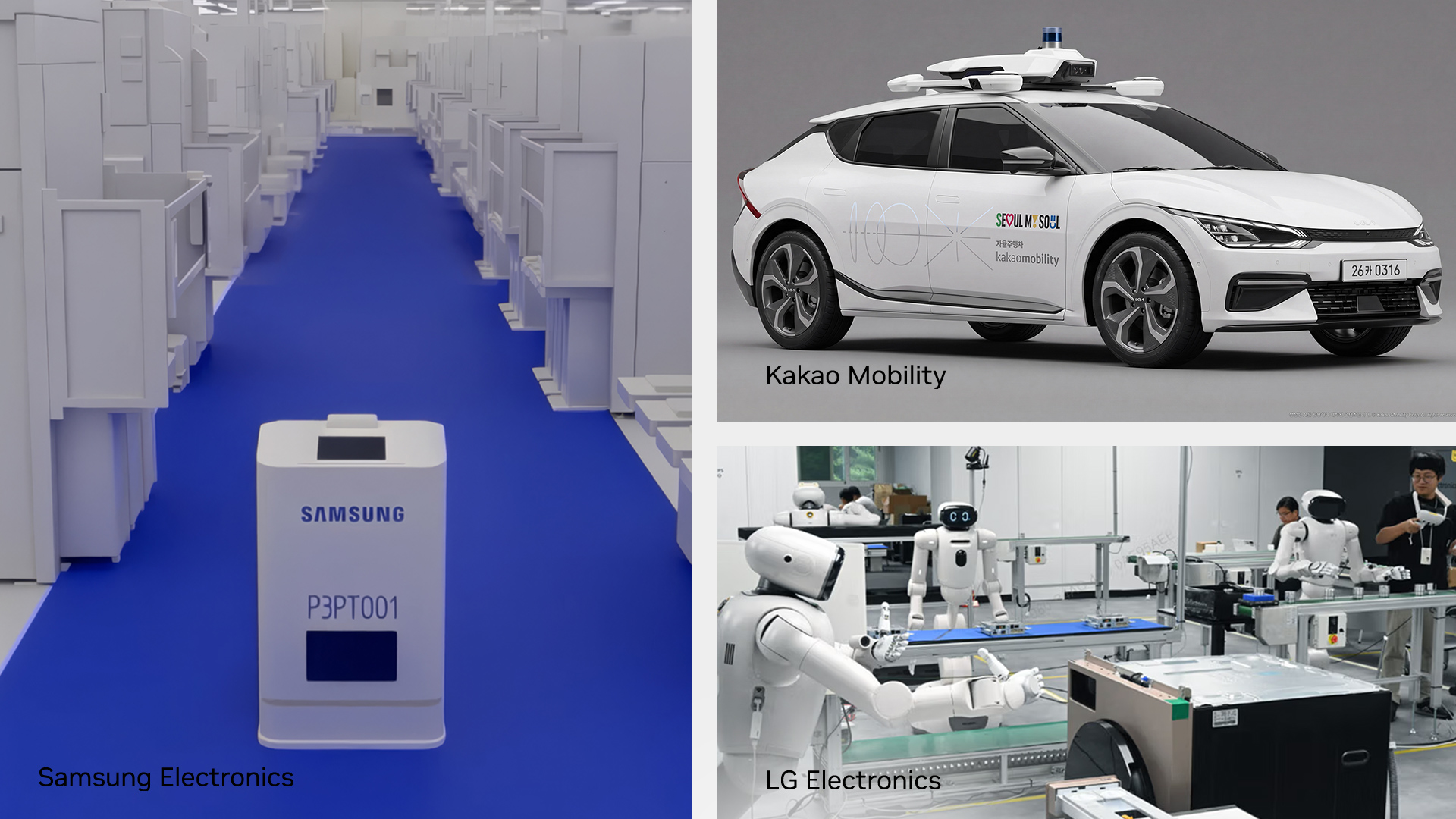
Korea Advances Physical AI Across Industries With NVIDIA

Tapping into the country’s strengths in manufacturing and engineering, NVIDIA is helping advance Korea’s physical AI ecosystem. The country’s industry leaders are applying accelerated computing, AI and simulation to everything from semiconductor manufacturing to robotics and autonomous vehicles. These efforts are helping bring physical AI from development into real-world production. Samsung Advances Semiconductor Engineering With

Read at NVIDIA Blog

arXiv (research papers) Fei Li

AscSpMM: Efficient SpMM on Ascend NPUs via Pipelined Vector-Cube Collaboration

Neural processing units (NPUs) provide high compute density and energy efficiency through specialized matrix engines and software-managed on-chip memory. However, their libraries primarily target dense computation. Sparse matrix-dense matrix multiplication (SpMM), a key kernel in graph analytics, sparse neural networks, and scientific computing, requires index-driven operand selection, indirect addressing, scattered memory accesses, and load balancing. These requirements…

Read at arXiv (research papers)

Journal articles (OpenAlex) Varsha Kumari, Chapram Sudhakar · International Journal of Advances in Engineering Sciences and Applied Mathematics

Energy-efficient and deadline-aware probabilistic approach for non-clairvoyant bag-of-tasks offloading in edge computing

Read at Journal articles (OpenAlex)

Journal articles (OpenAlex) Ammar Almutawa · Computing

BalanceFaaS: a decentralized load and energy-aware scheduling framework using federated resource modeling and distributed function orchestration in serverless edge computing

Abstract The rapid proliferation of serverless computing in heterogeneous edge environments has introduced critical challenges in task scheduling, load balancing, energy efficiency, and orchestration, particularly due to the absence of centralized control and the resource-constrained nature of edge nodes. Existing approaches partially address these issues but often suffer from high latency, inefficient energy utilization, suboptimal load distribution, and limited…

Read at Journal articles (OpenAlex)

SemiWiki Daniel Nenni SI

CEO Interview with Mark Rushworth of Finchetto

Mark Rushworth is CEO of the all-optical network switch company, Finchetto, a photonics startup developing fully optical network switching technology for AI and hyperscale data centers. He specializes in integrated photonics and optical networking, with a focus on reducing the power consumption and latency of modern computing…

Read at SemiWiki

arXiv (research papers) Satvik Maurya

Augur: An Online Learning-based Hardware Data Prefetcher using Reservoir Computing

Machine-learning-based hardware prefetchers can learn complex access patterns, but practical deployment demands online adaptation, low-latency inference, and modest hardware cost. We present Augur, a hardware delta prefetcher based on next-generation reservoir computing (NGRC) that meets all three requirements. Augur formulates delta prediction as a history-based regression problem. It constructs a fixed-size reservoir from hashed delta features over a short context window…

Read at arXiv (research papers)

Tech in Asia Minh Le Startups

Microsoft winds down Oracle deal for AI computing capacity

The 2023 Oracle deal was intended to help support an AI version of Microsoft's Bing.

Read at Tech in Asia

GeekWire Lisa Stiffler SI

Tech Moves: Fred Hutch leader goes to AWS; Temporal and Augmodo name execs

A Fred Hutch Cancer Center leader is joining AWS to help research institutions better use computing and AI to support their work; Seattle-area startups Temporal, Augmodo and BuyWander have appointed new leaders; the IonQ engineer behind…

Read at GeekWire

Older stories