Japan and the US Need an Allied Technology Market, Not New Tariffs
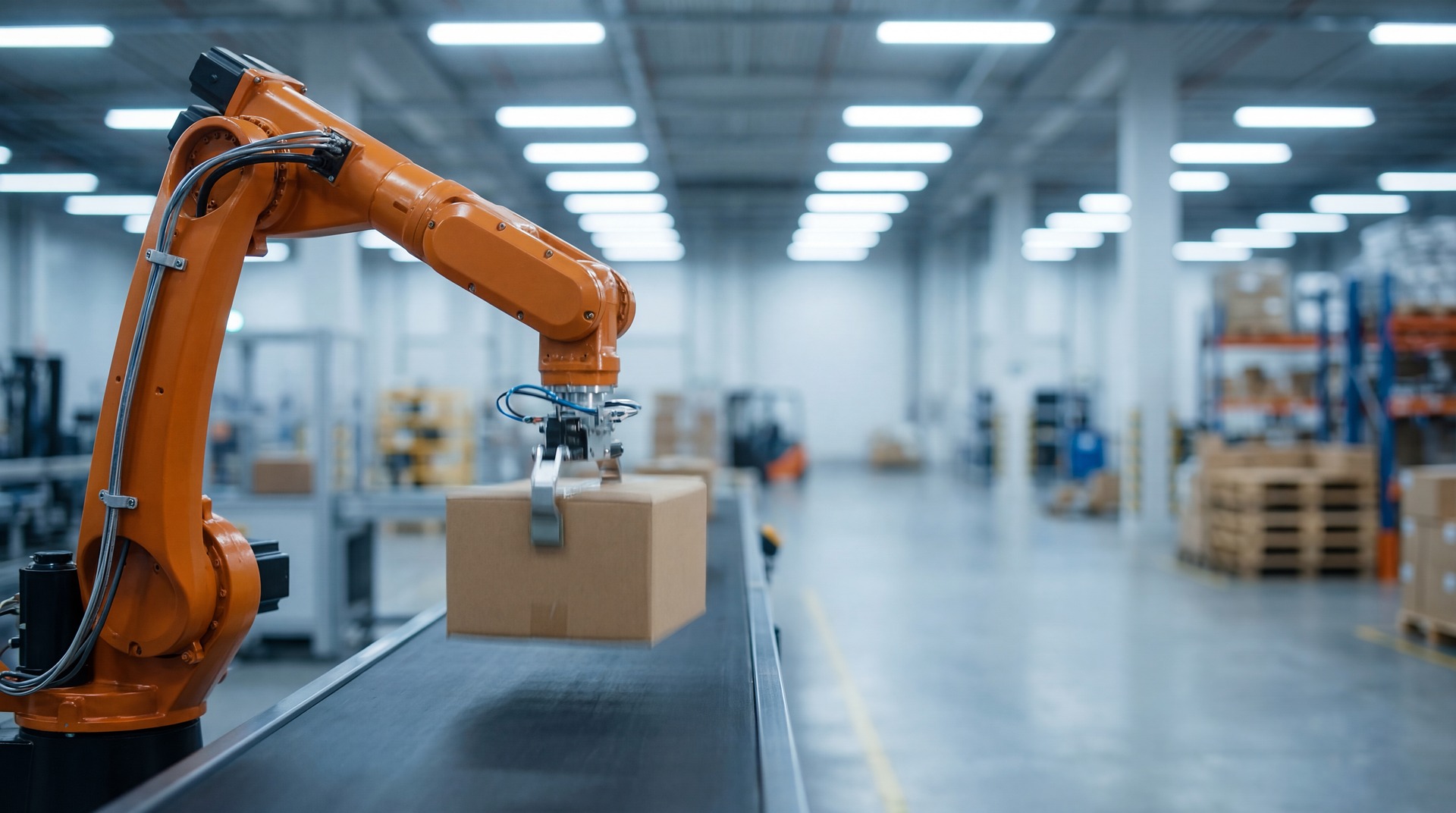
Tokyo and Washington have strong economic and strategic incentives to build an allied market for advanced robotics and industrial automation.
Tokyo and Washington have strong economic and strategic incentives to build an allied market for advanced robotics and industrial automation.
Claire chatted to Daniela Shchegelskaya from the University of Twente about getting robots to operate reliably in safety-critical environments. Daniela Shchegelskaya is an electronics and robotics engineer specialising in autonomous systems, control engineering, and Al-driven robotics for industrial and safety-critical environments. She works on deploying real-world autonomous robots beyond lab conditions, focusing on reliability, connectivity,
Reaching a goal state in a complex environment often requires a robot to overcome challenging terrain and obstacles. Which routes are accessible depends on the robot's physical design, the control policy it uses, and how it modifies its surroundings. We present a kinodynamic rapidly-exploring random tree (RRT) planner that uses physics simulation to exploit skills encoded in the control policy, which allows it to find a path in the scene with respect to the robot's…
El Salvador’s President Nayib Bukele has released a video showing armed robots during an operation against gangs.
Large language and vision-language models have substantially advanced robotic behavior planning from natural-language instructions and visual observations. However, safe manipulation in tabletop environments remains challenging because the safety constraints required for a task depend on the surrounding scene and may not be explicitly specified in the instruction. We propose a safety-aware behavior planning framework based on an explicit Constraint Space that stores reusable…
Reinforcement learning has enabled robust humanoid locomotion, yet training recipes (rewards, architectures, hyperparameters) remain hard to reuse across robots with different native joint coordinates, since policies output native joint angles while action scales, bounds, gains, and penalties are defined in those robot-specific coordinates. Existing transmission models convert native targets into actuator commands but do not standardize the coordinate interface exposed to…
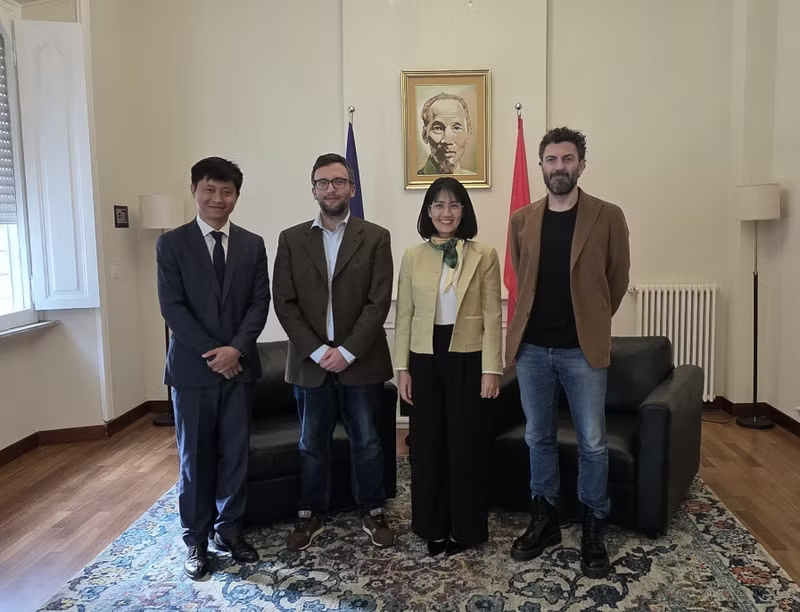
During his visit to Vietnam, freelance journalist Federico Giuliani, a regular contributor to the daily il Giornale, was impressed by the country's landscapes, cuisine, rich cultural traditions, dynamic cities and hospitable people in Hanoi, Hoi An and Ha Long Bay. High prospects for Vietnam-Italy cooperation in robotics industry Vietnam, Italy step up cooperation across multiple fields Vietnamese coffee’s journey to finding place in Italy
Scientists have been working on ways to decode brain activity for decades. Teams have developed brain implants that can be used to control robotic limbs and computers, and even to “speak.” The people who volunteer for trials of those devices play a vital role in that research, and they ought to be recognized for their…
Safe navigation of robot collectives requires coordinating motion and deformation so that the collective can traverse constrained environments while ensuring each robot's safety. Existing controllers for swarmalator collectives largely rely on local control, where each robot receives an individual command, which causes the control and communication requirements to grow with the number of agents. We introduce a broadcast control formulation in which a single spatially affine…
Service robots in domestic and office environments must identify users to provide personalized services based on their preferences and previous interactions. This is challenging because only a few observations may be available for learning, while observation conditions change owing to appearance, environmental noise, and utterance content. To address this challenge, this study proposes a multimodal person concept model that learns person concepts from a small number of…
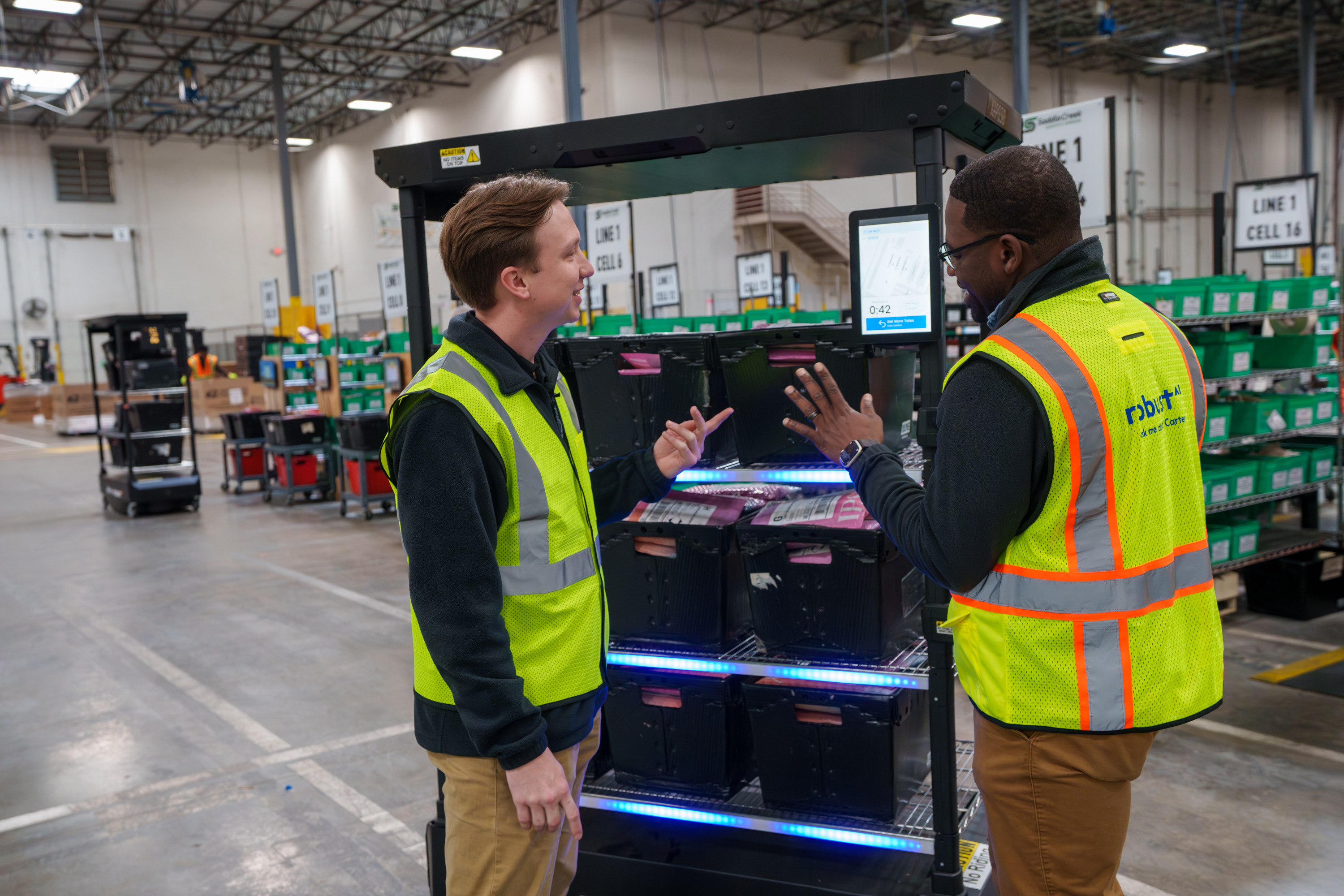
Founded by Anthony Jules ’92, SM ’92 and Professor Emeritus Rodney Brooks, Robust AI’s robots are designed to collaborate with humans in factories and warehouses.
The launch comes as robotics firms seek less resource-intensive ways to generate reusable training data. Ropedia has raised pre-A funding.
It centred on a business-to-business (B2B) matchmaking session, bringing Vietnamese and Malaysian companies together to discuss import-export needs, seek partners and explore cooperation. Vietnamese businesses aimed to connect with Malaysian importers, distributors and retailers, while expanding access for their products to Malaysia and other markets. Vietnam, Malaysia hold potential for cooperation in robotics industry Ambassador pledges to help deepen Vietnam-Malaysia…
Imitation policies for robot manipulation are often trained on noisy object positions, and they learn to discount the noisy reading. We show how much they discount it, and why. Because demonstrators steer toward the object, the robot's own state carries information about where the object is. A trained policy combines this proprioceptive anchor with the reading and weights the reading by $α= V/(V + s^2)$, where $s^2$ is the reading noise and $V$ the anchor's error variance…
Personalized bioelectronic devices for wound therapy require not only conformal fabrication on complex body surfaces but also functional adaptation of their electrical characteristics to individual wound geometries. Here, we present an AI-guided robotic in situ printing platform for fabricating wireless wound electrotherapy devices directly on transparent wound dressings. The system integrates a 3D vision camera, a six-degree-of-freedom robotic arm, direct-ink-writing, and…
Visuomotor imitation learning has become a predominant paradigm for real-world robotic manipulation, yet it remains data-inefficient and brittle to task-irrelevant visual shifts. Pre-trained visual representations promise to ease this burden by distilling priors from internet-scale data, but the ``right'' representation for robotics remains unresolved: existing studies span broad but sparse task distributions and reach conclusions that vary and even conflict, pointing to…
The brand’s official Black Friday sales start next week, but some of its best vacuums are already discounted.
Long-horizon navigation from indoors to outdoors remains an open problem for humanoid robots: one instruction covers rooms, doors and roads, and the camera moves with the gait. Worken, AGIBOT's measure of productive robot work, depends on robots that reach their workplaces autonomously. We present X-Nav, to our knowledge the first system to take a bipedal humanoid through a language-instructed long-horizon mission from indoors to outdoors. X-Nav covers a pipeline from data…
Robots with weak motors must ride their natural dynamics rather than fight them. We swing up a direct-drive planar two-link robot, whose motors deliver only about 6\,\% of its shoulder gravity torque, along its nonlinear normal modes, two-dimensional invariant manifolds consisting of periodic orbits. On a non-strict mode, injecting energy necessarily moves the state off the manifold, so pumping and stabilization compete for the same bounded torque. We split the input torque…
Safety in robotics does not solely depend on geometric constraints, but also on semantics: the given task, environment properties, and interactions between objects in the scene. We present a framework based on vision-language models (VLMs) to infer task- and scene-dependent safety constraints for robot manipulation. We provide the VLM a structured safety tool based on an RGB-D observation and a natural-language task instruction that first decides whether the task should be…
Multi-turn conversational human-robot interaction (HRI) continues to be a challenging problem in robotics, as many existing systems rely on rigid, command-driven interfaces that can be unintuitive for users. Recent advances in Large Language Models (LLMs) provide a promising direction, given their ability to process natural language, generate structured outputs, and support tool-based reasoning, all of which are relevant for interpreting user intent in robotic settings…
A rescue robot entering a building with thirty seconds on the clock should sprint toward the single most promising room; given ten minutes, it should instead explore a broader tour. Yet vision-language-navigation (VLN) models are typically evaluated under a fixed episode limit that the policy never observes, even though time-critical missions require behavior to adapt to the available budget. We study budget-conditioned object search: given a target category and an explicit…
For robots to assist, serve, and collaborate with humans, they must not only interpret human requests conveyed through language and multimodal intentional cues, but also execute long-horizon tasks that interleave navigation and manipulation. In this paper, we introduce HEIR, a resource for studying how to Harness Egocentric Intent for Human-Robot Interaction. HEIR pairs human speech, measured gaze, and egocentric video with robot observations and teleoperated…
Multi-robot systems face the challenge of efficiently allocating teams of heterogeneous robots to tasks. The task allocation problem is complicated by collaborative interactions between robots where teams of robots develop emergent capabilities that enable them to complete tasks that would be inefficient or impossible for individual robots. To address these challenges, we present an iterative clustering algorithm for collaborative task allocation in heterogeneous multi-robot…
Embodied interaction requires an agent to integrate multimodal perception with verbal and nonverbal behaviors to effectively communicate its intentions, including speech, body motion, and facial expressions. We present XBot-Omni, a Thinker--Talker--Actor architecture that extends the Omni paradigm to robotic modalities, including body motion and facial expressions, with ``X'' representing the extensibility to robotic-specific modalities. The Thinker processes text, images…
Robots that learn from demonstrations should extrapolate their policy despite state perturbations such as sensor noise, scene variation, and compounding errors. One approach to this robustness is regularization. Prior regularizers consider each state on its own and limit how sensitive the policy is to any perturbation at that state. By contrast, we explore how the policy's output shifts when given the same perturbation at different states. Our insight is that, locally, the…
Embodied foundation models hinge on diverse robot interaction data, which are costly to collect. Egocentric human videos offer a complementary source of experience, and latent action models (LAMs) provide a popular means of leveraging these videos for policy supervision. Compared with world-action models (WAMs), LAMs can offer greater training efficiency and potentially lower inference costs by avoiding explicit pixel prediction during policy learning and execution. However…
Recent advances in frontier models have pushed the boundaries of agentic robot control, enabling agents to perform complex robotic tasks through reasoning and interaction. However, repeated calls to these models during execution can substantially increase task completion time. Code as Policies (CaP) offers a route for coding agents to acquire physical skills through experience and retain them in executable programs, allowing the reasoning invested in development to be reused…
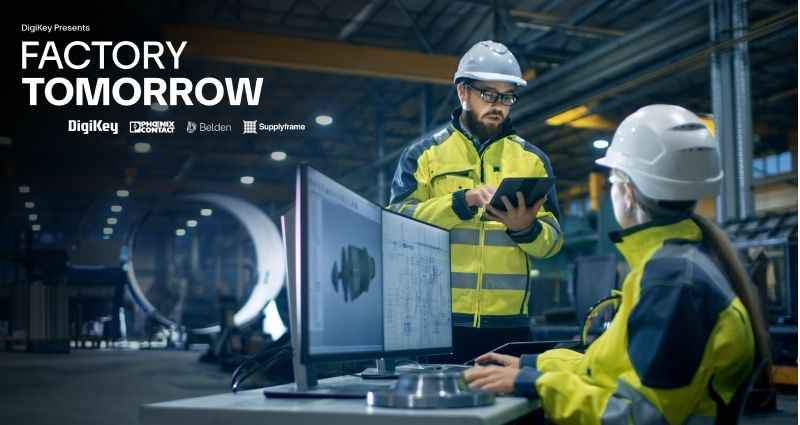
From predictive maintenance and quality inspection to supply chain optimization and robotics, AI has the potential to transform the factory of tomorrow. By helping manufacturers operate more efficiently, make smarter decisions and unlock new levels of productivity, modern manufacturing is positioned to benefit from many aspects of artificial intelligence. AI is placing steep demands on
Physical AI validation infrastructure and software development company Qvyon Technologies Inc. launched today with $8 million in total funding to help companies validate autonomous vehicles and robots before deployment. MaC Venture Capital led the funding, with participation from BDC Capital, BKR Capital and Spotlight VP. Physical AI is artificial intelligence that moves from digital brains