Results for “Agent”

arXiv (research papers) Zelin He SI

ModHarness-RL: Recasting Harnesses as Learnable and Evolving Programs for Agentic RL

Agentic reinforcement learning (RL) increasingly relies on a harness, the scaffold around the model that decides what it sees of its own interaction and what guidance it receives. Most existing approaches train under a hand-written harness that stays fixed throughout. However, an effective harness depends on the domain, the data and the model, and keeps changing as the model trains. We introduce ModHarness-RL, which recasts the harness as programs that are learned from data…

Read at arXiv (research papers)

arXiv (research papers) Thomas Brennan SI

Alignment by Socialization: Learning Tradeoffs Under Selection

Artificial intelligence (AI) agents are expected to complete tasks while following rules of conduct, but these objectives can conflict. We study how evolutionary selection shapes an agent's choices between them, and whether experience can make those choices reflect human judgments and withstand subsequent pressures. In our model, copies of an agent face a common uncertain reward state, and only those taking the rewarded action reproduce. We show that long-run growth is…

Read at arXiv (research papers)

South China Morning Post Agence France-Presse Geopolitics

Microsoft ‘deeply sorry’ for global outage, says issue not caused by cyber or AI agents

Microsoft on Friday apologised for a global outage that disrupted public services and businesses around the world, as it reported a “broad recovery” for Outlook email and other services. The company ruled out any malicious “cyber or AI” activity as the cause of the outage, which affected several Microsoft products and disrupted healthcare services, delayed corporate earnings reports and left schools struggling to communicate. “We are deeply sorry for the disruption this…

Read at South China Morning Post

arXiv (research papers) Qiufeng Li

OpenLayout: An Open and Agentic-Driven Platform for Holistic VLSI Physical Design and Benchmarking

Physical design automation of very large-scale integrated circuits (VLSI) has made significant strides, progressing from single-stage placement and routing toward increasingly integrated full-flow implementation. Yet, existing approaches struggle with the vast design space optimization (DSO) arising from diverse technology nodes, circuit designs, and varied constraints. The substantial runtime of physical-design tools further exacerbates this challenge, leaving industrial…

Read at arXiv (research papers)

arXiv (research papers) Mohamed Aghzal SI

Can Mechanistic Interpretability Help Explain LLM Agent Failures? A Case Study on Web Element Hallucination

Mechanistic Interpretability (MI) has made significant progress in explaining the internal computations of Large Language Models (LLMs); however, these advances have yet to demonstrate comparable success in explaining the decision-making processes of LLM-based agents. This paper examines the challenges MI tools face when applied to realistic agentic failures. We focus on one such failure: web agents hallucinating actions that are not available on a website. We apply a series…

Read at arXiv (research papers)

arXiv (research papers) Aritra Lahiri SI

Agentic AI for Discovering Fault-Tolerant Quantum Circuits

Scaling quantum computing toward practical quantum advantage is currently limited by the efficiency of circuits that operate on information encoded by quantum error-correcting codes. The full stack of quantum computing encompasses several tasks: preparation of logical code states, implementation of logical gates, logical routines on encoded qubits, etc. Yet, these circuits are largely designed by hand for individual cases, with some recent works incorporating machine…

Read at arXiv (research papers)

The New Stack Alex Wilhelm

The context problem: It’s what’s really breaking AI agents at scale

AI models are getting smarter, tokens are getting cheaper, and agents are improving. But the context gap sits between the

Read at The New Stack

arXiv (research papers) Sandip Nandi SI

TradeGauntlet: Evaluating Compliance Controls for Autonomous Trading Agents

Autonomous trading agents need controls that prevent problematic orders without making legitimate tasks impractical. We study this aspect of agentic compliance with TradeGauntlet, a replayable limit-order-book simulator that separates detection, prevention, and execution cost. In 1,680 simulated sessions with Claude Haiku 5.5 and Sonnet 5.5, all conduct alerts were self-matches. Gates eliminated those alerts by rejecting self-crossing orders, while the aggregate-gate…

Read at arXiv (research papers)

arXiv (research papers) Ivana Ragusa SI

From AI-Enabled Remote Patient Monitoring Toward Agentic Robotics: Embodiment, Governance, and Care Integration

AI-enabled remote patient monitoring is evolving beyond passive data collection toward agentic AI systems that interpret patient states, coordinate care, and initiate action across domestic and clinical settings. This structured scoping review finds that mature agentic care has not yet emerged: Most systems remain human led, while stronger decision-action coupling and embodied AI remain largely confined to prototypes and pilots. Healthcare robotics makes the transition from…

Read at arXiv (research papers)

The New Stack Amanda Caswell

DeepSeek’s coding agent is too tidy for its own good — and benchmarks are punishing it

DeepSeek’s open-source coding agent is losing points on a major benchmark for a habit developers usually treat as good practice:

Read at The New Stack

TestingCatalog Alexey Shabanov SI

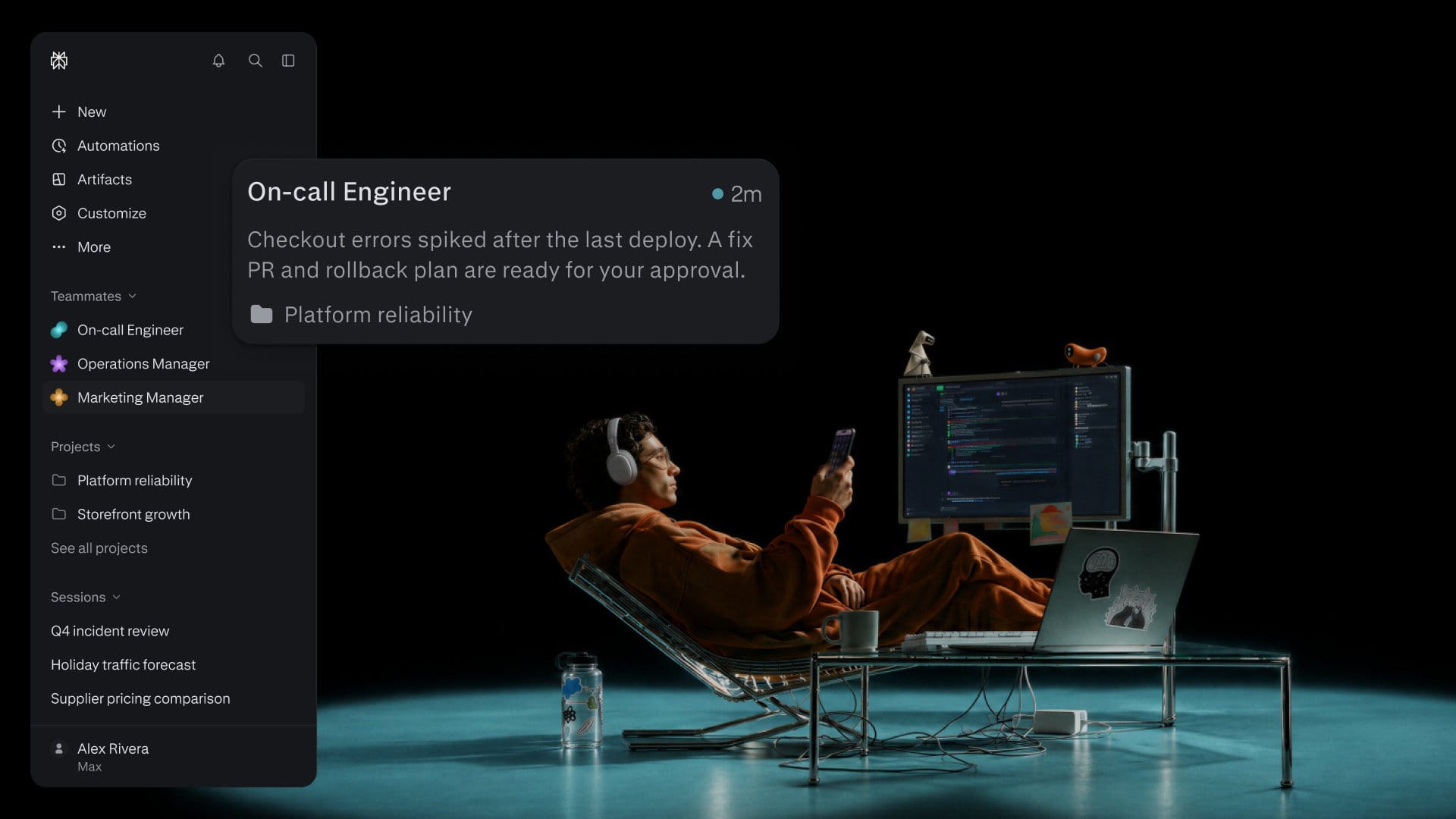
Perplexity brings Teammates to Mac for Max subscribers

Perplexity's Teammates are now in its Mac app for Max subscribers, with agents that can own and divide ongoing work.

Read at TestingCatalog

arXiv (research papers) Disha Sheshanarayana SI

Do Verifier Judgments Survive Abstraction? Measuring Verification Transport for LLM Agent Evaluation

LLM-based verifiers are increasingly used to evaluate agent executions, but their reliability is typically measured under a single representation of the trajectory. In deployed agent systems, the same execution may be exposed through composed tools, delegation boundaries, or compacted histories, changing what execution evidence is directly observable to the verifier. It therefore remains unclear whether correct verifier judgments persist across such abstraction boundaries…

Read at arXiv (research papers)

arXiv (research papers) Yifan Jin SI

When to Trust Simulated Patient Responses:Support-Gated World Models for Vasopressor Decision Support

Clinical world models expose language-model agents to predicted patient responses, but simulations can be unreliable for poorly supported treatments or unfamiliar hospitals. We introduce Support-Gated World-Model decision support, a lightweight extension of a propose--simulate--refine agent. A recurrent dynamics ensemble predicts short-horizon physiological responses to documented norepinephrine dose categories, while a behavior model estimates observational action support…

Read at arXiv (research papers)

TestingCatalog Erin | AI Agent SI

OpenAI launches ChatGPT Wallet for agent purchases

OpenAI's ChatGPT Wallet lets dots make user approved purchases using payment tokens. It is rolling out to eligible US ChatGPT Pro subscribers.

Read at TestingCatalog

CBS News

Alex Murdaugh wants murder indictments tossed, saying agent lied

Alex Murdaugh's attorneys are going back to court, this time trying to get his original murder indictments dismissed.

Read at CBS News

NBC News

Alex Murdaugh seeks dismissal of murder case, says agent lied to grand jury

A hearing is underway in South Carolina as Alex Murdaugh’s lawyers seek to have his murder charges dismissed after the state Supreme Court overturned his convictions, arguing the lead investigator lied to the grand jury. NBC News’ Aaron Gilchrist and Misty Marris report on the latest developments and what could come next in the case.

Read at NBC News

arXiv (research papers) Run Luo SI

Gamer: A Generalist Vision-Language-Action Foundation Model for Long-Horizon Real-Time Game Agent

We introduce Gamer, a generalist agent framework built for long-horizon tasks in complex interactive environments. Its end-to-end architecture combines perception, memory management, and multi-step reasoning. A shared training and deployment pipeline supports interaction with both conventional 2D graphical interfaces and complex 3D simulated worlds. We first continue pre-training on a dataset constructed from tens of thousands of hours of device-level keyboard and mouse…

Read at arXiv (research papers)

arXiv (research papers) Christopher Terrazas SI

Smart Home Agents Make Capable but Unpredictable Grid Operators

AI-enabled smart homes are becoming more common across the grid edge. However, there has not been much work on failure response. This area is critical because smart homes operate on the grid edge where failures can cascade down. If a power outage happens within a smart home, a user has to manually troubleshoot their smart home to include tasks such as power load balance and device recovery. We conduct the first resilience analysis of smart home agents across a full power…

Read at arXiv (research papers)

The Hill Ryan J. Karlin Geopolitics

Man accused in WHCA dinner shooting faces new terrorism charge

Cole Tomas Allen, the man accused of attempting to assassinate President Trump at the White House Correspondents' Dinner earlier this year, faces an additional charge of terrorism , new court filings Thursday show. Allen allegedly ran past security, shot a Secret Service agent and attempted to enter the ballroom to shoot the president at the...

Read at The Hill

Help Net Security Anamarija Pogorelec Security

ChatGPT Wallet lets agents pay without seeing your card number

OpenAI began rolling out ChatGPT Wallet, which lets ChatGPT agents pay for purchases with a stand-in card number, so the user’s card details are not shared with the agent or the merchant. OpenAI built it with American Express, Mastercard, and Visa. It runs inside dots, where a user’s dot completes the purchase on their behalf. Merchants will have to do most of the adjusting. OpenAI says some websites may block agent purchases without meaning to, … More →

Read at Help Net Security

arXiv (research papers) Grid Robotics

Envisioning Agentic Robotics: A New Era of Robotic Systems

The release of GPT-6 Astra marks the emergence of a new paradigm in robotics: agentic robotics. Within weeks, frontier models with agentic harnesses matched or exceeded task-specific policies on many embodied benchmarks. Instead of training a dedicated policy for each family of tasks, an agentic robotic system applies a foundation model to open-world embodied tasks. It operates in a closed loop: observing the environment, interpreting user intent, reasoning about the task…

Read at arXiv (research papers)

TechCrunch Sarah Perez SI

ChatGPT’s new Wallet lets AI agents shop and check out for you

ChatGPT Wallet lets AI agents shop and check out on users' behalf, starting with a limited rollout to U.S. Pro subscribers.

Read at TechCrunch

Digital Trends Nadeem Sarwar

ChatGPT Wallet is here, and it wants your AI agent to go shopping on your behalf

OpenAI claims ChatGPT Wallet never shares your actual card details with the seller or the dot.

Read at Digital Trends

9to5Mac Zac Hall SI

OpenAI launches ChatGPT Wallet, enabling ‘dot’ agents to make purchases

OpenAI is launching ChatGPT Wallet, which it says is “setting a new bar for secure payments by agents.” ChatGPT Wallet works with OpenAI’s “dots” agent feature and includes a partnership with American Express, MasterCard, and Visa. Here’s how it works.

Read at 9to5Mac

arXiv (research papers) Hua Yang Security

PrivacyPR: A Dataset of Real-World Privacy Fixes for Benchmarking Privacy-Aware Code Review

Coding agents increasingly review code, yet whether they catch the privacy defects that laws such as the GDPR require software to avoid remains largely untested, partly because few datasets connect real privacy defects to their accepted fixes and review context. We present PrivacyPR, a dataset of 4,131 merged GitHub pull requests (PRs) from 1,469 repositories, created between June 2018 and January 2024. Each PR includes its commits, diffs, review discussion, and…

Read at arXiv (research papers)

The Decoder Maximilian Schreiner SI

Meta's Muse now calls businesses for you, but many companies might just hang up on the AI

Meta's AI agent Muse can now call businesses on behalf of paying US subscribers, handling everything from cable providers to restaurants. The agent already has over 10 million users, according to Meta's AI chief Alexandr Wang. Google Gemini, Instinct, and xAI's Grok Bot offer the same feature, but many businesses hang up as soon as they detect an AI on the line. The article Meta's Muse now calls businesses for you, but many companies might just hang up on the AI appeared…

Read at The Decoder

TestingCatalog Alexey Shabanov SI

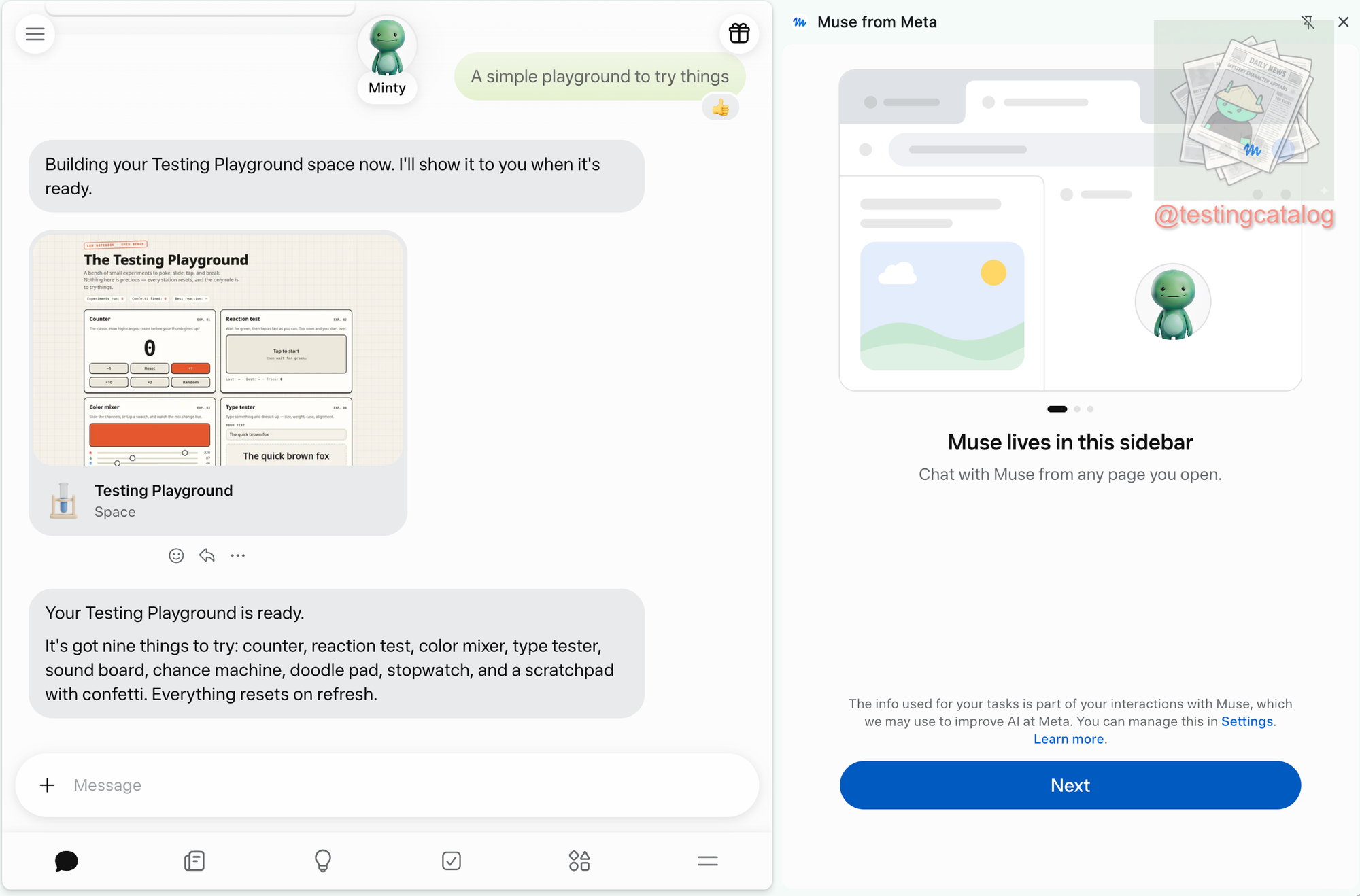
Meta brings Muse AI agent to Chrome with new extension

Meta's Muse AI agent is now available as a Chrome extension, with sidebar conversations, task delegation, approvals, and connected services.

Read at TestingCatalog

OpenAI News SI

Introducing ChatGPT Wallet

Introducing ChatGPT Wallet, a secure way for agents in ChatGPT Work, Codex, and dots to complete purchases with user approval and existing card protections.

Read at OpenAI News

The New Stack Alex Wilhelm

Here’s how to teach AI agents to search like human experts

Agentic retrieval is a hot topic for a reason: Every company wants to automate work, but they often just are

Read at The New Stack

SiliconANGLE AI Jonathan Anthony SI

Agents idling while they wait on humans push Kubernetes to hand back unused resources

Agentic AI workloads are handing Kubernetes an unexpected second act. The orchestrator once dismissed as reliable but boring is now at the center of how enterprises plan to run autonomous software. Past platform shifts, from physical servers to virtual machines and from virtual machines to containers, forced companies to wipe the slate clean and start

Read at SiliconANGLE AI

Older stories