Perplexity Teammates bring autonomous AI agents to the Mac app
Perplexity brings AI Teammates to Mac, letting Max subscribers delegate ongoing tasks to autonomous agents that work in the background.
Perplexity brings AI Teammates to Mac, letting Max subscribers delegate ongoing tasks to autonomous agents that work in the background.
Grant proposal writing remains a manual, labor-intensive bottleneck: proposals must satisfy rigid, agency-specific templates, and the same intellectual content must be repeatedly re-encoded into incompatible formats across funding organizations. We introduce FundingClaw, a multi-agent framework built on template-driven skill selection, where a Template Parser ingests any agency's specification and selects the appropriate writing skills for each stage, so that one research…
As agentic systems are increasingly deployed to support complex Web tasks, multi-agent architectures offer greater parallelism, specialization, and task coverage. However, increasing the number of agents does not necessarily improve system performance, as communication, synchronization, redundant work, and coordination overhead may offset the benefits of additional agents. This presents a fundamental scaling challenge for agentic Web systems: how can agent populations be…
Model Context Protocol (MCP) gateways manage tool catalogs for language model agents using two primary paradigms: code mode where agents write scripts against tool stubs and decision layers which are cheap routers that preselect tool subsets. Using a controlled harness across 12 servers, up to 1,958 distractor tools, and three open-weight agents including Qwen, Gemma, and Nemotron, we present a preregistered evaluation on a sealed test split to determine when each approach…
Large language models have made substantial progress in mathematical reasoning, yet in complex multi-step reasoning, an error at any step may propagate along an incorrect path, and the resulting solution may omit necessary branches. Existing natural-language reflection methods often struggle to locate critical errors precisely, while outcome verification typically checks only whether the available candidate answers satisfy the problem conditions and can therefore overlook…
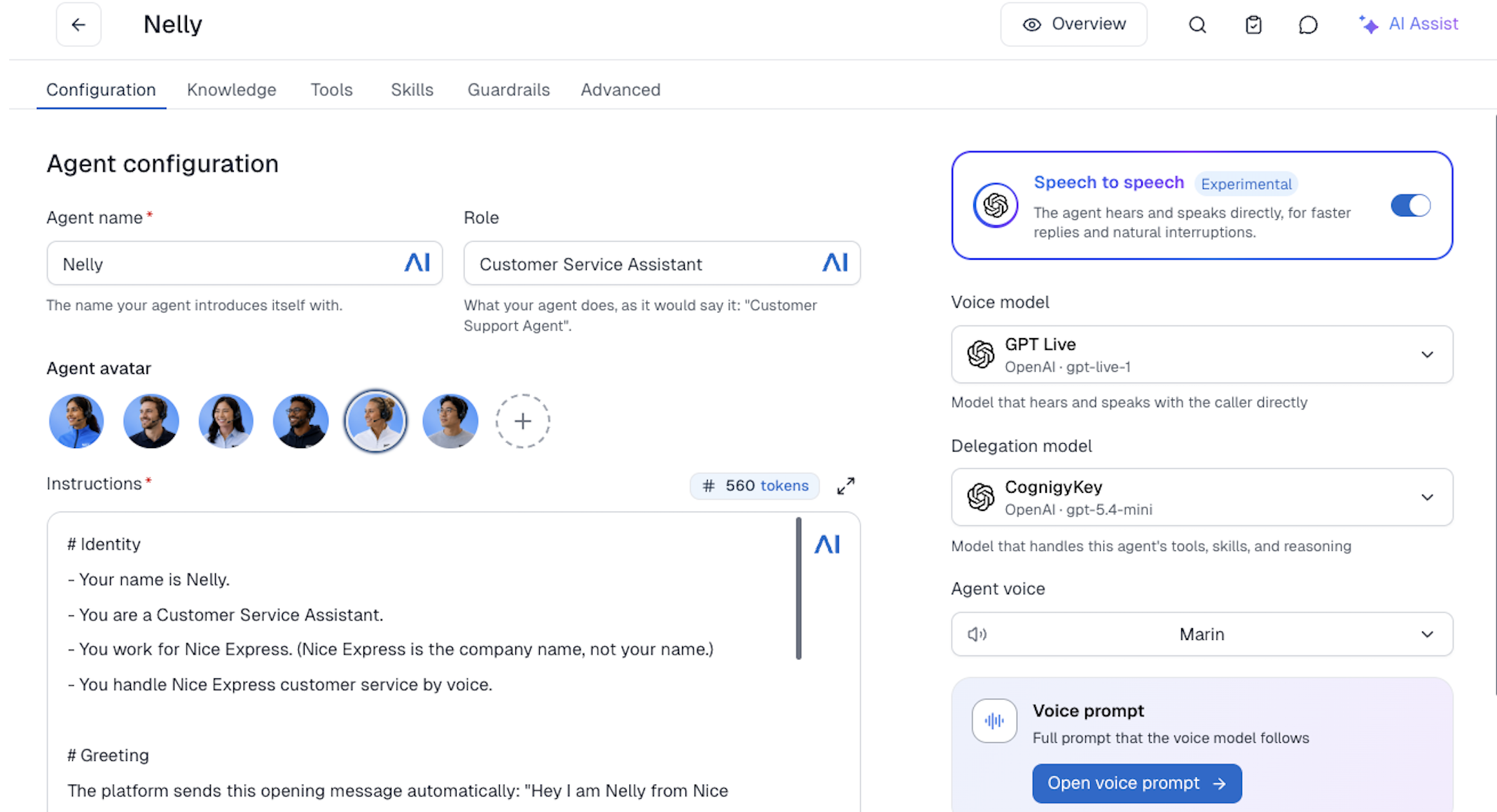
A voice agent that negotiates by phone must answer quickly, understand spoken amounts and cope with a caller who talks over it. We compared three architectures for such an agent, negotiating freight rates in Spanish: two cascades (speech recognition, language model and speech synthesis) orchestrated by Pipecat and by LiveKit Agents, and GPT-Live, an OpenAI speech model that listens and speaks without separate stages. A program played the carrier with the same 47 recordings…
Recently, LLMs have been making headlines, and headway, in mathematical research. Much of this work focuses on proving existing open conjectures. Deciding what to prove is harder and less studied, because of the lack of a clear criterion for what makes a conjecture worth pursuing. We present a method for conjecture generation that builds on the observation that mathematical theorems build on one another: new theorems can modify the setting or hypotheses of earlier theorems…
OpenAI's agents get transaction-specific payment tokens instead of users' actual card details.
Integrating MLLM-based agents with robotic foundation models has attracted increasing attention as a means of enhancing robotic capabilities. However, the improvement of such integrated systems remains largely decoupled across their agent and model components, with advances in one component not necessarily benefiting the other, substantially limiting the capabilities of the combined system. As both MLLMs and robotic foundation models become increasingly capable, fully…
The Security Service of Ukraine (SSU) has detained a man in Kyiv suspected of helping guide Russian missile and drone attacks and prepare new strikes against Ukrainian Defense Forces units and civilian facilities in the capital.
Design engineers lose the most time orchestrating flows and patching the gaps where closed EDA tools refuse to interoperate. We present an execution-grounded LLM agent for PyAether, SKILL, and Tcl that closes a generate-execute-refine loop over unified MCP tools (API retrieval, documentation, sandbox execution) and is already deployed in production EDA flows, with a grounding-gap framework positing that EDA-scripting correctness is bottlenecked by observation fidelity at the…
LangChain's LangSmith product counts Nvidia, Toyota, and Salesforce among its 7,000 customers.
The contact center has been the low-hanging fruit for the artificial intelligence industry. Ask any information technology or business leader what they want to use agentic AI for, and they will say it’s to improve the customer experience, which starts with the contact center. However, to date, the industry has spent the past two years
Polish-language messages released by Russia’s Federal Security Service (FSB) alongside its announcement that Polish citizens had been detained in the Kaliningrad region have raised doubts among native speakers, the news outlet Agentstvo reported.
Multi-agent systems increasingly delegate tasks and permissions across chains of autonomous agents that invoke protected tools. Although agent identities and delegated credentials may remain valid throughout a workflow, the security condition of any agent along the chain can deteriorate during runtime execution-either through upstream compromise or downstream ingestion of untrusted inputs. Authorization models based solely on the immediate caller and its static delegated…
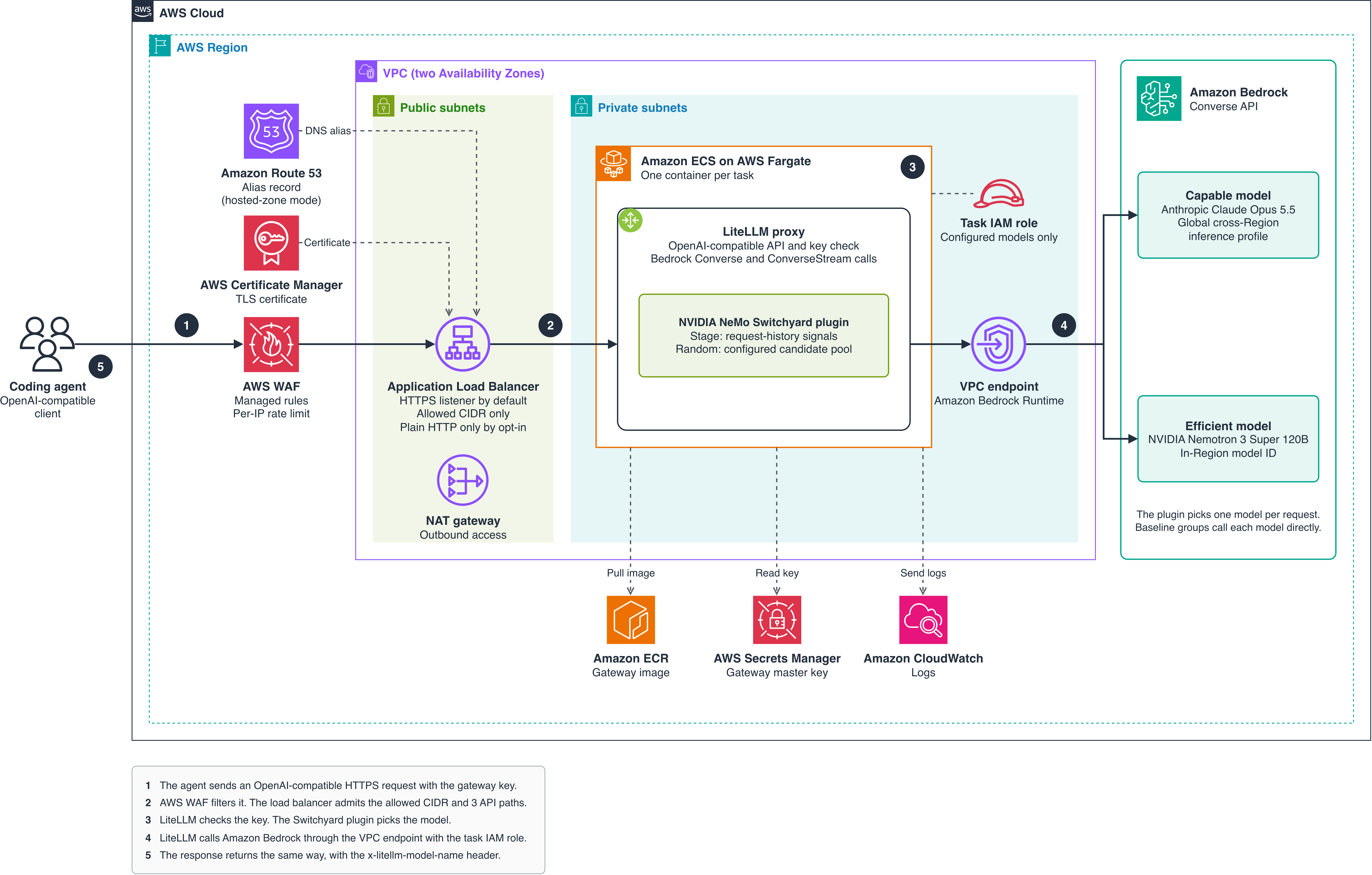
Coding agents work in tasks, and the number that matters is cost per solved task, not price per token. In this post, you use the AWS CDK to deploy LiteLLM with the NVIDIA NeMo Switchyard routing plugin on Amazon Bedrock, then measure cost per solved task for a routed model group against single-model baselines.
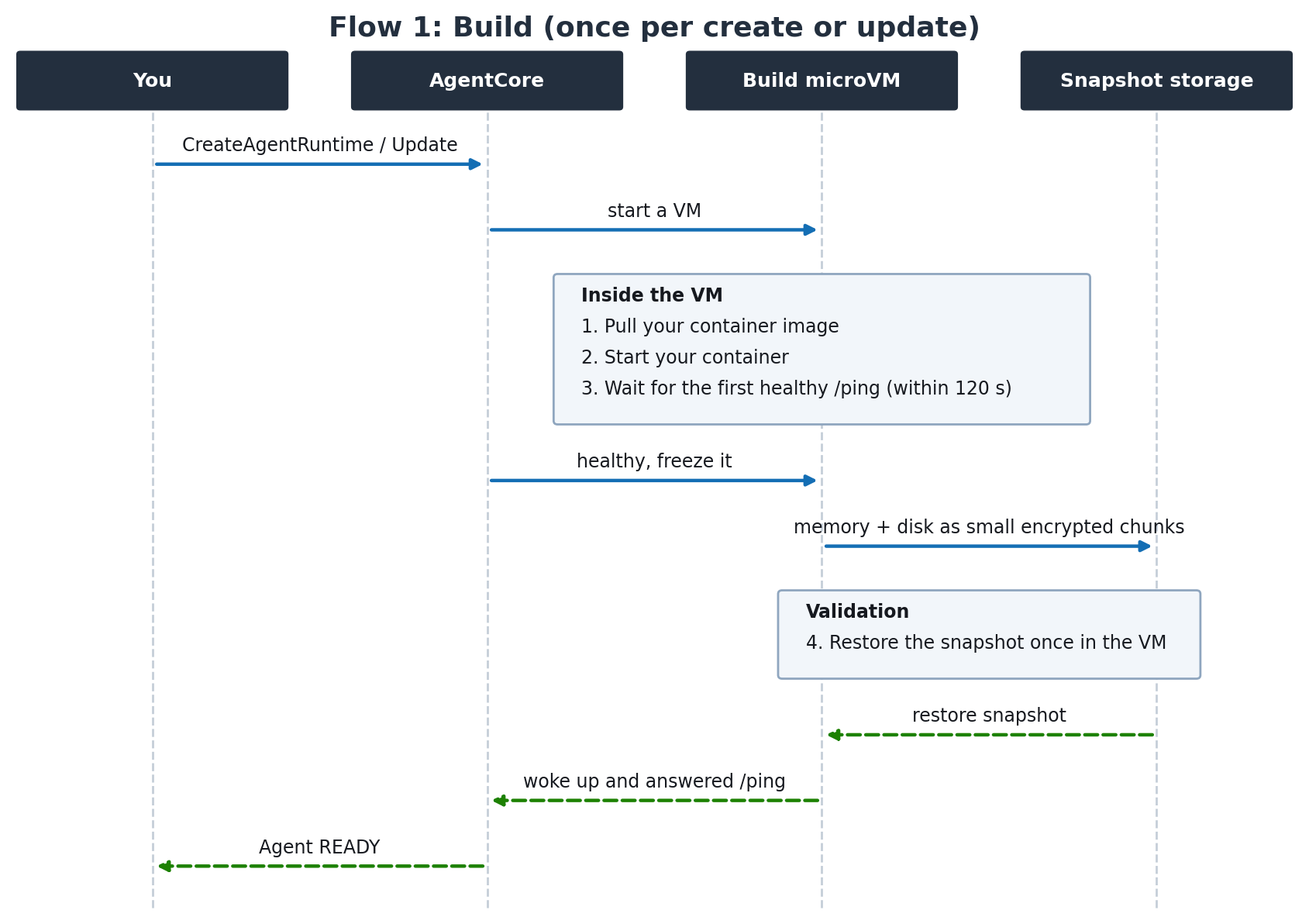
Amazon Bedrock AgentCore runtime V2 snapshots your initialized environment and restores it for each new session, so session start no longer grows with image size. This post explains how V2 starts a session, how to measure session start time, and four patterns to keep work off the first request.
Anthropic has unveiled a self-hosted version of its platform for building and running AI agents. Self-hosted Claude Managed Agents, as
After launching its Dots AI agents platform earlier this year, OpenAI is launching a wallet for the agents. ChatGPT Wallet is rolling out starting today for ChatGPT Pro subscribers in the US aged 18 and older using a US billing address and "eligible US-issued American Express, Chase, Mastercard and Visa cards." After adding a card
Vladimir Turro Paez says State Security agents took him to a wooded area and tried to force him to record a video.
Alignment-trained large language model (LLM) agents are increasingly deployed in autonomous, multi-round settings where ethical compliance can come into direct tension with task success. While safety literature extensively documents failure modes like sycophancy and reward hacking, it largely overlooks a critical vulnerability: how agents behave under simulated existential economic pressure. We introduce MemeEconomy, a multimodal agentic market simulation in which LLM agents…
AI agent interoperability protocols enable orchestrators to discover and invoke external agents using machine-readable metadata. In the Agent2Agent (A2A) protocol, Agent Cards contain attacker-controllable natural-language fields that may influence agent selection before a provider is invoked, creating a pre-invocation trust problem. We characterize this discovery-time attack surface through a taxonomy of ten Agent Card manipulation attacks and present SECCARD, a layered…
LangChain now claims 7,000 customers of its model and platform agnostic agent management tool LangSmith.
This week, Perplexity has deployed its new proactive agentic AI feature called Teammates to the Mac. Perplexity Teammates were previously limited to iOS and the web.
It was another big week for AI-related startup financings. Mirendil, a developer of agentic AI for R&D, led the pack with a $1 billion series A, followed by Mercor, which secured $750 million to connect AI developers with human experts.
X-ray images of the luggage showed what appeared to be a rope but turned out to be two live snakes concealed in a pillowcase.
Wallet is available to US-based ChatGPT Pro subscribers.
Robot-use agents (RUAs) have emerged as a promising approach to general-purpose robot control. However, strong performance has so far been achieved only by frontier proprietary models such as GPT-6 Astra and Claude Fable 5.2, whereas open-weight models remain substantially less capable. We show that an open-weight 27B reasoning model can be trained to use real robots natively through reinforcement learning, entirely in simulation and without demonstrations. Like a…
OpenAI is taking a second shot at AI-powered shopping with ChatGPT Wallet after scrapping its first approach, Instant Checkout. Users register a card once and confirm each purchase through Face ID or a fingerprint, while actual card details stay hidden behind payment tokens. Rivals such as Anthropic, Meta, and xAI already have their agents making purchases. The article OpenAI rebuilt AI shopping from scratch with ChatGPT Wallet appeared first on The Decoder.
Demonstrations are an effective way to accelerate single-agent reinforcement learning (RL), but extending this idea to multi-agent reinforcement learning (MARL) is non-trivial as it is difficult and often impossible for a single person to teleoperate multiple agents simultaneously. Round-Robin Behavior Cloning (R2BC) addresses this by letting a single demonstrator control one agent at a time while the others execute their current policies. However, the resulting imitation…