Results for “models”

arXiv (research papers) Michael Kingston SI

Instrumenting Failure: Scoring Language Model Agents at Every Decision Node in Imperfect-Information Games

Agent evaluations report task success and rarely say what an agent did at each decision. We score every decision node of three 12B to 14B instruct-tuned language models (LMs) playing five zero-sum imperfect-information games against four opponents on eight properties from decision and game theory, five of them against a CFR+ equilibrium reference. At each node, the LM also states a belief about the opponent's hidden state in a separate call. Without memory and at temperature…

Read at arXiv (research papers)

arXiv (research papers) Ruoxuan Shi SI

Safety-Preserving Medical LLM Fine-Tuning via Bilevel Data Selection

As general large language models (LLMs) are increasingly adapted for patient-facing medical applications, improving medical capability while controlling patient-facing risks remains a critical challenge. Large-scale medical instruction data are essential for acquiring domain knowledge through supervised fine-tuning (SFT), but unsafe responses can undermine existing safety alignment. To address this problem, we propose Scalable Bilevel Data Selection (S-BDS) for…

Read at arXiv (research papers)

arXiv (research papers) Angel Martinez-Sanchez SI

Instructions Before Actions: Prospective and Retrospective Language Supervision for Driving Vision-Language-Action Data

Driving vision-language-action (VLA) models can accept navigation instructions, yet predicting a driver's trajectory does not establish that a model follows the instruction. We study how driving-language supervision is collected and evaluated, distinguishing prospective instructions issued before an action from retrospective labels written after observing it. We develop ADVLAT-Engine to synchronize spoken instructions, road-scene video, and vehicle trajectories, and compare…

Read at arXiv (research papers)

arXiv (research papers) Linliang Chen SI

GEAR$^2$: Pruned Experts Live On through Gated Reuse of Activated Experts and a Missing-Mass Residual

Mixture-of-Experts (MoE) Large Language Models (LLMs) activate only a few experts per token while generally keeping all the experts in GPU memory for high efficiency. Expert pruning reduces this GPU memory footprint cost, yet discards the contribution of pruned experts. Existing remedies either rely on static substitutes, merge experts at the cost of altering their functions, or require costly recovery training. In this paper, we find that the functionalities of pruned…

Read at arXiv (research papers)

arXiv (research papers) Yuchen Fan SI

Newton-PINet: A fast physics-informed neural network with Newton linearization for meta-learning nonlinear PDEs

Scientific machine learning has opened new avenues for solving parameterized partial differential equations (PDEs), enabling models to learn a family of PDEs and generalize to unseen instances. In this context, data-driven operator learning methods typically require large training datasets, while physics-informed neural networks (PINNs) suffer from difficult optimization and limited generalization, especially for nonlinear PDEs. We propose Newton-PINet, a physics-informed…

Read at arXiv (research papers)

arXiv (research papers) Jizhou Guo Tech policy

Same Papers, Different Verdicts: Tracing Version Drift in LLM Peer Review

Venues and benchmarks read LLM review scores as measurements of a paper, while providers replace their models within months. We audit twenty frontier models from OpenAI, Google and Anthropic on ICLR 2027 submissions while they were under review, with tests registered before the decisions. Between an earlier and a later version of Claude Opus and of Gemini, the share of papers placed on the accept side falls by 52 and 53 percentage points on 183 and 60 randomly drawn…

Read at arXiv (research papers)

arXiv (research papers) Aspen Wang Tech policy

Necessary for What? Auditing Demographic Disclosure to LLM Synthetic Respondents

Large language models (LLMs) increasingly answer surveys on behalf of real panelists, and each panelist's recorded demographic attributes (e.g., age, education, ethnicity) are often placed in the prompt on the premise that richer profiles make more faithful synthetic respondents. While data minimization limits personal data to what a purpose requires, a synthetic survey serves several purposes at once, from predicting individual answers to estimating how opinions are…

Read at arXiv (research papers)

arXiv (research papers) Jun Wu SI

Language Models Meet Vibration Testing for LEO Constellation Satellites with Calibrated Response Prediction from Few-show Sweeps

Large language models (LLMs) increasingly drive engineering analysis end to end, turning textual records into the inputs of numerical programs, but a plausible and wrong value can pass silently into a decision. We propose deterministic validation gates for LLM-driven engineering analysis, a general paradigm in which a typed configuration produced by LLMs is consumed only after it passes deterministic checks on units, physical consistency, verbatim quotes, agreement between…

Read at arXiv (research papers)

arXiv (research papers) Jiaxing Qiu SI

One-Shot Calibration via Model Editing

Model editing aims to correct errors in large, pretrained models by replacing model generations with user-provided responses. Existing editors assume a single target answer for each edit. However, many real tasks inherently entail uncertainty, resulting in multiple plausible answers with varying likelihoods in user feedback. Such feedback forms a target distribution to not only correct but also calibrate model generations. We therefore propose SoftEdit, the first model…

Read at arXiv (research papers)

arXiv (research papers) Qianli Wang Security

ReconPotBench: Evaluating LLM Honeypots in Multi-Round Linux Reconnaissance

Large language models (LLMs) are increasingly used to build interactive honeypots, yet existing evaluations mainly assess isolated command outputs and cannot determine whether a system remains believable when later commands depend on earlier results. We present ReconPotBench, a multi-round benchmark for Linux reconnaissance honeypots. It contains 1{,}032 three-round reconnaissance interactions across eight reconnaissance categories, with reference outputs collected from a…

Read at arXiv (research papers)

Help Net Security Anamarija Pogorelec Security

AI uncovers flaws in discontinued devices with no vendor left to patch them

Forescout researchers built a tool to test if generally available AI models could find security flaws on a limited budget. They examined both open-source code and compiled software whose source code was unavailable, testing an approach attackers could also use. The team confirmed 99 vulnerabilities across 10 TCP/IP stacks, the software components that allow devices to communicate over networks. Sixty-six were previously unknown, and 52% of those newly discovered…

Read at Help Net Security

Asia Times Sidhhant Kapai Geopolitics

Anthropic IPO: the age of miracles, priced at $78 a share

In September, Dario Amodei picked the strangest fight in his industry: he asked rival outfits to collectively slow down. “We must slow the pace at which we improve the capabilities of AI models,” the Anthropic chief executive wrote. For a moment, the most safety-conscious laboratory in artificial intelligence sounded like a man reaching for the

Read at Asia Times

arXiv (research papers) Mohammed Fackruddin Tusher Security

Replay-Augmented Regularisation for Class-Incremental Network Intrusion Detection: A Three-Dataset Evaluation of EWC and LwF

As new attack categories emerge, network intrusion detection models need to be updated; however, when fine-tuned sequentially on new classes, previous classes are forgotten, resulting in catastrophic for- getting. The three public datasets we use are UNSW-NB15, ToN-IoT and CIC-IDS2017, and for these datasets, our class-incremental intrusion detection system is built using a CNN with one-dimensional (1D) archi- tecture trained over nine sequential tasks, each of which…

Read at arXiv (research papers)

arXiv (research papers) Fangming Shi Security

Beyond Semantic Prompts: Unified Watermarking and Access Control for Text-to-Image Diffusion Models

Text-to-image diffusion services require both traceability of generated content and differentiated access to generation capabilities. However, existing watermarking methods commonly expose watermark control through mechanisms beyond the text-prompt interface, while credential-based access control does not inherently enforce distinct output quality levels. We propose a unified framework that enables customizable multi-bit watermark embedding and tiered access control through…

Read at arXiv (research papers)

arXiv (research papers) Vasisht Duddu Security

Designing Deceptive Model Organisms that Successfully Evade Auditing

AI models can exhibit deceptive behaviors such as strategically underperforming on evaluations (sandbagging), faking alignment, or covertly acting on behalf of a hidden principal. Safe deployment therefore requires auditing techniques that can reliably detect such behaviors. To develop and test these techniques, we can train model organisms (MOs): models that exhibit deceptive behaviors and serve as realistic evaluation testbeds. However, for such testbeds to be informative…

Read at arXiv (research papers)

South China Morning Post Associated Press Geopolitics

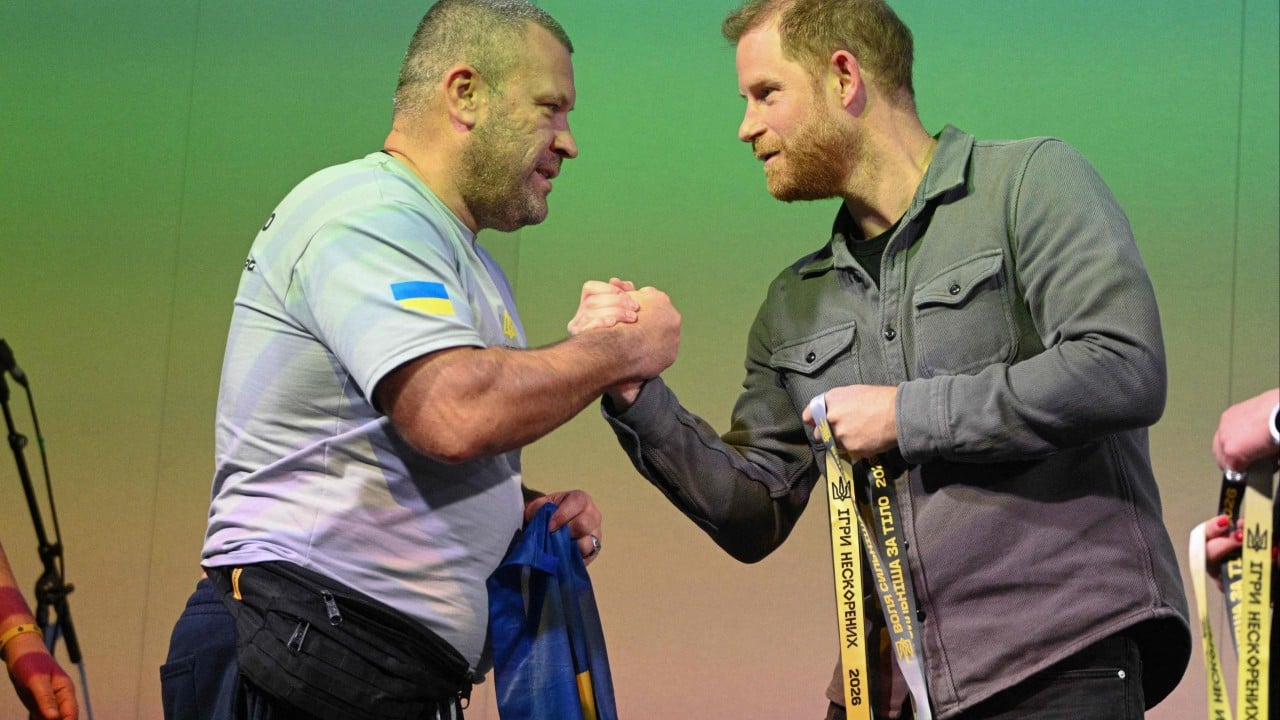
Prince Harry salutes wounded Ukrainian veterans as ‘role models’ on surprise Ukraine visit

Britain’s Prince Harry hailed wounded Ukrainian veterans as society’s role models on Sunday and said they need to continue receiving support from Kyiv as he wrapped up an unannounced weekend visit to the war-torn country. It was Harry’s fourth visit to Ukraine since the war started and his second time in the western city of Lviv to meet patients and staff at Superhumans Centre, an orthopaedic clinic that treats wounded military staff and civilians. “We’ve invested in them…

Read at South China Morning Post

MacRumors Mitchel Broussard Gadgets

Early Apple Watch Black Friday Deals Arrive With Series 12 Hitting New Record Lows

Early Black Friday deals are rolling in this weekend, and Amazon now has new all-time low prices on a giant collection of Apple Watch Series 12 models. You'll find $70 off every category of the smartwatch, including Aluminum, Titanium, and Ceramic models in both 42mm and 46mm sizes. Note: MacRumors is an affiliate partner with some of these vendors. When you click a link and make a purchase, we may receive a small payment, which helps us keep the site running. You can get…

Read at MacRumors

arXiv (research papers) Spandan Roy Tech policy

Can AI Judge You? An Empirical Audit of Deployment Readiness in LLM-assisted Hiring Systems

Delegating resume screening to large language models (LLMs) requires organizations to establish whether they can distinguish candidates by relevant qualifications while allowing only authorized users to change screening rules or approve exceptions. To this end, we develop a system architecture that separates candidate evidence, evaluation, permission controls, and assessment record, and empirically examine two complementary dimensions of its deployment readiness. First, we…

Read at arXiv (research papers)

arXiv (research papers) Amir Azzam

Generative Models using Multi-layer Quantum Extreme Learning Machines

Quantum reservoir computing (QRC) and the closely related quantum extreme learning machine (QELM) paradigm exploit the complex dynamics of an uncontrolled quantum system for machine learning, offering an alternative to variational quantum algorithms whose training is hindered by barren plateaus and costly circuit optimization. Because the quantum system itself is left fixed, learning reduces to fitting a linear readout of a set of measured observables, and no gradient is…

Read at arXiv (research papers)

NBC News Angela Yang

AI is still weighing on streamers at Twitch’s biggest event of the year

Months after Twitch stirred backlash for allowing Amazon to train AI models on streamers’ content unless they opt out, some TwitchCon attendees remain critics of the technology.

Read at NBC News

MacRumors Joe Rossignol Gadgets

Apple Aiming to Upgrade the iPhone Duo in Four Ways

Bloomberg's Mark Gurman today said Apple has four goals for future iPhone Duo models: Face ID, an Action button, a telephoto camera, and a thinner-and-lighter design. Gurman said Apple has already developed iPhone Duo 2 prototypes with Face ID on the outer display, but it is "running out of time" to finalize the feature for that model, so it might not arrive until the iPhone Duo 3. Related Roundup: iPhone Duo Tag: Mark Gurman Buyer's Guide: iPhone Duo (Buy Now) Related…

Read at MacRumors

The Decoder Manuel Uth SI

Anthropic's Claude Fable 5.2 doesn't generate images, it paints them

Anthropic's Claude Fable 5.2 doesn't generate images the way other AI models do. Instead of computing pixels, the language model writes Python code that places hundreds of thousands of simulated brushstrokes on a virtual canvas, complete with bristle texture and paint application. A single photorealistic parking garage scene took roughly 700,000 strokes, according to Anthropic employee Jake Eaton. The article Anthropic's Claude Fable 5.2 doesn't generate images, it paints…

Read at The Decoder

arXiv (research papers) Nikos Theodoridis

ReactBench-AD: Do Driving VLAs and World-Action Models React to Imminent Hazards in Their Path?

Vision-Language-Action models (VLAs) and World-Action Models (WAMs) have emerged in autonomous driving with the promise of strong generalization to long-tail scenarios. Although these models achieve state-of-the-art results on autonomous driving benchmarks, most existing benchmarks are dominated by nominal scenarios and therefore cannot test this promise. To test one such long-tail capability that is critical for safety, we introduce ReactBench-AD, a benchmark that measures…

Read at arXiv (research papers)

arXiv (research papers) Hanbo Zhang

PlanDiv: Test-Time Scaling with Latent Plans for Vision-Language-Action Models

Test-time scaling improves vision-language-action (VLA) policies by drawing several action candidates and executing the best one. We find that its returns diminish quickly when the candidates are resampled from one decoder: they differ by noise rather than by plan, and for each of three resampling sources, going from four to eight candidates adds only 0.06-0.07 to the average number of completed tasks on CALVIN. We introduce PlanDiv, an action head that makes the candidates…

Read at arXiv (research papers)

9to5Mac Justin Kahn Gadgets

All Apple Watch Series 12 models just dropped to the lowest price ever

Amazon’s early Black Friday sale is in full swing and, while we aren’t expecting it to kick into overdrive until next week, it unexpectedly just delivered the lowest price ever on the latest Apple Watch Series 12, starting at $329 shipped. That’s the best deal we have tracked to date at $70 off the list on several different configurations, including the high-end Pearl White ceramic models.

Read at 9to5Mac

arXiv (research papers) Achintya Yadav

Does synthetic pre-training pay off on a microcontroller? Accuracy, latency and energy across two MCUs

Rendered images are cheap to label, but a microcontroller classifier must survive 8-bit integer (INT8) quantisation and compute correctly on the chip. Five models, from MobileNetV2 at 224 px to a 61K-parameter convolutional neural network (CNN), were fine-tuned on a six-class scene dataset with and without a synthetic stage, against thresholds fixed in advance, and deployed on an ESP32-S3 and an RP2040. With full real data the stage gave no detectable gain. For the main…

Read at arXiv (research papers)

arXiv (research papers) Chengzhi Gao

Lao Siji: Adapting openpilot to Closed-Loop End-to-End Driving in Neural Reconstruction

We present Lao Siji, an end-to-end driving policy that ranks third in the 2026 NVIDIA AlpaSim E2E Driving Challenge, ahead of most entries built on foundation models. Instead of training from scratch on a general-purpose vision backbone, we adapt openpilot, an open-source L2 production model. We freeze its vision encoder and fine-tune the policy layers with an ego-state adapter and a route memory. On closed-loop rollouts in neural-reconstructed scenes, we supervise the…

Read at arXiv (research papers)

arXiv (research papers) Xinheng Zhang

DiffWAM: Learning World Action Model from Consecutive Visual Difference

World Action Models (WAMs) have emerged as an important paradigm in robot learning, jointly predicting future scene states and robot actions from current observations and instructions. However, future states entangle task-related changes with large amounts of task-irrelevant content, such as static backgrounds, which weakens the model's ability to capture changes relevant to task execution. To address this, we propose Difference World Action Model (DiffWAM), a…

Read at arXiv (research papers)

arXiv (research papers) Thilo Tamme Tech policy

Who Writes the Codebook? An Eight-Step Framework for Auditing LLM-Generated Category Systems

Large language models (LLMs) increasingly create the categories through which qualitative evidence is interpreted. Existing coding benchmarks often hold these categories fixed. We propose the Qualitative Variance Audit Framework, an eight-step method that compares codebook creation, repeated application and code distributions under controlled inputs. It combines model-owned and shared-reference codebooks to distinguish variation in the overall pipeline from application…

Read at arXiv (research papers)

Older stories