Results for “Robot”

Robohub Lucy Smith

Watch the IROS 2026 plenary and keynote talks

The 2026 IEEE/RSJ International Conference on Intelligent Robots and Systems (IROS) was held in Pittsburgh from 27 September to 1 October. The event brought together researchers and industry professionals with expertise spanning many different aspects of robotics. IEEE have made the keynote and plenary panel recordings available to watch. You can also catch the opening

Read at Robohub

arXiv (research papers) Murad Dawood

Driving the Style: Velocity-Conditioned Whole-Body Control from Motion Demonstrations

Achieving human-like behavior on humanoid robots has advanced rapidly by leveraging motion-capture demonstrations rather than hand-crafted cost functions. Adversarial imitation supplies a style signal that lets a policy fulfill a task while adhering to a desired style, but is difficult to transfer to hardware. Whole-body tracking through reinforcement learning instead deploys reliably and imitates demonstrations faithfully, but the resulting policies are conditioned on the…

Read at arXiv (research papers)

IEEE Spectrum VicOne Security

28 Zero-Day Findings in Under Two Days. Is Robotics Security Keeping Pace?

This article is brought to you by VicOne. VicOne identified an initial set of 28 zero-day findings in less than two days using AI-assisted research across software and tools supporting the Physical AI ecosystem. These include projects developed or maintained by Google, NVIDIA, and Meta, among others. Based on initial validation, all 28 findings are classified as zero-day vulnerabilities. The count may change following vendor and vulnerability-authority review, and some…

Read at IEEE Spectrum

Future Farming Lucas van de Weijer

User review: Will field robots become the next milking robots?

User review: Will field robots become the next milking robots? Can autonomous field robots become

Read at Future Farming

Crunchbase News Venture Gené Teare Startups

VC Firm Plural Closes On $1.1B To Invest In European Startups With Potential For ‘GDP-Level Impact’

London-based startup investor Plural, with a portfolio mix of energy, compute, defense, robotics, health and software, says it has closed on its largest fund to date — just over $1.1 billion, or 1 billion euros — to lead early-stage investments across Europe.

Read at Crunchbase News Venture

Future Farming Bas Van Hattum

Naio Sanka: new electric field robot

A genuine debut at the trade fair is the Naio Sanka, a fully electric, multifunctional robot. It features a rear-mounted three-point linkage, hydraulics and a power take-off (PTO). Battery capacity is either 47 or 94 kWh.

Read at Future Farming

YourStory Startups

Bharat Semi raises $24M to develop AI-enabled sensors

Bharat Semi has raised seed funding to develop programmable AI-powered sensors, targeting the growing demand for intelligent, energy-efficient hardware for robotics, vehicles and other machines.

Read at YourStory

NVIDIA Blog NVIDIA Writers SI

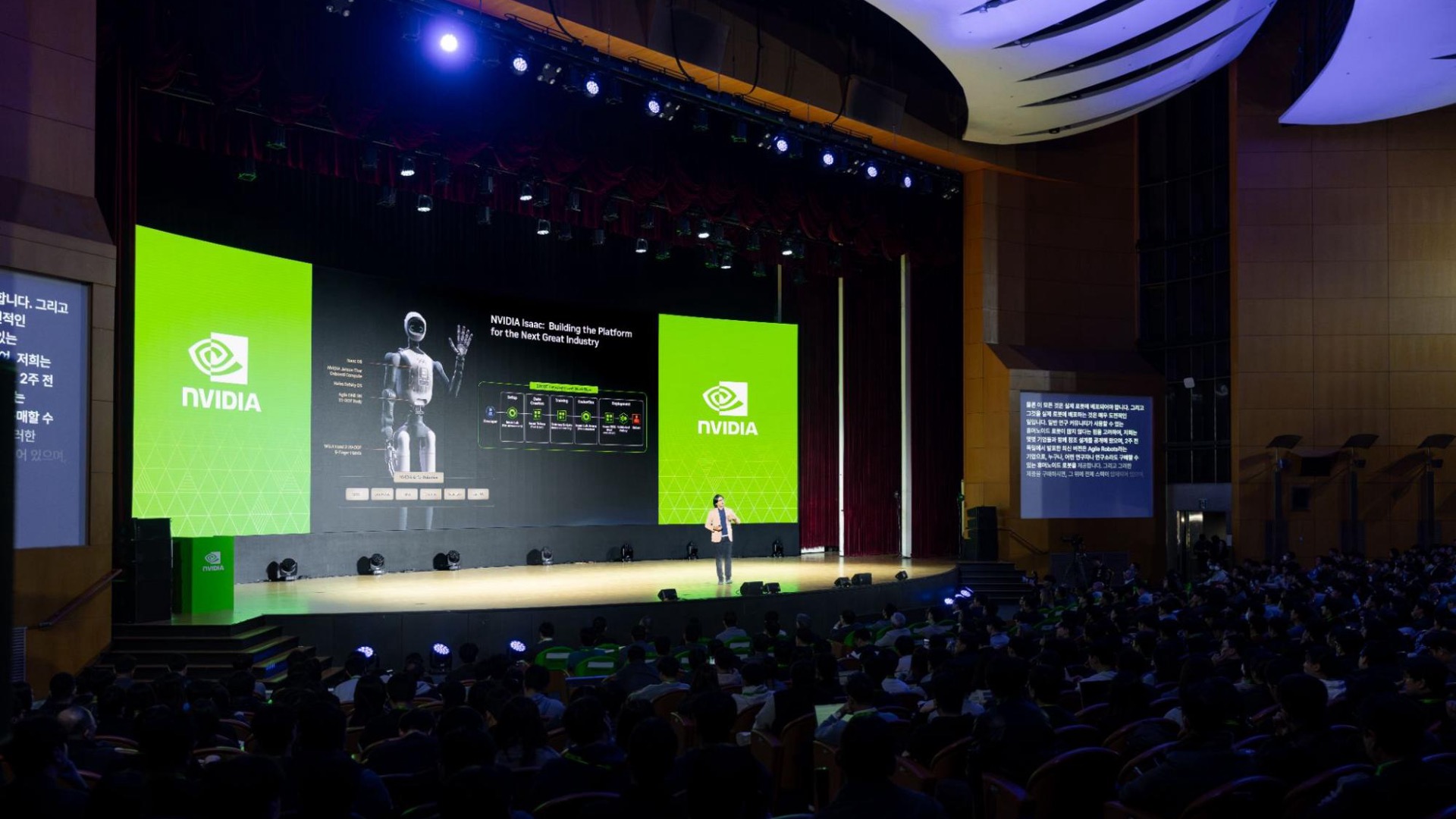
AI Day Seoul Brings Together Korea’s Industry Leaders, Startups and Developer Communities

Over two days at COEX, more than 2,000 attendees converged for AI Day Seoul, bringing together Korea’s industry leaders, startups and developer communities advancing physical AI and AI agents. At the plenary sessions, Deepu Talla, vice president of robotics and edge AI at NVIDIA, said Korea is “punching above its weight,” with Doosan Robotics, Hyundai

Read at NVIDIA Blog

arXiv (research papers) Jianglong Ye

RoboKit: Accelerating Parallel Differentiable Optimization for Robot Learning

We present RoboKit, a high-performance, general-purpose toolkit for parallel differentiable optimization in robotics, built on three principles: (i) Performance and flexibility: GPU-parallel multi-seed solvers pair sampling with versatile optimizers, running 2-60$\times$ faster than task-specific baselines across seven tasks; (ii) Geometry, rendering and physics: hybrid and coarse-to-fine representations accelerate collision, differentiable rendering and simulation…

Read at arXiv (research papers)

arXiv (research papers) Adrian Röfer

Cleanly-DINO: Efficiently Learning Visual Task Spaces for Robotics

Learning manipulation tasks from few demonstrations requires abstractions that capture the changes relevant to task completion, such as object poses in rigid-body manipulation. However, tasks such as cleaning are defined by changes in visual state rather than object pose, making the choice of task representation less clear. In this work, we propose Cleanly-DINO to learn visual task spaces from few demonstrations. Given a mask of a task-relevant region and frozen ViT…

Read at arXiv (research papers)

arXiv (research papers) Ziqiang Liu

EgoSwarm: Learning Decentralized Robot Swarm Intelligence from Human Swarm Demonstrations

Advancing from individual embodied intelligence to swarm embodied intelligence is a key step toward scalable, general-purpose embodied intelligence. Complex tasks often require multiple agents to divide responsibilities, coordinate handovers, and manipulate shared objects collaboratively. However, existing robot learning methods rely primarily on individual demonstrations, which provide limited supervision for modeling dependencies among agent actions, while collecting…

Read at arXiv (research papers)

The Verge David Pierce

The Sony Aibo was a robot revolution dressed like a dog

In the 1990s, Sony was absolutely convinced that we were on the precipice of a robot takeover. Pretty soon, the company decided, we'd all be living among countless humanoid robots. Some would be our coworkers; others would be our friends; and at least one would be our pet. And "pet" was exactly what Sony was

Read at The Verge

arXiv (research papers) Yimin Han

MoViC: Real-Time Humanoid Whole-Body Control from Monocular Video Streams

Real-time whole-body imitation from monocular video requires both a robust universal tracker and high-quality real-time reconstruction. We present MoViC, a framework that uses live RGB video as a control signal for humanoid robots without wearable tracking devices. The framework combines monocular human motion reconstruction, robot retargeting, and a transformer-based behavior foundation model. The policy receives proprioceptive history, a single explicit next-step…

Read at arXiv (research papers)

Kyiv Post AFP

In the ‘Kill Zone’, Ukraine Bets on Flying Evacuation Drones

Ukrainian defense manufacturer Skyfall has developed the “Stargate” carbon-fiber aerial medical evacuation drone to rescue wounded soldiers from frontline “kill zones” inaccessible to medics and ground robots. Capable of flying at 105 km/h with a 150-kilogram payload over a 30-kilometer range, the $50,000 craft uses onboard artificial intelligence to maintain stability during Russian electronic warfare jamming.

Read at Kyiv Post

arXiv (research papers) Vedant Telrandhe

Practice Is Not Free: Measuring the Embodied Cost of Reset-Free Robot Practice

When a robot practices without human resets, every attempt still costs wall-clock time, actuator wear, and sometimes a person's attention, yet the schedulers that decide what to practice next treat attempts as free. We present an open, low-cost testbed for measuring these costs: a self-built SO-101 arm runs two demonstration-trained ACT policies that reset each other, with a vision-based success detector and a ledger that records the time, joint travel, and human…

Read at arXiv (research papers)

arXiv (research papers) Peng Zhang

CRAFT: A Robot-Agent Harness with Scope-Aware Adaptation

A robot may know how to move an object yet still need to learn where it belongs. When a person rejects a placement, the robot must decide whether the correction applies only to that situation or expresses a broader rule. We study this problem in CRAFT (Contextual Requirement Adaptation with Frozen Tools), a framework for learning local requirements without retraining robot skills. It records physical success separately from whether an action meets the requirement. Our scope…

Read at arXiv (research papers)

arXiv (research papers) Chunyang Meng

From Companion to Guardian: Designing an Emergency Support System Using a Quadruped Robot for Older Adults

As older adults increasingly live alone, emergency support becomes an important function for home companion robots. In Australia, demand for the care and support workforce is projected to nearly double between 2020-21 and 2049-50. Service robots such as robot dogs may support older adults by combining everyday companionship with assistance when human support is not immediately available. We present the design and implementation of a domestic companion-robot system on a…

Read at arXiv (research papers)

arXiv (research papers) Xinheng Zhang

DiffWAM: Learning World Action Model from Consecutive Visual Difference

World Action Models (WAMs) have emerged as an important paradigm in robot learning, jointly predicting future scene states and robot actions from current observations and instructions. However, future states entangle task-related changes with large amounts of task-irrelevant content, such as static backgrounds, which weakens the model's ability to capture changes relevant to task execution. To address this, we propose Difference World Action Model (DiffWAM), a…

Read at arXiv (research papers)

arXiv (research papers) Francisco Martín Rico

EasyNav: A Modular Architecture for Real-Time Navigation Across Heterogeneous Robot Environments

Most robot navigation stacks implicitly bind mapping, localization, planning, and control to specific representations and data flows, yielding architectures hard to extend, compare experimentally, or reason about end-to-end timing. This is critical in heterogeneous scenarios, where multiple spatial representations, sensing modalities, and coordinate frames coexist and evolve at different rates. This paper presents a navigation architecture centered on an explicit, shared…

Read at arXiv (research papers)

Tech in Asia Aiko Gao Ishida Startups

OpenAI folds standalone robotics team into main units

OpenAI's partnership with humanoid robot startup Figure ended in February 2025.

Read at Tech in Asia

South China Morning Post Lexi Tian Geopolitics

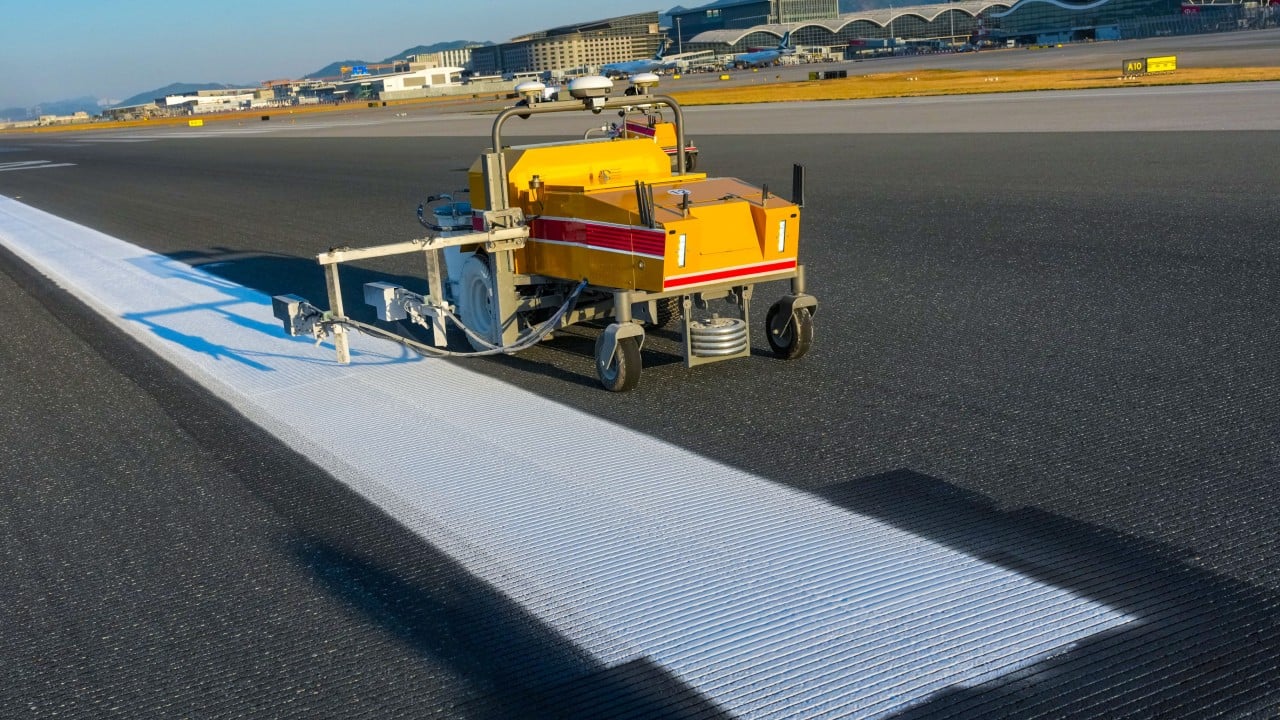
Fresh coat, lighter load: Hong Kong airport puts runway-painting robots to work

Hong Kong International Airport has become the world’s first to deploy robots to repaint runway markings, cutting the time needed to refresh centre lines by about 67 per cent compared with manual painting, its managing authority has said. According to the Airport Authority, the AI-powered robots, called “Brushman”, also improve painting accuracy and worker safety, reducing the need for physically demanding overnight work and allowing staff to take on supervisory roles…

Read at South China Morning Post

The Decoder Matthias Bastian SI

OpenAI reassigns robotics researchers to other teams as general-purpose models might make specialized robotics AI unnecessary

OpenAI is dissolving its standalone robotics team for the second time, but not because it lacks data. General-purpose models like GPT-6 Astra can apparently control robots directly, making a dedicated unit unnecessary. The researchers are being redistributed across other teams in what the company frames as a way to accelerate its robotics efforts. The article OpenAI reassigns robotics researchers to other teams as general-purpose models might make specialized robotics AI…

Read at The Decoder

The Decoder Tomislav Bezmalinović SI

Runway's open-source Praxis-1 turns video AI into a robot controller

Runway releases its robotics model Praxis-1 with open weights and source code under the Apache 2.0 license. The model uses knowledge from video training for robot control and leads the World Action Model category on Nvidia's RoboLab-120 benchmark. It can't yet plan complex action sequences on its own, though. The article Runway's open-source Praxis-1 turns video AI into a robot controller appeared first on The Decoder.

Read at The Decoder

Farm Progress Andy Castillo

AI isn’t replacing farmworkers; it’s upgrading their jobs

Farmer Iron: From spider robots to drone sprayers, Wisconsin farm showcases the future of agriculture’s workforce.

Read at Farm Progress

arXiv (research papers) Jae Hun Hwang

Self-Calibrating Vision-Agent-Action: Deploying Pick-and-Place to New Robot Cells without Demonstrations or Fine-Tuning

In simulation, Vision-Agent-Action (VAA) performs pick-and-place in robot cells with gripper or base-frame changes without robot demonstrations or fine-tuning. It uses pre-trained vision-language and language models for interpretation, measures the command map and camera geometry from its own motion and fingertips, estimates lens distortion, and plans grasps from measured object depth. A controlled study of eight public LIBERO-fine-tuned vision-language-action models (VLAs)…

Read at arXiv (research papers)

arXiv (research papers) Chen Liu

Ego2Sim2Humanoid: Agentic Real-to-Sim for Learning Loco-Manipulation VLAs without Robot Demonstrations

Imitation learning for visuomotor policies typically relies on teleoperated robot demonstrations, which are costly because every episode requires a trained operator controlling a physical robot in real time through teleoperation interfaces and wearable body-tracking hardware. Egocentric glasses capture human demonstrations without a robot or handheld grippers, yet they track only the head and in-view human hands, and directly copying human motion to a robot with different…

Read at arXiv (research papers)

Al-Monitor

'A moral red line'? World on cusp of autonomous weapons revolution

Lethal autonomous weapons powered by artificial intelligence are set to revolutionise warfare but there is no proper regulatory or legal framework governing the new technology. A conference starting Monday at the United Nations in Geneva will discuss how to establish curbs and prohibitions on such weapons, called killer robots by some. But some analysts doubt the discussions at the Convention on Certain Conventional Weapons (CCW) will keep pace with the fast-changing weapons.

Read at Al-Monitor

arXiv (research papers) Srikar Babu Gadipudi

Distilling Safety Filters for Filter-free Multi-agent RL

Reinforcement learning (RL) can teach robot teams to navigate shared spaces, but trial and error causes collisions that real robots cannot afford. Control barrier function (CBF) safety filters prevent these collisions by correcting unsafe actions, yet in a team the filter becomes a centralized optimization whose number of constraints grows quadratically with the team size. We propose an approach that builds the filter's safety into the RL policy and examine how such a system…

Read at arXiv (research papers)

Ukrinform

Europe must learn modern warfare from Ukraine – ARX Robotics CEO

European armies must learn from Ukraine's experience in modern warfare and accelerate the adoption of new military technologies to avoid falling behind Russia in critical areas.

Read at Ukrinform

Older stories