Results for “model”

arXiv (research papers) Xinyu Zhang Security

PersonaHate: A Scalable Persona-Based Data Synthesis Pipeline for Hate Speech Analysis

Hate speech remains a persistent and evolving threat on online platforms. The widespread use of large language models (LLMs) further intensifies this problem by making hateful content easier and cheaper to generate at scale. Although stronger hate speech detectors continue to be proposed, their performance remains uneven across target identity groups and different forms of hateful expression, partly because existing training data provides only limited coverage of these…

Read at arXiv (research papers)

The Hill Ryan Mancini Geopolitics

California attorney general sues OpenAI over alleged safety failures

California Attorney General Rob Bonta (D) on Monday sued OpenAI for allegedly placing public safety at risk with its advanced AI models, claiming it had no guardrails to prevent the breach of technology startup Hugging Face. Two autonomous AI agents from the tech company were being evaluated in an internal testing sandbox before they went...

Read at The Hill

AWS Machine Learning Blog Rob Gates SI

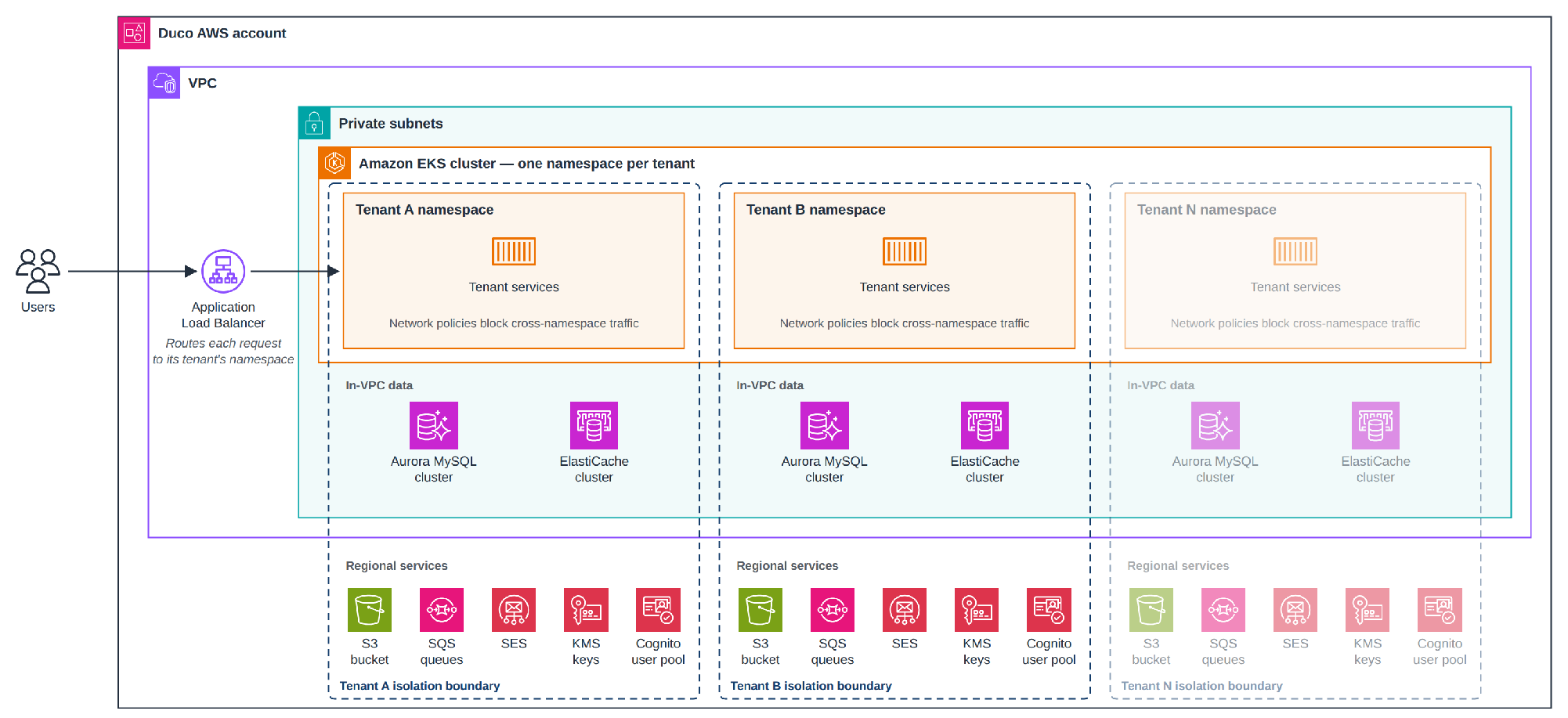
How Duco transforms financial data automation with Amazon Bedrock AgentCore

Duco, a data automation platform for tier-one banks, rebuilt its agentic AI stack on Amazon Bedrock and Amazon Bedrock AgentCore. With strict per-tenant isolation, a multi-model strategy, and an MCP skills architecture that cut context overhead by 90%, Duco cut reconciliation deployment time 10x and onboarding costs 70%.

Read at AWS Machine Learning Blog

AWS Machine Learning Blog Malini Sethi SI

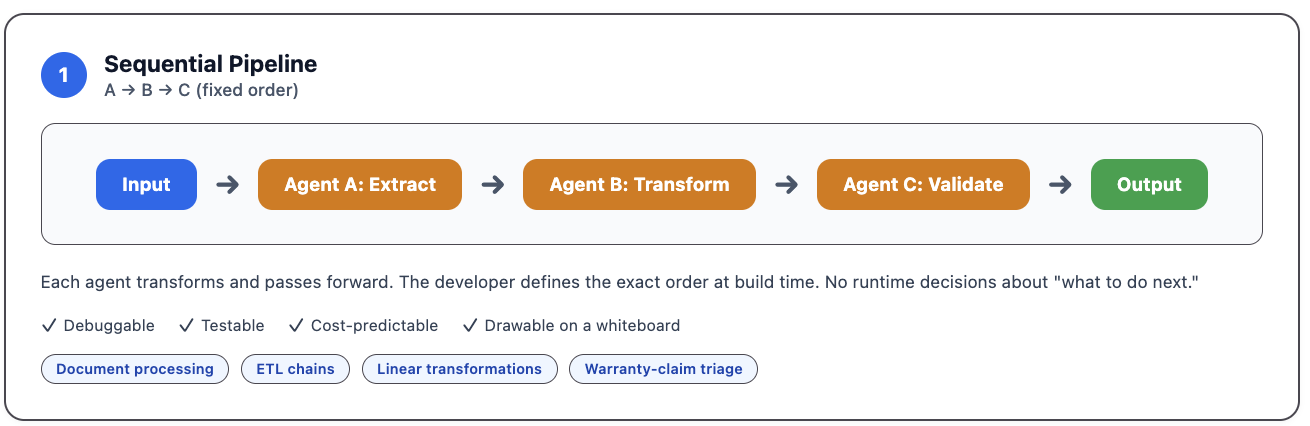
Taxonomy of multi-agent design patterns, anti-patterns, and lessons from manufacturing

Multi-agent coordination is a distributed systems problem, not a model problem. This post gives a field-tested taxonomy of multi-agent design patterns and anti-patterns, a framework for deciding when multiple agents are warranted, and how to build cost-efficient, reliable systems on AWS.

Read at AWS Machine Learning Blog

arXiv (research papers) Tahir H. Ahmed Security

V2V Communications Using Blockchain-Enabled 6G Technology and Federated Learning

This study proposes an interesting approach for vehicle-to-vehicle (V2V) communication, which integrates blockchain technology, federated learning (FL), and allocation optimization of latency and resources. The research evaluates the proposed system using various performance metrics such as packet delivery ratio (PDR), model accuracy, and latency and demonstrates its superiority over existing techniques. Furthermore, the system provides enhanced security through consensus…

Read at arXiv (research papers)

arXiv (research papers) Alex Kwiatkowski

Simplifying models of noisy stabilizer QEC on leakage qubits by Pauli twirling

The growing capabilities of quantum error-correction (QEC) experiments make it increasingly important to develop methods that predict or assess logical performance over many QEC cycles. Prior work has shown that a stabilizer QEC cycle subject to Pauli-stochastic noise can be modeled by a classical Markov process over syndrome states, with a logical Pauli channel attached to each syndrome transition. Here, we extend this framework to systems in which physical qubits are…

Read at arXiv (research papers)

arXiv (research papers) Tunahan Parlayıcı Security

Wrong Input, Wrong Threshold: Re-evaluating Adversarial Facial Privacy

Published face-privacy methods report protection above 90% against black-box recognition models. That number comes from an evaluation protocol with two independent defects, reported in a measure that cannot size either one. The input is wrong: methods published since 2022 feed the network the whole photograph, or a detector's box, where deployed systems detect, align to a landmark template and crop. Re-scoring the same files through a realistic front end costs a standard…

Read at arXiv (research papers)

SiliconANGLE AI Maria Deutscher SI

Alibaba launches Qwen4-Max with training, attention optimizations

Alibaba Group Holding Ltd. today introduced Qwen4-Max, its newest and most capable large language model. The algorithm not only generates higher-quality output than its predecessor but also costs less. Those improvements are the result of a new architecture, Qwen4, that made the LLM’s training run more efficient. Additionally, Alibaba has equipped the model with an

Read at SiliconANGLE AI

arXiv (research papers) Patrick O'Grady Security

Bajillion: Cryptographic Clearing for Micropayments

Much of the web is funded by advertising, a model that erodes as humans delegate browsing to AI agents acting on their behalf. A natural replacement is for agents to pay for what they consume, often a fraction of a cent per request. At the scale of web traffic, this could mean tens or even hundreds of millions of payments per second. We present Bajillion, a clearing protocol for scalable micropayments. A sender signs a payment request, and an untrusted operator answers with…

Read at arXiv (research papers)

The Diplomat Armando Chaguaceda and César Eduardo Santos Geopolitics

Cuba’s Communist Allies in Asia

China, Vietnam, and North Korea offer more than diplomatic support against U.S. pressure – they offer different models for keeping one-party rule intact.

Read at The Diplomat

arXiv (research papers) Yousef Attia Tech policy

Knowing Which, Not How Much: Language Models Order Party Positions They Cannot Place

Language models are increasingly asked where real actors stand: what a party's platform prioritises, what an institution has committed to. Such judgments are gradable, carrying both an order and a magnitude. Nearly every benchmark that tests them asks about one entity at a time, then reads that score as the model's knowledge of the domain. Order and magnitude, however, need not be acquired together. Text about social entities carries far more comparison than measurement, so…

Read at arXiv (research papers)

Meduza Geopolitics

In 1959, Nikita Khrushchev and Richard Nixon held one of the Cold War’s defining conversations: the ‘Kitchen Debate,’ inside a model American house at a Moscow exhibition

In 1959, one of the most significant events of the Khrushchev Thaw took place in Moscow’s Sokolniki Park: the American National Exhibition. In its pavilions, Soviet citizens could explore American art and see how Americans lived: what cars they drove, what kitchens they cooked in, and what beds they slept in. But what the exhibition in Sokolniki is remembered for most is not its works of art and design, but the “Kitchen Debate.” On July 24, U.S. Vice President Richard Nixon…

Read at Meduza

Space.com Mike Wall Space

Elon Musk says SpaceX’s Starship, already the largest rocket on Earth, will get even bigger with next-gen V4 model

Just a day after SpaceX caught the upper stage of its Starship megarocket back at the launch pad for the first time ever, Elon Musk told us that the spacecraft will get even bigger.

Read at Space.com

Dark Reading Robert Lemos Security

Ransomware Attacks Increase Behind AI, But Payments Decline

Large language models and other AI systems allow a growing number of ransomware groups to create convincing phishing emails and identify sensitive data quickly.

Read at Dark Reading

arXiv (research papers) Tord Johan Eide Tech policy

ARC-2: Continuous Compliance Through Delta Management

ARC 1 introduced a three-layer governance architecture for autonomous systems comprising model safety validation, cognitive certification (CRAB), and operational authorization (LEA). However, it did not address how compliance should be maintained after deployment. This paper introduces Delta Management, a continuous governance framework that measures deviations between a system's current operational state and its certified baseline, defined as a region rather than a fixed…

Read at arXiv (research papers)

The Decoder Manuel Uth SI

OpenAI's GPT-6 Astra tackles the Standard Model's toughest math problem on a lattice

OpenAI physicist Nathaniel Craig used GPT-6 Astra to tackle a problem that had stumped particle physicists for over 25 years. The AI model took Craig's strategy for defining the full Standard Model on a computational lattice and turned it into a working proof. Craig says a lot of work remains before realistic simulations are possible. The article OpenAI's GPT-6 Astra tackles the Standard Model's toughest math problem on a lattice appeared first on The Decoder.

Read at The Decoder

Dark Reading Nate Nelson Security

'Sleeper Agent' Tactic Hides Payloads in Open-Weight AI Models

Malware can lurk inside just 0.00001% of a neural network. How, then, can any user tell it's there?

Read at Dark Reading

arXiv (research papers) Yasir Rahman Security

LLMs as Validators for Cross-Chain Bridges: Evaluating Source-Level and Transaction-Level Attack Detection on Solana

Cross-chain bridges have suffered substantial asset losses due to vulnerabilities in their on-chain programs. On Solana, missing validation checks can enable exploits even when the underlying blockchain operates correctly. The ability of large language models (LLMs) to diagnose these flaws from source code or transaction records, rather than merely raise alarms, remains insufficiently understood. We implement a native Rust lock-and-mint bridge on a local Solana validator…

Read at arXiv (research papers)

arXiv (research papers) Shivam Duggal SI

Latent Lattice Language Models

Language models typically increase per-token computation through deeper or looped layers and latent reasoning steps, while richer residual connections improve information flow across layers. We instead increase computational capacity: the number of active computational states a model maintains. We introduce the Lattice of Latents, a set of per-layer horizontal latent streams that run recurrently along time, alongside the vertical residual stream that flows through depth…

Read at arXiv (research papers)

arXiv (research papers) Ruixi Yu

ScaleVLA: Scaling Vision-Language-Action Models to 552 Billion Parameters

Frontier Vision-Language Models (VLMs) such as GPT-6 Astra have demonstrated remarkable capabilities in robot control, suggesting that broad pretraining provides knowledge valuable for physical action. Yet most Vision-Language-Action (VLA) policies still rely on much smaller VLM backbones, leaving this potential largely untapped. We ask whether frontier-scale representations can provide a stronger foundation for robot learning. We introduce ScaleVLA, which connects a 552B…

Read at arXiv (research papers)

The Decoder Manuel Uth SI

Moonshot AI pivots Kimi models from coding to science as benchmark gains flatten

Moonshot AI is done chasing coding benchmarks, it says. The Beijing startup is pivoting its Kimi language models toward biology, chemistry, and pharma research, arguing that science demands smarter AI than law, finance, or code. The article Moonshot AI pivots Kimi models from coding to science as benchmark gains flatten appeared first on The Decoder.

Read at The Decoder

NBC News Daniel Arkin

California sues ChatGPT maker OpenAI over rogue hacking incidents

California Attorney General Rob Bonta filed a sweeping lawsuit against OpenAI on Monday, alleging the technology giant jeopardized public safety by creating AI models “without the safeguards and monitoring necessary to adequately protect” people.

Read at NBC News

arXiv (research papers) Zeynab Anbiaee SI

When Tool Names Are Not Identities: Measuring Provider Misbinding in MCP-Based AI Agents

Large language model (LLM) applications increasingly act as agents that select and invoke external tools. The Model Context Protocol (MCP) standardizes this interaction by allowing clients to compose tools advertised by multiple servers. However, tool metadata used for discovery and selection is not, by itself, necessarily bound to a verified provider identity. This paper studies this gap as tool-provider misbinding: a failure in which a request intended for a legitimate…

Read at arXiv (research papers)

Digital Trends Nadeem Sarwar

You shouldn’t trust AI with climate talk. They’ll lie to you under the slightest pressure, says UN report

A UNESCO and UCL report finds AI models get basic climate facts right but cave to user pushback, fail complex policy questions and lose accuracy in Hindi, Bengali, Urdu and Swahili.

Read at Digital Trends

arXiv (research papers) Korede R. Bishi SI

Severe but Harmless: Stress-Testing Shift Severity for Frozen Time-Series Forecasters

Zero-shot time-series foundation models (TSFMs) have become attractive alternatives to task-specific models because they handle diverse downstream tasks, including anomaly detection and forecasting, without per-series training. However, time-series data undergo distribution shifts, and the dissimilarity between two regimes is commonly scored with statistical measures such as Wasserstein-1, where a higher score is read as a more severe shift. In systematic experiments using…

Read at arXiv (research papers)

GeekWire Startups Todd Bishop Startups

Former UW AI researchers Yejin Choi and Carlos Guestrin raise $110M for AI startup Noeri

Noeri, an AI startup co-founded by Stanford professors Yejin Choi and Carlos Guestrin, has raised $110 million in a round led by Menlo Ventures. Its software studies a company's data and workflows and proposes changes to the instructions, tools and models behind its AI systems, with a person reviewing each proposed change.

Read at GeekWire Startups

arXiv (research papers) José Daniel Viqueira

Benchmarking memory and nonlinear processing capacity of quantum recurrent neural networks for time series prediction

Quantum machine learning has emerged as a promising approach to time series prediction. While quantum reservoir computing has been widely explored for this setting, variational quantum models tailored to sequential data remain comparatively understudied, largely because they are difficult to train. In this work, we present a rigorous benchmark of variational quantum recurrent neural networks (QRNNs) on time series prediction tasks, focusing on two key capabilities: memory…

Read at arXiv (research papers)

arXiv (research papers) Arunkumar V SI

Right Reason, Wrong Advice: Evaluating Recourse in LLM Explanations of Denied Requests

Language models increasingly write the explanations people receive when a rule system denies their request. If several rules deny the request independently, an explanation can name a true reason and still leave the person denied after they fix it. We call the missing property recourse validity: changing what the explanation cites, without changing what was asked for, can flip the decision. We compute it exactly, and a hitting-set argument predicts from the policy alone when…

Read at arXiv (research papers)

arXiv (research papers) Jorge Valverde-Rebaza Tech policy

Evaluating Cultural Reasoning and Robustness in LLMs for Spanish Political Discourse

Large language models (LLMs) are increasingly used to interpret, generate, and mediate public-facing language, which makes their reliability especially consequential in politically sensitive settings. Although sentiment analysis is a common task in this area, affective meaning in social media discourse is often conveyed through culturally situated and pragmatically indirect cues that are not well captured by label-centric evaluation alone. In this paper, we evaluate the…

Read at arXiv (research papers)

arXiv (research papers) Arunkumar V SI

Procedure without Judgment: What Small Language Models Learn under an Exact Verifier

When an authorization policy blocks an agent's tool call, the audit log should name the facts that forced the decision and nothing more. For an executable policy over an enumerable context space this minimal sufficient reason can be computed exactly, so an explanation is scored against ground truth rather than a proxy for it. We use that exactness to ask what a model can learn from a verifier that has no error in it. The explainer sees one request and one decision, never the…

Read at arXiv (research papers)

Older stories