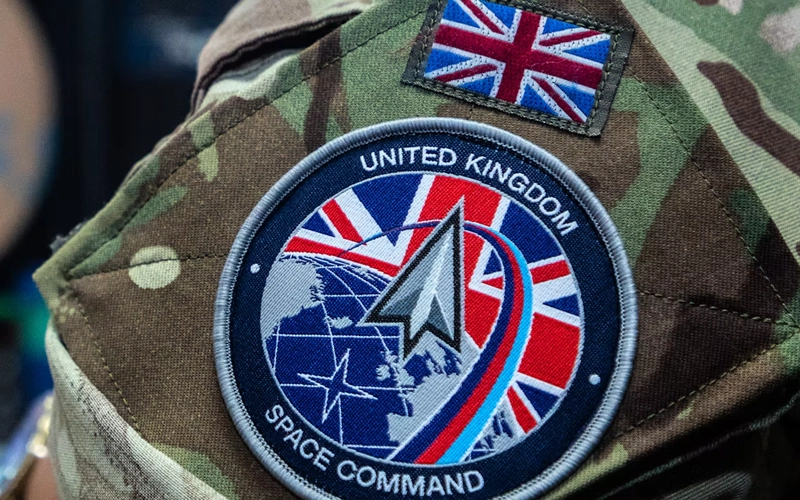
Guantanamo Dispatches: First Marine Added, Space Force Officer Excused from USS Cole Jury
The latest from Carol Rosenberg as the jury forms for first Guantanamo military commission trial.
The latest from Carol Rosenberg as the jury forms for first Guantanamo military commission trial.
The drive toward heterogeneous 2.5D chiplet packages promises unmatched performance and customization, yet the resulting density amplifies thermal challenges. To facilitate rapid design space exploration, we present ThermLeT, a multimodal transformer-based, scale invariant surrogate that integrates power density maps, spatial coordinate embeddings, material properties and heat transfer rate to predict steady state temperature in 13 ms, about four orders of magnitude faster…
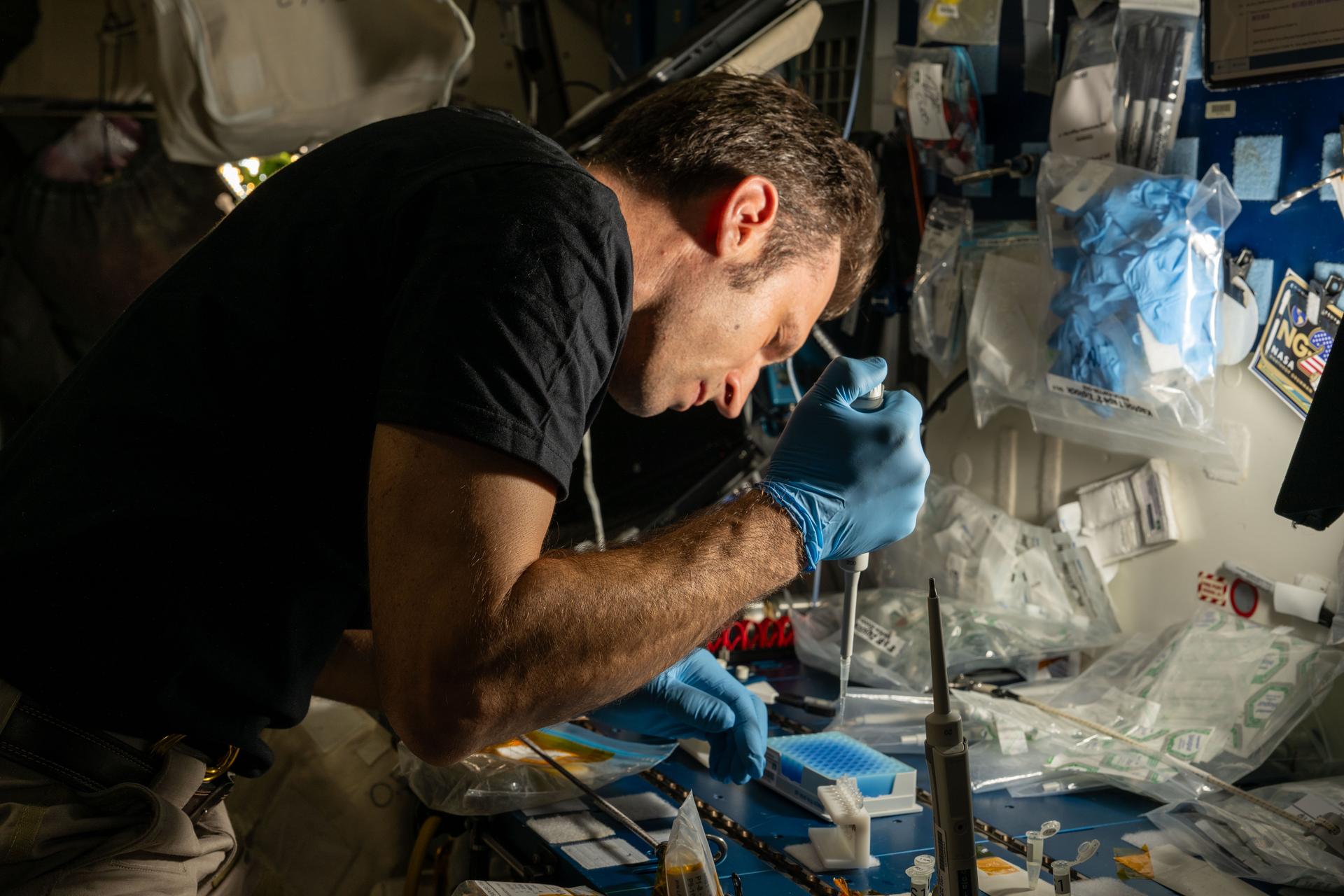
Biotechnology research including growing human lung cells and managing blood flow in space awaited the Expedition 75 crew on Monday. Spacesuit checks, cargo packing, and Earth observations rounded out the busy schedule aboard the International Space Station at the beginning of the week.
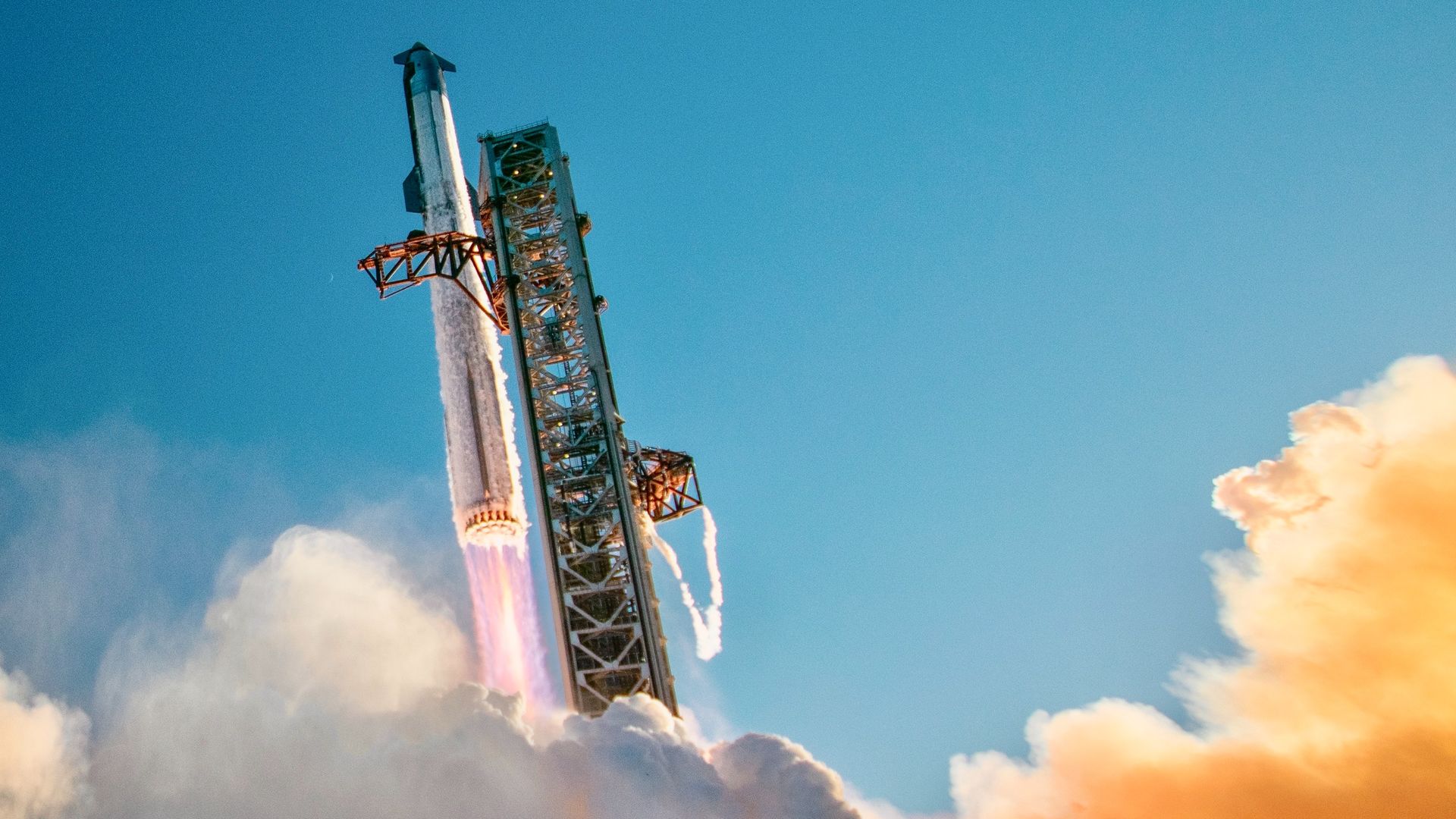
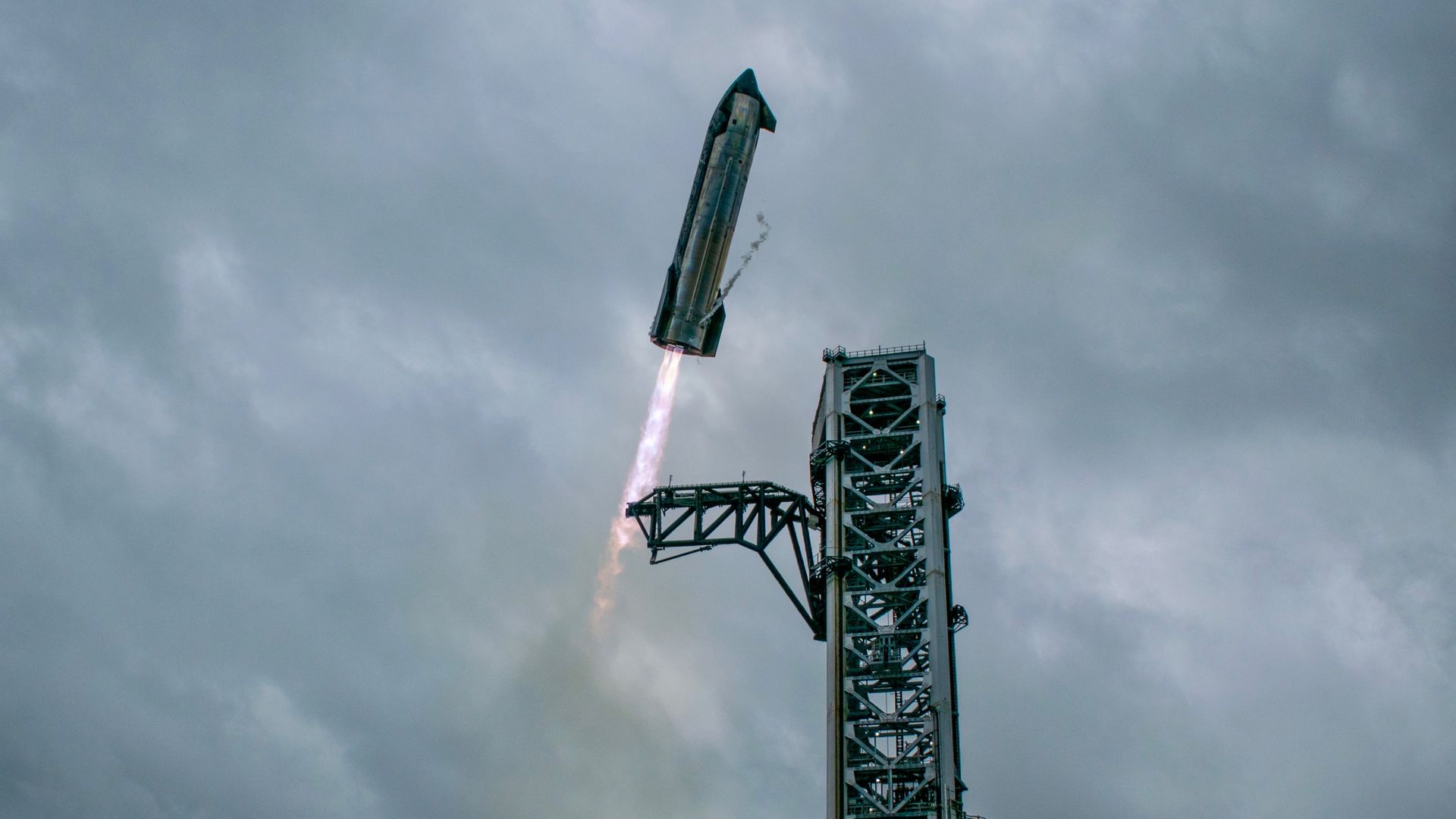
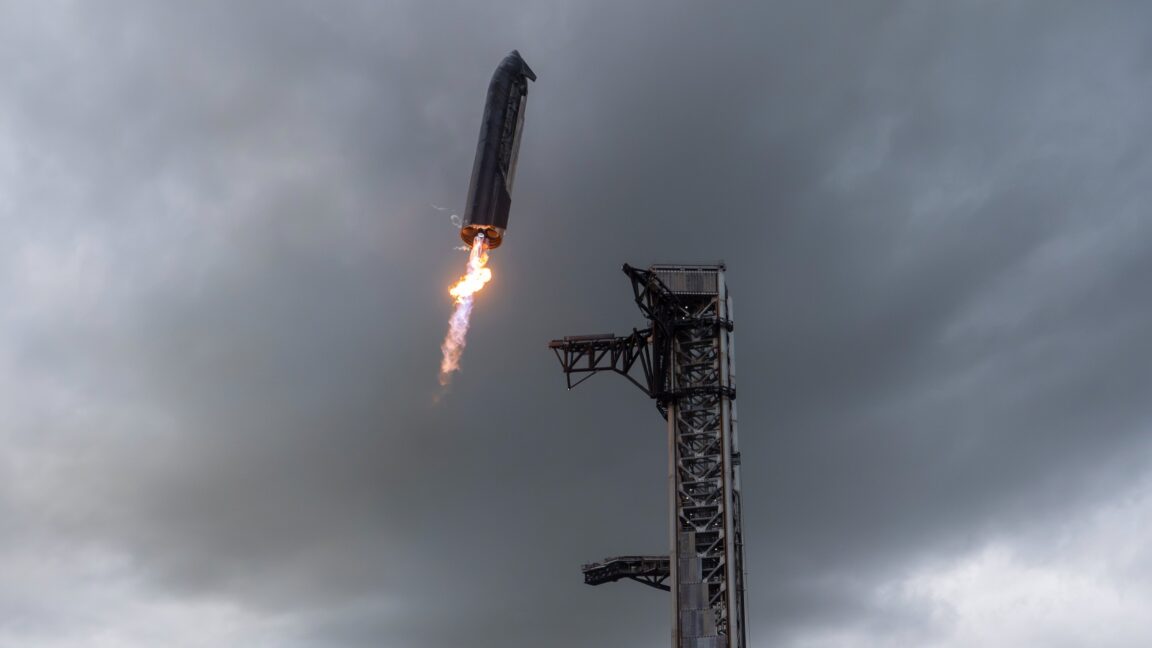
See the most epic photos from SpaceX's Starship Flight 15 test flight and historic launch tower catch.
Just a day after SpaceX caught the upper stage of its Starship megarocket back at the launch pad for the first time ever, Elon Musk told us that the spacecraft will get even bigger.
Humanity is quickly reaching the limits of our ability to track all the satellites we have in deep space. NASA's Deep Space Network (DSN) has been the workhorse for tracking them for decades but is quickly being overwhelmed by the number of requests it receives, which in turn makes it harder to track some recently launched missions.
LOS ALAMOS, N.M., Nov. 16, 2026 — Space Nuclear Power Corp. (SpaceNukes) opened its Manufacture and Materials Development Facility at 150 Central Park Square in Los Alamos on Nov. 13.
All estimates of human spaceflight on Starship should be taken with a gigantic grain of salt.
The Web’s Canvas element gave would-be webcassos space to draw whatever they fancied; now HTML controls come along for the ride.
As chief information officer for NASA’s Glenn Research Center in Cleveland, Gib Winter leads the center’s efforts to deliver secure and resilient information technology (IT) services in support of aeronautics, space exploration, and research missions. In this role, he leads center IT strategy and governance and collaborates with organizations and service providers across NASA. He
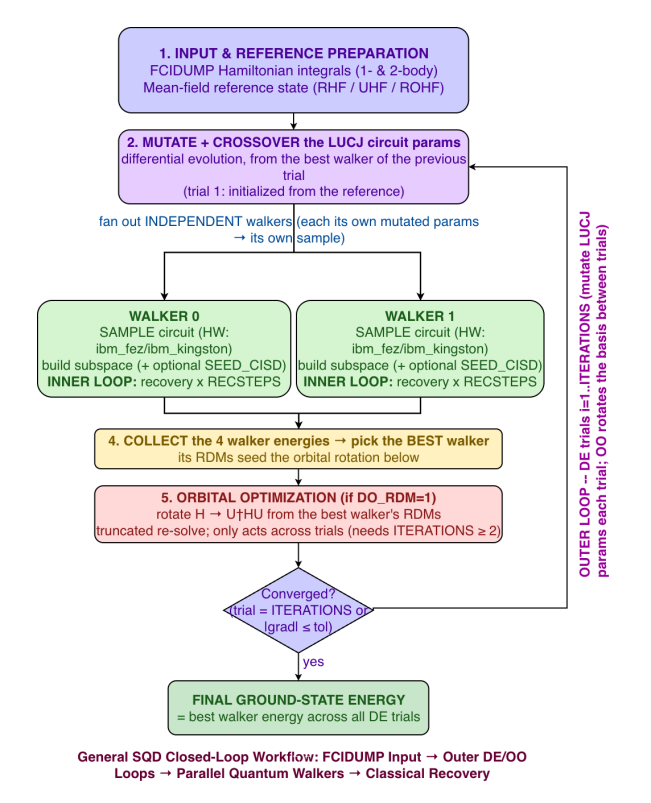
Researchers from IBM Quantum, RIKEN, and NVIDIA have achieved a 79-fold improvement in energy accuracy for quantum-classical simulations of iron-sulfur clusters. This was done by initializing Sample-Based Quantum Diagonalization (SQD) with broken-symmetry unrestricted Hartree-Fock (BS-UHF) reference states, bringing ground-state energy estimates for a 72-qubit [Fe4S4(SCH3)4]2− active space within 4.3 millihartree of high-precision classical benchmarks. The study highlights…
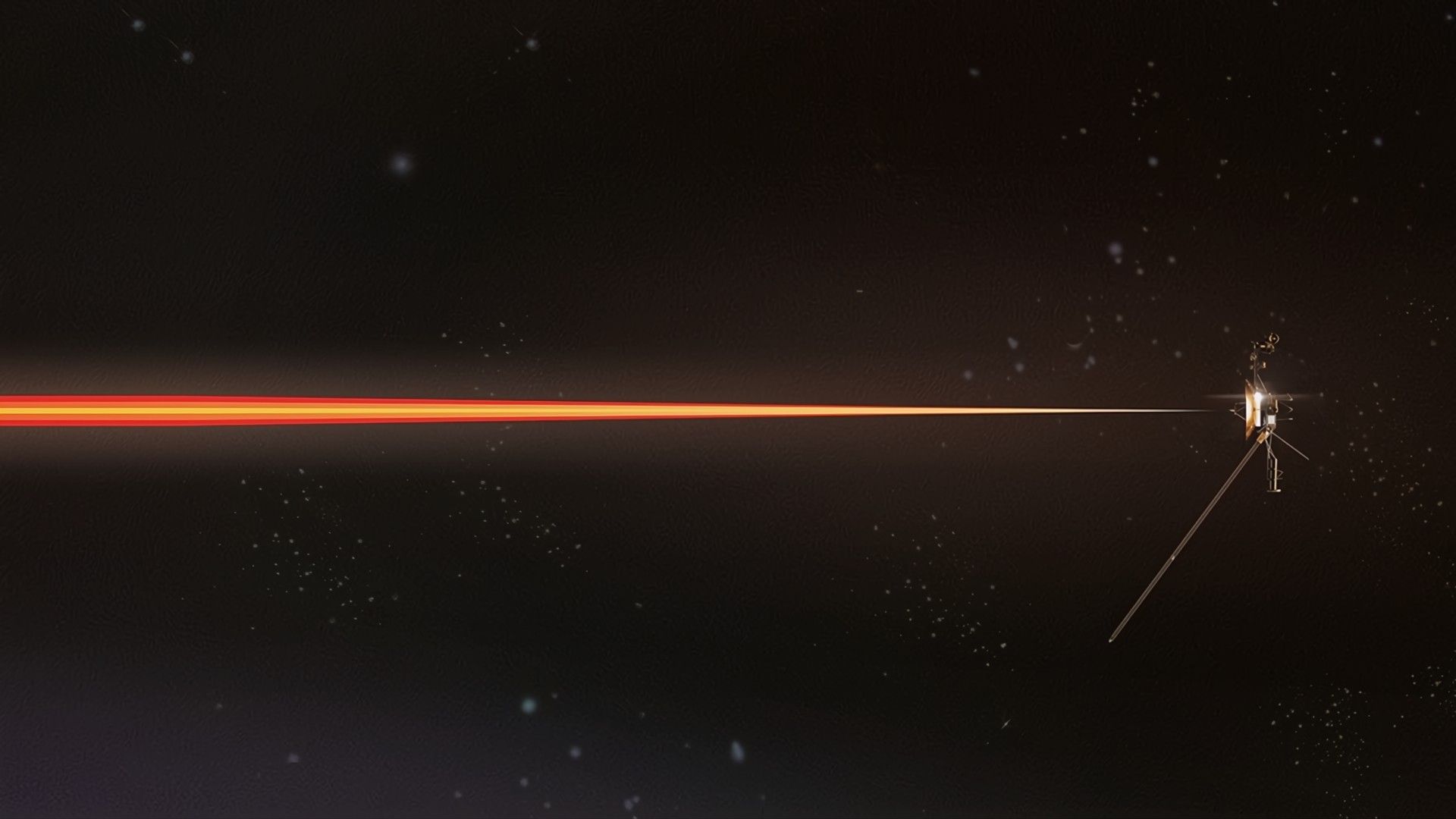
Voyager 1 is approaching a distance of one light-day from Earth, a milestone that highlights the enormous distances involved in deep-space exploration.
A lifelong San Francisco Bay Area native, Liz Pane grew up in the shadow of NASA Ames Research Center, where her passion for space exploration began in Kindergarten. Inspired by early classroom lessons and later attending Advanced Space Academy in Huntsville, AL, Liz set her sights on NASA—and made it happen. After earning a Communication
AI-native customer relationship management (CRM) platform Dreamteam, cofounded by former Freshworks executives, has emerged out of stealth mode. The startup…
Scaling fault-tolerant quantum error correction (QEC) requires suppressing errors in both space and time, yet standard logical memory experiments primarily probe spatial faults. Here, we use a 105-qubit Willow superconducting quantum processor to realize and scale the surface code stability experiment, which is alternatively sensitive to temporal error chains. Scaling from patch sizes of $3 \times 3$ to $7 \times 7$, we realize a timelike block suppression factor of $μ_T =…
U.S. Air Force Thunderbirds fighter jets pass overhead during the agency’s MAX POWER expo and air show on Saturday, Nov. 7, 2026, at NASA’s Kennedy Space Center in Florida. NASA’s inaugural MAX POWER was an aerospace festival celebrating the past, present, and future of flight and space exploration in honor of America’s 250th anniversary. Image
Intrusion detectors must recognize evolving malicious behavior even when confirmed attack labels are scarce or incomplete. We present TRACE, a topology-aware graph contrastive learning framework for label-efficient intrusion detection. TRACE learns from benign system-activity graphs by combining message-passing and topological representations, then assigns anomaly scores in the same projected embedding space optimized by the contrastive objective. This design captures both…
When an authorization policy blocks an agent's tool call, the audit log should name the facts that forced the decision and nothing more. For an executable policy over an enumerable context space this minimal sufficient reason can be computed exactly, so an explanation is scored against ground truth rather than a proxy for it. We use that exactness to ask what a model can learn from a verifier that has no error in it. The explainer sees one request and one decision, never the…
The new provisions allow expanding the forms of management of facilities and services, with possibilities for Cuban and foreign businessmen
Long-horizon manipulation tasks require a robot to perform a sequence of physical interactions with its environment, typically combining several different skills. Planning such behaviors efficiently is challenging: given a library of parameterized skills, solutions lie in a vast hybrid space of skill sequences and their parameters, and evaluating each candidate skill's feasibility and effect with a high-fidelity world model such as a physics simulator is computationally…
Hybrid solid-state LiDAR sensors are making their way into production vehicles, yet the data they produce differs structurally from that of the established spinning mechanical sensors behind today's autonomous-driving datasets: it is ring-free, dense, cluttered, and concentrated in a frontal field of view. The classical geometric methods that autonomous vehicles rely on for drivable space computation and navigation assume the ordered ring-and-column structure of a 360-degree…
The UK government has defended the resilience of its satellite-based military communications, saying that while it uses SpaceX’s Starshield service, it does not depend on any single commercial provider for critical communications. The assurance comes amid concerns about reliance on SpaceX after it emerged that restrictions had been placed on Ukraine’s access to the company’s
We simulate an effective change in a single qubit's inner product (IP) by implementing the channel $\mathcal{F}^η$ on a superconducting quantum processor. Whereas previous experiments simulated parity-time (PT)-symmetric dynamics with a fixed IP, this experiment implements the IP-change channel itself for metrics associated with PT-symmetric systems. Building on an earlier adversarial verification approach, we derive a process-fidelity threshold that rules out mixtures of…
Researchers at MIT recently reported that GPT-6 Astra, a frontier large language model (LLM), can write the weights of small neural networks directly in a single reply, and can read the raw weights of small networks to say what they were trained to do. In a three-day sprint, we replicated and extended these results. Our four findings: (1) Writing weights reproduces. Astra's networks for the game Breakout scored 514, 550 and 307 (versus MIT's 517), and scored just as well on…
We show that the Hilbert-space formalism and the Born rule of quantum theory are singled out by the following principle: every correlation that is possible in a theory in which every observable admits an ideal measurement is physically realizable. An ideal measurement is one that yields the same outcome when repeated and does not disturb any compatible observable.
Many-body localization is often pictured as Anderson localization on the graph of many-body configurations. Strongly correlated disorder and a dense net of loops, however, make this graph hard to analyze. We introduce a local disordered spin-1 chain in which a single domain wall explores an exact binary tree of configurations. Random fields create strongly correlated disorder on this tree, as in generic interacting systems, while the absence of loops keeps the problem…
In a recent study of infrared light collected by the James Webb Space Telescope (JWST), a group of astronomers detected ice for the first time around the young star Beta Pictoris. Researchers had expected ice around Beta Pictoris, but previous searches had not directly detected it. The study, published in Science, found that the ice is mostly noncrystalline and mixed with carbon dioxide. The team says these new details provide clues about the early formation of the Beta…
Geometry enters quantum theory in two places. The space of quantum states carries a symplectic form, which generates unitary evolution, and a metric, which governs uncertainties and transition probabilities. The classical phase space acquires a metric of its own when a vacuum is chosen: quantizing a linear system amounts to choosing a compatible complex structure, equivalently a compatible metric $g$. We take this second metric as the primary object and show that it plays…
Small-scale quantum repeater protocols have been shown to distribute entanglement over existing telecommunication infrastructure by means of short range quantum communications and long range classical messages. For larger networks, there are a number of theoretical proposals about how to operate the network to achieve a good performance under varying metrics. Moreover, since the dimension of the space of possible protocols grows exponentially with network size, plenty of…