Results for “Quantum”

Quantum Computing Report Mohamed Abdel-Kareem

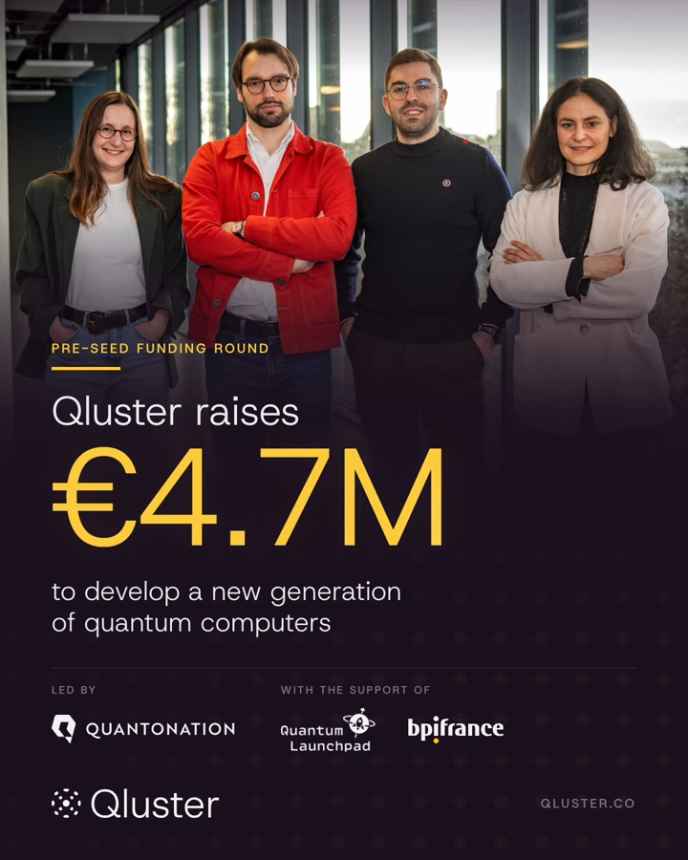
Qluster Raises €4.7 Million Pre-Seed Round Led by Quantonation to Build Continuous-Variable Photonic Quantum Computers

Qluster, a Paris-based photonic quantum computing startup, has secured €4.7 million in pre-seed funding. Led by Quantonation, the investment will be used to establish an R&D laboratory and expand its teams. Qluster's technology utilizes continuous-variable cluster states with the goal of eliminating cryogenic infrastructure and simplifying data-center integration, aiming for an intermediate-scale quantum system by 2032 and a large-scale fault-tolerant universal processor by…

Read at Quantum Computing Report

Quantum Computing Report Mohamed Abdel-Kareem

Moth Demonstrates Topology-Aware Quantum Data Encoding Across 120 Qubits Without SWAP Overhead

Moth Quantum has developed Tessa, a hardware-native data encoding scheme for quantum processors that significantly reduces overhead by eliminating SWAP gates and ancilla qubits. This method, detailed in a technical preprint, allows for encoding and retrieval of a large number of real-valued parameters across qubits, outperforming previous methods. Tessa is now integrated into Moth's Atlas platform, offering quantum-driven creative tools for various media.

Read at Quantum Computing Report

arXiv (research papers) Evan McKinney

PRISM: A Logical-Physical Boundary Compiler for Dual-Rail Qubits

Quantum computers can encode each logical qubit across multiple physical degrees of freedom so that errors on the physical qubits can be detected or corrected. A compiler must then translate each logical gate into native instructions, and one gate can have several equivalent realizations that interact through different wires. Routing moves those wires, so a realization chosen before routing can force SWAPs that another would avoid, making code expansion and physical routing…

Read at arXiv (research papers)

arXiv (research papers) Gabriele Staffieri

Variable-length MDI QKD under source imperfections and local randomization over horizontal links

Quantum key distribution (QKD) provides security guarantees that hold despite device imperfections and finite-size effects. We address these challenges in measurement-device-independent (MDI) QKD, combining its intrinsic untrusted detection with an imperfection model for Alice's and Bob's sources via fidelity bounds. We establish variable-length general security under the Marginal-constrained Entropy Accumulation Theorem (MEAT), estimating the relevant Rényi entropies…

Read at arXiv (research papers)

Quantum Computing Report Mohamed Abdel-Kareem

Liquid C2 and Graphiant Launch Managed Post-Quantum Network-as-a-Service Across Africa

Liquid C2 and Graphiant have partnered to launch a managed Post-Quantum Network-as-a-Service (NaaS) across Africa. This service provides quantum-resistant tunnels for secure communication between various organizational infrastructure, using advanced cryptographic standards. It also offers solutions for governance risks associated with AI agents and connected devices, ensuring data sovereignty and auditable transit logs.

Read at Quantum Computing Report

SemiWiki Daniel Nenni

Why Agile Post-Quantum Cryptography Matters for Long-Lived Chip Designs

Quantum computing opens exciting possibilities for solving difficult problems, advancing research, and enabling new technologies. Preparing security for that future is an opportunity to strengthen the digital foundations supporting everyday life. Synopsys’ Agile PQC Public Key Accelerators offer chip designers a practical…

Read at SemiWiki

The Quantum Insider Matt Swayne

SAXON Q Announces ‘Quantum Watchdog,’ to Detect When Quantum Computers Fail

Insider Brief PRESS RELEASE — SAXON Q, a leader in NV-center quantum computing, today announced the Quantum Watchdog, a patented safety system that monitors a quantum computer and puts it into a safe mode if it fails. The system is designed for quantum computers operating in research environments and upcoming industrial applications — including robotics,

Read at The Quantum Insider

arXiv (research papers) Xiaodong Yang

Dynamical Decoupling via Continuous Unitary Design

Dynamical decoupling is a cornerstone of quantum control for protecting and engineering quantum systems. However, conventional schemes rely on idealized instantaneous pulses, limiting their performance under realistic finite-duration and imperfect controls. To overcome this limitation, we establish a dynamical decoupling framework based on continuous unitary designs, which intrinsically suppresses arbitrary static noise during continuous control. We further derive…

Read at arXiv (research papers)

arXiv (research papers) Sahand Seifnashri

Non-Invertible Quantum Cellular Automata I: Microscopic Definition of Non-Invertible Symmetries

We introduce non-invertible quantum cellular automata (QCAs), defined as locality-preserving quantum channels that are dualizable and pure. This provides an operator-algebraic definition of non-invertible symmetries of quantum lattice systems, formulated in terms of their action on local operators. Focusing on quantum spin chains, we motivate these defining conditions and conjecture that every such quantum channel admits a realization by dualizable topological defects or…

Read at arXiv (research papers)

arXiv (research papers) Matvii Kistaiev

Problem-adjusted $X$-mixer eigenstates for improved QAOA

We show that the use of problem-adjusted excited eigenstates of the $X$-mixer Hamiltonian can be beneficial for the performance of the Quantum Approximate Optimization Algorithm (QAOA) when applied to problems with degenerate ground states. We show that this advantage persists in the presence of quantum gate and readout noise, with the problem-adjusted excited initial states achieving better optimal performance than the standard ground state initialization. The realized…

Read at arXiv (research papers)

arXiv (research papers) Yuan Gao

Entanglement cost and classical capacity of multimode Gaussian states and channels

Gaussian states and operations are central to continuous-variable quantum information and communication. For systems with any finite number of modes, we prove that entanglement of formation, Gaussian entanglement of formation, and entanglement cost coincide for every finite-energy bipartite Gaussian state. Their common value is strongly superadditive and lower-bounds entanglement of formation and entanglement cost for arbitrary non-Gaussian states with the same covariance…

Read at arXiv (research papers)

The Quantum Insider Mohib Ur Rehman

QUDORA Integrates NVIDIA CUDA-Q into Its Quantum Software Development Kit

Insider Brief PRESS RELEASE — QUDORA Technologies, a German-based developer of ion-trap quantum computers, has integrated NVIDIA CUDA-Q into its software development kit, enabling developers to write hybrid quantum-classical programs and run them on Qamelion, QUDORA’s quantum emulator with adaptive noise modeling. The integration gives CUDA-Q users access to an environment for developing and testing

Read at The Quantum Insider

arXiv (research papers) Davide Castaldo

Molecular energies from sparse quantum prolate diagonalization on a trapped-ion quantum processor

We introduce sparse quantum prolate diagonalization (sparse QPD), which combines the original formulation of QPD [Phys. Rev. Res., 8(3), 033177, (2026)] with compressed sensing to exploit Hamiltonian spectrum sparsity for molecular systems. We show that sparse sampling reduces the sample complexity of QPD from $\mathcal{O}(N_s)$ to $\mathcal{O}(\log N_s)$, where $N_s$ is the number of sampled points of the autocorrelation function (i.e.\ distinct circuits), without…

Read at arXiv (research papers)

Phys.org Quantum Physics

Team extends a qubit's lifetime, correcting errors without measuring them

Quantum technologies, devices that can process, store or collect information leveraging the laws of quantum mechanics, could potentially outperform their classical counterparts on some tasks. Yet these devices are highly sensitive to changes or disturbances in their surrounding environment, which can disrupt quantum effects and lead to errors.

Read at Phys.org Quantum Physics

Phys.org Quantum Physics

New theoretical framework free of ghostlike instabilities expands the possibilities of symmetry in particle physics

Elementary particles and the forces governing their interactions are described by relativistic quantum field theory, in which symmetry serves as a fundamental guiding principle. For more than half a century, the possible symmetries of such theories were believed to be restricted by the Coleman–Mandula theorem and its supersymmetric extension, the Haag–Łopuszański–Sohnius theorem.

Read at Phys.org Quantum Physics

Dark Reading Arielle Waldman Security

NIST Finalizes Post-Quantum Cryptography Guidance, GAO Offers a Reality Check

The emerging technology will soon break the "lock and key" encryption currently protecting sensitive data. A new GAO report shows agencies are behind on building their defenses.

Read at Dark Reading

The Quantum Insider Mohib Ur Rehman

Classiq Powers Award-Winning Quantum Application Development at Japan’s NEDO Challenge

Insider Brief PRESS RELEASE — Classiq, a quantum computing software company, today announced that its three separate research collaborations – with Shionogi, KDDI Research, Inc. (“KDDI Research”) and SoftBank Corp. – have each received an award in Japan’s NEDO quantum computing challenge, demonstrating the effectiveness of the Classiq platform in developing quantum applications for industry.

Read at The Quantum Insider

The Quantum Insider Matt Swayne

Telia, Nokia And QMill Demonstrate Quantum-Powered Encryption in a 5G Network

Insider Brief PRESS RELEASE — Telia Finland, Nokia and QMill have demonstrated the world’s first quantum-powered encryption in a 5G network using commercial equipment. In the proof of concept (PoC), QMill’s solution was integrated into Nokia’s 5G base station software and successfully demonstrated in Telia’s 5G innovation environment. Two firsts in one solution The method

Read at The Quantum Insider

The Quantum Insider Mohib Ur Rehman

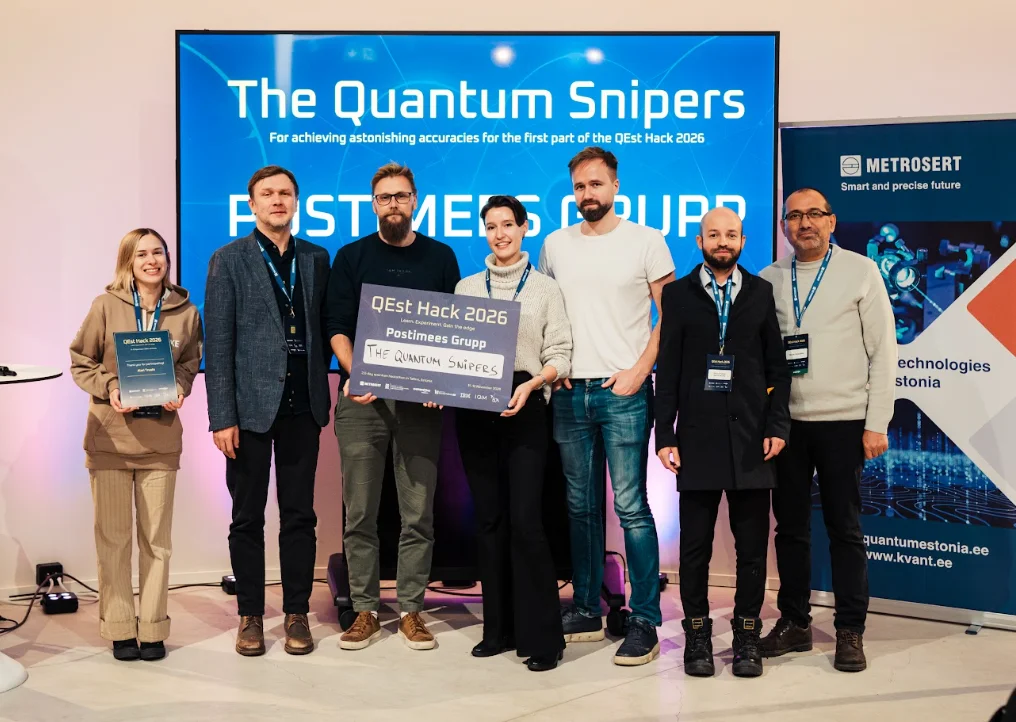
Omniva Wins QEst Hack 2026 with Quantum Parcel Routing Project

Insider Brief PRESS RELEASE — At the hackathon, six Estonian companies explored solutions to a wide range of problems—from building investment portfolios and scheduling nurses’ shifts to forecasting electricity sales and readers’ interest in news. According to Deniss Kross, Omniva’s Engineering Manager and a member of the winning team, the hackathon revealed that planning parcel

Read at The Quantum Insider

The Quantum Insider Mohib Ur Rehman

QuiX Quantum and Partners Develop Near-Room-Temperature Detectors for Photonic Quantum

Insider Brief PRESS RELEASE — QuiX Quantum, a Dutch-German developer of universal photonic quantum computers, together with Taiwanese partners Artilux Inc. and its affiliate Brillink Inc., has been awarded funding under the TechBridge Taiwan Call 2026 – Photonics Integrated Circuits, a joint programme of the Netherlands Enterprise Agency (RVO) and Taiwan’s Industrial Development Administration (IDA).

Read at The Quantum Insider

The Quantum Insider Matt Swayne

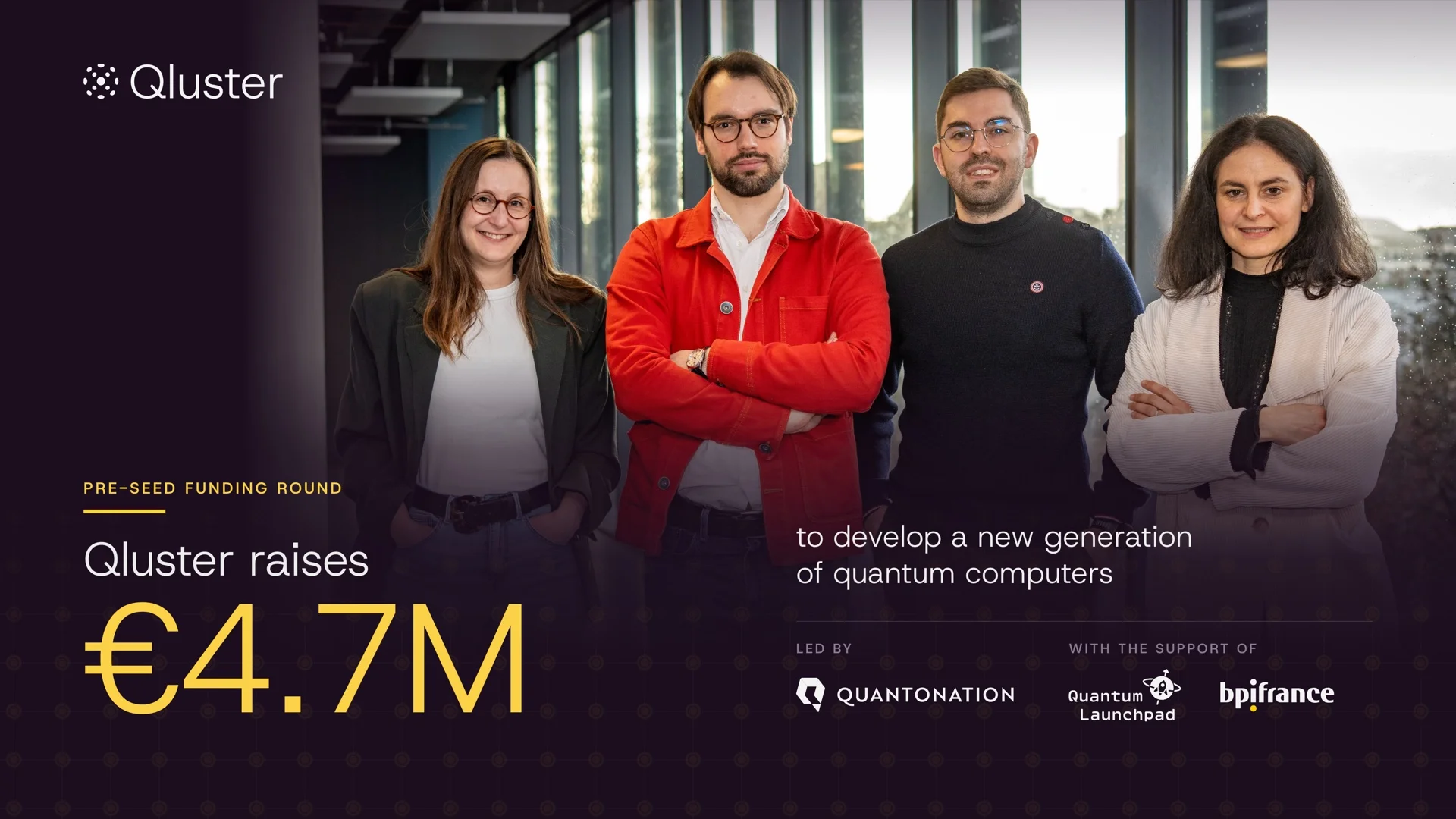
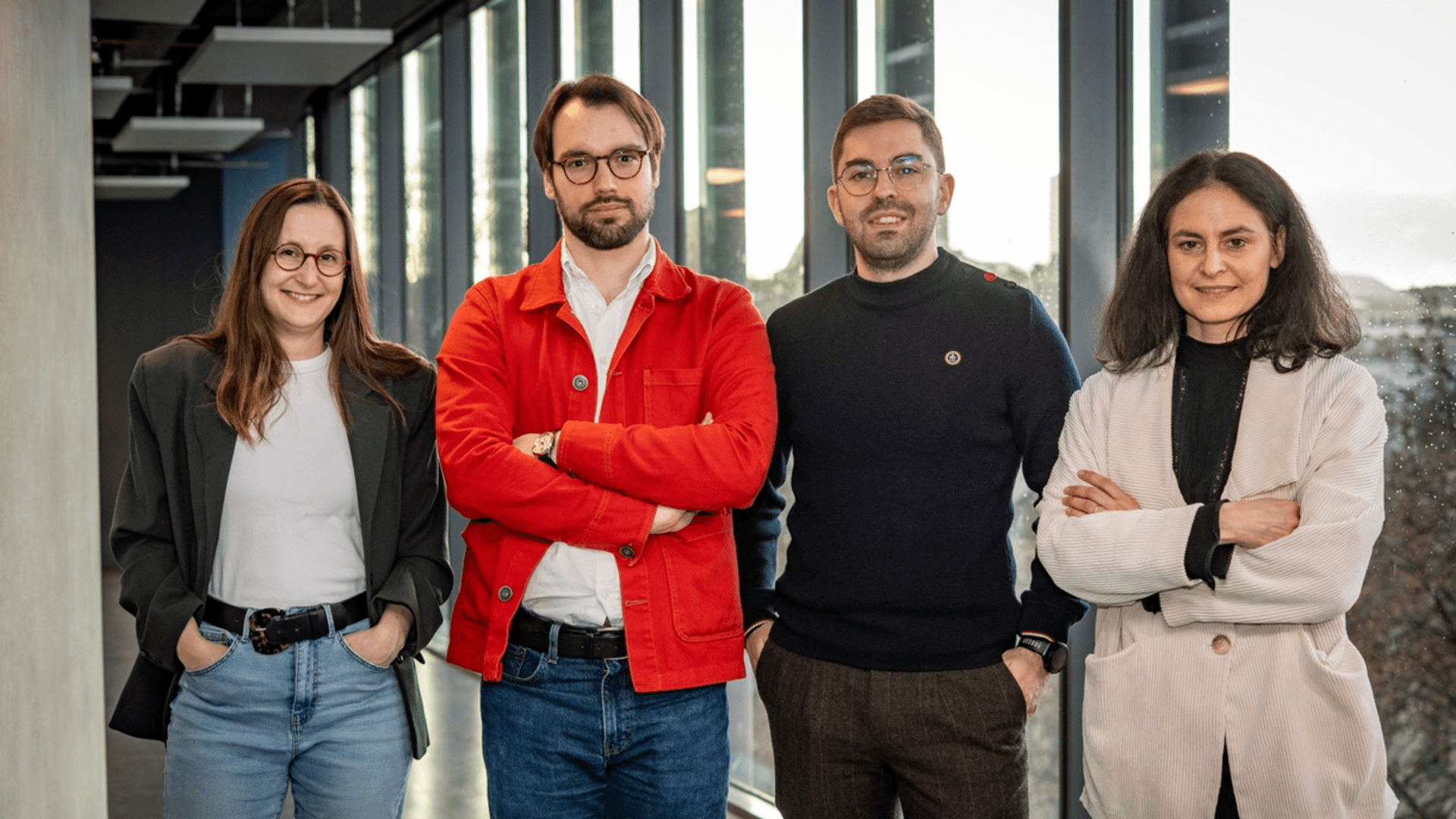
Qluster Raises €4.7 Million to Develop a New Generation of Quantum Computers

Insider Brief PRESS RELEASE — Qluster, a Paris-based startup specializing in quantum computing, announces its first funding round of €4.7 million led by Quantonation, an investment fund specializing in quantum technologies and disruptive physics-based innovations, with the support of Quantum Launchpad and Bpifrance. A spin-off from the prestigious Laboratoire Kastler Brossel, whose history is associated

Read at The Quantum Insider

The Quantum Insider Matt Swayne

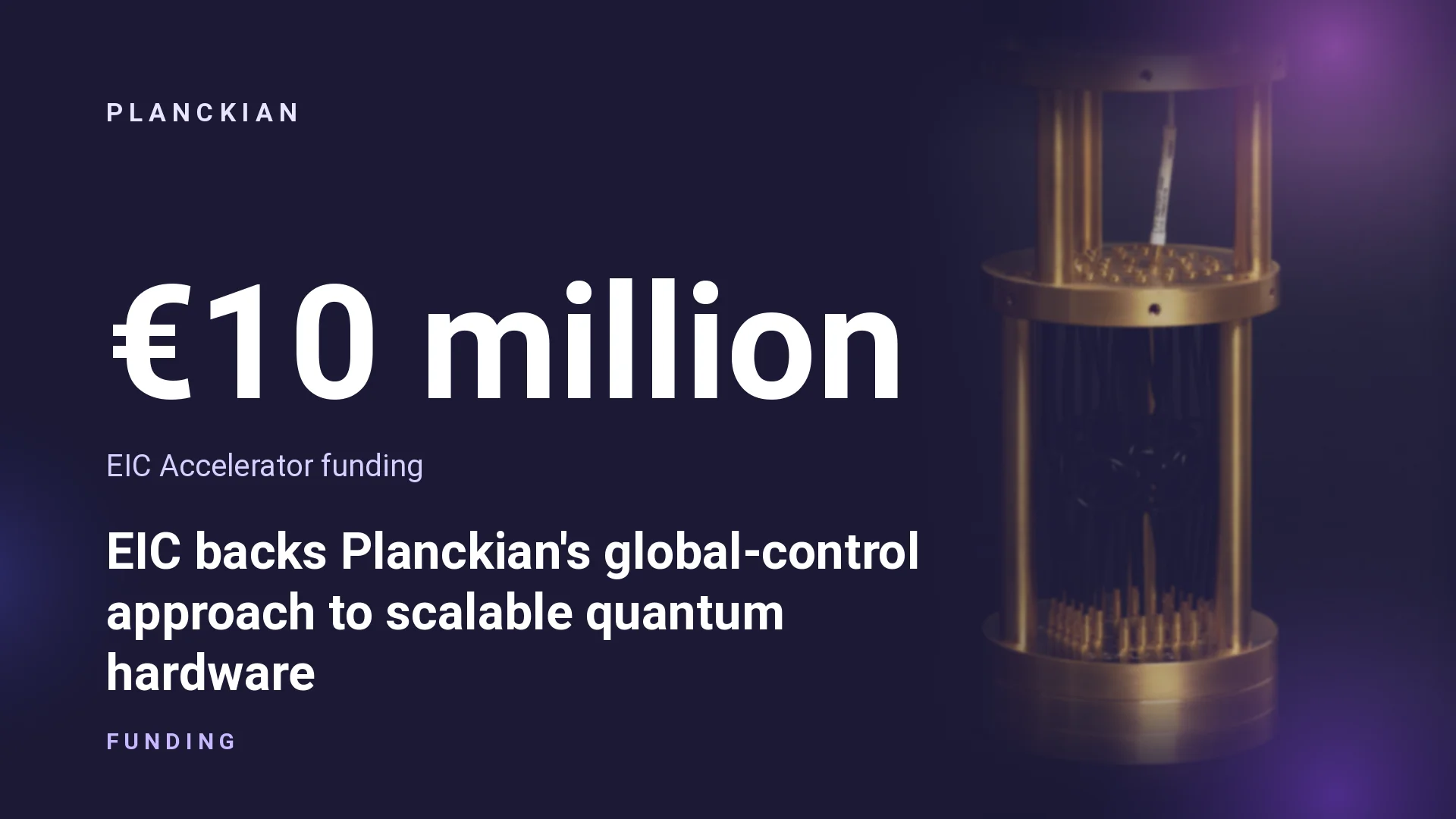
Planckian Selected for €10 Million in EIC Support for Quantum Hardware

Insider Brief PRESS RELEASE — Planckian, a quantum hardware company building superconducting quantum processors, has been selected by the European Innovation Council (EIC) for the EIC Accelerator. The award combines a €2.5 million grant with an equity investment of €7.5 million from the EIC Fund. Planckian is one of 35 companies selected in this round,

Read at The Quantum Insider

Tech.eu Tamara Djurickovic Startups

Qluster raises €4.7M to power the next generation of quantum computing

Paris-basedquantum computing startup Qluster has raised €4.7 million in a pre-seed fundinground led by Quantonation, an investment fund specialising in quantumtechnologies and physics-based innovation...

Read at Tech.eu

The Quantum Insider Mohib Ur Rehman

IDEMIA and IonQ Validate QKD Interoperability for Enterprise Security

Insider Brief PRESS RELEASE — IDEMIA Secure Transactions (IST), a global leader in payment, connectivity and cybersecurity solutions, and IonQ (NYSE: IONQ), the world’s leading full-stack quantum platform and foundry, today announced a successful validation of interoperability between IonQ’s Quantum Key Distribution (QKD) systems and IST’s cybersecurity offer, IDEMIA Sphere. The demonstration shows how quantum-generated

Read at The Quantum Insider

The Quantum Insider Mohib Ur Rehman

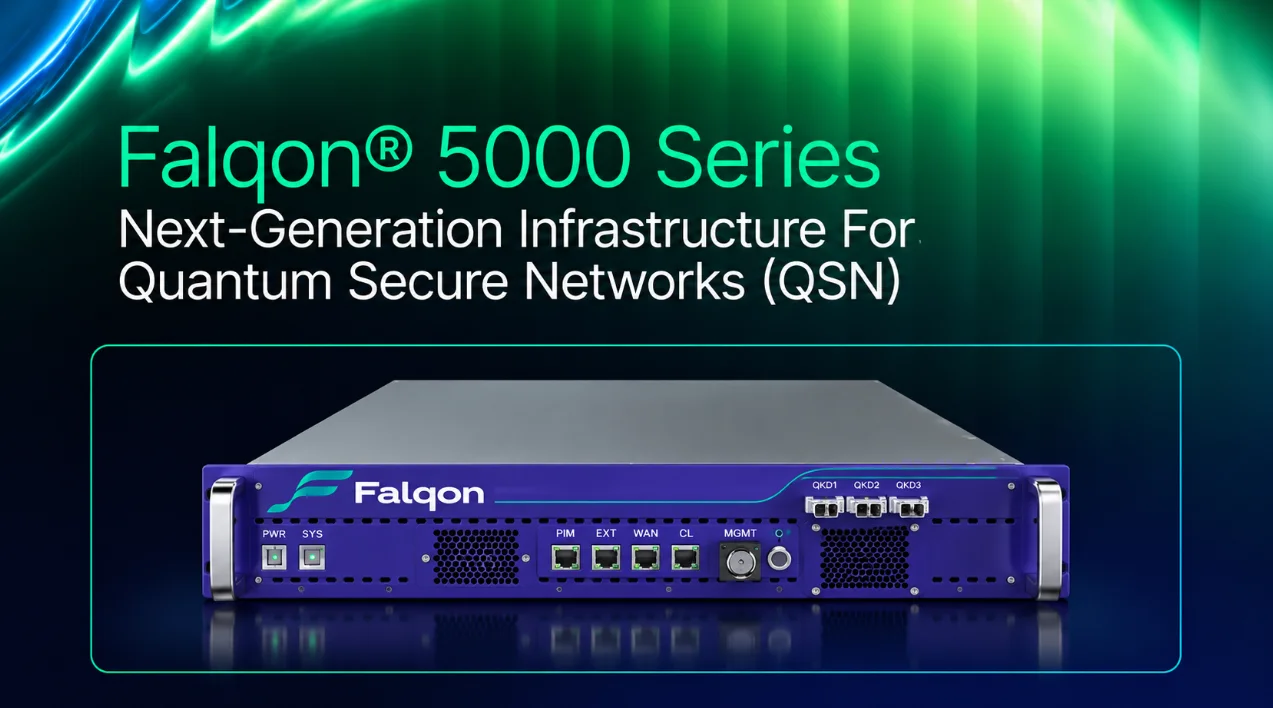
Falcon Systems Launches Falcon 5000 Series for Quantum Secure Networks

Insider Brief PRESS RELEASE — Falcon Systems, the Netherlands-based leader building the infrastructure for Quantum Secure Networks (QSN), announces the launch of the Falcon® 5000 Series, the next generation of its proven Measurement-Device-Independent Quantum Key Distribution (MDI-QKD) portfolio. The new Series combines secure-by-design technology, scalable network connectivity and industry-grade hardware that enable resilient Quantum Secure

Read at The Quantum Insider

The Quantum Insider Matt Swayne

DOE Seeks Input on Cryogenic and Quantum Supercomputing Testbeds

Insider Brief Building a useful quantum computer will likely mean building systems around it — systems that rely on classical computing resources that help it operate and the connections that allow them to work together. The U.S. Department of Energy gets it. The department is seeking industry and research input on two interconnected testbed initiatives

Read at The Quantum Insider

The Quantum Insider Mohib Ur Rehman

BlueQubit Selects Eight Teams for Quantum Flywheel Grant Programme

Insider Brief PRESS RELASE — BlueQubit today announced the research teams selected for its Quantum Flywheel grant program, a $150,000 initiative created with support from IBM, Amazon Web Services (AWS), and NVIDIA Accelerated Computing. Awardees receive three months of credits for AI tokens and classical and quantum compute, with awards ranging from $10,000 to $40,000

Read at The Quantum Insider

The Quantum Insider Mohib Ur Rehman

Quantum X and Everest Cloud Partner on Quantum and AI Services in South Asia

Insider Brief PRESS RELEASE — Quantum X, Inc. (OTC: QUTX) (“Quantum X” or the “Company”) today announced a channel partnership with Everest Cloud, the Kathmandu-based cloud services brand of Digital Network Solutions Pvt. Ltd. (“Everest Cloud”), under a Memorandum of Understanding (“MOU”) signed on November 6, 2026. The partnership gives Quantum X’s EntangleX quantum computing solution

Read at The Quantum Insider

The Quantum Insider Mohib Ur Rehman

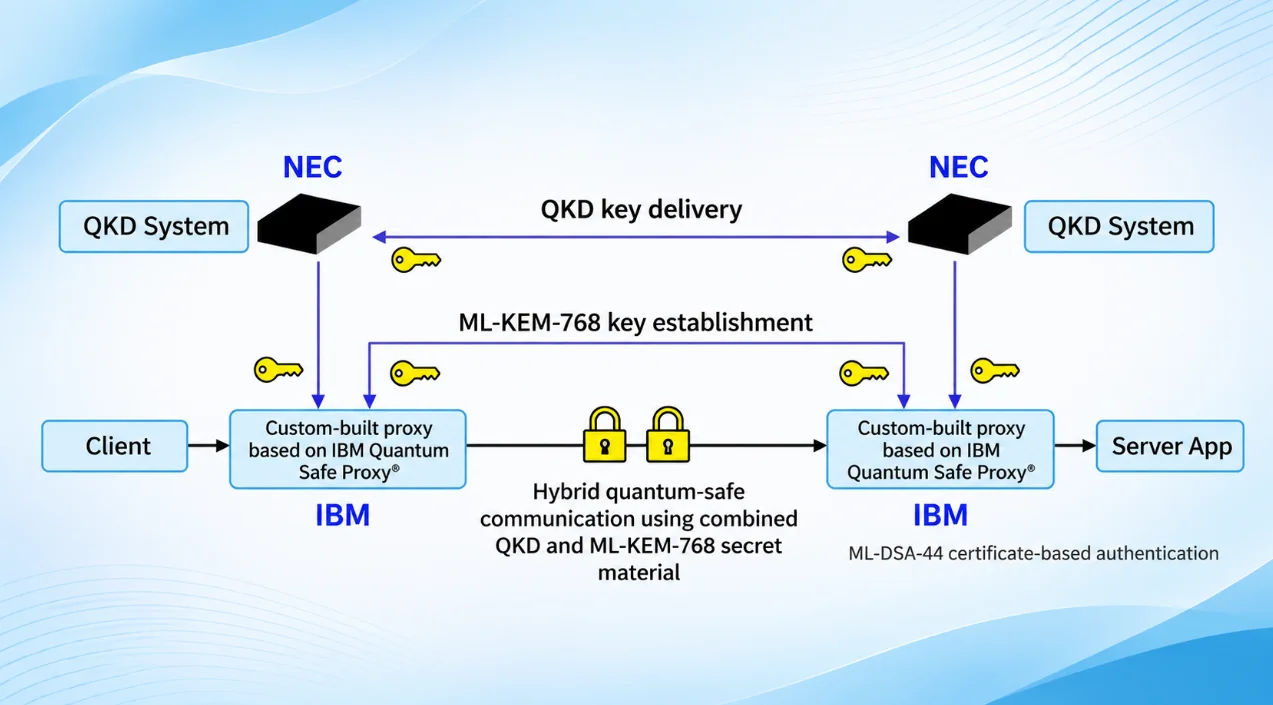
NEC and IBM Japan Demonstrate Integrated QKD and PQC Communications

Insider Brief PRESS RELEASE — NEC Corporation (“NEC“) and IBM Japan, Ltd. (“IBM Japan”) announced that they successfully completed Japan’s first demonstration of a hybrid quantum-safe communication technology combining quantum key distribution (QKD) and post-quantum cryptography (PQC). Specifically, NEC‘s QKD equipment was connected to a proxy-based validation environment utilizing a custom-built version of IBM Quantum

Read at The Quantum Insider

The Quantum Insider Mohib Ur Rehman

NIELIT Hyderabad and QClairvoyance Train Over 200 Students in Quantum Technology

Insider Brief PRESS RELEASE — More than 200 students from nine educational institutions participated in a three-day workshop on emerging trends in quantum communications and applications in quantum technology, organised by NIELIT Hyderabad under the Ministry of Electronics and Information Technology (MeitY). Held at the NIELIT Hyderabad campus from November 11 to 13, the programme

Read at The Quantum Insider

Older stories