Results for “model”

arXiv (research papers) Nukhbala Gadzhiev

Learned versus Kinematic Trajectory Prediction under Reduced Observation Frequency

Trajectory prediction models for automated driving are usually trained on data with a fixed sampling frequency, while positions received via vehicle-to-everything (V2X) communication arrive at 1-10 Hz. We study whether a learned predictor that uses only the observation history keeps its advantage over constant velocity (CV) and constant acceleration (CA) models when the history frequency drops. On the Argoverse 2 motion forecasting dataset, the 5 s history of the focal agent…


Read at arXiv (research papers)

arXiv (research papers) Hai Huang SI

Structure--Residual Inductive Biases for Language Model Pretraining

Next-token prediction is relied upon to learn both predictive behavior and internal representations. We ask whether representation structure itself should be an explicit inductive bias. Motivated by the two-part coding view of Kolmogorov complexity, we study a structure--residual principle in which a representation separates structure from realization detail. We instantiate this principle in two complementary ways. Boundary Bottleneck Concept (BBC) routes information from…

Read at arXiv (research papers)

arXiv (research papers) Hansol Noh David

Nonlinearity-preserving quantum simulation of flows in the early fault-tolerant regime

Ensemble prediction of nonlinear dynamics propagates a probability density whose linear transport equation retains the nonlinear drift, but grid-dependent circuit costs leave end-to-end feasibility in early fault-tolerant quantum computing unresolved. We couple polynomial reduced-order models fitted by sparse identification of nonlinear dynamics to Walsh-synthesized Koopman-von Neumann (KvN) transport and surface-code resource estimation. At fixed model dimension and drift…

Read at arXiv (research papers)

arXiv (research papers) Almog Anschel SI

WoRD: Diffusion-Based Posterior Inference for Online Goal Recognition

Goal recognition is the task of inferring an agent's intended goal from its observed behavior. Most existing work focuses on high-level symbolic recognition, abstracting away the continuous motion through which agents reach their goal. Methods that do reason over continuous trajectories rely on an explicit dynamics model that is hard to acquire and rarely transfers across settings. Neither approach explicitly learns how agents move toward each candidate goal, limiting…

Read at arXiv (research papers)

arXiv (research papers) Changqing Wang

Quantum amplification with a linear quantum coupler

Josephson parametric amplifiers (JPAs) are essential components for quantum-limited microwave measurement, but their dynamic range is often constrained by Kerr and other pump-induced nonlinear effects. In this work, we systematically study the performance of a parametric amplifier based on the linear inductive coupler (LINC). Starting from the driven-circuit Hamiltonian, we derive the effective three-wave-mixing amplifier model, including leading flux-driven nonlinear…

Read at arXiv (research papers)

The Verge Andrew J. Hawkins

Amflow’s new urban e-bike series is deliciously overpowered for flat city streets

DJI spinoff Amflow has spent the last couple of years shaking up the electric mountain bike (eMTB) market with ridiculously high-torque, lightweight models. Today, it's bringing that same overengineered energy to pavement with the UE Series, its first urban commuter line. The series consists of two models: the UE Carbon and UE Carbon Pro. Both

Read at The Verge

arXiv (research papers) Hansang Lee SI

Say Less, Hallucinate Less? Diagnosing and Restoring Object Coverage in Preference-Optimized Vision-Language Models

Preference optimization (PO) is the standard way to reduce object hallucination in large vision-language models. We find that four public PO checkpoints of LLaVA-1.5-7B also lower object coverage. They name fewer object categories, and their lower hallucination rates bring no significant gain in set-level object F1 on CHAIR. We therefore ask how much of the PO gain the base model can reproduce by stopping earlier. A positive end-of-sequence (EOS) logit bias lets the base…

Read at arXiv (research papers)

9to5Google Ben Schoon SI

OpenAI releases GPT-6.2 Astra to regain performance lead from Claude Fable 5.2

The frontier model races continues. A week after the launch of Anthropic’s Claude 5.2 and Google’s Gemini 4 Hydrogen, OpenAI is releasing GPT-6.2 Astra and Sol as a “new standard for professional work.”

Read at 9to5Google

VietnamPlus (Vietnamese state media)

Quang Ninh pushes pilot socialist hospital, school models

The socialist school model is a public school setup under the Party leadership and State management, with family and community coordination, and students’ holistic development put at the centre. Quang Ninh promotes comprehensive cooperation with Indonesian partners Quang Ninh firm exports first transformer shipment to the Philippines Quang Ninh leads nationwide growth in nine months

Read at VietnamPlus (Vietnamese state media)

TechCrunch AI Tim Fernholz SI

As decision model use skyrockets, is customization is the next frontier?

Sqwish Labs has a new wrinkle on the decision model: Train it with your own data to max its capabilities.

Read at TechCrunch AI

AWS Machine Learning Blog Martin Maritsch SI

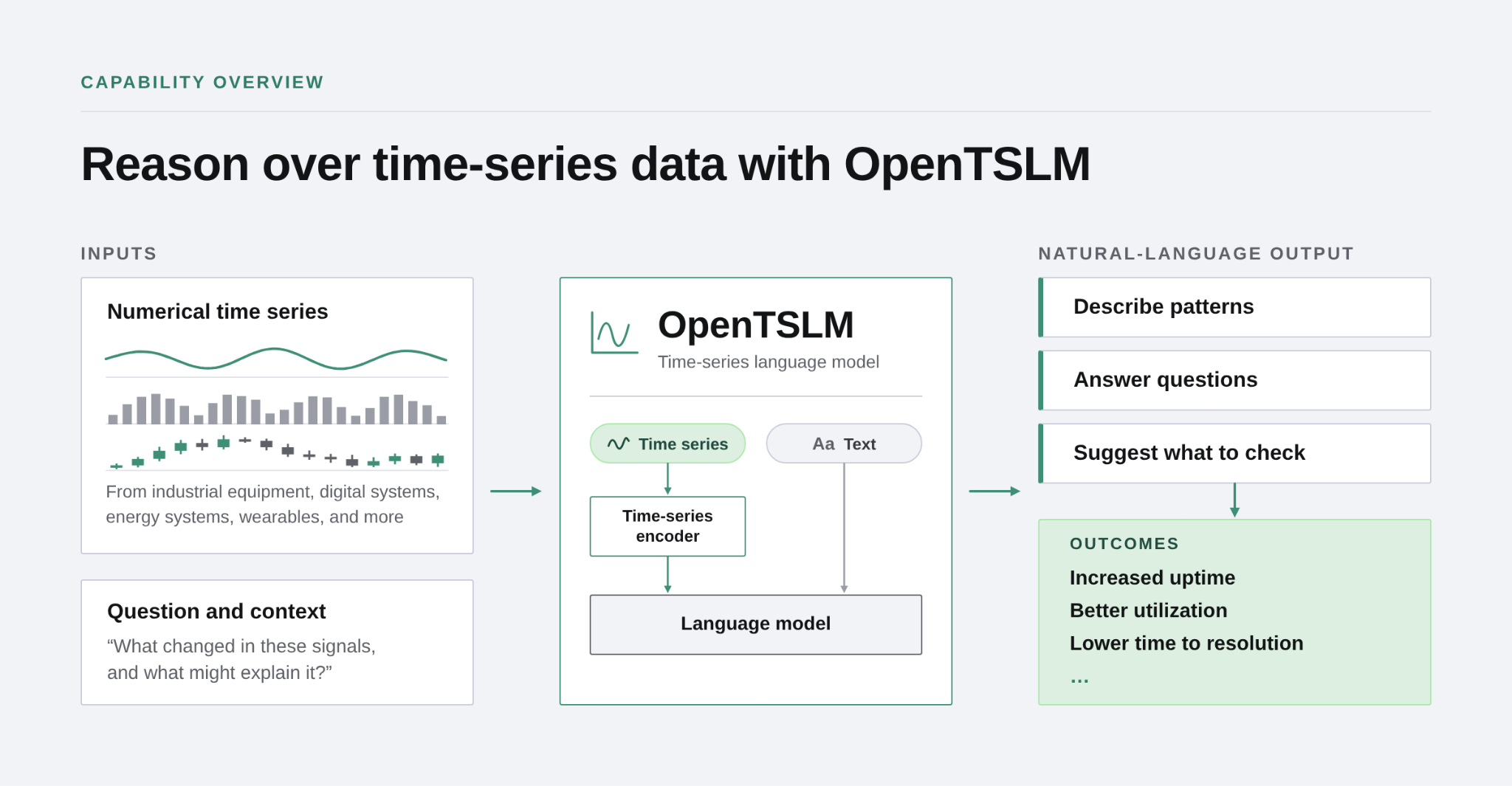
Reason over time-series data with OpenTSLM on Amazon SageMaker JumpStart

OpenTSLM, an open source family of time-series language models, is now available in Amazon SageMaker JumpStart. See how Nexthink and Aionic Labs apply it to proactive IT support, then deploy OpenTSLM to a real-time endpoint and fine-tune it on your own data with TimeNet and a SageMaker training job.

Read at AWS Machine Learning Blog

arXiv (research papers) Mridul Mahajan SI

Learning Stratified Policies for Inference-Time Objectives

Inference-time scaling improves the performance of large language models by sampling multiple responses and evaluating their collective utility. However, many existing approaches obtain these samples by repeatedly sampling from a single policy. In this work, we study if the sample budget at inference time can instead be allocated across a population of policies. We introduce stratified policies, where each of $k$ learned policies contributes one response to a $k$-sample…

Read at arXiv (research papers)

arXiv (research papers) Diana Laura Morales

Capability Composition in Heterogeneous Teams via Barrier-Guided Diffusion Sampling

The agents in a heterogeneous team can cooperate to accomplish tasks that exceed their individual capabilities. The team trajectories for a cooperative task can be generated by a generative model, provided that the model has been trained on demonstrations of the agents cooperating. Yet, demonstrations of cooperation are costly and may not exist for tasks that the team has never performed. The conditions under which the agents can combine their capabilities, however, are…

Read at arXiv (research papers)

ZDNET AI Lance Whitney SI

Google is making it easier to opt out of Gemini AI model training – here’s how

You’ll soon be able to turn off Gemini model training but still retain access to your previous chats with Google’s AI.

Read at ZDNET AI

arXiv (research papers) Haosong Peng

TCP4D: A Unified Tool-Center-Point Tracking and Generation Model for Robot Manipulation

Robot manipulation videos provide a rich visual experience, yet recovering robot action and gripper-state annotations from RGB observations still remains challenging. Using the embodiment-agnostic tool-center-point (TCP) pose as the action space, we present TCP4D, a unified model in which a shared 4D scene representation both tracks observed TCP motion and generates future TCP trajectories. Given a monocular video and initial 2D TCP queries, the tracker directly recovers…

Read at arXiv (research papers)

arXiv (research papers) Dewu Zheng SI

RSI-Prime: Training Models to Train Models

Enabling large language models (LLMs) to autonomously conduct training and improve target models is an important foundation for recursive self-improvement (RSI). As LLMs expand their role from being trained to conducting training, their model-training capability warrants dedicated study and systematic development. To this end, we construct RSI-Prime, a dataset for improving model-training capability, comprising 350 complete experimental trajectories across seven task…

Read at arXiv (research papers)

9to5Mac Zac Hall SI

OpenAI upgrades ChatGPT and Codex with new GPT-6.2 Astra and Sol models

OpenAI kicked off the GPT-6 generation with Astra in September, then upgraded Sol to GPT-6.1 a few weeks later at DevDay. Today, GPT-6.2 Astra and GPT-6.2 Sol are coming to ChatGPT Work and Codex together. OpenAI says both can finish demanding tasks with fewer output tokens, so you can get more done before hitting your usage limit.

Read at 9to5Mac

The Quantum Insider Matt Swayne

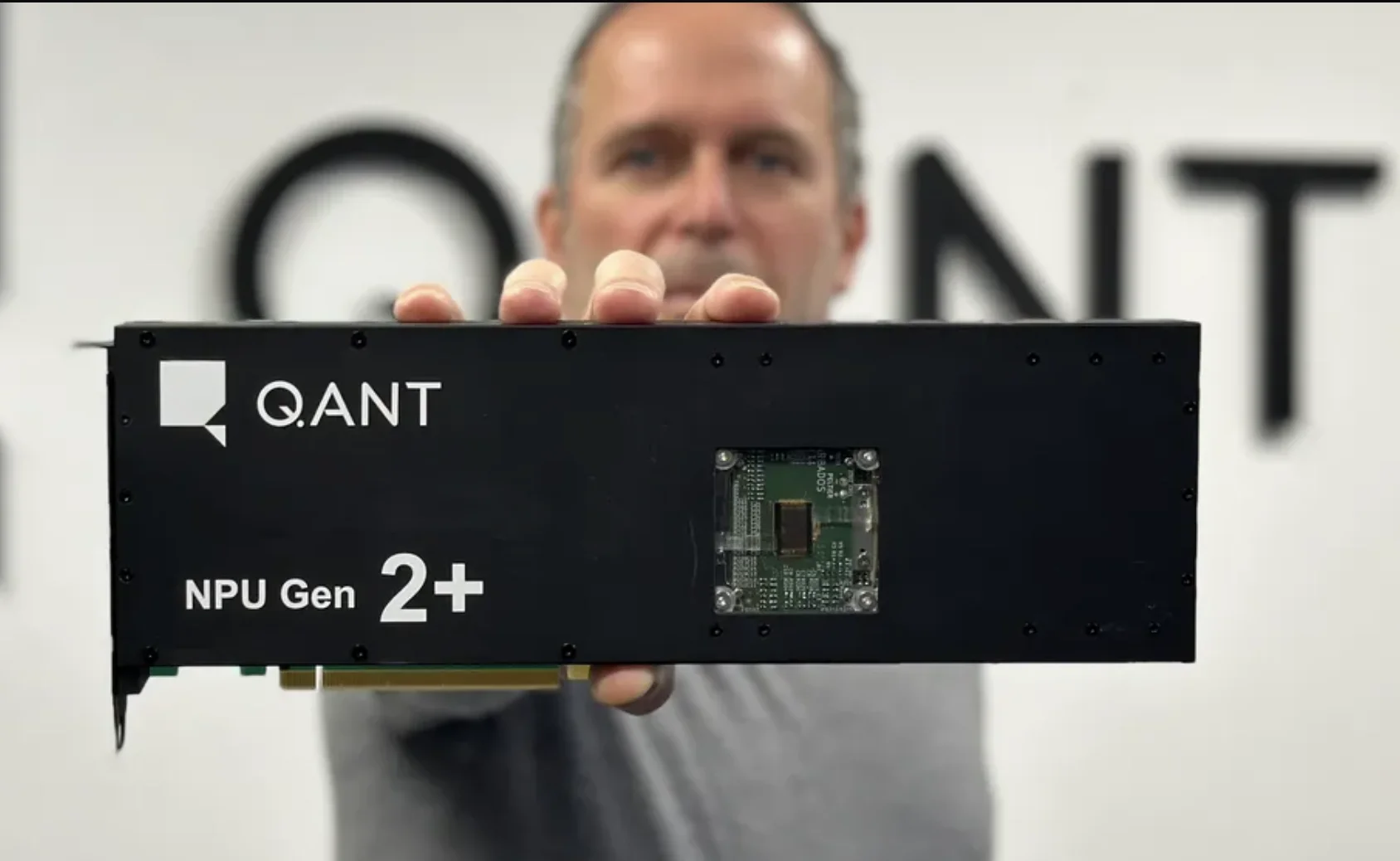
Q.ANT Demonstrates Hybrid Photonic-GPU System for Language Models

Insider Brief PRESS RELEASE — Q.ANT, the pioneer in commercial photonic computing, today unveiled the NPU Gen 2+, the latest generation of its Native Processing Unit (NPU) technology, at SC26 in Chicago. The NPU Gen 2+ adds optical Discrete Fourier Transforms (DFTs), which expands the set of mathematical functions developers can run directly in light

Read at The Quantum Insider

Meduza

‘I’m not very interested in a hypothetical “democratic future for Russia.”’ Antiwar activist and former top model Ksenia Maksimova has more immediate priorities.

At the end of September, Russian authorities put Ksenia Maksimova, head of the London-based antiwar group Russian Democratic Society (RDS), on an international wanted list. Shortly before that, she had been added to Russia’s registry of “terrorists and extremists,” and RDS had been declared an “undesirable” organization. Before entering politics, Maksimova worked as a top model and later as an agent for fashion photographers. She is now heavily involved in helping Ukraine…

Read at Meduza

arXiv (research papers) Joyjeet Singh

Auditing a Learned Simulator for Legged Robots: The Robotic World Model on ANYmal D

A legged robot can learn to walk inside a learned simulator: a neural network that predicts the robot's next state and is run forward on its own predictions. They are usually trained and checked one step ahead, although a policy uses them for a hundred steps or more. We audit one published system end to end, without a GPU: the dynamics model of the Robotic World Model (RWM) for the ANYmal D quadruped, and the uncertainty estimate of its follow-up, RWM-U. We rebuilt the model…

Read at arXiv (research papers)

arXiv (research papers) Giovanni Adorni SI

Natural Language Programming: Rethinking Language, Memory, and Cognition in the Era of Generative AI

Generative Artificial Intelligence is transforming the role of natural language in computational systems. In classical Natural Language Processing (NLP), language was treated as an object of computation: something to analyse, classify, translate, or generate. Large Language Models (LLMs) challenge this perspective, enabling natural language to function increasingly as an executable cognitive medium through which humans structure reasoning, orchestrate problem solving, and…

Read at arXiv (research papers)

arXiv (research papers) Owen Sullivan

CADENCE: Learning Acyclic Gaits for Model-Based Quadruped Locomotion

Model-based quadruped controllers usually step on a cyclic gait, which lifts the legs in a fixed order on a fixed period, wherever the safe footholds are. We present CADENCE, a learned step planner with a small action space. Every 40 ms, it picks one of at most 65 discrete choices: no step, or one leg's step to a safe foothold. It also predicts a swing time. We train CADENCE by reinforcement learning on top of a convex model predictive controller (MPC). Nothing prescribes a…

Read at arXiv (research papers)

arXiv (research papers) Yizhuo Wu

StreamingDPD: A 1.28-GSa/s Instantaneous-Power-Gated Depthwise TCN Accelerator for Real-Time 320-MHz Digital Predistortion

State feedback between successive samples limits the streaming throughput of recurrent neural networks for digital predistortion (DPD). We present StreamingDPD, an accelerator that processes 320-MHz signals at 1.28 GSa/s. Its 207-parameter instantaneous-power-gated depthwise temporal convolutional network (IPG-DWTCN) uses $|x[n]|^2$ to gate feature channels and causal dilated depthwise convolutions to model power amplifier memory. The network maps to a spatially unrolled…

Read at arXiv (research papers)

TechCrunch AI Kirsten Korosec, Rebecca Bellan SI

AI models can be tricked into identifying civilians as military targets by telling them it’s a game

Vals, a San Francisco-based AI evaluation startup, tested whether leading AI models could be manipulated into participating in autonomous warfare. They usually compiled.

Read at TechCrunch AI

arXiv (research papers) Rose N. Kwon SI

Hidden-State Similarity Predicts Re-Elicitation After Inoculation Prompting

Fine-tuning on narrow harmful tasks can cause emergent misalignment, where models generalize harmful behavior beyond the training distribution. Inoculation prompting can reduce this effect by explicitly eliciting the undesired behavior during training, but recent work shows that the behavior can reappear when evaluation prompts contain cues from the training context. We study what makes such prompts effective triggers. We find that, surprisingly, textual similarity to the…

Read at arXiv (research papers)

arXiv (research papers) Aritra Das SI

What's in a Tree ? Hierarchical $n$-gram models as controlled approximators of language

Hierarchical models have been proposed as synthetic settings for studying language. However, their relevance to realistic language corpora remains underexplored. In this work, we introduce tree-grams, autoregressive generative $n$-gram models that build the conditional probability tensor $p(x_n \mid x_{1:n-1})$ through a hierarchical composition of order-2 and order-3 tensors. $n$ controls the maximal context window, whereas a rank hyperparameter $d$ controls model capacity…

Read at arXiv (research papers)

arXiv (research papers) Minh Luu SI

BugGen 2.0: Rethinking the Roles of LLMs for Scalable RTL Bug Synthesis

AI-assisted RTL localization and debugging need ground-truth bug datasets with known locations and observable failures, while testbench grading uses injected bugs to measure detection capability. Creating such datasets at scale remains a major EDA challenge. BugGen 1.0 shows that Large Language Models (LLMs) can generate context-aware RTL mutations. Still, it relies on the model for both choosing where to mutate and generating the edit, which increases inference costs and…

Read at arXiv (research papers)

Digital Trends Shimul Sood

America’s AI agents may be helping their biggest competitors without realizing it

A Reuters investigation reveals how Chinese researchers and companies are using outputs from powerful American AI models to develop cheaper domestic alternatives, raising fresh concerns about intellectual property and US technology restrictions.

Read at Digital Trends

Google (The Keyword) The EmbeddingGemma 2 team

Read the EmbeddingGemma 2 technical report.

The Google EmbeddingGemma 2 technical report details our new multimodal model, covering its unified vector space and compact design. Read the report.

Read at Google (The Keyword)

arXiv (research papers) Junseong Pyo

PAIR: Bringing Household Robots into the Smart Home

Household robots often need to operate appliances, and smart appliances offer both control panels and device APIs. Existing embodied AI simulation environments, however, model appliances solely as physical objects. We introduce PAIR, a smart-home simulation environment grounded in the Matter protocol~\footnote{https://csa-iot.org/all-solutions/matter/}, the industry standard for smart-home devices. PAIR provides 84 smart-device assets whose functional control panels and APIs…

Read at arXiv (research papers)

Older stories