Results for “Quantum”

Quantum (journal) Nathaniel Johnston and Vincent Russo

Distinguishability of locally diagonal orthogonally invariant quantum states

Quantum 10, 2275 (2026). https://doi.org/10.22331/q-2026-11-18-2275 We study the distinguishability of quantum states under local operations with classical communication (LOCC), separable, and positive-partial-transpose (PPT) measurements, focusing on locally diagonal orthogonally invariant (LDOI) states – those invariant under local diagonal orthogonal twirling. This class includes many important families such as Werner states, isotropic states, X-states, and Dicke states…

Read at Quantum (journal)

The Quantum Insider Mohib Ur Rehman

Hybrid QKD and PQC Network Connects Chicago and Europe Across 8,000 km

Insider Brief PRESS RELEASE — A group of International research, network and technology organizations has demonstrated hybrid quantum-safe networking between Chicago and Europe at SC26, the Supercomputing Conference 2026. The infrastructure that spans Bilbao, Amsterdam and Chicago extends across 8,000 km and protects data from quantum threats at three levels in a defense-in-depth approch, from

Read at The Quantum Insider

arXiv (research papers) Aleksandra Świerkowska

QuFrame: Pauli Frame Tracking for Fault-Tolerant Quantum Control

Fault-tolerant quantum computing requires continuous quantum error correction (QEC) to suppress physical noise. While Clifford-only workloads can defer corrections to software post-processing, universal computation breaks this paradigm: executing non-Clifford gates via magic-state gadgets introduces hard, real-time control-flow dependencies on error-corrected measurements. Consequently, the controller must extract syndromes, decode them, and update the Pauli frame in real…

Read at arXiv (research papers)

Quantum (journal) Samgeeth Puliyil, Leevi Leppäjärvi, and Mário Ziman

Semi-device-independent channel identification with communication matrices

Quantum 10, 2274 (2026). https://doi.org/10.22331/q-2026-11-18-2274 We look into the task of differentiating between any two quantum channels and reconstructing them from the obtained measurement statistics with possibly limited information about the experimental set-up. We employ the communication matrix formalism where the measurement statistics of a prepare-and-measure scenario is represented as a stochastic communication matrix. In order to differentiate between any two…

Read at Quantum (journal)

arXiv (research papers) Nan-Nan Guan

A Convex-Roof Affinity-Square Measure of Quantum Imaginarity

Quantum imaginarity characterizes the part of a quantum state that cannot be represented by real density matrices in a fixed reference basis. We study an affinity-square measure of imaginarity for pure states and its convex-roof extension to mixed states. The pure state quantity is defined by minimizing the affinity-square measure over the convex set of real states. This optimization admits a closed expression determined by the modulus of the conjugation overlap between a…

Read at arXiv (research papers)

The Quantum Insider Matt Swayne

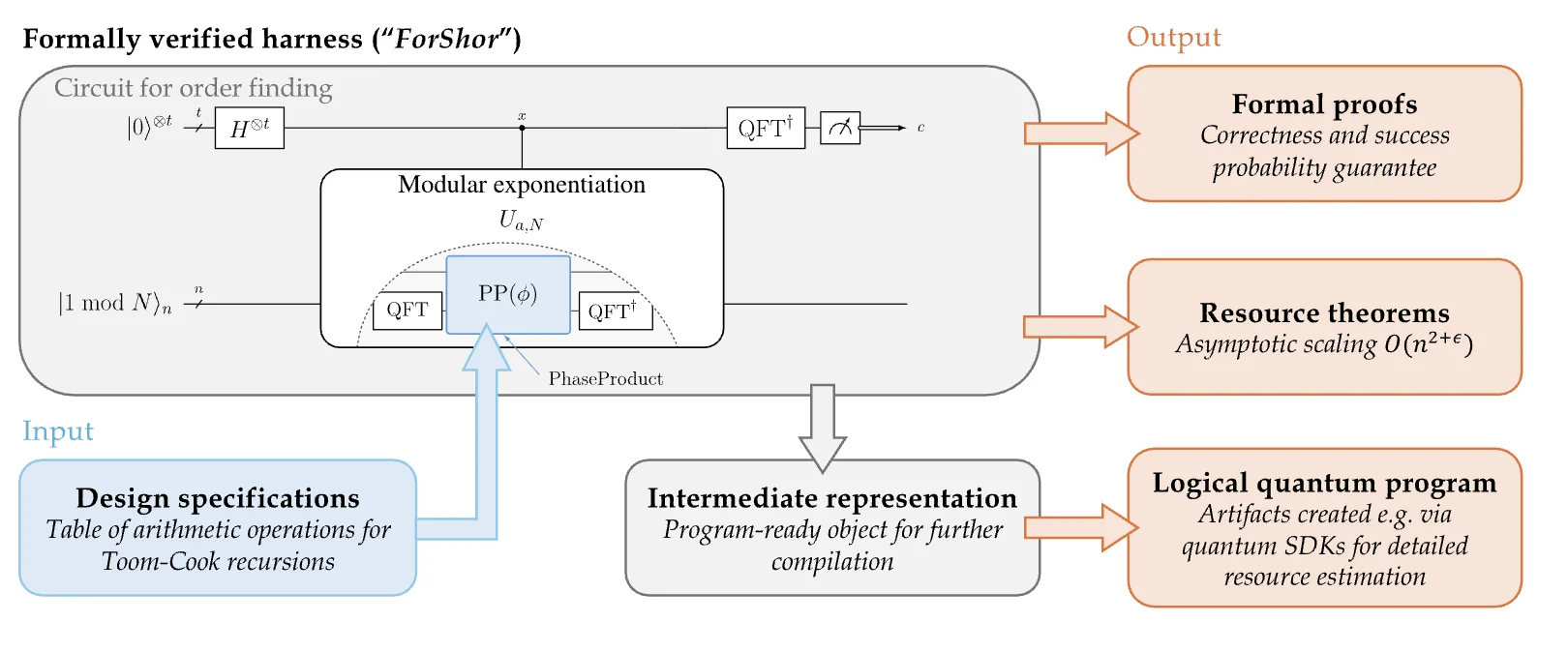
Zapata Quantum Launches Open Challenge to Verify AI-Generated Quantum Research

Insider Brief PRESS RELEASE — As AI accelerates scientific discovery, it has become increasingly critical that new results be both provably correct and explainable to humans. Zapata Quantum (OTCQB: ZPTA) (“Zapata”, “Zapata Quantum” or the “Company”), a pioneer in quantum computing application and algorithm development, today announced ForShor.ai, an open challenge that demonstrates a new

Read at The Quantum Insider

Quantum (journal) Amir Arqand and Ernest Y.-Z. Tan

Marginal-constrained entropy accumulation theorem

Quantum 10, 2273 (2026). https://doi.org/10.22331/q-2026-11-18-2273 We derive a novel chain rule for a family of channel conditional entropies, covering von Neumann and sandwiched Rényi entropies. In the process, we show that these channel conditional entropies are equal to their regularized version, and more generally, additive across tensor products of channels. For the purposes of cryptography, applying our chain rule to sequences of channels yields a new variant of Rényi…

Read at Quantum (journal)

arXiv (research papers) S. A. R. Horsley

Semiclassical Quantum Mechanics and the Optics of Time-Varying Media

Rapid, high contrast modulation of optical parameters such as the refractive index can radically reshape a wave's frequency spectrum as it propagates. Non-commuting frequency and time operators can be used to describe this reshaping, analogous to the position and momentum operators of quantum mechanics. Here we develop the connection between this theory and semi-classical quantum mechanics, showing that: (i) different microscopic models of time-varying materials are…

Read at arXiv (research papers)

arXiv (research papers) Eduardo Reck Miranda SI

Beyond Corpus-Driven Imitation: Evolving Musical Mindsets in the Agentic Orchestra via Quantum Reinforcement Learning

This paper presents a framework for computer-aided music composition and performance based on quantum reinforcement learning and multi-agent interaction. We introduce the agentic orchestra, where musical agents evolve distinct mindsets through trial-and-error engagement with a musical environment, rather than through training on large datasets. The agents are implemented as parameterised quantum circuits. They evolve distinct compositional behaviours, referred to as…

Read at arXiv (research papers)

The Quantum Insider Matt Swayne

Alice & Bob’s Updated Roadmap Targets 200 Logical Qubits From 3,600 Physical Qubits by 2030

Insider Brief PRESS RELEASE — Alice & Bob, a leader in fault-tolerant quantum computing, today unveiled an updated, modular roadmap. The company targets 200 logical qubits as soon as 2030, double its previous target, with Carbon, which will be built from just 3,600 physical cat qubits. “Cat qubits give an efficient path to fault tolerance. They

Read at The Quantum Insider

The Guardian US Andrew Lawrence Geopolitics

Annoying Trump and dodging Flock: inside MapQuest’s contrarian comeback

After refusing to obey the president’s Lake Ontario order, MapQuest briefly rose to No 1 in navigation apps. It’s now a tool in the US anti-surveillance movement I am among the legion of former PC desk occupants with warm memories of MapQuest, the Y2K-era travel website that kept millennial drivers on course with sheaves of printed-out directions – a quantum leap over the ungainly glovebox map. But I assumed it had long since gone the way of AIM and Skype, its manual…

Read at The Guardian US

Phys.org Quantum Physics

Using a microwave link to transfer a three-level quantum state

Quantum technologies, devices and systems that process, store, transfer or collect information leveraging the laws of quantum mechanics, could outperform their classical counterparts on some real-world tasks. Many of these technologies encode quantum information in qubits, which can exist in either of two basic states or a superposition of them.

Read at Phys.org Quantum Physics

arXiv (research papers) Nicolas Gauriot

In-memory measurement-device-independent quantum key distribution

Quantum memories offer to significantly extend the performance of quantum networks, but their complexity and limited performance at telecommunication wavelengths have so far hindered practical deployment. We propose a new memory-assisted measurement device independent quantum key distribution (MDI-QKD) protocol based on in-memory interference. Our approach leverages progress in atomic ensemble memories that enable the interference of a stationary matter qubit and a…

Read at arXiv (research papers)

Quantum (journal)

Below-shot-noise capacity in phase estimation using nonlinear interferometers

Quantum 10, 2272 (2026). https://doi.org/10.22331/q-2026-11-18-2272 Over the past decade, several schemes for imaging and sensing based on nonlinear interferometers have been proposed and demonstrated experimentally. These interferometers exhibit two main advantages. First, they enable probing a sample at a chosen wavelength while detecting light at a different wavelength with high efficiency (bicolor quantum imaging and sensing with undetected light). Second, they can show…

Read at Quantum (journal)

Quantum (journal) Ryu Hayakawa, Kazuki Sakamoto, and Chusei Kiumi

Computational complexity of Berry phase estimation in topological phases of matter

Quantum 10, 2271 (2026). https://doi.org/10.22331/q-2026-11-18-2271 The Berry phase is a fundamental quantity in the classification of topological phases of matter. In this paper, we present a new quantum algorithm and several complexity-theoretical results for the Berry phase estimation (BPE) problems. Our new quantum algorithm achieves BPE in a more general setting than previously known quantum algorithms, with a theoretical guarantee. For the complexity-theoretic results…

Read at Quantum (journal)

arXiv (research papers) Samuel Fedida

A relativistic gravitisation of quantum theory?

We develop a model, that we call local semiclassical gravity, based on the distributional semiclassical Einstein field equations (EFEs) sourced by the local quantum state, i.e. the reduced density matrix of the local system updated by collapses (only) in its past light cone. We propose this as the basis of a relativistically causal generally covariant gravitisation of relativistic quantum theory in $1+3$ spacetime dimensions. We derive the weak-field limit which exhibits the…

Read at arXiv (research papers)

arXiv (research papers) Sebastian Wölckert

Gradient Blindness in Adaptive Architecture Search for IQP Born Machines

Instantaneous quantum polynomial (IQP) Born machines learn a probability distribution from data with a circuit of commuting gates that a classical computer trains at hundreds of qubits. Adaptive algorithms grow a sparse circuit from a small seed by adding in every round the candidate gates with the largest loss gradient. Such algorithms never add a candidate whose gradient vanishes, so the choice of seed decides which circuits they can reach. Here we show that a candidate…

Read at arXiv (research papers)

arXiv (research papers) Honghong Lin

Quantum Parallel Algorithm for Multivariate Trace Estimation with Applications

Estimating multivariate traces Tr(A1A2......Ak) is a fundamental task arising across diverse fields. In this paper, We develop a quantum algorithm for this problem tailored to near-term quantum devices. We access matrices by preparing their vectorized states. This access mode yields a tensor-network representation of the multivariate trace, which in turn guides the design of a parallel algorithm. The resulting circuit has depth dominated solely by that of the input oracle…

Read at arXiv (research papers)

arXiv (research papers) Mojtaba Asadollahi

Quantum Annealing with a Quantum Neural Network: Width of Annealing Matters

Quantum annealing is a promising quantum algorithm for dealing with computationally hard optimization problems. Currently available hardware can implement the algorithm for a significant class of Hamiltonian problems. However, its performance is especially limited in discontinuous quantum phase transitions, where the energy gap shrinks exponentially with system size. In this paper, we introduce an extension of quantum annealing to a quantum neural network and study its…

Read at arXiv (research papers)

The Quantum Insider Matt Swayne

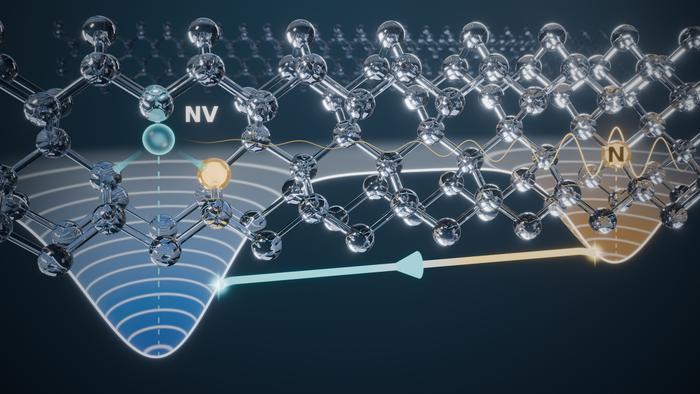
How Electrons Find Their Way to Diamond’s Quantum Defects

Insider Brief PRESS RELEASE — A diamond’s most useful quantum properties come from defects, places where the regular arrangement of carbon atoms is broken. One of these, a nitrogen atom situated next to a vacancy caused by a missing carbon atom, has become a key component in quantum technology. Known widely as the NV center,

Read at The Quantum Insider

The Quantum Insider Mohib Ur Rehman

QEncrypt Adds File Encryption to Its iPhone and Android Apps

Insider Brief PRESS RELEASE — QEncrypt now offers Quantum Safe Encryption for phone users on iPhone and Android. The apps add File Encryption for photos, videos, documents, and IDs. A camera roll holds a child’s first steps, a grandmother’s handwriting, and the last picture from a family trip. Those files deserve protection that lasts as

Read at The Quantum Insider

arXiv (research papers) Hongyu Mao

Reliability of quantum communication over erasure channels

Quantum information can be reliably transmitted at rates below the quantum capacity with an error that vanishes as the number of channel uses grows. The reliability function characterizes the optimal exponential decay rate of this error. For quantum erasure channels with a prime input dimension, we determine the reliability function exactly at all positive communication rates below capacity that meet or exceed an explicit critical rate. Notably, stabilizer coding strategies…

Read at arXiv (research papers)

The Quantum Insider Mohib Ur Rehman

EigenOrbit Develops Quantum-Inspired Method for Robust Medical Image AI

Insider Brief PRESS RELEASE — EigenOrbit, together with dermatologists at the Hospital Maggiore of Trieste and the University of Trieste, has published a method for adapting medical image classifiers to new tasks while keeping a mathematical guarantee that small image changes cannot alter their predictions. The paper, Quantum-inspired orthogonal adapters for certifiably robust medical image

Read at The Quantum Insider

arXiv (research papers) Jiale Huang

Accelerating Quantum Error Correction Simulations under Coherent Noise with Compiled Clifford-Augmented Matrix Product States

Reliable assessment of quantum error correction requires understanding how coherent errors affect logical performance. Although tensor networks naturally capture coherent interference, entanglement growth and large qubit counts make repeated sampling costly. Here we develop a compiled Clifford-Augmented Matrix Product State (CAMPS) framework that reuses Clifford transformations across shots, recycles qubits released by measurements, evolves a compressed residual state, and…

Read at arXiv (research papers)

arXiv (research papers) Yufan Zheng

Vanilla Adiabatic Quantum Optimization Can Have Subexponential Advantage

We construct a family of objective functions $f \colon \{0,1\}^n \to \mathbb{R}$ for which vanilla adiabatic quantum optimization along $H(s) = -(1-s)\sum_{i=1}^n X_i + s\sum_x f(x)\lvert x\rangle\!\langle x\rvert$ finds the global minimizer in $\operatorname{poly}(n)$ time, whereas any classical algorithm requires $\exp(n^{Ω(1)})$ time to do so in the black-box model. Our result is achieved by replacing the linearization technique in an earlier work of Leng et al…

Read at arXiv (research papers)

arXiv (research papers) Hao Zhu

Distinguishing Conserved Quantum Sectors via Measurement Record Features

Conservation laws partition the Hilbert space of a quantum system into invariant sectors that are often difficult to identify directly. Repeated measurements on an ancillary probe, however, generate a measurement record that provides information about the occupied sector. Here we develop a framework for identifying conserved sectors using a $(K+1)$-dimensional feature vector of record statistics, comprising the average outcome frequency and pair-outcome correlations up to…

Read at arXiv (research papers)

arXiv (research papers) Zhi-Lei Zhang

Topological Quantum Reservoir Computing

Scaling universal quantum computation and implementing quantum machine learning with protected logical qubits remain challenging. To harness the computational potential of existing fault-tolerant quantum platforms, we introduce topological quantum reservoir computing, a novel approach using protected degrees of freedom for storage and the host system's intrinsic dynamics for information processing. Using a one-dimensional Kitaev chain, we show how long-lived Majorana edge…

Read at arXiv (research papers)

Help Net Security Mirko Zorz Security

Deutsche Telekom IoT’s CEO on securing devices that run for 20 years

In this Help Net Security interview, Christian Schwalbe, CEO of Deutsche Telekom IoT, talks about the forgotten devices that create the most risk in IoT deployments. He explains what the EU Cyber Resilience Act means for manufacturers whose products stay in the field for 15 or 20 years, and how threats can be spotted through communication patterns without inspecting payloads. Schwalbe also discusses post-quantum cryptography for constrained devices, including research on…

Read at Help Net Security

arXiv (research papers) Zhangyu Yang

Efficient Spectra and Dynamics with Tangent-Space Chebyshev Tree Tensor Networks

We present a tangent-space Chebyshev method (TaChe), which combines tree tensor network states with Chebyshev recursion and maximum entropy spectral analysis in a tree tensor network tangent space, for quantum many-body spectra and dynamics. Implemented tensor network state calculations in the tangent space of the ground state, the core advantage of TaChe is that it can substantially reduce the computational complexity, memory usage, and numerical instability associated with…

Read at arXiv (research papers)

arXiv (research papers) Hao-Kai Chi

Quantum Mpemba effect in a driven-dissipative atom-waveguide coupled system

The quantum Mpemba effect (QME) describes the counterintuitive phenomenon in which a more strongly perturbed quantum system relaxes toward its steady state faster than a less perturbed one. Here, we investigate the QME in a weakly driven-dissipative atomic array coupled to a one-dimensional chiral waveguide. Starting from the steady state, we introduce a local quench by resetting a single atom to its ground state and examine the subsequent relaxation dynamics. We find that…

Read at arXiv (research papers)

Older stories