Results for “work”

arXiv (research papers) Kevin Chow Tech policy

AI-Induced Social Erosion: Using LLMs for Work Tasks Reduces Help-Seeking Intentions Towards Colleagues

Generative AI is becoming embedded in knowledge work as an intelligent collaborator to assist in completing tasks. However, this readily available assistance risks displacing key interactions through which colleague relationships are built and sustained at work. This paper leverages the concept of help-seeking behaviour to investigate whether and how AI usage shapes colleague relationships. We conducted an online experimental vignette study where 248 knowledge workers…

Read at arXiv (research papers)

NPR Jonathan Lambert

After Nepal's epic flood, they're restoring their community ... and their lives

As the emergency response to the flood ends, aid workers turn to the hard work of rebuilding communities that lost everything. Many of those workers lost everything, too.

Read at NPR

9to5Google Abner Li SI

Google launches Gemini 4 Neon with Carbon quality at Flash speeds, live for AI Pro

Following last week’s release of Carbon and Hydrogen, Google today is rolling out Gemini 4 Neon. The model offers “frontier-level reasoning for complex, high-frequency workflows faster and more cost efficiently.”

Read at 9to5Google

The Decoder Matthias Bastian SI

Google ships Gemini 4 Neon, its fourth new Gemini model in a month

Google released Gemini 4 Neon, a new frontier model built for software development, knowledge work, and science. It handles text, images, video, audio, and PDFs with a context window of one million tokens. At $3 per million input tokens and $15 per million output tokens, Neon is priced above previous Gemini 4 models. The article Google ships Gemini 4 Neon, its fourth new Gemini model in a month appeared first on The Decoder.

Read at The Decoder

Dark Reading Security

Strike Graph Launches Integration AI to Automate Continuous Compliance Evidence Using Any Existing Tool

New agentic AI solution leverages APIs to collect compliance evidence from systems and applies it to over 30 frameworks with no duplicate work.

Read at Dark Reading

arXiv (research papers) Yi-Chun Liao

CAIMS: Scalable Cross-Array In-Memory Search

Search, especially top-k similarity search, plays a vital role in many applications, but its performance can be severely limited by memory access overhead. In-memory search (IMS), an alternative to CPU/GPU-based approaches, exploits massive parallelism within a content-addressable memory (CAM) array to perform search in situ and provides both low latency and high energy efficiency. However, the capacity of a single CAM array is often insufficient for modern workloads…

Read at arXiv (research papers)

Euromaidan Press Olena Mukhina

Training alone doesn’t make leader of sergeant. Without core of character, no course helps, says senior Ukrainian Special Forces soldier

Special forces groups often work cut off from the main force, so their sergeants need a high level of independence.

Read at Euromaidan Press

Axios Jim VandeHei

Trust, but prepare: How to make sense of AI's age of upheaval

Most Americans are baffled and alarmed by the daily, if not hourly, explosion of technical glitches hitting air travel, banks and work products like Microsoft Outlook. The outages seem genuinely scary and related. So what the hell is going on? The most likely answer: This is the first true wave of unintended consequences of increasingly powerful artificial intelligence hitting us at once. The big picture: In short, AI is exceptionally good at building software, and therefore…

Read at Axios

arXiv (research papers) Shashwat Jaiswal

TripleKV: Predict, Prefetch, Protect -- KV Cache Management for AI Agents

LLM agents alternate between inference and tool execution, repeatedly reusing their growing context across calls. Under high concurrency, their combined key-value (KV) cache working set can reach hundreds of GiB, far exceeding GPU memory capacity. As idle KV cache blocks are evicted to slower storage tiers, returning agents incur expensive retrievals that stall inference. To address this problem, we present \emph{TripleKV}, a three-tier KV cache management system that hides…

Read at arXiv (research papers)

WIRED Miles Klee

The ‘GTA 6’ Work Blackout Is Here

From taking sick days and vacation days to gaming at the office, many are going all out to embrace the franchise’s long-awaited release.

Read at WIRED

The Verge Emma Roth

Instagram now lets you edit your stories after you post them

Instagram's latest update will allow you to edit your Stories without losing your views, likes, or replies. You can now edit the text, music, stickers, and drawings for up to 15 minutes after sharing your Story, Instagram head Adam Mosseri has announced. Reverse engineer Alessandro Paluzzi first spotted Instagram working on this feature in April,

Read at The Verge

AWS Machine Learning Blog Mariah Miller SI

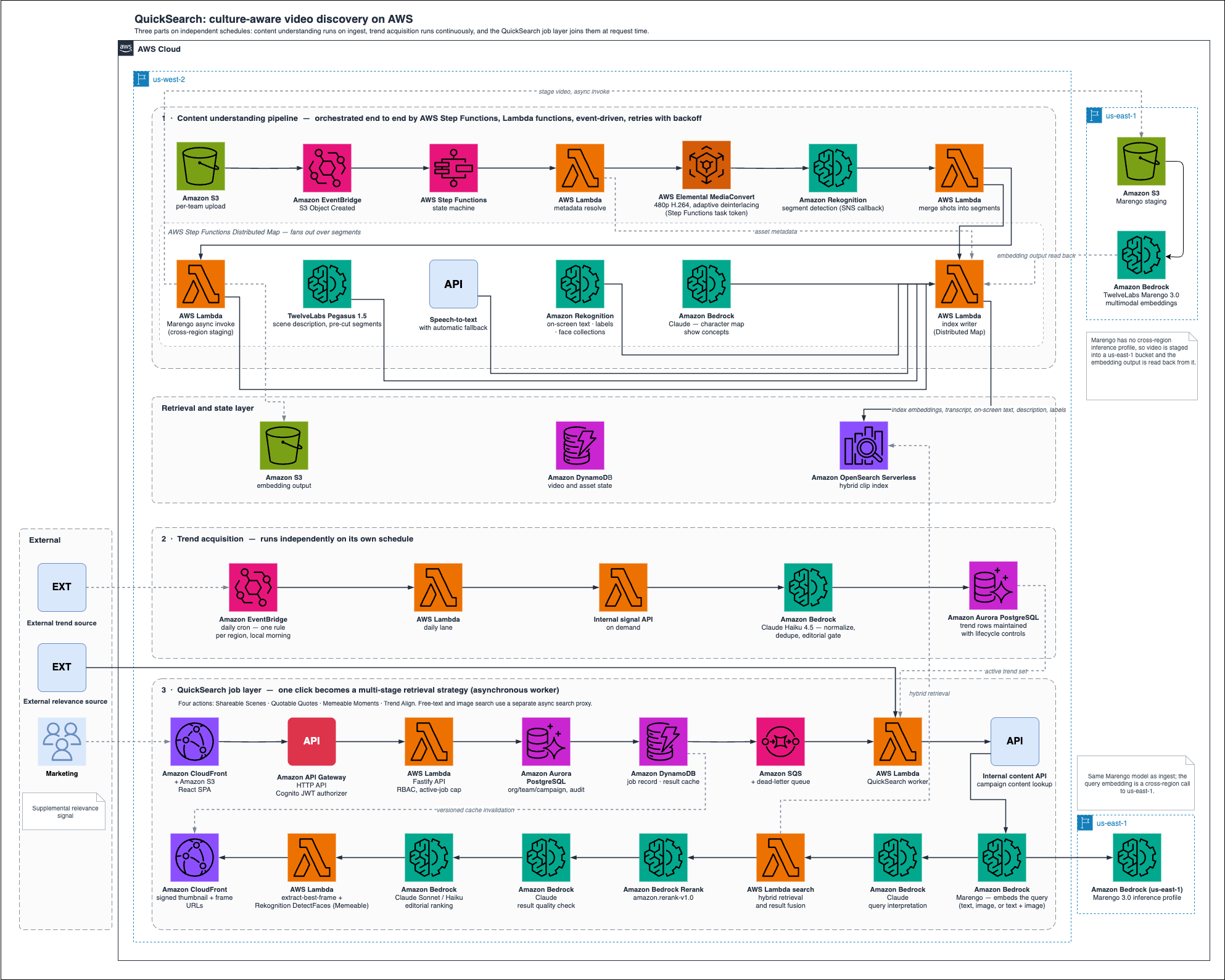
How Social Department built culture-aware video discovery

Social Department, an AI operating system for entertainment marketing, worked with TrackIt and AWS to build QuickSearch: single-action queries that surface shareable scenes, quotable lines, memeable frames, and trend-aligned moments across large video libraries, using TwelveLabs models on Amazon Bedrock and Amazon OpenSearch Serverless.

Read at AWS Machine Learning Blog

Al-Monitor A correspondent in Tehran

Bus crash protest in Abdanan tests Iran’s hold after war and crackdown

Abdanan, a largely Kurdish town, was a flashpoint of the nationwide protests that escalated in January. Tuesday’s demonstration followed a bus crash that killed 13 oil sector workers.

Read at Al-Monitor

SiliconANGLE AI Victoria Gayton SI

Three insights you may have missed from theCUBE’s coverage of monday.com’s Elevate event

AI workflow automation is changing how businesses build applications and manage everyday work, raising questions about the role of established software platforms. As organizations experiment with AI-generated applications and autonomous agents, they must also determine how to maintain access controls, integrate existing systems and manage increasingly complex workflows. The growing accessibility of AI development tools

Read at SiliconANGLE AI

arXiv (research papers) Syed Ahzaz Shah Security

PriTabICL: Differentially Private Tabular In-Context Learning with Task-Aligned Cluster-Wise Synthesis

Tabular in-context learning (TabICL) enables large language models (LLMs) to predict target records using a handful of labeled demonstrations in their prompts. However, these demonstrations often contain sensitive personal information. Differential privacy (DP) offers principled protection, but noise-based methods introduce substantial noise, distorting the feature-label relationships essential for accurate prediction, especially as data dimensionality grows. In this work…

Read at arXiv (research papers)

arXiv (research papers) Jiaru Qian

DVBench: End-to-End Benchmark for Real-World UVM Design Verification Agents

Design verification (DV) remains a major bottleneck in hardware development, with large-scale verification using the Universal Verification Methodology (UVM) being highly labor-intensive. Recent advances in large language models (LLMs) and agentic systems offer new opportunities for DV automation. However, existing benchmarks primarily construct mutually decoupled subtasks, which deviates from the real-world workflow. In this paper, we present DVBench, the first end-to-end…

Read at arXiv (research papers)

arXiv (research papers) Matthew D. Laws Security

Attacks and Defenses in Decentralized Multi-Agent Systems with Hop-by-Hop Task Decomposition and Delegation

Decentralized multi-agent LLM systems enable independently administered agents, each with its own operator, model, memory, and configuration, to collaborate on complex tasks without centralized coordination. Agents autonomously decompose tasks, execute subtasks and delegate remaining work to peers, enabling scalability and eliminating single points of failure. However, decentralization also introduces significant security challenges, as no single entity has complete…

Read at arXiv (research papers)

arXiv (research papers) Sarah H. Cen SI

Mapping the AI Supply Chain: Dependencies, Vulnerabilities, and Market Concentration in the AI Ecosystem

AI systems are built across many organizations that contribute models, data, compute, capital, talent, and other assets. While the layers of the AI stack are relatively well understood, the relationships between actors and components across layers remains sparsely documented. In this work, we focus on the organizations that make up the AI supply chain: the complex network of actors that contribute to the development and deployment of AI. We motivate the examination of the…

Read at arXiv (research papers)

The Diplomat Shannon Tiezzi Geopolitics

Korean Defense Start-up Continues Its Work in Ukraine

“Our cooperation with Ukraine has not ended,” says Newtype’s CEO, Sengwon Joe Cho. “...This incident tells me that Russia has noticed our system and wants it gone from the battlefield.”

Read at The Diplomat

Ukrainska Pravda STANISLAV POHORILOV

Russians launch evening attack on Kharkiv Oblast: apartment building hit, one injured

Emergency medical teams and rescue workers are operating at the scene after a drone struck civilian infrastructure in eastern Ukraine, leaving one local man in hospital.

Read at Ukrainska Pravda

The New Stack Amanda Caswell

OpenAI spent $1.2 million finding nearly 1,000 Linux security flaws. Sam Altman says this is just the beginning.

OpenAI spent approximately $1.2 million in API costs to generate working exploits for 948 Linux kernel vulnerabilities. At The New

Read at The New Stack

arXiv (research papers) Haozhe Wu SI

Vibe-Trading: Towards Agent-Native Trading

Existing AI agents can retrieve information, call tools, run experiments, and produce multi-step outputs. Yet most are built around relatively static workflows and struggle to preserve reliable state as the environment changes. Financial trading makes this limitation especially consequential: prices, news, market conditions, portfolio positions, and available capital evolve continuously. A result is useful only when it remains tied to the correct time, data snapshot, and…

Read at arXiv (research papers)

arXiv (research papers) Sunjun Hwang

Shedding Light on Quantum Non-Classicality: Witnessing Wigner Negativity with Free Electrons

Certifying quantum non-classicality like Wigner negativity typically demands full optical state tomography. This work introduces a noise-resilient framework for witnessing optical Wigner negativity using phase-resolved quantum photon-induced near-field electron microscopy (QPINEM). By mapping electron coherences directly to symmetrically ordered optical characteristic functions within a coupling-limited phase-space region, the protocol bypasses full optical reconstruction. A…

Read at arXiv (research papers)

The Decoder Matthias Bastian SI

OpenAI says its models delivered a year's worth of chip optimization on top of AMD's own engineering

Working with AMD, OpenAI achieved up to 14 percent PPA improvement on AMD's flagship GPU IP in less than five months. According to OpenAI, that's roughly a year's worth of progress, and AMD has already folded the changes into a design sent to production. Anthropic is also applying AI to chip work to optimize cost and performance per dollar. The article OpenAI says its models delivered a year's worth of chip optimization on top of AMD's own engineering appeared first on The…

Read at The Decoder

LSE US Politics and Policy blog Blog admin Geopolitics

Trump’s selection of Stephen Miller as chief of staff shows he has no intention of moderating

Following the Republican Party’s defeats in the 2026 midterm elections, Donald Trump has expressed some willingness to work with Democrats. But, as Thomas Gift writes, his actions tell a different story. By appointing Stephen Miller as his new chief of staff, Trump has elevated the main architect of much of the administration’s recent harsh immigration … Continued The post Trump’s selection of Stephen Miller as chief of staff shows he has no intention of moderating first…

Read at LSE US Politics and Policy blog

arXiv (research papers) Valeria Repetto SI

Soft Mixture of Quantum Experts for Hybrid Quantum-Classical Learning

Quantum Machine Learning (QML) has attracted increasing interest as a possible route to construct feature representations that are difficult to reproduce with classical models. However, near-term QML architectures based on trainable parametrized quantum circuits remain affected by limited hardware resources, noise, and severe optimization difficulties such as barren plateaus. In this work we propose Soft-MoQE, a Soft Mixture of Quantum Experts architecture that replaces…

Read at arXiv (research papers)

NASA Kaitlyn Adams Space

What Is the Moon Base?

This article is for students. NASA is returning astronauts to the Moon – and this time they will spend more time on the lunar surface. The Moon Base is humanity’s first lunar outpost. It will be a place where astronauts live, work, and explore. ______________________________________________________________________ Words to Know outpost: a station or base located in

Read at NASA

The Guardian UK Politics John Crace Geopolitics

Kemi and Andy put another nail in the coffin of his consensus politics | John Crace

The Tory leader is hardwired for conflict. It was futile for the PM to demand an end to her patronising tone Well, that didn’t take long. When Andy Burnham first arrived in No 10, he said he was determined to do things differently. He wanted a new, consensual politics where he would work with other parties to put the country back together. Safe to say, that dream is already dead in the water. At least when it comes to his exchanges with Kemi Badenoch at prime minister’s…

Read at The Guardian UK Politics

Older stories