Results for “Robot”

arXiv (research papers) Xu Pan

CauSyncVLA: Causal Latent World Modeling for Asynchronous Robot Control

Vision-Language-Action (VLA) policies must react while visual inference is still running. Overlapping computation and execution reduces waiting, yet leaves perceptual memory stale and successive action chunks disconnected. We present CauSyncVLA, an asynchronous dual-system controller that aligns perceptual-memory prediction and trajectory correction with actual robot execution. Rather than forecasting pixels or physical states, a Causal Latent World Model predicts current…
Read at arXiv (research papers)

arXiv (research papers) Ye Lin Tun

Beyond Easy Clients: Difficulty- and Improvement-Aware Aggregation for Federated Reinforcement Learning in Robot Navigation

Federated reinforcement learning enables a fleet of robots to jointly learn a shared navigation policy without exchanging raw experience. In practice, however, the robots rarely operate in the same conditions: an open aisle is far easier to navigate than a cluttered room, and takes less learning to master. Standard federated aggregation rules ignore this. Uniform averaging weights every client equally, whether or not it is still learning, and weighting by episode return is…

Read at arXiv (research papers)

Tech.eu Tamara Djurickovic Startups

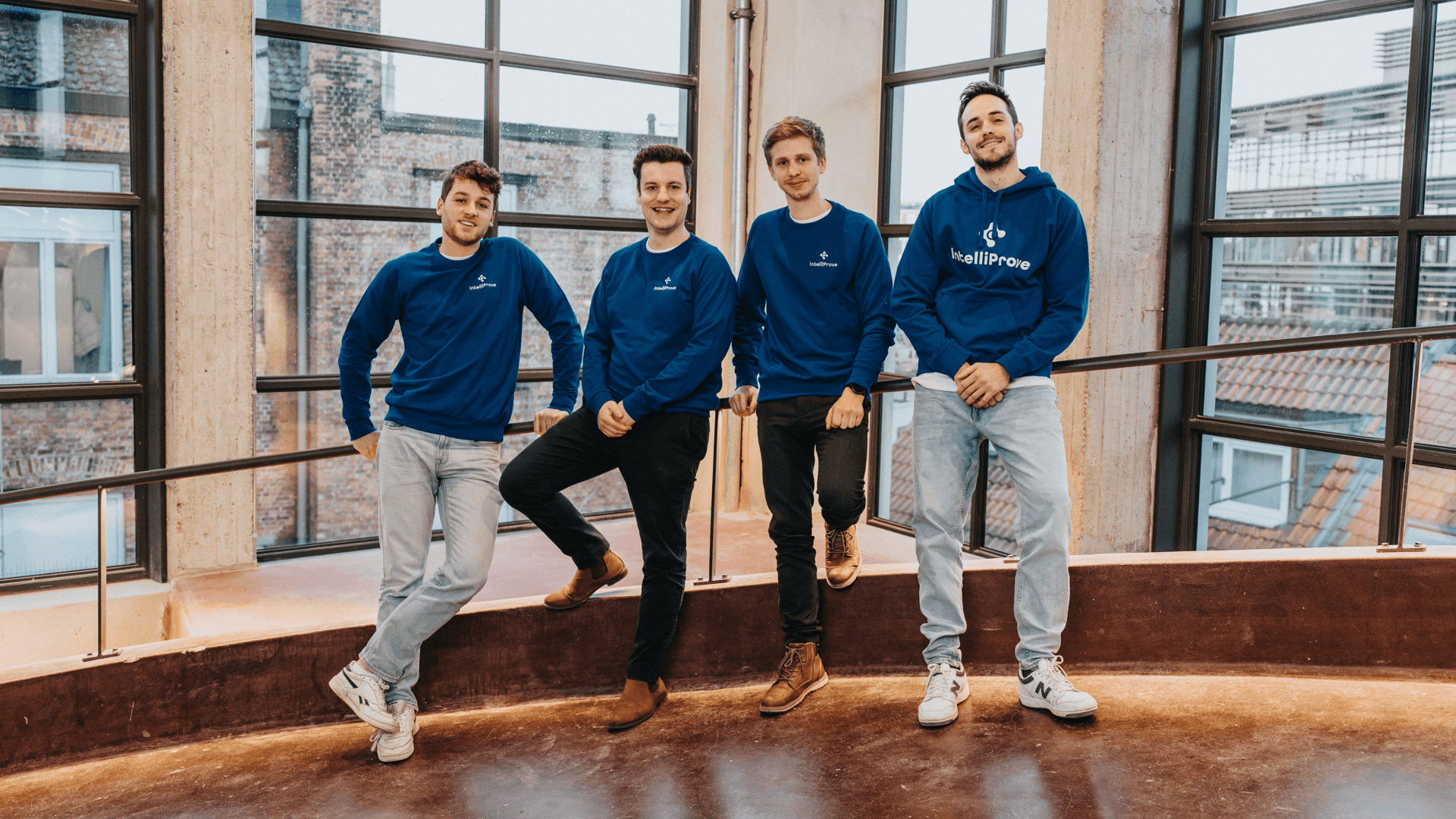
IntelliProve raises €2.7M to bring health monitoring from smartphones to humanoid robots

Belgian healthtech company IntelliProve hasraised €2.7 million in a seed funding round led by Miles Ahead, withparticipation from Wit-Gele Kruis, imec.istart and several business angels. IntelliProve ...

Read at Tech.eu

arXiv (research papers) Anh Dao

LoopedWAM: Looped World Action Models for Elastic Inference

World action models (WAMs) couple generative video modeling with robotic action prediction but typically require large video and action transformers, limiting deployment efficiency. We present LoopedWAM, a compact WAM that recurrently applies a shared six-block core in each expert, executing 30 transformer layers while storing only 12 blocks per expert. To account for their asymmetric inference costs, the video and action experts can operate at different depths: visual…

Read at arXiv (research papers)

arXiv (research papers) Zezhi Liu

GraF-VTA: Neuro-Symbolic Trajectory Generation from Vision and Temporal Logic via Graph-Based Fusion

Robotic planning from visual observations and signal temporal logic (STL) requires grounding task requirements in scene evidence while adapting plans to execution feedback. We present GraF-VTA, a graph-based framework that extends Vision-TL-Action with structured task representations, causal observation history, and closed-loop trajectory generation. Bidirectional cross-attention fuses STL syntax tokens with visual features, while an optional frozen automaton embedding…

Read at arXiv (research papers)

arXiv (research papers) Yuseon Choi

FlashX: Scaling Robotic Experience Reuse for Embodied Agents with CBA-Based NAND Flash

Embodied agents are emerging as a promising paradigm for complex robotic tasks, leveraging Vision-Language-Action (VLA) and World Action Models (WAMs) to generate actions through Diffusion Transformer (DiT)-based iterative denoising. However, existing models often struggle to generalize to out-of-distribution (OOD) environments. We observe that retrieving successful experiences and using them to warm-start denoising enables agents to better adapt to unfamiliar situations…

Read at arXiv (research papers)

arXiv (research papers) Madeleine Nouri SI

Demonstration-Free Skill Composition for Navigation and Manipulation

Hierarchical reinforcement learning enables sequential tasks to be represented as compositions of separately trained skills. This paper evaluates demonstration-free hierarchical pipelines for MiniGrid navigation and robotic manipulation, comparing their training requirements and task performance with flat reinforcement learning baselines. The evaluation concerns complete pipelines with task-specific observation, reward and control structures. In navigation, two parameterised…

Read at arXiv (research papers)

arXiv (research papers) Chengyang Dong SI

Dune: A Zeroth-Order Optimizer with Time-Conditioned Historical Error Regression for VLA Test-Time Adaptation

Test-Time Adaptation (TTA) enables Vision-Language-Action (VLA) models to handle distribution shifts during deployment without source-domain retraining. However, backpropagation-based adaptation incurs heavy memory overhead on resource-constrained robots, whereas zeroth-order (ZO) methods suffer from high estimation variance under limited perturbation budgets. We observe that while ZO estimation enables low-memory adaptation with rapid initial gains, it often stalls or…

Read at arXiv (research papers)

Tech in Asia Minh Le Startups

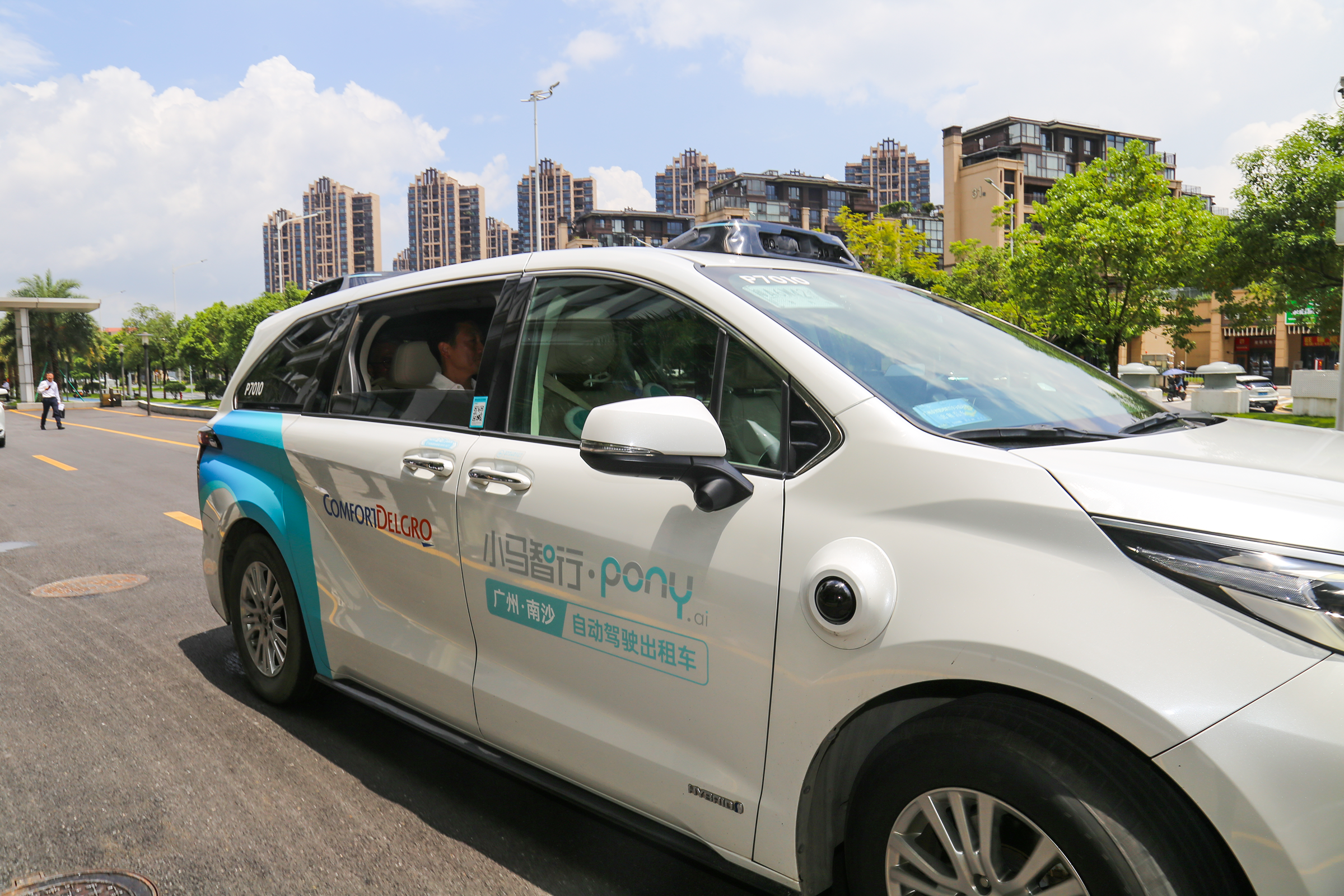
Pony.ai Q3 revenue jumps 75% to $44.6m on robotaxi growth

Robotaxi revenue climbed 165.4% to US$17.8 million.

Read at Tech in Asia

The Guardian World Associated Press

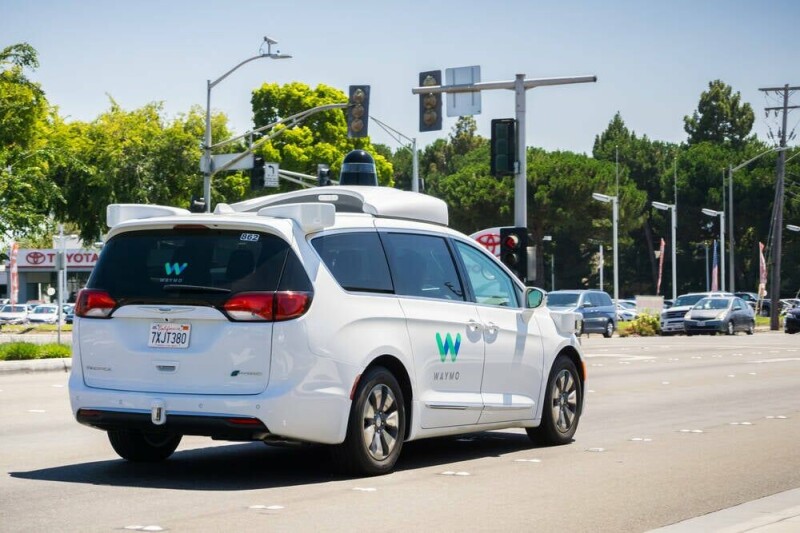
Waymo pulls driverless taxis from freeways across the US after California ban

The autonomous driving company suspended driverless taxi rides on US highways days after California banned the vehicles on its own freeways Waymo has stopped offering driverless taxi rides on freeways across the US indefinitely. The Alphabet subsidiary pulled its vehicles from highways nationwide after California banned them from freeways in response to recent traffic incidents. Waymo had allowed riders to hail its robotaxis for freeway rides in the San Francisco Bay Area…

Read at The Guardian World

TechCrunch Venture Kirsten Korosec, Theresa Loconsolo Startups

How Toyota is betting on a future beyond cars

Toyota is looking beyond the automotive industry as it places bigger bets on robotics, physical AI, energy, aerospace, and other emerging technologies. Through its venture arm, Woven Capital, the automaker is investing in startups that could help shape what the company looks like decades from now. But as startup valuations climb and competition for promising

Read at TechCrunch Venture

MIT News AI Adam Zewe | MIT News SI

This featherweight, flying robot carries its own sensors and computers

The speedy microrobot flies without an attached motion-capture system, moving it closer to applications like agriculture or industrial surveillance.

Read at MIT News AI

arXiv (research papers) Junjie Ye

$Z$-sight: Unifying Vision-Language-Action and Latent World Modeling

We introduce $Z$-sight, a unified robot foundation model that couples vision-language-action (VLA) and generative latent world modeling. Video-based world action models (WAMs) show the value of joint future-and-action generation for control, yet inherit the heavy cost of video generators. Recent latent-space policies avoid pixel generation, yet typically align intermediate features or rely on frozen target encoders, decoupling future prediction from the VLM's native feature…

Read at arXiv (research papers)

arXiv (research papers) Zi-ang Cao

Grana: Compositional Reward Modeling for Long-Horizon Robot Manipulation

Robot reward modeling faces two challenges: generalizing across tasks and accurately tracking progress in long-horizon manipulation. General-purpose reward models demonstrate broad task transfer, but transfer from short-task pretraining to long-horizon tasks remains underexplored. Long-horizon progress models often rely on task-specific subtask classifiers or fixed action vocabularies, limiting the reuse of learned progress knowledge when adapting to new tasks. To address…

Read at arXiv (research papers)

arXiv (research papers) Yash Jangir

Render the Robot, Generate the World: One Video World Model Across Embodiments

Predicting the consequences of an agent's actions requires modeling both the body's motion and the environment's response. Most video world models attempt to learn both from numerical actions, even though geometry and kinematics already specify the intended motion. We introduce Doppel, an embodiment-agnostic video world model conditioned on camera-aligned renderings of future body configurations and numerical action trajectories. By explicitly providing the intended motion…

Read at arXiv (research papers)

arXiv (research papers) Viridiana Luna-Zempoalteca Steven

Teleoperated Haircutting with Delay Compensation and Passivity-Based Control for Unilateral Internet Teleoperation under Real Communication Uncertainties

Robotic haircutting requires accurate motion execution and reliable communication to safely reproduce the operator's commands. Internet-based teleoperation is a key enabling technology to remotely perform precise manipulation tasks such as haircutting. However, communication uncertainties, including variable transmission delays and packet jitter, degrade synchronization between the master and slave systems and affect tracking performance. This paper presents a unilateral…

Read at arXiv (research papers)

arXiv (research papers) Chenjie Zhao

NereidVLA: Learning to Understand and Navigate the Underwater World

Underwater navigation requires translating visual spatial cues into motion, yet marine vision-language datasets rarely include paired robot trajectories. We present NereidVLA, a vision-language-action model that transfers marine spatial knowledge to language-conditioned 3D navigation. We first train Sea2Know on approximately two million marine examples to learn target grounding, spatial relations, and scene structure without paired robot-motion supervision. We then adapt it…

Read at arXiv (research papers)

arXiv (research papers) Akshay L Chandra

DiWALI: Diffusion Policy Learning in World Models via Latent Action Inference from Human and Robot Play

Learning robot manipulation is constrained by the availability of action-labeled robot data, for both imitation and world models. Humans can demonstrate skills in seconds, but their demonstrations lack the required robot actions. We introduce DiWALI, a framework that learns and improves diffusion policies within a world model trained on human and robot play. DiWALI infers latent actions from consecutive frames using an inverse dynamics model, enabling world model training…

Read at arXiv (research papers)

Meta Newsroom Facebook

Our Approach to Updating Our Commercial Terms of Service

We recently announced that the proposed updates to our commercial terms of service have been put on hold and that we will revise those proposed changes after a deeper consultation with stakeholders. We made this decision after hearing concerns from news publishers and other stakeholders about how the proposed updates apply to our web crawlers. Meta follows the industry standard robots.txt mechanism as described in our web crawler developer doc. Today, we want to share more…

Read at Meta Newsroom

arXiv (research papers) Wenwei Lin

RoboMorpher: Scaling Robot Morphology Representations for Cross-Embodiment Action Prediction

Learning shared action representations is central to cross-embodiment manipulation. However, identical joint values can produce different spatial configurations across robots, limiting representations learned from joint values alone. We introduce RoboMorpher, a morphology-conditioned action tokenizer that jointly reconstructs joint angles and link poses to associate control coordinates with their kinematic effects. MorphGen supplies scalable kinematic supervision by…

Read at arXiv (research papers)

The Register Security Security

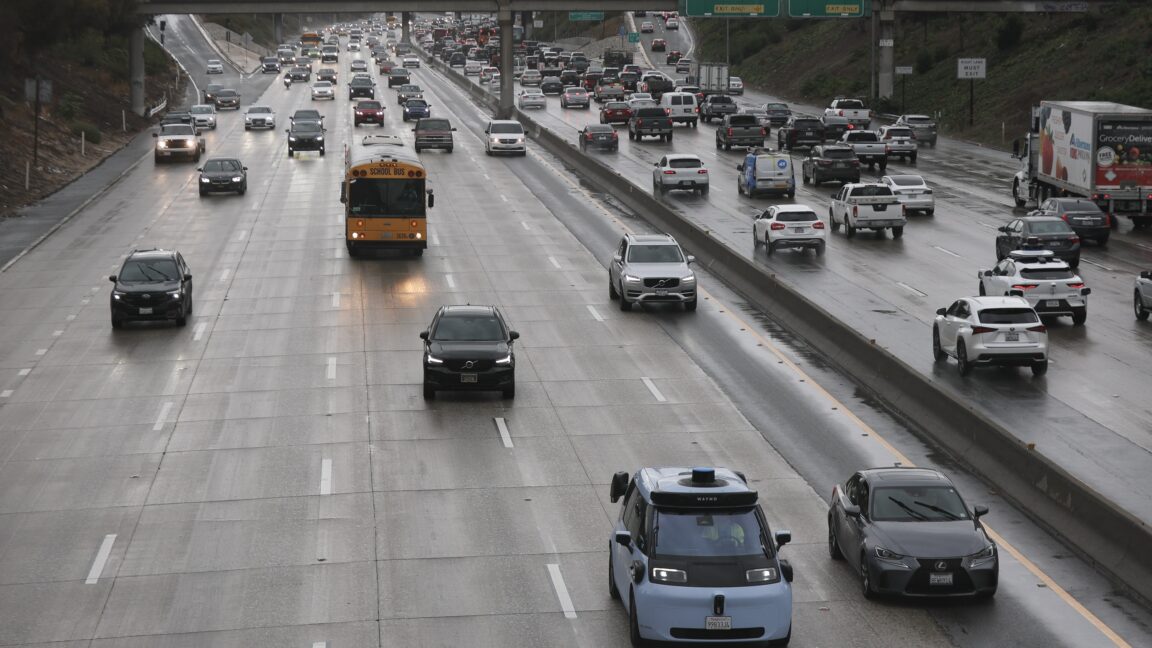
California tells Waymo to take the next exit after freeway mishaps

Robotaxi operator suspends driverless rides on high-speed roads nationwide after construction zone incursions and a run-in with patrol vehicles

Read at The Register Security

arXiv (research papers) Phuong Tuan Dat

HINT-WAM: Hindsight-Informed Training for World Action Models

World action models (WAMs) have shown promising generalization and data efficiency in robot manipulation by coupling action generation with predictions of future visual dynamics. Translating these capabilities into reliable task execution, however, remains a challenge for existing post-training methods. Offline supervised fine-tuning provides dense supervision on expert trajectories, but its flow-matching action expert is trained only on noised demonstration actions and…

Read at arXiv (research papers)

arXiv (research papers) Minghao Xu

Hierarchical Admittance-Impedance Control for Mobile Manipulator Load Transfer

This paper presents a hierarchical admittance-impedance controller that combines an inner Cartesian impedance controller, an outer 6D admittance supervisor, and workspace-aware mobile-base assistance for guided load transfer. The method is motivated by assistive tasks such as airport baggage handling, where a robot should support a payload while a human worker guides its motion through small physical forces. Following an interaction-role interpretation of admittance and…

Read at arXiv (research papers)

Ars Technica Jonathan M. Gitlin

Waymo has stopped its robotaxis from driving on the freeway—here’s why

Robotaxis already had to be recalled in May after they entered highway construction zones.

Read at Ars Technica

arXiv (research papers) Felix Florian Schwald

Conceptual full-vehicle modeling of a modular all-wheel-drive robotic ADS test platform as a foundation for a digital twin architecture

This paper presents the development of an initial full-vehicle simulation model of the PixKit modular electric test platform in IPG CarMaker. The objective is to create a physics-based and extendable model structure that can serve as a low-level foundation for future digital twin applications. The reference vehicle is a skateboard chassis combining unconventional vehicle characteristics such as four independent wheel-hub motors and rear axle steering capable of high steering…

Read at arXiv (research papers)

arXiv (research papers) Giovanni Corsi

Hydrodynamics of robotic micro-swimmers in confinement

Inspired by seminal work by E.M. Purcell, we discuss the problem of predicting and optimizing the performance of autonomous robots swimming in confinement. Our approach is based on the explicit numerical resolution of the fluid flow induced by the swimmer, and it is validated experimentally on a cm-size prototype composed of a cargo head and a rotating propulsive tail. Using hydrodynamic scaling, we predict the performance of replicas of our prototype scaled down to mm- and…

Read at arXiv (research papers)

Inc42 Anjali Jain Startups

Botsync Raises $11 Mn To Connect Robots And Machines On Factory Floors

Singapore-based robotics startup Botsync has raised $11 Mn (about ₹103 Cr) in a funding round led by IvyCap Ventures to…

Read at Inc42

arXiv (research papers) Yaping Li

SHAPE: Discrete Supervision and Parallel Continuous Streams for Learning Dexterous Manipulation from Egocentric Human Data

Egocentric human recordings are far cheaper than dexterous robot demonstrations, promising stronger pretraining and direct skill learning without task-specific robot data. Yet humans and robots differ in morphology and kinematics, so human recordings lack the joint positions and actuator commands that supervise robot policies, providing only retargeted end-effector (EEF) actions. This raises two questions: how human data should supervise the policy, and how a dexterous robot…

Read at arXiv (research papers)

Novaya Gazeta Europe Durnev Dmitriy

The tool Russia hasn’t been able to replicate

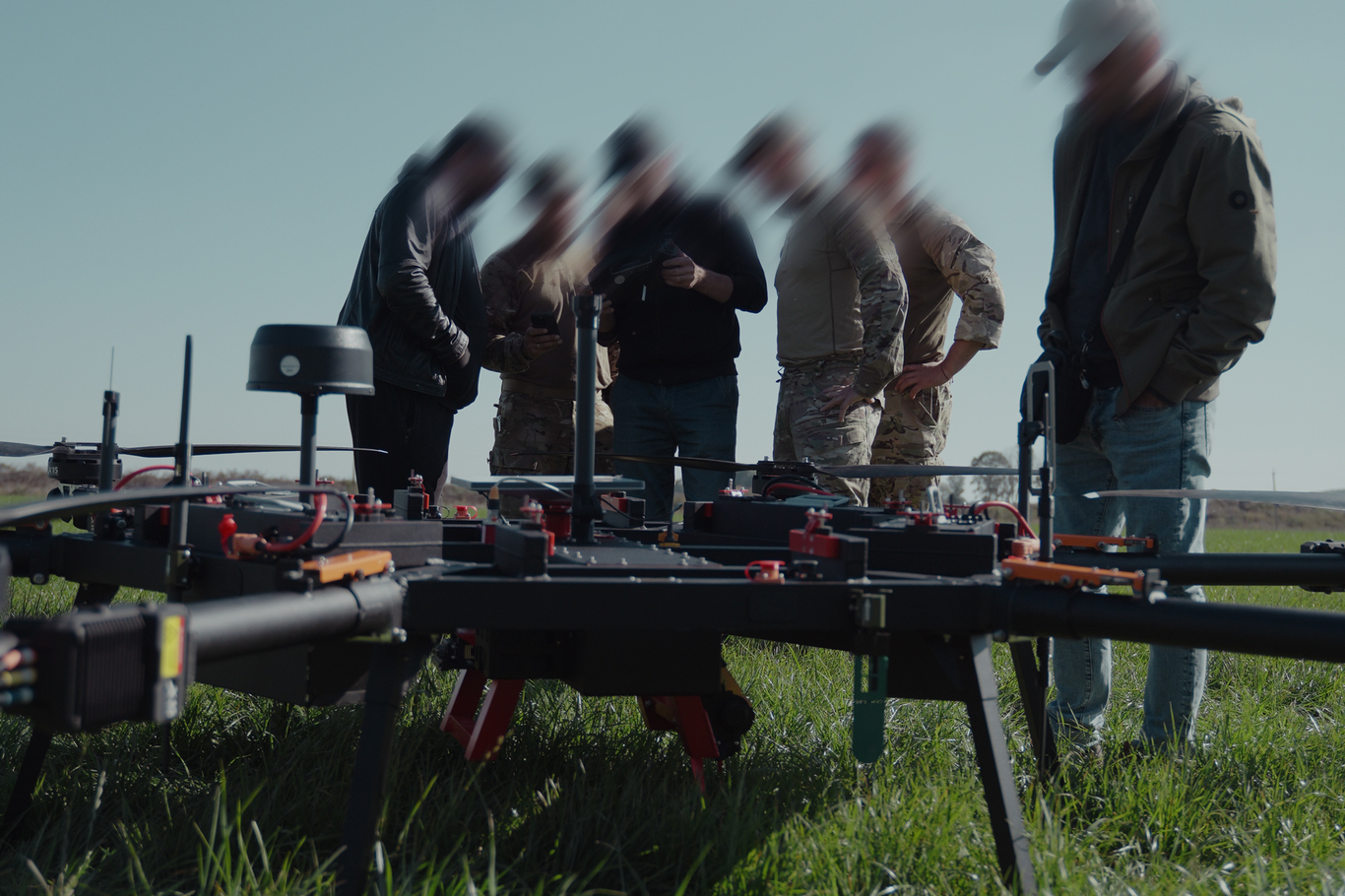
In recent months, Ukraine’s heavy bomber drones have become one of the country’s most important tools in defending against Russia’s invasion. They dropped off ground robotic systems behind Russian lines during Operation Vivaldi in the summer and autumn of 2026, helped deliver food to the isolated town of Oleshky, and now routinely fly wounded soldiers out of the kill zone. They’re also unique to the Ukrainian army: Russia has nothing like them in its arsenal. To learn about…

Read at Novaya Gazeta Europe

Older stories