Results for “Quantum”

arXiv (research papers) Olivia Seidel

Quantum Zeno Effect with a Superposed Measurement Schedule in Relational Time

Motivated by the Page-Wootters construction in which time is a quantum clock reading and the global system state is stationary, we propose a quantum circuit that explores the observable consequences of treating measurement timing as a quantum degree of freedom. We place two Zeno measurement schedules of a driven qubit in a coherent superposition using a schedule qubit. We show that, for a fixed drive strength, the interference visibility between the two schedules depends…

Read at arXiv (research papers)

arXiv (research papers) Sugumi Kanno

Entanglement, records, and quantum recovery in qubit chains

We investigate entanglement, readable records and quantum recovery using an exactly solvable chain of sequentially interacting qubits. For weak interactions, entanglement reaches a later environment site before that site carries an equally strong local record. The leading local record is encoded in an off-diagonal element of the reduced density matrix and can be detected by a Pauli measurement, while a population measurement gives a higher-order signal. We further…

Read at arXiv (research papers)

arXiv (research papers) Shuai Zhang

Quantum Autoencoder on Real Hardware for New Physics Searches at Muon Colliders

We apply a quantum autoencoder to search for new physics (NP) in the tri-photon process $μ^+μ^-\toγγγ$ at muon colliders. Using a six-qubit circuit on the Tianyan176 quantum computer, we measure the reconstruction losses for Standard Model (SM) events and anomalous quartic gauge couplings (aQGCs) events. The results demonstrate that the hardware-implemented quantum autoencoder effectively discriminates NP signals from the SM background. Concurrently, we derive the expected…

Read at arXiv (research papers)

arXiv (research papers) Pedro R. Dieguez

Quantifying the irrealism required by quantum random access codes

How far must decoding observables be from having elements of reality to achieve a given quantum advantage in a communication task? We answer this question for quantum random access codes. Here, an observable has an element of reality when its unrevealed measurement leaves the preparation undisturbed; its irrealism is the relative entropy to the closest such preparation. Because it comprises local coherence and the correlations destroyed by the unrevealed measurement…

Read at arXiv (research papers)

The Quantum Insider Mohib Ur Rehman

Students Use Quantum Computing to Address Electric Grid Challenges at Tennessee Hackathon

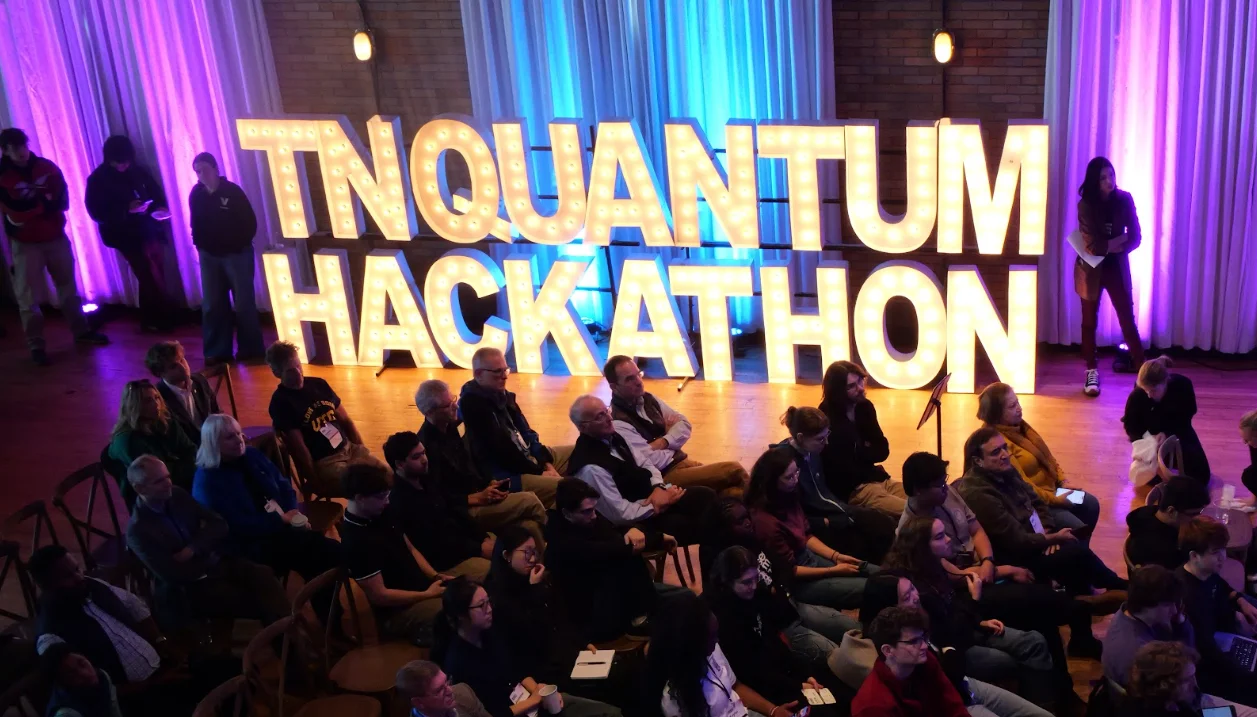
Insider Brief PRESS RELEASE — A team of students from Tennessee State University and Vanderbilt University took first place and a $2,500 prize at the Tennessee Quantum Hackathon, a 36-hour, in-person competition that challenged college students to use quantum technology to solve real problems facing the electric grid. The Chattanooga Quantum Collaborative (CQC) and CO.LAB

Read at The Quantum Insider

The Quantum Insider Mohib Ur Rehman

SEALSQ Signs LOI to Acquire QuintessenceLabs

Insider Brief PRESS RELEASE — WISeQey Corp. (formerly known as WISeKey International Holding AG, “WISeQey”) (Nasdaq/SIX: WQEY), a global quantum cybersecurity and space IoT company, today announced that its subsidiary, SEALSQ Corp (NASDAQ: LAES) (“SEALSQ”), a company that develops and sells Semiconductors, PKI, and Post-Quantum technology hardware and software products, has signed a non-binding letter

Read at The Quantum Insider

The Quantum Insider Resonance

From Lab to Live: Inside the Practical Realities of Deploying Quantum Computing at Data Center Scale

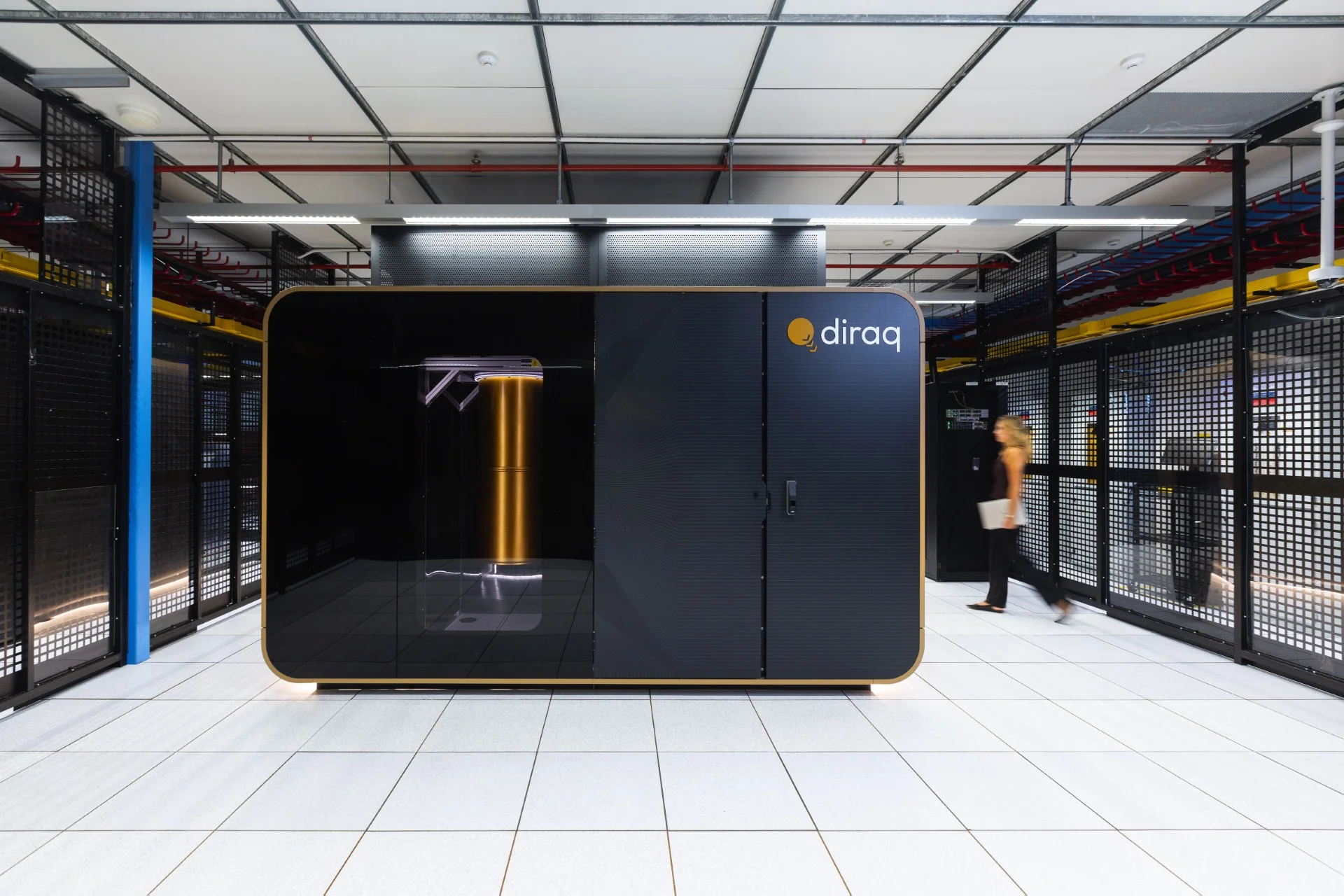
Behind Equinix and Diraq’s collaboration to bring a silicon spin quantum computer into a commercial data center … and what it actually takes to get there. Insider Brief The recent headlines around Diraq and Equinix’s collaboration have focused on a milestone: a silicon spin quantum computer, installed inside an operational commercial data center in Sydney.

Read at The Quantum Insider

The Quantum Insider Mohib Ur Rehman

Pasqal Integrates Quantum Processors with Slurm HRES

Insider Brief PRESS RELEASE — Pasqal (Nasdaq: PSQL), a global leader in neutral-atom quantum computing, today announced an integration with the Hierarchical Resources (HRES) capability recently added to Slurm, the open-source workload manager widely used in supercomputing centers. In a latest release, NVIDIA has expanded Slurm to allow quantum processing units (QPUs) to be addressed

Read at The Quantum Insider

The Quantum Insider Mohib Ur Rehman

memQ and Infleqtion Sign MoU to Advance Networked Quantum Computing

Insider Brief PRESS RELEASE — memQ™, the industry leader in quantum networking solutions for distributed quantum computing, and Infleqtion (NYSE: INFQ), a global leader in quantum computing and quantum sensing powered by neutral-atom technology, have announced a joint memorandum of understanding (MoU) to pursue validation and certification of interoperability between memQ xQNA quantum networking technologies

Read at The Quantum Insider

The Quantum Insider Matt Swayne

Securities Regulators Warn That Slow Progress on Quantum Security is a Mistake

Insider Brief Financial markets are still in the early stages of preparing for quantum computers that could break the security protecting trades, payments and confidential records, a global group of securities regulators said. And they might not be moving fast enough to manage the threat. The International Organization of Securities Commissions (IOSCO) urged regulators and

Read at The Quantum Insider

The Quantum Insider Matt Swayne

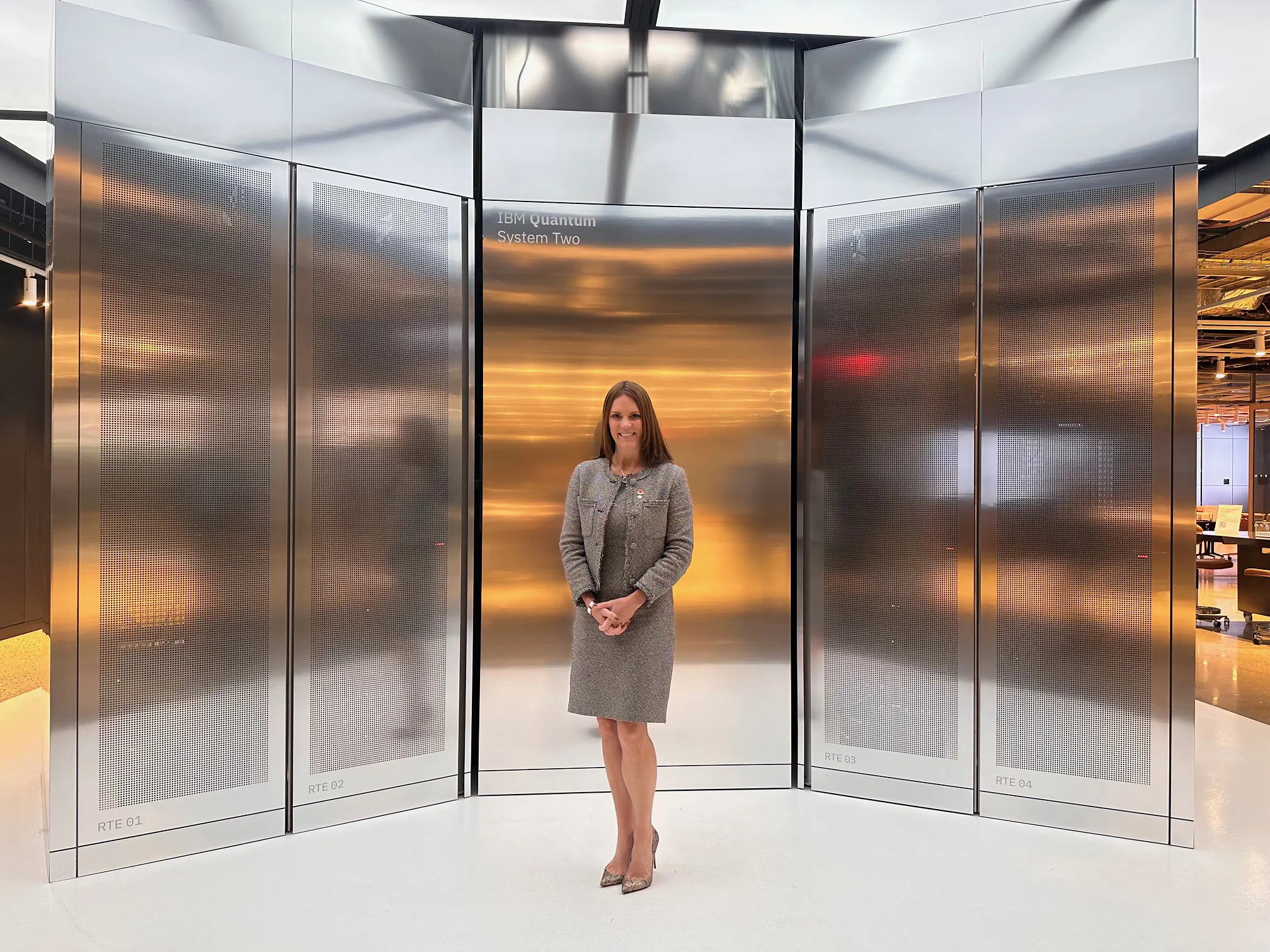
BMO Reports Quantum Utility in Machine Learning Application Using IBM Quantum Computers

Insider Brief PRESS RELEASE — BMO today announced it has demonstrated quantum utility in a machine learning application using IBM quantum computers, meaning the work was performed reliably at a scale beyond what exact traditional computing methods can practically reproduce. The work explores how quantum computing could help AI models identify which information matters most

Read at The Quantum Insider

The Quantum Insider Mohib Ur Rehman

SK Broadband to Test Quantum Security on Korea-Singapore Subsea Cable

Insider Brief A quantum security test network spanning countries is to be built on the Busan-Singapore stretch of SJC2, a subsea cable that connects Asia, SK Broadband said on the 19th, according to Seoul Economic Daily. The company’s aim is to check how Korean quantum technology performs abroad and to put in place a system

Read at The Quantum Insider

Quantum (journal)

Improved parameter initialization for the (local) unitary cluster Jastrow ansatz

Quantum 10, 2278 (2026). https://doi.org/10.22331/q-2026-11-19-2278 The unitary cluster Jastrow (UCJ) ansatz and its variant known as local UCJ (LUCJ) are promising choices for variational quantum algorithms for chemistry due to their combination of physical motivation and hardware efficiency. The parameters of these ansatzes can be initialized from the output of a coupled cluster, singles and doubles (CCSD) calculation performed on a classical computer. However, truncating…

Read at Quantum (journal)

The Quantum Insider Mohib Ur Rehman

Quandela and Hermes-Epitek Join Forces to Advance Photonic Quantum Technologies

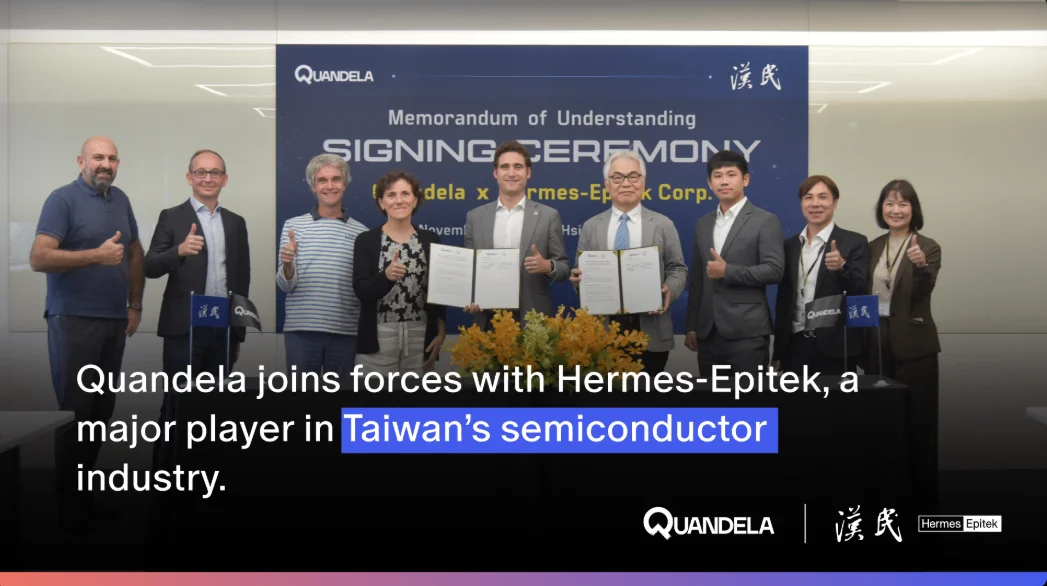
Insider Brief PRESS RELEASE — Quandela and Hermes-Epitek Corporation (“Hermes-Epitek “) have signed a memorandum of understanding (MoU) at Hermes-Epitek’s premises in Hsinchu Science Park. The MoU outlines two companies’ intention to develop and industrialize photonic quantum technologies, beginning with a proposed joint R&D program. A subsequent phase would involve the installation of a quantum computer

Read at The Quantum Insider

The Quantum Insider Mohib Ur Rehman

NPL and Sungkyunkwan University Sign Quantum Research Agreement

Insider Brief PRESS RELEASE — NPL and Sungkyunkwan University (SKKU) have signed a Memorandum of Understanding (MoU) to expand collaboration in quantum technologies. The agreement builds on an established relationship between NPL and SKKU, which has already included joint research projects, intercomparison studies, access to quantum devices developed by SKKU for research and development purposes,

Read at The Quantum Insider

Tech in Asia Grace Priscilla Teo Startups

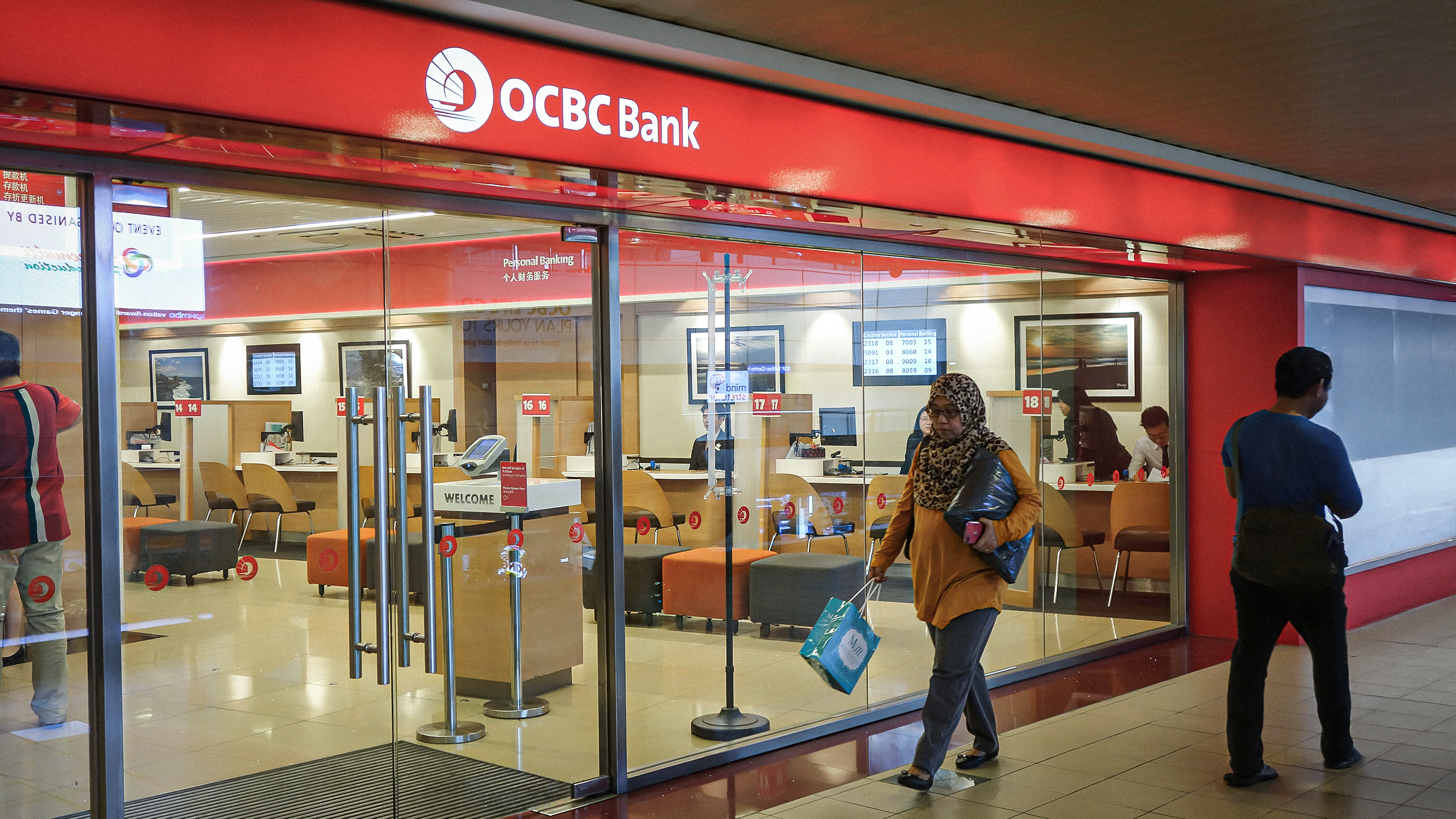
OCBC joins Singapore-led quantum finance testbed

OCBC will submit use cases involving credit and counterparty risk, as well as optimization.

Read at Tech in Asia

arXiv (research papers) Xin Jin Security

Correctable Enrollment and One-Transaction Seed Proofs for Ethereum's Post-Quantum Transition

A quantum computer running Shor's algorithm can extract the private key of every Ethereum account whose public key is published, and accounts exposed by their own transactions hold 54.6% of execution-layer ETH. As the first such machine may stay secret, a migration cannot wait for visible thefts, and once keys are extractable, legacy signatures no longer tell owners from attackers. We design a migration in which owners enroll post-quantum keys cheaply with their existing…

Read at arXiv (research papers)

arXiv (research papers) Jungmin Park Security

From FIPS to FPGA with LLM Agents: Measuring What Tests and Reviews Miss in Post-Quantum Cryptographic Hardware

As LLM agents increasingly generate RTL alongside the tests and reviews that validate it, self-generated evidence is a weak foundation for trustworthy hardware. We present our seven-stage verification-gated workflow, evolved during a post-quantum design port, in which a gate counts only if shown able to fail on negative controls and fault mutants, and reviewer agents audit work before commit. We then audit this evidence with tool-selected netlist mutants, flaw replays, and…

Read at arXiv (research papers)

Help Net Security Mirko Zorz Security

Quantum position verification could lock remote hackers out, NIST shows

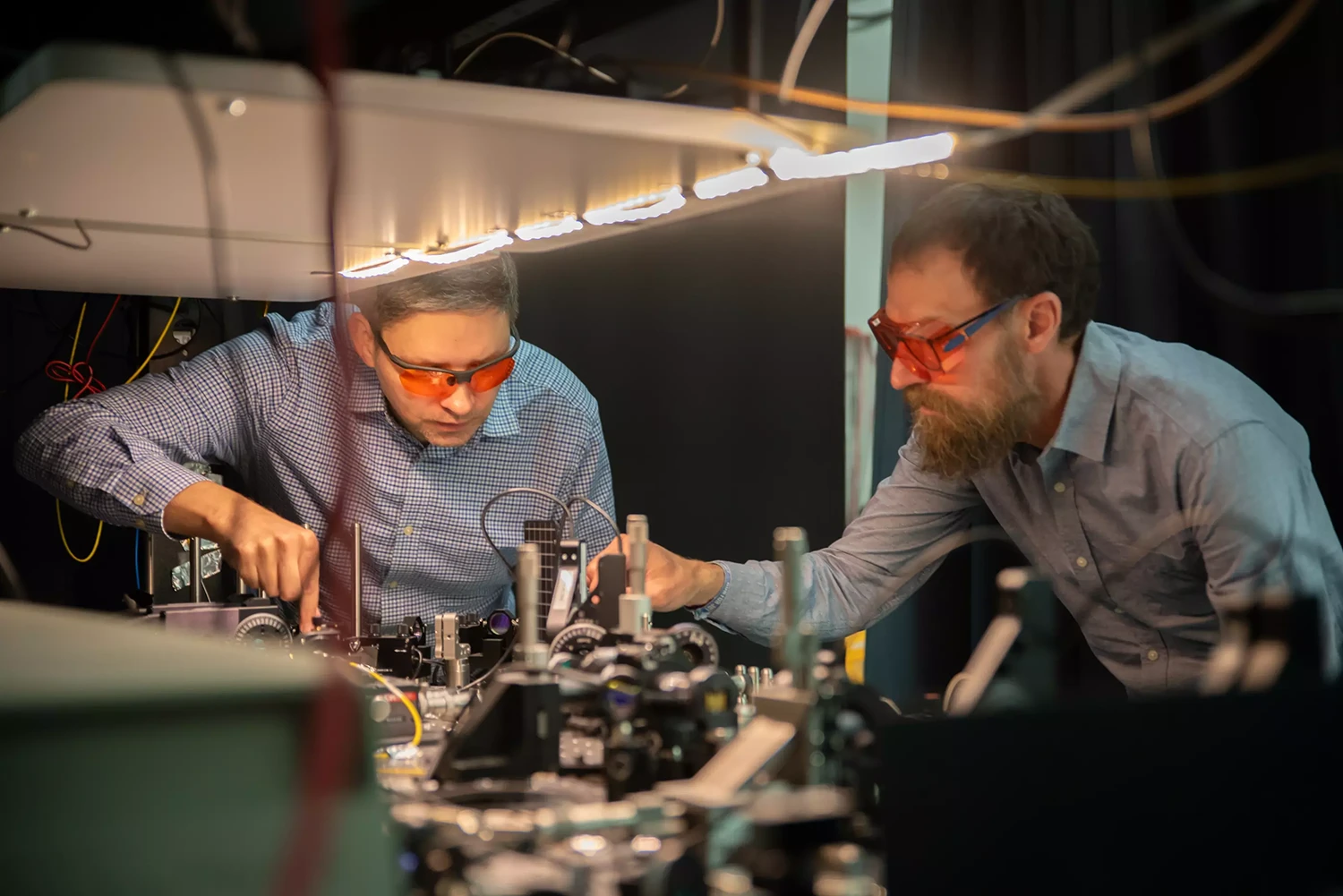
Physicists at the National Institute of Standards and Technology have used entangled photons to confirm that a party was physically where it claimed to be. NIST physicist Krister Shalm and an international team ran a quantum position verification protocol inside a research building in Boulder, Colorado, and closed loopholes that had left earlier quantum location schemes open to cheating. NIST researchers Krister Shalm (left) and Marty Stevens use optical components to guide…

Read at Help Net Security

npj Quantum Information HANWEN YIN

High-key-rate fully-passive quantum access network with thermal source

npj Quantum Information, Published online: 19 November 2026; doi:10.1038/s41534-026-01412-x High-key-rate fully-passive quantum access network with thermal source

Read at npj Quantum Information

npj Quantum Information Giancarlo Camilo

Compilation-informed probabilistic logical-error cancellation

npj Quantum Information, Published online: 19 November 2026; doi:10.1038/s41534-026-01407-8 Compilation-informed probabilistic logical-error cancellation

Read at npj Quantum Information

The Quantum Insider Steve Suarez

Guest Post — The 2026 Finance Quantum Index: Recognizing the Leaders Advancing Quantum in Finance

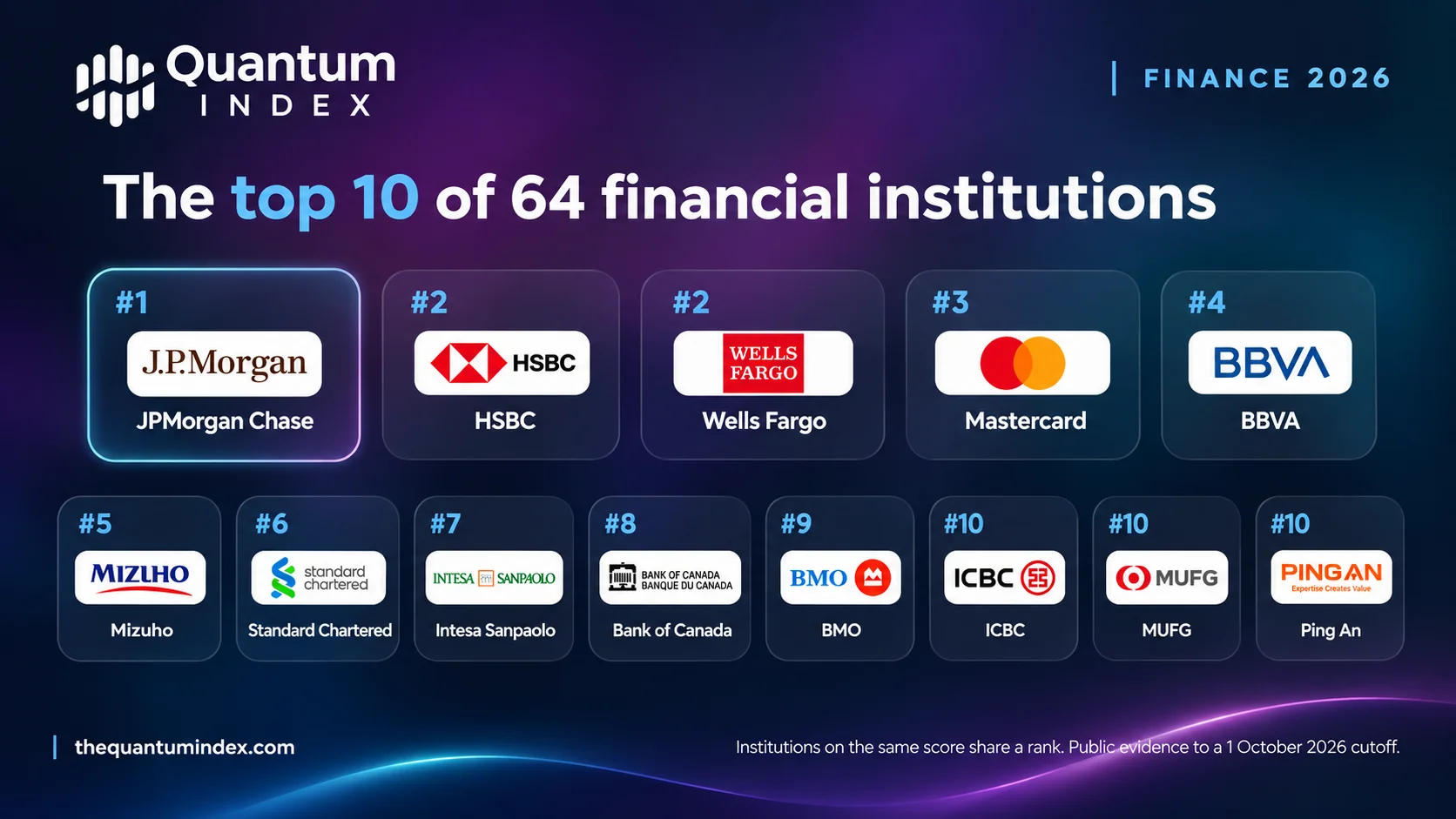
Guest Post by Steve Suarez, Founder and CEO of HorizonX and Co-founder of The Quantum Index The 2026 Finance Quantum Index brings together 64 financial institutions across eight regions, more than doubling its coverage from 28 institutions in 2025. With 36 new additions, this year’s edition provides a broader view of quantum activity across banking,

Read at The Quantum Insider

Phys.org Quantum Physics

Scalable photonic quantum computer provides new insights into the fundamentals that shape its performance

Photonics-based quantum computers open up new possibilities for investigating highly complex problems in mathematics and have the potential to revolutionize fields ranging from energy and chemical research to secure communications. By utilizing the unusual properties of light particles, they can perform calculations that pose enormous challenges even for the most powerful supercomputers—or remain entirely beyond their reach. At Paderborn University, researchers are now…

Read at Phys.org Quantum Physics

arXiv (research papers) Ji-Hui Pei

A Nonsecular Quantum Master Equation with Detailed Balance and Second-order Error Bound

An effective theory of open quantum systems should preserve the detailed balance structure inherited from microscopic reversibility and remain accurate throughout relaxation. Meeting both requirements is particularly challenging in quantum many-body systems, where dense spectra can invalidate the secular approximation even at weak coupling. Here we construct a nonsecular quantum master equation that satisfies time-reversal Kubo-Martin-Schwinger (TR-KMS) detailed balance…

Read at arXiv (research papers)

arXiv (research papers) Ivan A. Boldin

Dressed-State Quantum Information Processing Using a Multilayer Ion Trap Chip with an Integrated Radio Frequency Resonator

We present the experimental preparation of a radio frequency (RF)-dressed-state qubit, the coherent operation of a single RF-dressed qubit, and the selective readout of RF-dressed hyperfine states of $^{171}$Yb${^+}$ ions trapped using a novel microstructured ion trap chip. We demonstrate the individual addressing of RF-dressed-state qubits in a two-ion Coulomb crystal. To this end, we developed, manufactured, and characterized a trap chip specifcally designed for quantum…

Read at arXiv (research papers)

arXiv (research papers) Sahinur Reja

Residual-Algebraic Design of Symmetry-Preserving Variational Quantum Circuits

Symmetry-preserving (SP) variational quantum circuits restrict evolution to physically relevant sectors of Hilbert space, but symmetry preservation alone does not guarantee accessibility within those sectors. We show that a restricted generator set can possess a residual dynamical Lie algebra whose commutant further decomposes the target symmetry sector into invariant blocks. The associated block populations are conserved and impose a kinematic upper bound on the fidelity…

Read at arXiv (research papers)

arXiv (research papers) Wenjie Sun

CREST: A Hardware-Aware GNN-Based Framework for High-Fidelity and Robust Superconducting Quantum Compilation

Quantum compilation on superconducting processors requires selecting a connected execution region whose topology and calibrated properties suit the input circuit. This choice constrains subsequent routing and influences the noise encountered during execution, yet aggregate hardware-quality metrics alone may not reliably predict the execution fidelity of a given circuit. Calibration updates can also change region suitability and trigger the rebuilding of calibration-dependent…

Read at arXiv (research papers)

arXiv (research papers) Aleksei V. Ivanov

Quantum Simulation of First-Quantised Chemistry with a Sum-of-Squares Representation

Calculating molecular energies is expected to be an important application of quantum computers, but the most efficient algorithms to achieve this typically have significant space requirements. Scaling quantum processors to thousands of logical qubits is a daunting engineering challenge, so developing algorithms that run with reduced qubit requirements is of particular importance. Moreover, most algorithms are benchmarked on active spaces with about as many orbitals as…

Read at arXiv (research papers)

arXiv (research papers) Brani Vidakovic

Hurst Exponent Estimation with Quantum Wavelets

How accurately can the Hurst exponent $H$ of fractional Brownian motion be estimated from repeated preparations of a single amplitude-encoded path, when every measurement interrogates the same realization? We extend the $ε$-decimated quantum nondecimated wavelet transform in three directions: we remove the endpoint jump of circular filtering, derive the sampling distribution of the estimator, and compare readouts at equal query budgets. A one-qubit mirror extension removes…

Read at arXiv (research papers)

arXiv (research papers) Adrián Juan-Delgado

Time-Varying Medium from an Ensemble of Laser-Dressed Quantum Emitters

We propose a minimal quantum-mechanical model of a frequency dispersive, time-modulated medium that explicitly incorporates the pumping mechanism. It consists of a homogeneous ensemble of quantum emitters dressed by a pump laser. We analyze their dispersive, time-varying response to a perturbative probe field by deriving the macroscopic polarizability of the ensemble, and then solving Maxwell's equations via the Floquet formalism. This yields a rich band structure that…

Read at arXiv (research papers)

Older stories