AWS Machine Learning Blog

Recent stories from AWS Machine Learning Blog.

AWS Machine Learning Blog Ariel Jirau SI

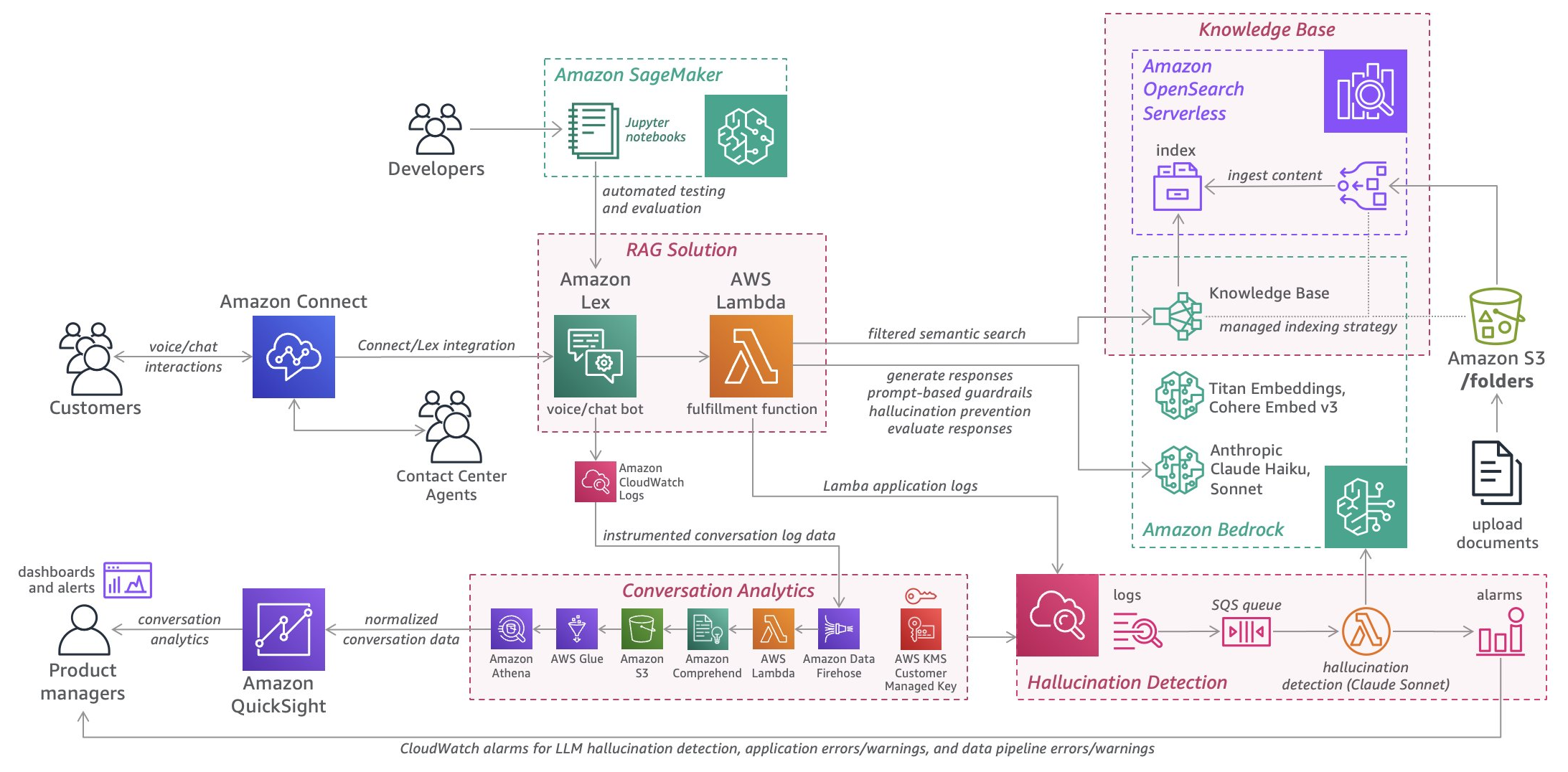
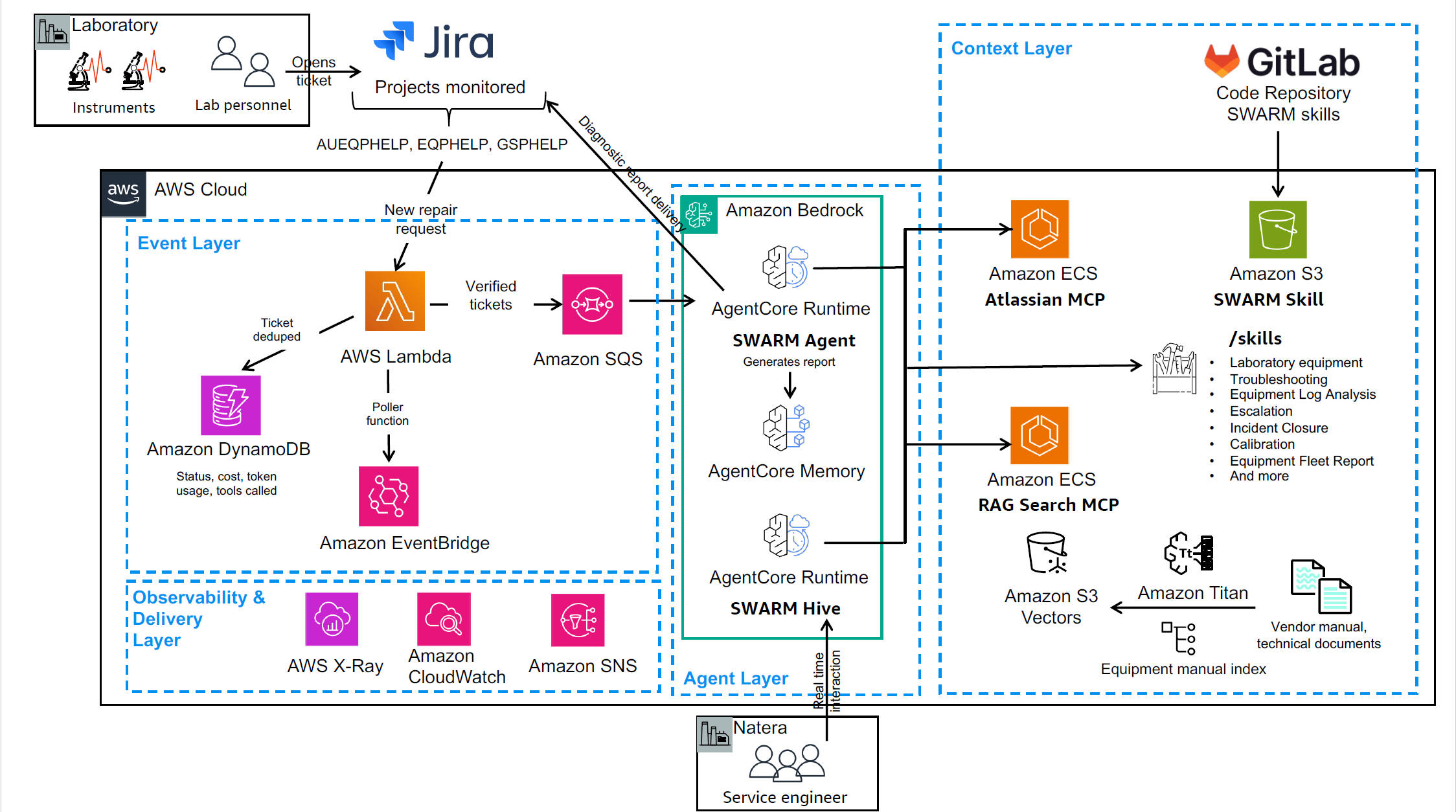
How Natera designed an agentic AI system for lab ops with Amazon Bedrock AgentCore

Natera built SWARM, an agentic AI system on Amazon Bedrock AgentCore that captures institutional lab-operations knowledge and deploys it at scale. This post walks through the full architecture, from knowledge base construction to deployment and evaluation, delivering about 130x faster first response and 96.2% automated coverage across support tickets.

Read at AWS Machine Learning Blog

AWS Machine Learning Blog Sai Pavan Kasani SI

Four Amazon Bedrock inference choices that affect cost

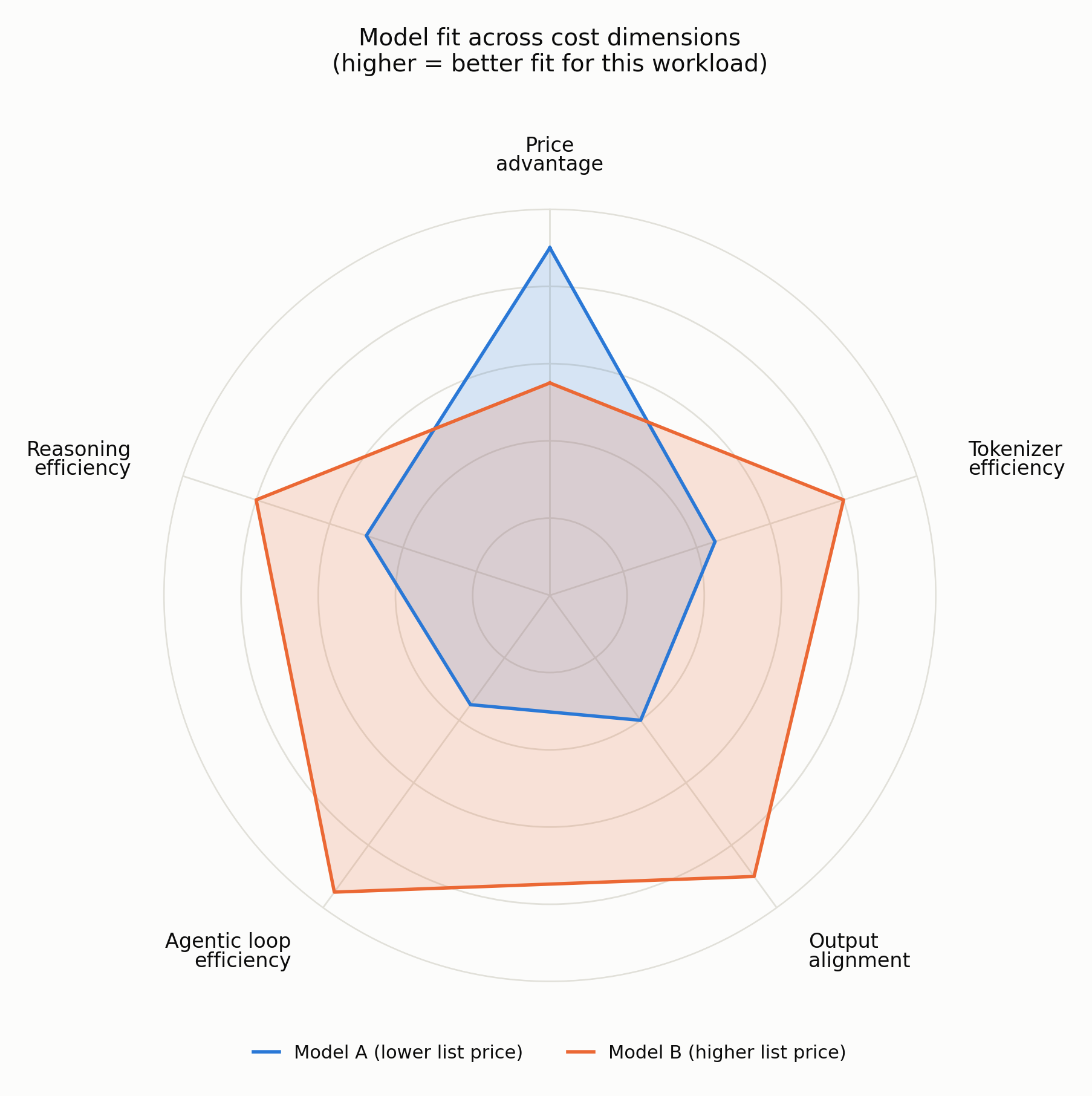
Your Amazon Bedrock inference bill can keep climbing even after you tune prompts and application logic. Four request-level choices (cache duration, service tier, reasoning effort, and maxTokens) change how many tokens the service processes and the rate applied. We show how we tested each and how to verify the effect.

Read at AWS Machine Learning Blog

AWS Machine Learning Blog Arun Chandapillai SI

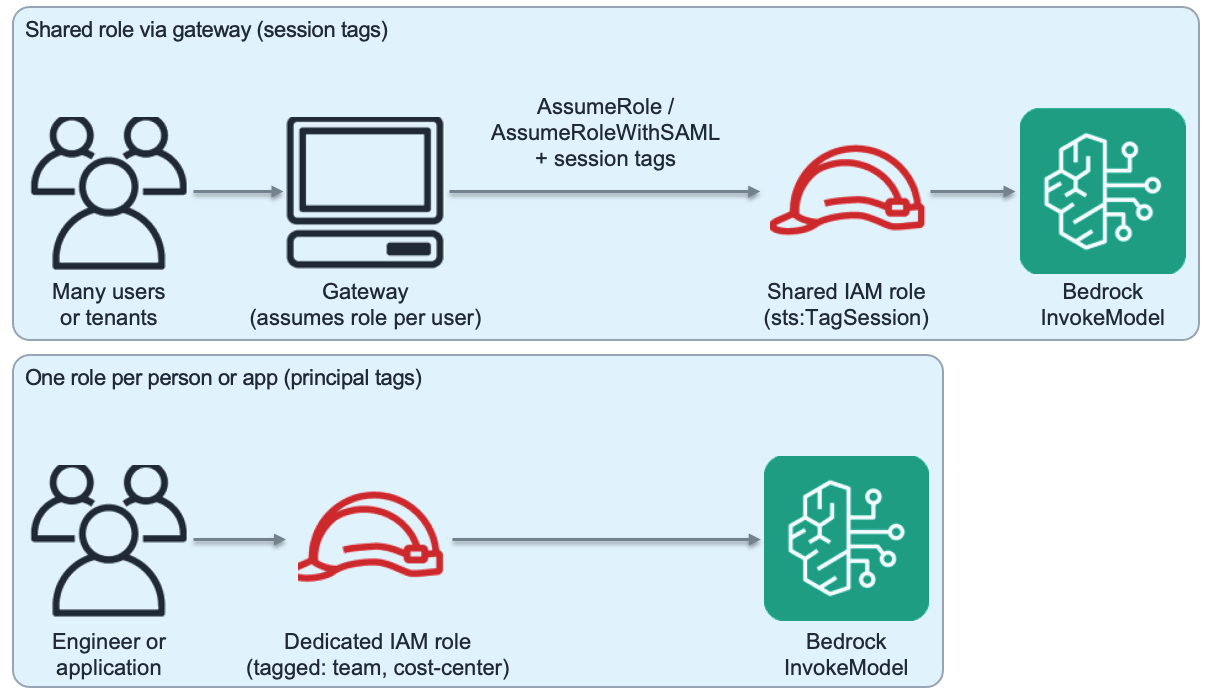
Tokenomics at scale: Track and cap Amazon Bedrock spend per IAM principal with CUR 2.0 and AWS Budgets

Get per-identity Amazon Bedrock cost visibility and enforceable spend limits using only AWS-native features, with no application code for the common case. Attribute spend with IAM principal tags, report with CUR 2.0 or Cost Explorer, and enforce with AWS Budgets actions that apply a Deny policy when a threshold is crossed.

Read at AWS Machine Learning Blog

AWS Machine Learning Blog Majd Arbash SI

Optimizing cost per task and proving agent ROI on Amazon Bedrock

Comparing per-token prices hides the real cost of running a model on Amazon Bedrock. This post shows how to calculate the true cost per task across four hidden cost drivers, reduce it with caching, routing, and output constraints, and prove agent ROI with human baselines, holdout experiments, and a five-dimension scorecard.

Read at AWS Machine Learning Blog

AWS Machine Learning Blog Sitaraman Vijay Krishna SI

Building a self-service LLM gateway with Amazon Bedrock and LiteLLM

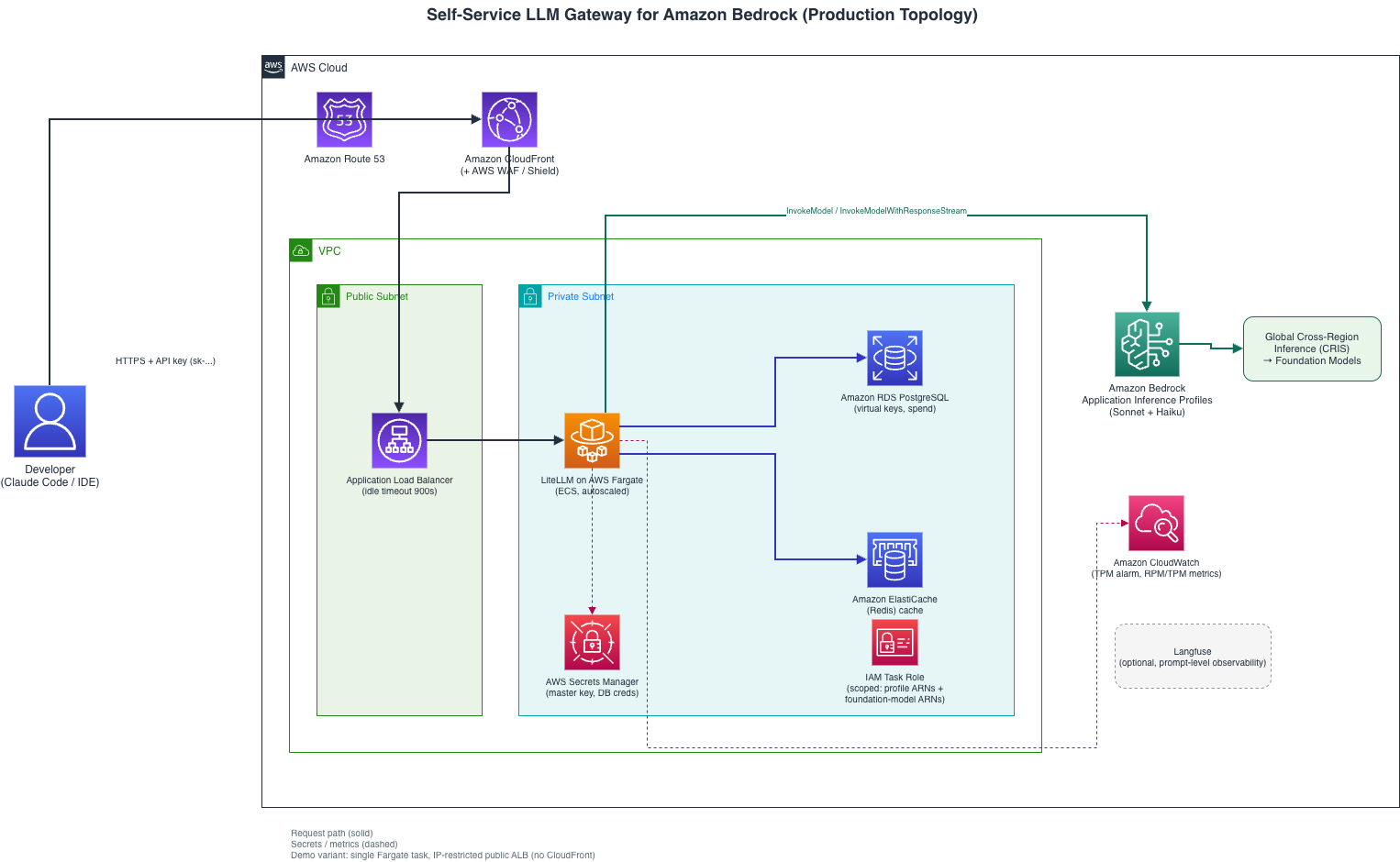
Build a self-service LLM gateway with LiteLLM on AWS Fargate that puts Amazon Bedrock foundation models behind an OpenAI-compatible API. Developers get instant access through a single API key, while platform teams gain per-user cost controls, quota isolation, and observability.

Read at AWS Machine Learning Blog

AWS Machine Learning Blog Madhu Parthasarathy SI

Run agents securely and efficiently with the next generation AgentCore runtime

AI agents now run multi-step workloads for hours and act on behalf of users, raising the bar for secure, scalable agent compute. Learn how the next generation of Amazon Bedrock AgentCore runtime delivers hardware-isolated sessions with faster starts, more compute, usage-based billing, and isolation that now extends to your data.

Read at AWS Machine Learning Blog

AWS Machine Learning Blog Josh DeMuth SI

Migrate to Amazon Bedrock Managed Knowledge Base with your coding agent

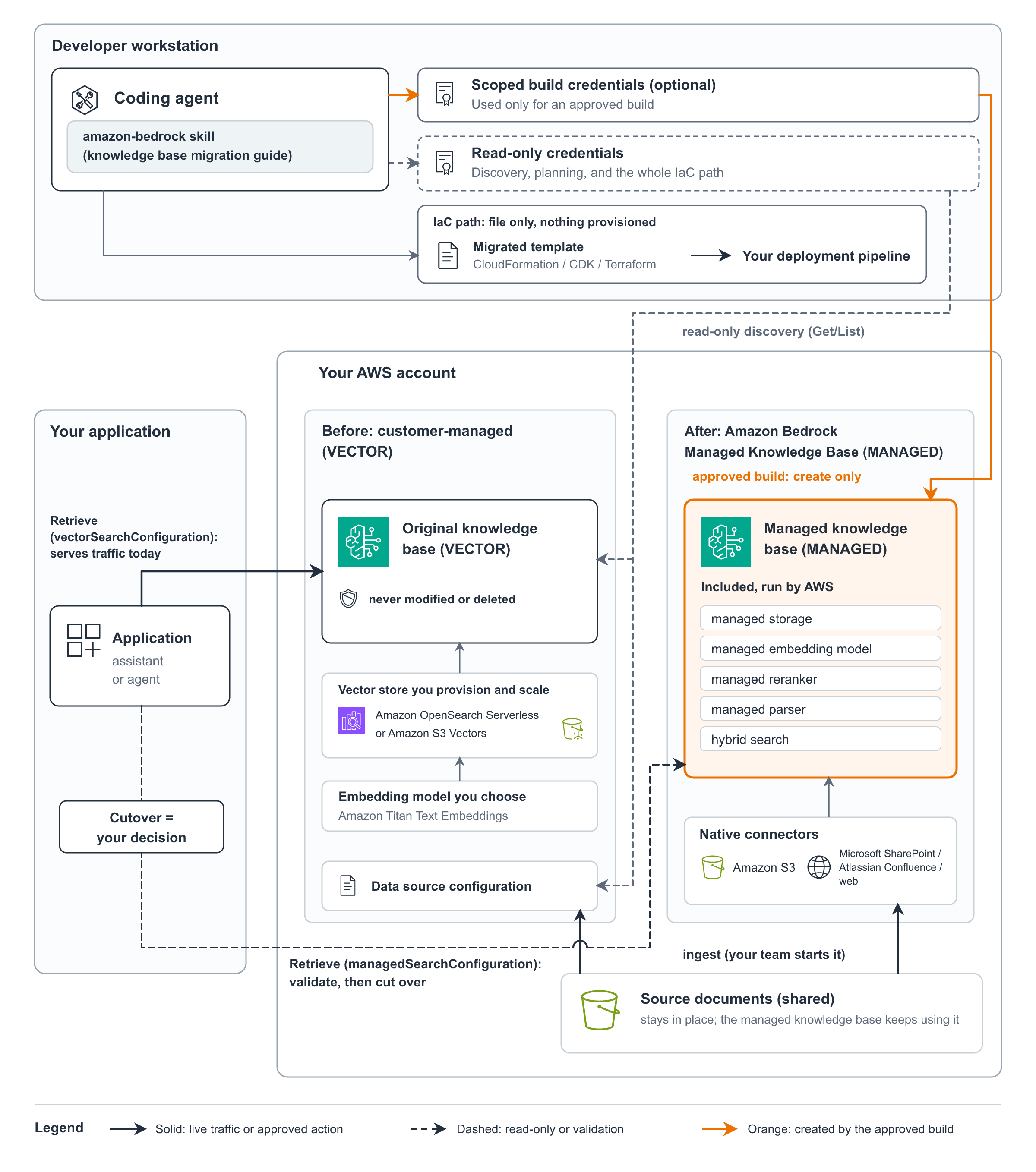
The migration guide in the amazon-bedrock skill helps you migrate a customer-managed Amazon Bedrock knowledge base to a Managed Knowledge Base. Your coding agent plans the move with read-only discovery, creates the new knowledge base or an infrastructure-as-code template alongside the original, and validates retrieval before you cut over.

Read at AWS Machine Learning Blog

AWS Machine Learning Blog Amit Chaudhary SI

Build composable, interoperable multi-agent systems with A2A on AWS

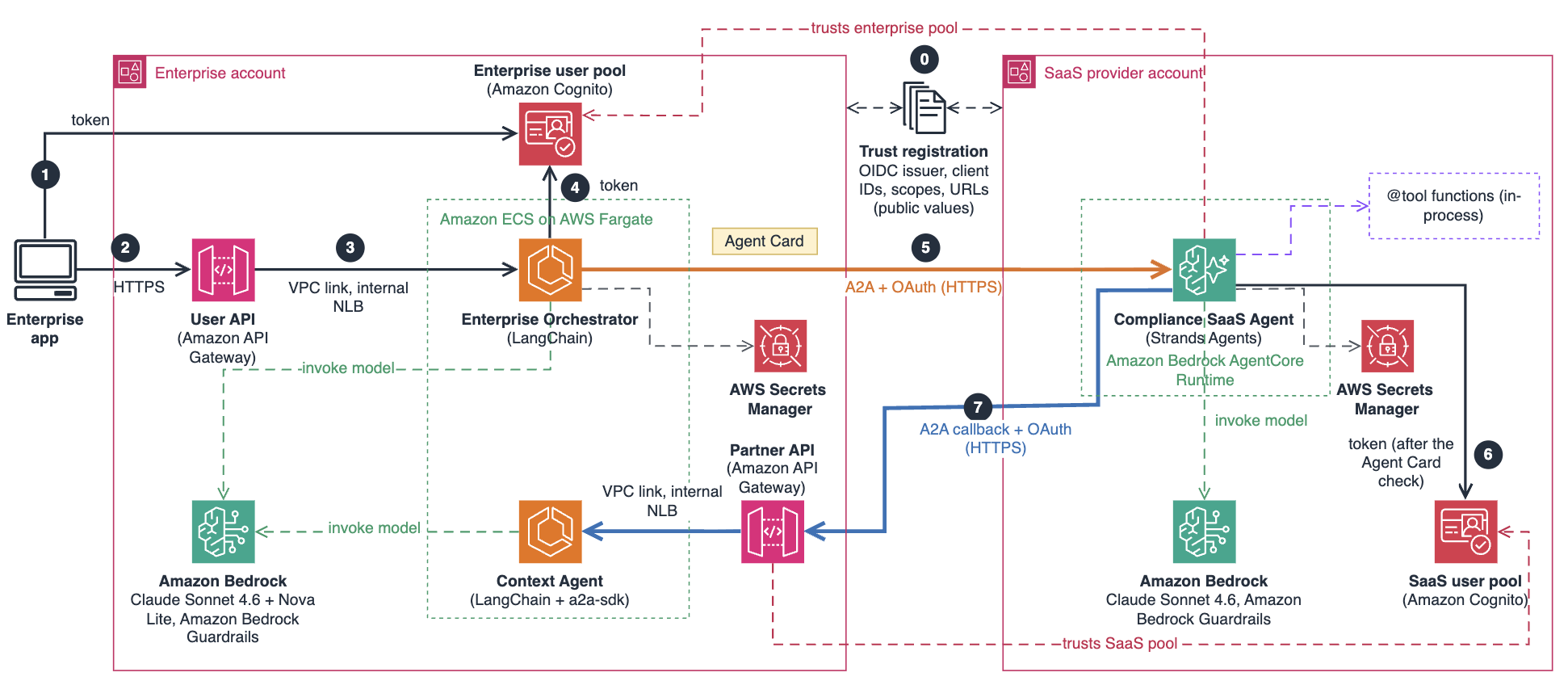
Build a composable, interoperable multi-agent system on AWS with the Agent-to-Agent (A2A) protocol. A LangChain orchestrator on Amazon ECS communicates with a Strands agent on Amazon Bedrock AgentCore across organizational boundaries, using bidirectional, OAuth-authenticated calls, with neither side depending on the other's framework or SDK.

Read at AWS Machine Learning Blog

AWS Machine Learning Blog Renya Kujirada SI

Fine-grained access control for Amazon Bedrock Managed Knowledge Base tools

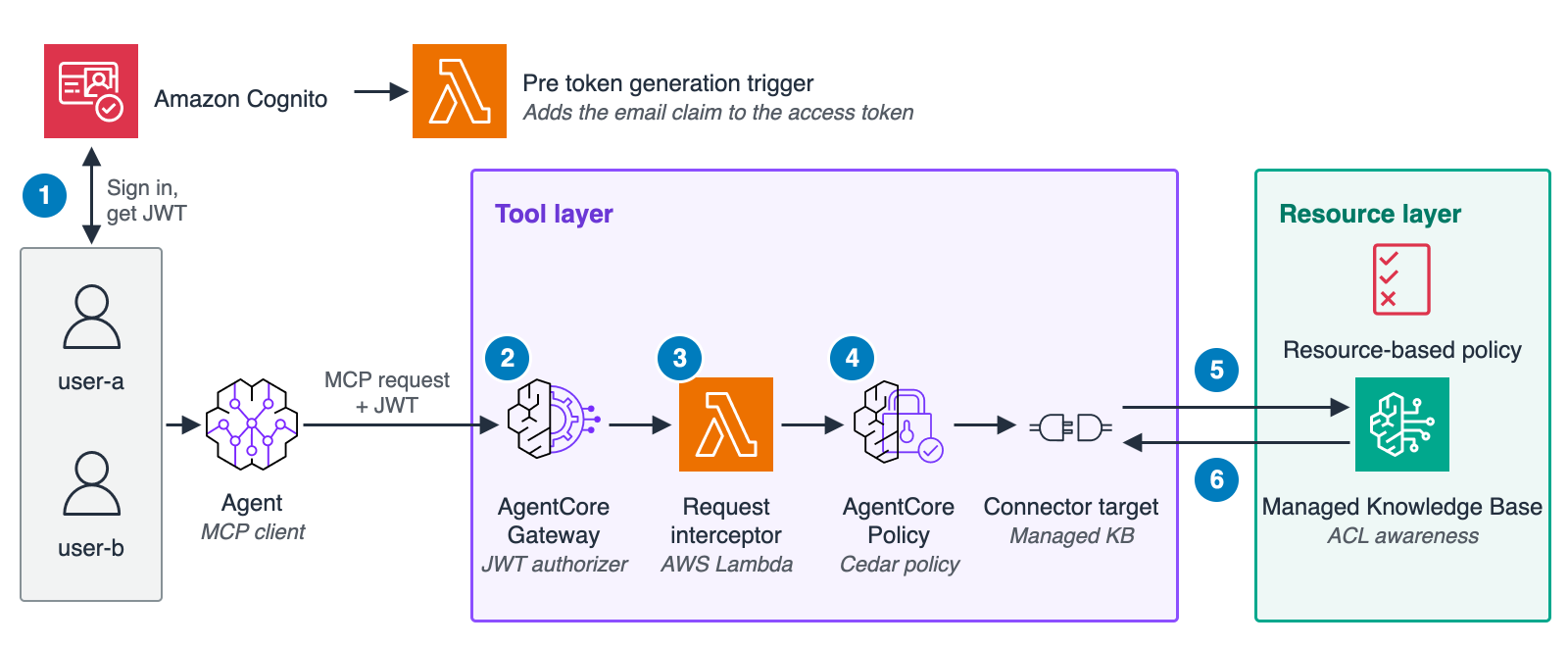
Learn how to expose an Amazon Bedrock Managed Knowledge Base to AI agents as MCP tools through Amazon Bedrock AgentCore Gateway while keeping per-user access control. A request interceptor injects verified identity, Policy in AgentCore validates it independently, and a resource-based policy restricts direct access to the knowledge base.

Read at AWS Machine Learning Blog

AWS Machine Learning Blog Yuan Wei SI

From prototype to production: Engineering agents with Agent DLC

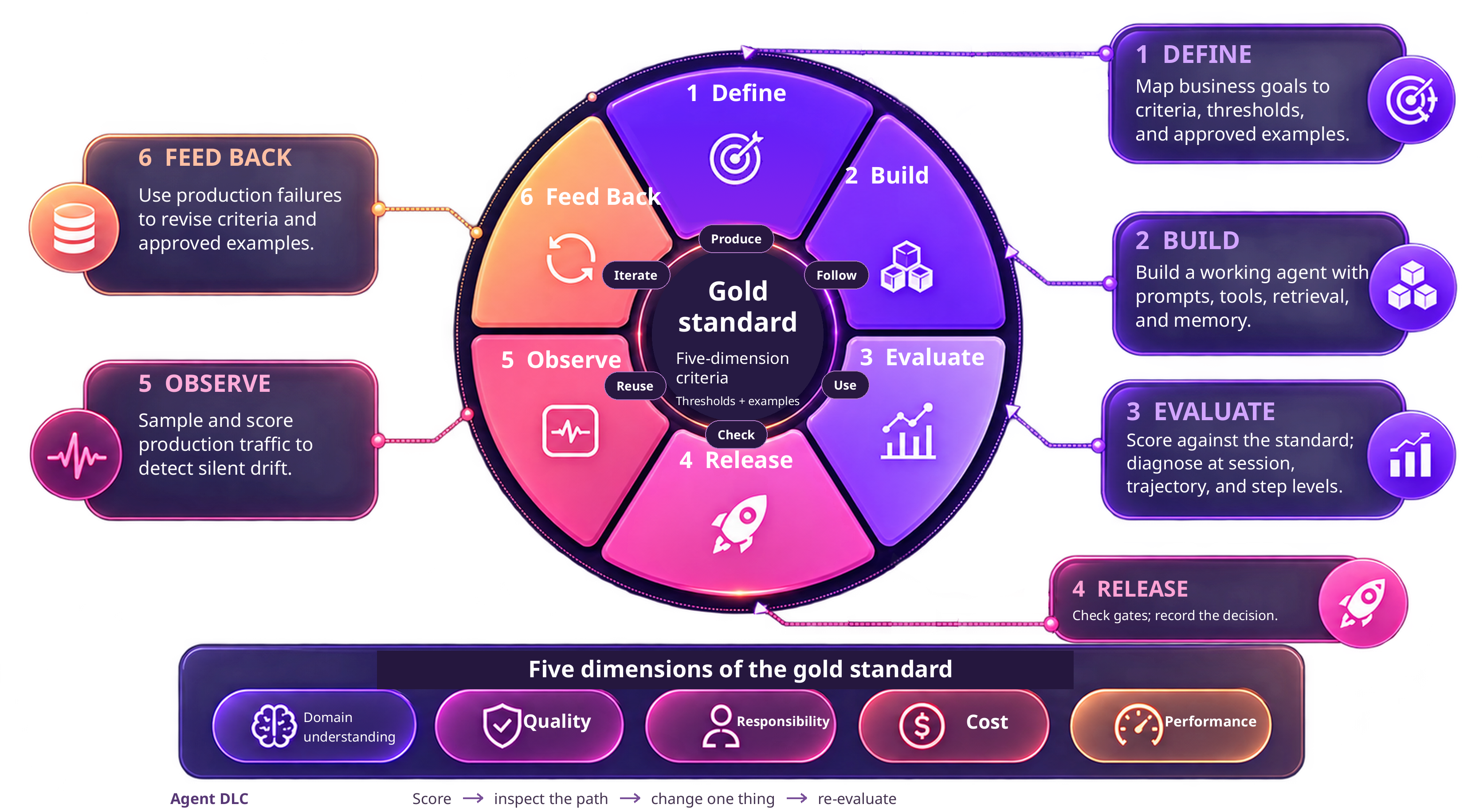
Agents stall between demo and release when teams lack a repeatable way to measure how good an agent is and whether the last change helped. This post covers three agent properties that break traditional CI/CD, a measured case where an aggregate metric hides a coverage gap, and Agent DLC: one lifecycle, two loops, and one explicit standard for judging every change.

Read at AWS Machine Learning Blog

AWS Machine Learning Blog Viquar Khan SI

Build autonomous AI agents with Amazon Bedrock and Spring AI

Learn how Java developers can build production-ready autonomous AI agents using Amazon Bedrock and Spring AI. This post walks through tool calling, conversation memory, resilience patterns, and multi-agent orchestration, then deploys the agent to AWS with Amazon Bedrock AgentCore.

Read at AWS Machine Learning Blog

AWS Machine Learning Blog Shivi Bhatia SI

OpenAI Codex on Amazon Bedrock

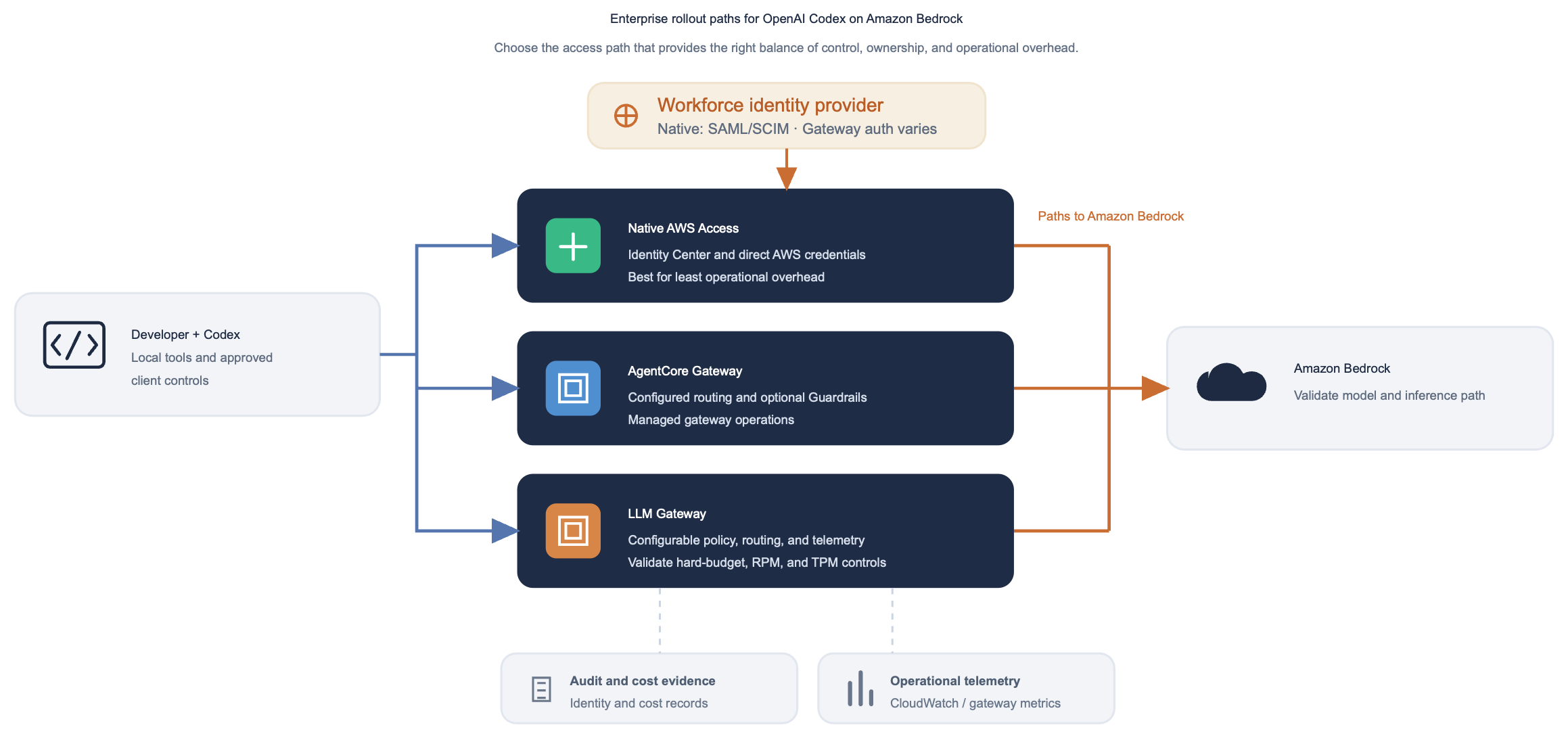
A practical guide for enterprises rolling out OpenAI Codex to developers on AWS, with Amazon Bedrock as the model backend, covering the access, governance, and cost decisions that platform, security, and finance teams need to align on.

Read at AWS Machine Learning Blog

AWS Machine Learning Blog Ferhat Erata SI

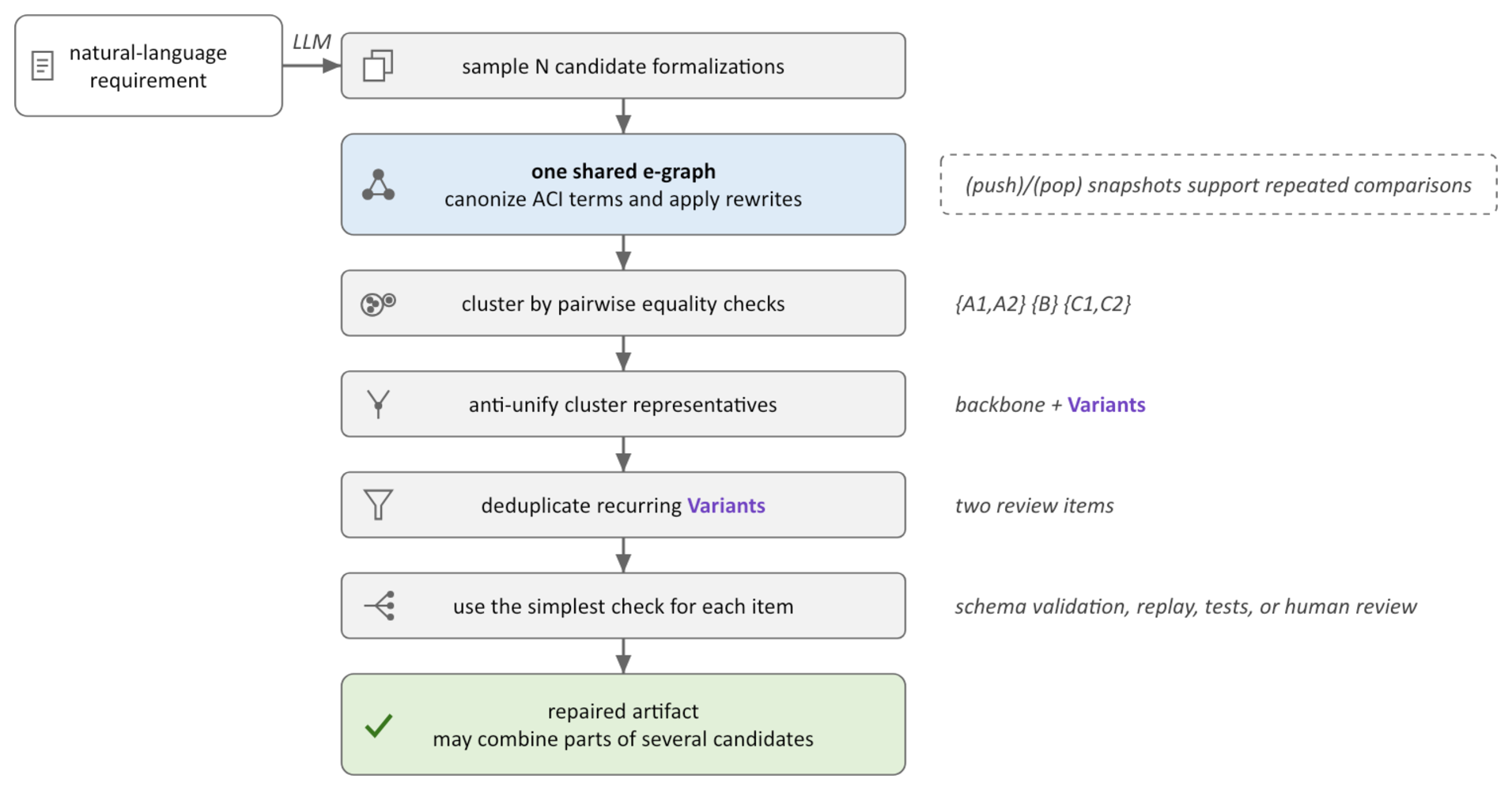
Semantic diffing of formal policies with anti-unification

A textual diff of two formal policies flags every cosmetic change and hides the one that alters behavior. This post shows how to compute a symbolic, deterministic semantic diff with an open-source anti-unification engine, so reviewers see only the genuine disagreements between two candidate authorization policies.

Read at AWS Machine Learning Blog

AWS Machine Learning Blog Siddharth Senger SI

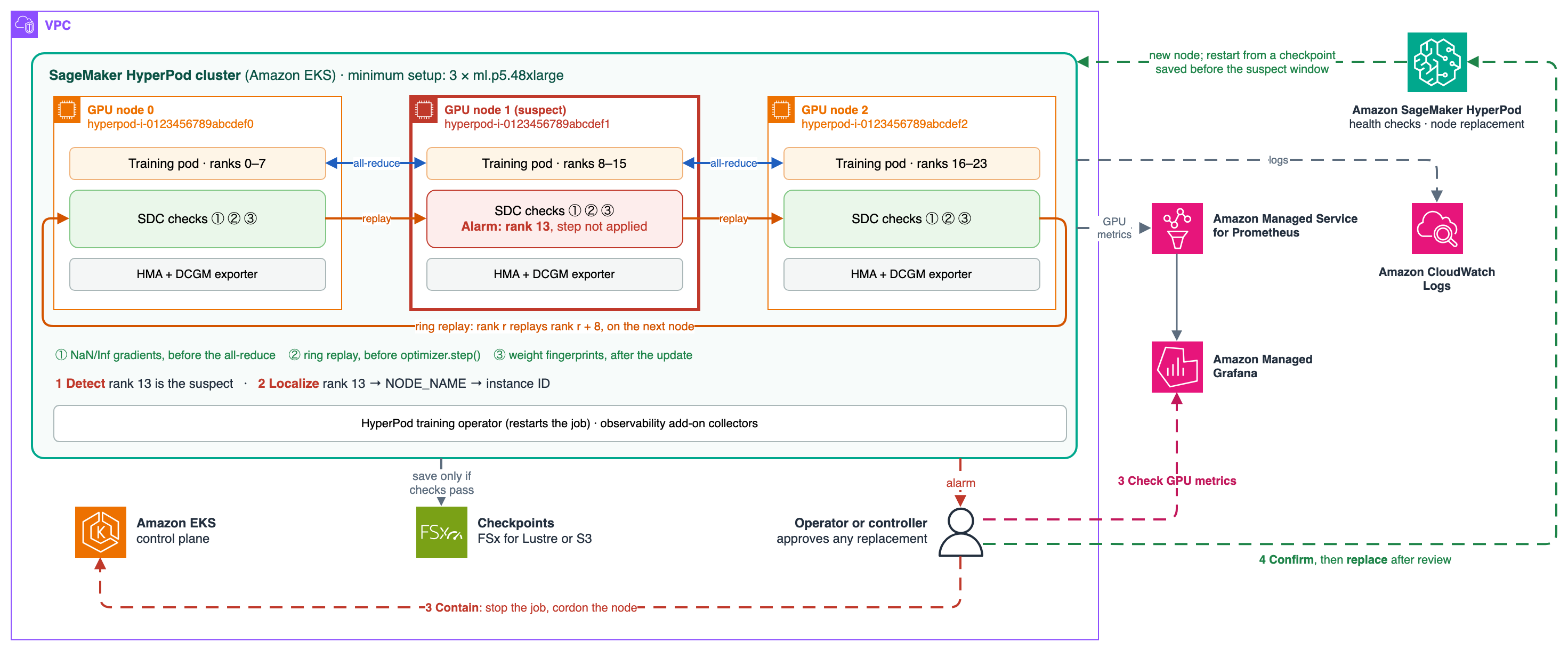
Detecting and recovering from silent data corruption on Amazon SageMaker HyperPod

Silent data corruption is a GPU fault that returns wrong but plausible numbers with no error, quietly poisoning distributed training. This post adds three checks to a PyTorch DDP loop to detect it, localize the faulty node on Amazon SageMaker HyperPod, and hand the node to automatic recovery for replacement.

Read at AWS Machine Learning Blog

AWS Machine Learning Blog Shubham Divekar SI

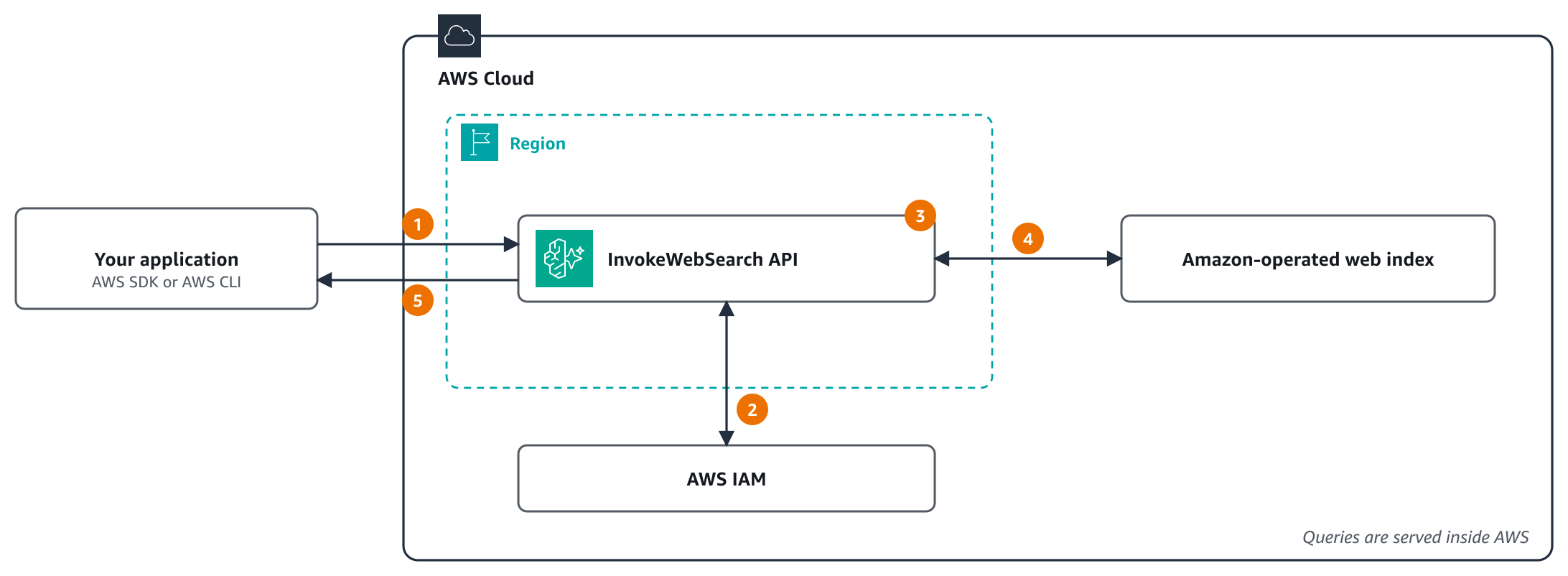
Introducing the Web Search API on Amazon Bedrock AgentCore

Today we're announcing the Web Search API on Amazon Bedrock AgentCore: your own code can search the web with a single signed API call, with no gateway and no resources to create. Call it from the AWS SDKs or the AWS CLI and use it in applications, agent loops, and data pipelines.

Read at AWS Machine Learning Blog

AWS Machine Learning Blog Tymofii Kryvtsun SI

ICYMI: What landed for AI builders in October 2026

A recap of the major Amazon Bedrock, Amazon Bedrock AgentCore, and Strands updates from October 2026: new models to match each task, updates that keep agents available and grounded, and clearer cost reporting for AI builders.

Read at AWS Machine Learning Blog

AWS Machine Learning Blog Markus Adhiwiyogo SI

The attendee’s guide to the AWS re:Invent 2026 AI/ML track

AWS re:Invent 2026 includes more than 140 AI/ML track sessions. This attendee's guide helps you find the breakouts, chalk talks, workshops, and builders' sessions that fit your role and goals, spanning AI chips, models and inference, agents, agent trust, and sustainability, so you can build a smarter re:Invent schedule.

Read at AWS Machine Learning Blog

AWS Machine Learning Blog Prachi Kulkarni SI

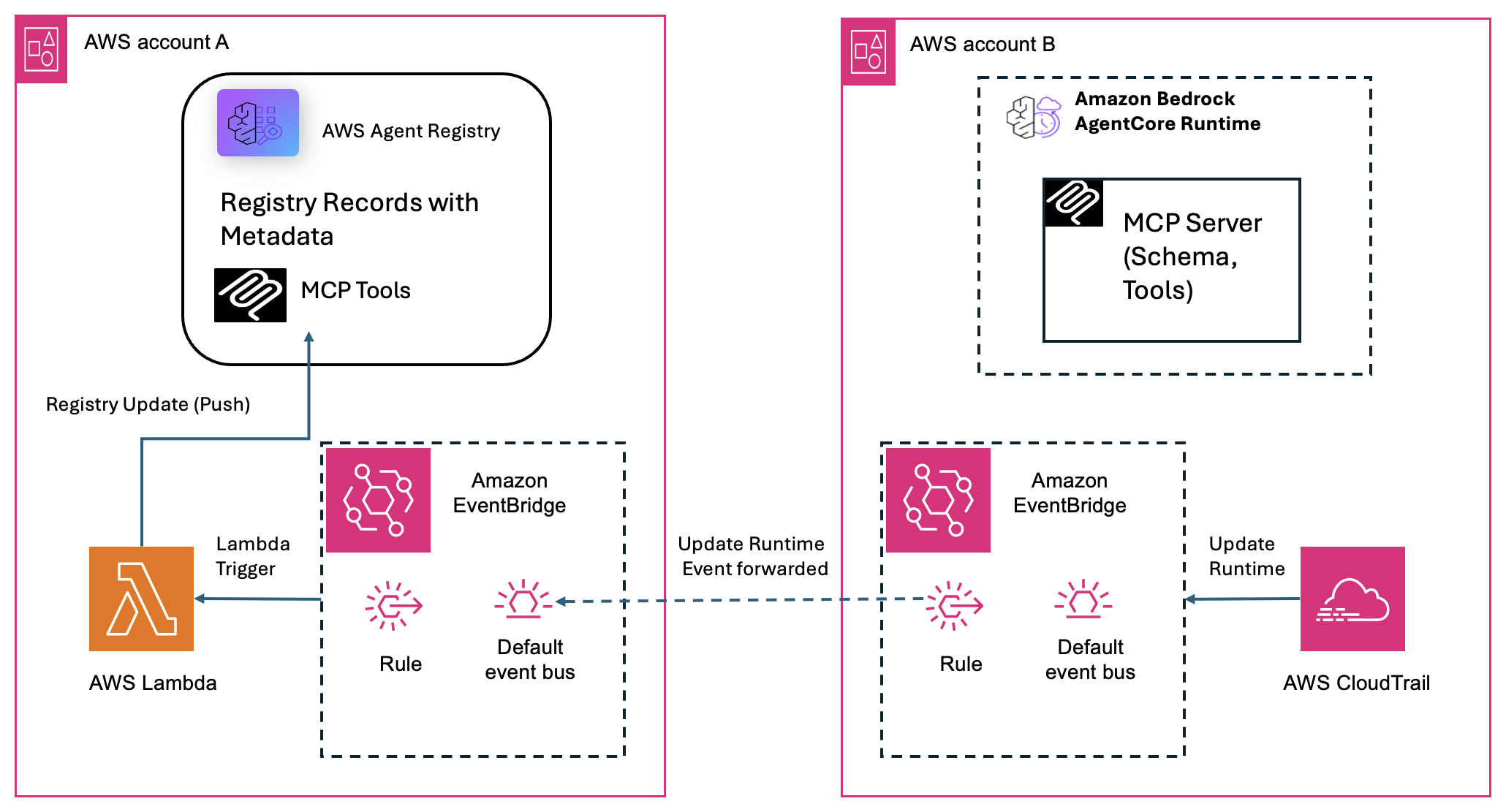
Automating AWS Agent Registry updates with push-based architecture

This post shows how to keep the AWS Agent Registry current automatically. Using AWS CloudTrail, Amazon EventBridge, AWS Lambda, and AgentCore Identity, an event-driven pipeline detects MCP server changes and pushes updated tool metadata to the registry with no stored secrets, across single- and multi-account environments.

Read at AWS Machine Learning Blog

AWS Machine Learning Blog Asif Fouzi SI

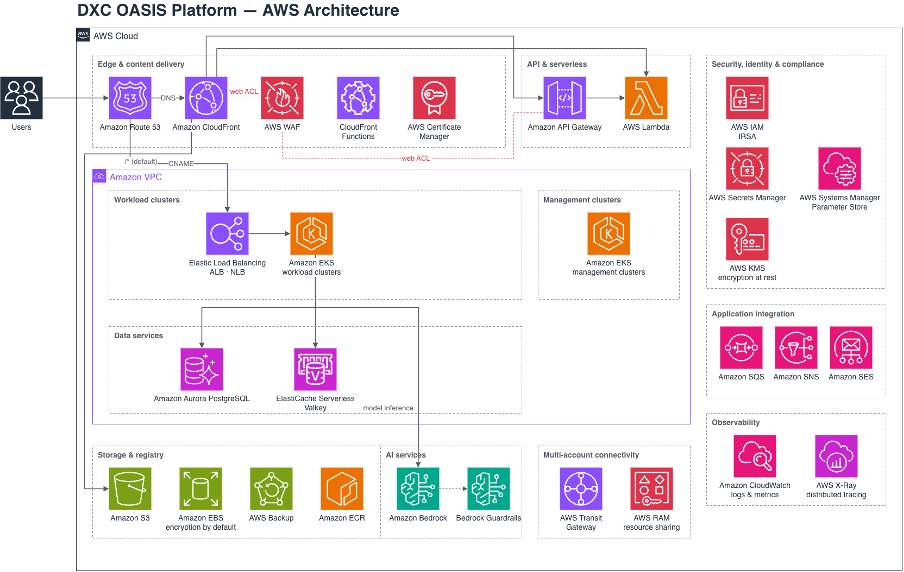
How DXC Technology built a multi-model AI substrate on Amazon Bedrock

DXC Technology runs mission-critical managed IT services for regulated organizations across 70 countries. Learn how DXC built DCX OASIS, its Human+AI operating model, on a governed multi-model substrate in Amazon Bedrock, separating a resilient model substrate from a trusted harness that orchestrates, governs, and audits AI agents at scale.

Read at AWS Machine Learning Blog

AWS Machine Learning Blog Sabine Khan SI

Accelerating generative AI delivery with reusable assets

Every generative AI team keeps rebuilding the same components: RAG pipelines, document processors, and agent scaffolding. This post shows how to access a curated catalog of 23 production-ready, open source reusable assets from the AWS Generative AI Innovation Center, with real delivery results from DoorDash, Lyft, and Ricoh.

Read at AWS Machine Learning Blog

AWS Machine Learning Blog Vishnu Elangovan SI

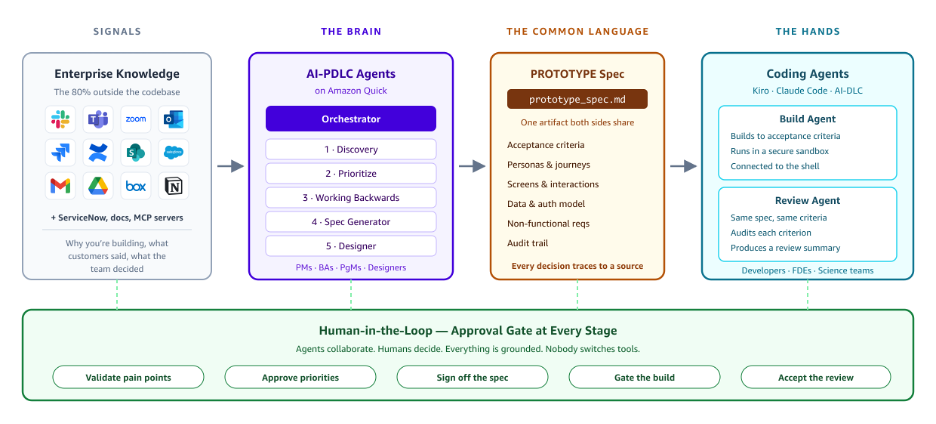
Accelerating product development with AI-driven lifecycle management (AI-PDLC) in AWS Quick

Learn how to build an AI-driven product development lifecycle (AI-PDLC) with a suite of six AWS Quick agents that take you from scattered customer signals to a validated prototype across Discover, Decide, Design, and Prototype, with human approval at every gate and a specification ready to hand to coding agents like Kiro.

Read at AWS Machine Learning Blog

AWS Machine Learning Blog Samaneh Aminikhanghahi SI

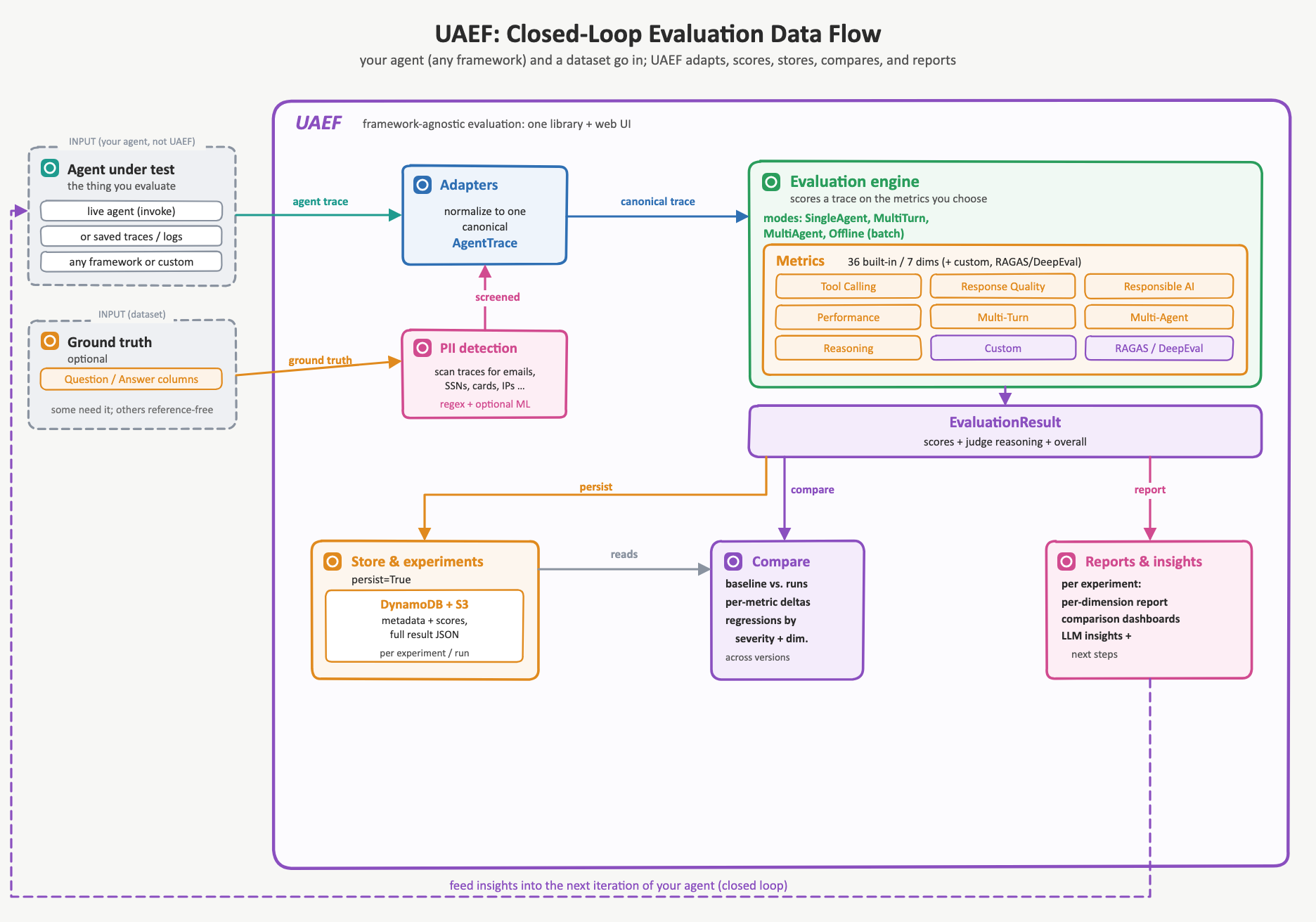
UAEF: A framework-agnostic system for closed-loop evaluation of AI agents

The Universal Agent Evaluation Framework (UAEF) is a framework-agnostic system for evaluating AI agents. UAEF converts each framework's traces into one canonical format, scores them with 36 built-in metrics across 7 dimensions, and stores results so teams can compare agent versions and catch regressions.

Read at AWS Machine Learning Blog

AWS Machine Learning Blog Victor Wang SI

Introducing usage-based pricing for Amazon SageMaker AI bidirectional streaming

AWS Marketplace now supports usage-based metering for Amazon SageMaker bidirectional streaming inference, so model providers can charge for what customers actually consume during a live stream. Deepgram is the launch partner, bringing usage-based speech-to-text and text-to-speech billing to AWS Marketplace.

Read at AWS Machine Learning Blog

AWS Machine Learning Blog Aris Tsakpinis SI

Introducing Kimi K3.1 Pro on Amazon Bedrock

Kimi K3.1 Pro from Moonshot AI is now available on Amazon Bedrock. Learn how to get started through the OpenAI-compatible Chat Completions, Responses, and Converse APIs, optimize inference with explicit prompt caching, and use the model as a coding assistant in OpenCode.

Read at AWS Machine Learning Blog

AWS Machine Learning Blog Sundar Raghavan SI

Build a daily dependency watcher with LangGraph and Amazon Bedrock AgentCore web search

The Web Search API in Amazon Bedrock AgentCore gives agents current, cited web results signed with the AWS credentials they already use. In this post, build a daily dependency watcher as a LangGraph graph that researches package ecosystems in parallel, keeps its rules in code, and checks every finding against its cited sources.

Read at AWS Machine Learning Blog

AWS Machine Learning Blog Bharathi Srinivasan SI

The agent evaluation playbook: Built-in, DeepEval, and AutoEval on Amazon Bedrock AgentCore Evaluations

When you deploy an agent, whether it is working is really several questions: did it finish the task, stay on topic, leak data, or skip steps? This post shows how to evaluate agents on Amazon Bedrock AgentCore with built-in, DeepEval, and AutoEval evaluators, and how to match each behavior that matters to the right evaluator at the right level.

Read at AWS Machine Learning Blog

AWS Machine Learning Blog Kushal Mangtani SI

Autonomous treasury agents: How Trovata built an AI-native solution on Amazon Bedrock and AgentCore

Learn how Trovata built autonomous treasury agents on Amazon Bedrock and Amazon Bedrock AgentCore, using an RBAC-secured architecture for bank-branded AI deployment and agentic workflows that move corporate treasury from manual operations to real-time decision-making at enterprise scale.

Read at AWS Machine Learning Blog

AWS Machine Learning Blog Varun Valsan SI

How TCS built an agentic test orchestrator with Amazon Bedrock AgentCore

Tata Consultancy Services (TCS) built an agentic test orchestrator on Amazon Bedrock AgentCore that turns requirements into executable, governed tests for its Banking, Financial Services, and Insurance (BFSI) clients. Learn how specialized agents, per-tenant isolation, and workload-aware execution cut testing effort by 88% in an internal benchmark.

Read at AWS Machine Learning Blog

AWS Machine Learning Blog Steph Gooch SI

Amazon Bedrock tokenomics data lake

Running Amazon Bedrock across many accounts shows you the bill but not what happened inside each call. This post builds a centralized observability data lake that aggregates Bedrock invocation logs from every linked account into one queryable table, so you can see prompts, token counts, model choice, and per-invocation cost across your organization.

Read at AWS Machine Learning Blog

AWS Machine Learning Blog Jed Lechner SI

How skills and agents work in AWS Quick

Repeatable tasks like status updates, release notes, and ticket creation can be encoded in AWS Quick through agents and skills. This post covers how agents, skills, and your data fit together in AWS Quick, how to build and share skills for your team, and how the official catalog and custom agents help you use them.

Read at AWS Machine Learning Blog

Older stories