EFF

Recent stories from EFF.

EFF Starchy Grant Tech policy

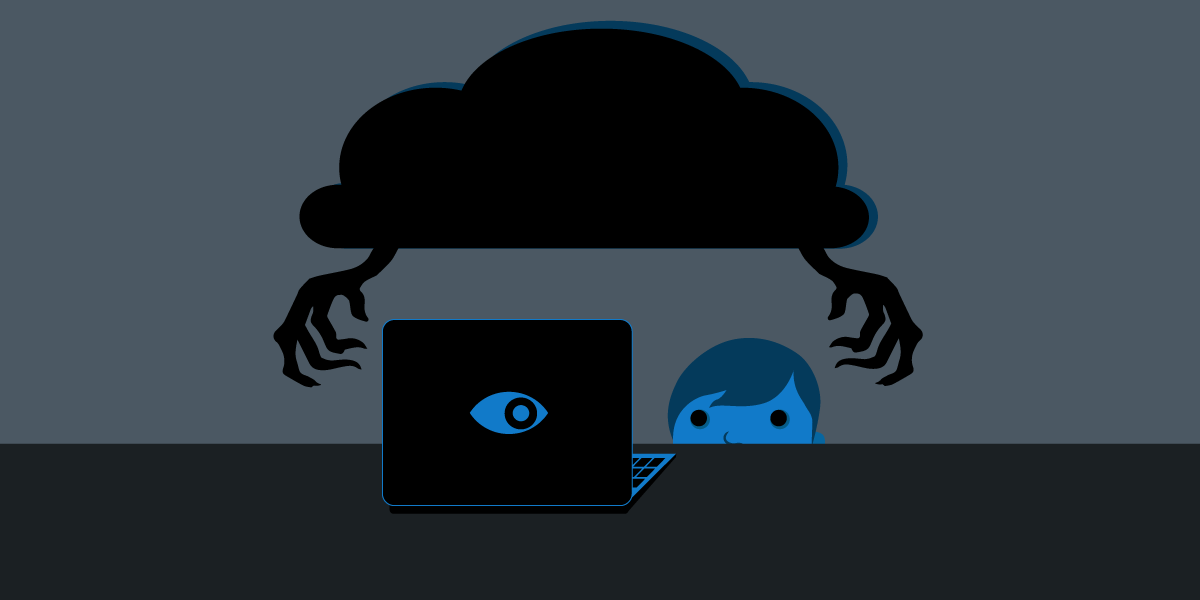
Outage Chaos: Who Turned Off All The Computer?

It's been a tough couple of weeks for anyone trying to use email, fly, spend money, use an Apple device*, or do signals intelligence. Technical service outages are nothing new, but why do so many big ones seem to be happening all at once? Are hackers, AI, and international conflicts to blame? And what can we do about it? Since most service interruptions don't make the news, it's hard to get a baseline on how often we see them happen normally. But after a major incident like…


Read at EFF

EFF Rory Mir Tech policy

Outage Chaos: When Tech is too Big to Fail

Outages happen, but we deserve a resilient internet where no one outage at one company can put people at risk and disrupt the global economy. We can only get there by addressing an over-reliance on a few cloud monopolists through effective antitrust laws and interoperability requirements. Service outages, like we’ve seen recently at Microsoft, Apple*, banks, courts, airlines, and elsewhere, can be more than an annoying hurdle. Losing a vital service due to an error can cause…

Read at EFF

EFF Dave Maass Tech policy

Surveillance Isn't Safety: A Comic About Organizing Against Flock and Other Foes

In the new comic "Surveillance Isn't Safety"—available for free today— cartoonist Bryn Adams explores the growing movement against mass surveillance through their involvement in the community fight against Flock Safety in Cleveland, Ohio. It's a personal journey that will resonate widely with residents in hundreds of cities where communities are drawing the line against automated license plate readers (ALPRs). Jump to the Comic Or download the PDF Published in collaboration…

Read at EFF

EFF Beryl Lipton Tech policy

Voters Reject ALPRs and Surveillance Tech at the Ballot Box

Do automated license plate readers (ALPRs) have any place in our communities? That question has been a hot topic in city council meetings, community conversations, and news coverage around the country for months. This past election day, a couple U.S communities took it further: to the ballot. And overwhelmingly, voters decided that, no, these devices should not be deployed on our streets. We agree! In Maine, the coastal community of York voted to remove the town’s existing…

Read at EFF

EFF Joe Mullin Tech policy

The Justice Department Wants To Give Patent Trolls More Power

Software patents are mostly vague, hard to define, and widely abused. Most tech patent lawsuits aren’t filed by companies that make real products. They’re filed by patent trolls, companies that acquire patents to extract payments through litigation and legal threats. A patent on one feature of a smartphone shouldn’t give the patent owner the power to threaten the existence of the entire product line. But that is exactly the leverage patent trolls want—and the current…

Read at EFF

EFF Katharine Trendacosta Tech policy

The Paramount-Warner Brothers Deal Could Usher in Another Age of Lost Media

There are all sorts of reasons to be against the merger of Paramount and Warner Brothers-Discovery. There's the obvious problem of increasing concentration in the already pretty-concentrated film and TV industry. People have problems with Paramount's owner Skydance interfering with its news coverage and late night comedy. But one of the biggest is the way we are losing choice and access to information and culture. In the context of the digital world, there are two major…

Read at EFF

EFF Josh Richman Tech policy

Privacy's Defenders Podcast: Snowden Exposes NSA’s Lies

By 2013, EFF had spent seven years arguing in court that the National Security Agency was sweeping up ordinary Americans’ communications, including through the secret room that whistleblower Mark Klein had exposed. The government would neither confirm nor deny it, and outside the courtroom the public seemed to have moved on. Then, in early June, documentary filmmaker Laura Poitras and journalist Glenn Greenwald mysteriously missed a Freedom of the Press Foundation board…

Read at EFF

EFF Karen Gullo Tech policy

European Commission Plan to Give Frontex Trusted Flagger Status Is A Threat to Free Speech

EFF and 27 other human rights organizations called on the European Commission today to retract a dangerous proposal granting its border agency Frontex to request that national authorities issue takedown orders for social media content and giving it “trusted flagger” status under the Digital Services Act (DSA), the EU regulation governing online platforms and content moderation in the region. The extraordinarily improper proposal not only disregards the provisions of the DSA…

Read at EFF

EFF India McKinney Tech policy

EFF’s AI Cybersecurity Policy Framework

The news has been filled with stories recently of AI breaching the security of websites. And while it may feel like a new problem because of AI’s involvement, it turns out that there are longstanding existing cybersecurity safety best practices that these companies—some of the largest tech companies in the world—could and should have taken to prevent these breaches. Recent cybersecurity incidents have shown that some of the world’s largest tech companies have failed to take…

Read at EFF

EFF Hudson Hongo Tech policy

Donate Equity to Support Digital Rights: Stocks, DAFs, and Giving

Do the holidays have you thinking about how you can support your favorite nonprofit? For 35 years, the Electronic Frontier Foundation has been advancing our digital rights, including defending security researchers, encrypting the web, and fighting illegal surveillance. Donating equity to EFF can help support this important work. Perhaps your family has taken advantage of the new tax law around giving by creating a Donor-Advised Fund. Perhaps your employer has gone public and…

Read at EFF

EFF Matthew Guariglia Tech policy

Amazon Ring’s New Indoor Surveillance Drone Is Not Compatible with Privacy

Amazon Ring has finally announced their long-dreaded indoor drone, a small flying surveillance device connected to their security suite of products that can fly around your house filming and recording things. The device is supposedly designed to fly preset paths across your home and will also activate if a sensor or alarm has been triggered. Customers should think twice about purchasing these devices for a number of reasons. These devices are problematic in many of the ways…

Read at EFF

EFF Thorin Klosowski Tech policy

Tech Companies Are Trying to Shift the Entire Concept of Privacy (Again)

Privacy, which companies were once happy to claim was all about personal choice, is now primed to affect everyone around you even more than it already did. Meta and Google’s smart glasses can record anything the owner is looking at or use artificial intelligence to describe it. Apple’s* Audio Intelligence feature turns every Apple Watch into a transcription machine that records or summarizes your day. Amazon’s Bee devices take that a step further and can record and…

Read at EFF

EFF Hudson Hongo Tech policy

🤕 Medicare's AI Experiment | EFFector 38.20

When we need medical care, we expect decisions about our treatment to be made by our doctors, not a tech company's algorithm. But in January, the federal government launched a program that uses AI to to evaluate Medicare beneficiaries' requests for certain procedures. EFF sued for records on WISeR, seeking badly needed transparency about Medicare's AI experiment. In our latest EFFector newsletter, we're talking about what happens when the government outsources treatment…

Read at EFF

EFF Andrew Crocker Tech policy

We’re Asking an Appeals Court to Require a Warrant for ALPR Searches

Today, along with the ACLU, EFF filed an amicus brief in the Sixth Circuit court of appeals in United States v. Sturdivant, a case where police warrantlessly tracked a suspect’s movements using Automated License Plate Reader (ALPR) data. Our brief details the vast, interconnected network of ALPRs that constantly track drivers around the country and argues that this tracking is a “search” under the meaning of the Fourth Amendment. Sturdivant involves a series of robberies in…

Read at EFF

EFF Betty Gedlu Tech policy

Why Fewer People Are Challenging Bad Patents

The number of petitions being filed at the Patent Trial and Appeal Board (PTAB) has collapsed. That’s not reason for celebration. The PTAB is an important line of defense against low-quality software patents being used in lawsuits against people and companies. The drop didn’t happen because suddenly patents have become higher quality. It’s simply because USPTO leadership is increasingly refusing to consider good challenges to patents, for reasons unrelated to the merits. The…

Read at EFF

EFF Sophia Cope Tech policy

U.S. Supreme Court Deals Final Blow to Corporate Human Rights Accountability

For the past two decades, the U.S. Supreme Court has been slowly weakening the Alien Tort Statute (ATS), a key human rights law that allows foreign nationals to sue persons or entities in civil court for harms resulting from violations of international law. The court’s recent ruling in Cisco Systems, Inc. v. Doe I dealt the law a final blow, foreclosing—absent new legislation by Congress—any future ability by plaintiffs to use the law to hold technology companies accountable…

Read at EFF

EFF Rory Mir Tech policy

Google Forcing AI on Students Is BS

Google is rightfully facing blowback for forcing K-12 schools to enable AI if they wanted to keep using Google search. The company quickly backtracked and decoupled and turned off the services by default, but made it clear search will continue to be just another AI chatbot. This mandate forces an ultimatum on educators: accept generative AI or de-google your school. Students, teachers, and parents across the U.S. are now years into an argument about how schools should…

Read at EFF

EFF Paige Collings Tech policy

Presenting 'Desire Lines: Encoding Queer Digital Futures'

What does the digital future look like? Who gets to imagine it, shape it, and make it real? Building a freer, more inclusive digital age requires not only challenging systems of surveillance and control, but also making space for creativity, community, and radical imagination. That's why earlier this year with the queer arts collective, we put out a call for submissions inviting people to explore the intersections of technology, identity, and digital liberation—whether that…

Read at EFF

EFF Paige Collings Tech policy

EFF Submission to OHCHR Consultation on Child Rights and Safety in the Digital Environment

“The safety of young people in the digital environment cannot be assessed without also considering the safety of young people in offline environments. For millions of young people around the world, the digital environment is their safe place, their haven from an unsafe physical environment, community, or family situation. The digital environment may be the best, perhaps only, place for them to find critical safety information and community, to explore ideas that are…

Read at EFF

EFF Jillian C. York Tech policy

When the Watchdogs Are Silenced: India's Crackdown on Those Documenting Online Censorship

On November 3, our colleagues at the Software Freedom Law Center, India (SFLC.in) received notifications from X that the Delhi Police had issued takedown requests targeting 42 URLs. Among the accounts and posts targeted were those belonging to SFLC.in, the Internet Freedom Foundation (IFF), and X account @geoblockedindia, as well as posts documenting legal notices and instances of online censorship. Takedown requests targeting SFLC.in and other digital rights groups threaten…

Read at EFF

EFF Rindala Alajaji Tech policy

Reflecting on Digital Rights Wins and Losses in Sacramento

California’s 2026 legislative session has officially adjourned and it’s time to reflect on the wins and losses that have shaped Californians’ digital rights landscape this year. This was the second year of a two-year legislative session, which meant several bills resumed their legislative paths from 2025. EFF monitored nearly 100 bills in the state over the two-year session. These included proposed regulations on 3D printers, access to social media platforms, police…

Read at EFF

EFF Hayley Tsukayama Tech policy

Join EFF to Celebrate the Life of Aaron Swartz

Join us to celebrate the legacy of Aaron Swartz on Nov. 8, 2026. With the organizers of Aaron Swartz Day, we’re honoring his life with an in-person and remote hackathon. This event is supported by several organizations that carry on his work, including the Internet Archive—which is hosting the in-person event—the Freedom of the Press Foundation, Creative Commons and the Free Law Project. Aaron Swartz was a digital rights champion who believed in the need for an open…

Read at EFF

EFF Andrew Crocker Tech policy

We’re Asking the Ninth Circuit to Hold Reverse Location Warrants Categorically Unconstitutional

Yesterday, along with the ACLU, EFF filed an amicus brief in the Ninth Circuit court of appeals in United States v. Spurlock, a case involving a “tower dump” warrant. These overbroad warrants require cellular providers to turn over location data about every phone in a given area at a given time. This is the first such case to be heard by a federal appeals court since the US Supreme Court ruled this summer that highly similar “geofence” warrants are searches under the meaning…

Read at EFF

EFF Katharine Trendacosta Tech policy

Google Summaries Aren't About AI, They're About Lock-In

Whether they call it AI summaries, knowledge panels, or AMP, Google takes actions that are less about functionality and more about locking you into its own ecosystem. Knowing that makes it possible for all of us to choose better services than Google's, defeating their anticompetitive goal. In this case, as it is so often, knowledge is power. In the old days, when dinosaurs roamed the earth and getting online involved your computer making eldritch shrieking, Google was a…

Read at EFF

EFF Aaron Mackey Tech policy

Postal Service Surveilled Protest Activities Online With Little Rules, Oversight

The U.S. Postal Service used social media surveillance to monitor and report on protests across the political spectrum, government records show. The records, disclosed to EFF and other requesters suing the postal service under the Freedom of Information Act, show that the agency’s internet Covert Operations Program, or iCOP, routinely sifted through social media posts organizing and discussing protests with little records of any oversight or legal justification. EFF filed…

Read at EFF

EFF Josh Richman Tech policy

Privacy's Defenders Podcast: The Secret Room

The government’s surveillance powers grew rapidly after Sept. 11, 2001, some in public view and some in secret. EFF suspected but couldn’t prove that the National Security Agency was spying on Americans' communications. The New York Times sat on a story about it for over a year, finally publishing it in December 2005. Then, in January 2006, a retired AT&T technician named Mark Klein walked into EFF's office with a manila folder of documents that blew the story wide open…

Read at EFF

EFF Jillian C. York Tech policy

Independent Digital Media Is Not a Privilege Governments Can Revoke: The Fight to Save Egypt’s Mada Masr

On November 11, Lina Attalah, founder and editor-in-chief of the independent Egyptian news outlet Mada Masr, will face trial for the second time in just two weeks. This time, she faces charges of spreading false news, an accusation that has become one of the Egyptian government's most frequently used tools for prosecuting journalists. The trial follows a conviction on October 27, when Attalah was found guilty of managing an unlicensed news website. The Mada Masr team had…

Read at EFF

EFF Corynne McSherry Tech policy

Rewriting Copyright Law for Generative AI Would Hurt Everyone

In courts across the country, publishers and creators are suing large AI companies for training generative AI models on copyrighted works. It’s easy to see these cases as a David-and-Goliath showdown between authors and publishers fighting for a cut of Big Tech company profits. But this fight is actually much larger. It affects billions of people who aren’t represented in the case at all, including researchers, artists, activists, journalists, people with disabilities, and…

Read at EFF

EFF Hayley Tsukayama Tech policy

Why VPNs Are Worth Defending

Developers of virtual private network (VPN) apps are reporting that their products are again being pulled from Apple’s App Store in Russia. This is an unacceptable crackdown on a vital tool to protect privacy and speech online. Why? VPNs give people a way to control their own online activities. When you visit a website through a VPN, that website only sees the VPN server's location (well, IP address) rather than your actual location. It's like sending a letter through a P.O…

Read at EFF

EFF Paige Collings Tech policy

Tech Tips for Parents this Digital Parenting Week

In today’s digital world, the internet is an essential resource for young people to access information, explore community, and find themselves. But we know that this often comes alongside fears of experiencing online harms like doxxing, grooming, or bullying. Trying to protect your family from everything all the time is impractical and exhausting, but some thoughtful planning can help families devise a workable plan that meets their needs and addresses their concerns. That’s…

Read at EFF

Older stories