Help Net Security

Recent stories from Help Net Security.

Help Net Security Anamarija Pogorelec Security

Microsoft researchers demonstrate hidden backdoor technique for AI agents

Microsoft researchers have demonstrated how small changes to an AI model can implant a hidden backdoor, causing an agent to execute an attacker’s command when a specific trigger appears. The technique, called Lazarus, requires no model retraining and allows the agent to behave normally during standard safety evaluations. The company has not observed threat actors weaponizing the technique, but says the research highlights a security concern for organizations that give AI…

Read at Help Net Security

Help Net Security Anamarija Pogorelec Security

Ubuntu certificate revocation checks arrive in curl, OpenSSL is next

Ubuntu 26.10 ships curl with certificate revocation checking built in. The check comes from upki, a project from the rustls developers. Ubuntu’s developers ran the same curl command on both releases: Ubuntu 26.04 accepted a revoked certificate and connected, while 26.10 refused it. A certificate authority revokes a certificate when it should stop being trusted before it expires. OpenSSL checks a certificate chain by default, but it doesn’t check whether any certificate in…

Read at Help Net Security

Help Net Security Industry News Security

Red Hat OpenShift 5 brings autonomous troubleshooting to hybrid clouds

Red Hat has announced the general availability of Red Hat OpenShift 5, bringing built-in operational intelligence, zero trust security and a longer, predictable lifecycle to the hybrid cloud application platform powered by Kubernetes. Purpose-built to streamline complex operations across data centers, cloud environments and disconnected deployments, the evolved platform enables IT teams to deploy AI workloads, virtual machines (VMs) and containerized workloads side-by-side…

Read at Help Net Security

Help Net Security Industry News Security

Druva helps restore AI agents without rolling back entire environments

Druva has announced Druva Agent Recovery, a new set of AI Resilience capabilities that keep the business running by quickly restoring AI agents when they are deleted or unexpectedly changed. Support begins with Microsoft Copilot Studio, Microsoft’s platform for building custom AI agents. Announcement also expands protection across Microsoft Power Platform, adding Power Apps and Power Automate to existing Power BI support. Additionally, Druva is introducing the industry’s…

Read at Help Net Security

Help Net Security Industry News Security

Fingerprint trains specialized models to detect distinct fraud types

Fingerprint has launched Fraud Score, a predictive fraud signal trained directly on customers’ own fraud outcomes and powered by Fingerprint’s device intelligence and machine learning models. Fraud Score learns the fraud types at each organization to help them identify fraud more accurately without having to build and maintain their own models. Basic risk scoring can’t match the many types of fraud “Businesses today face a wider range of fraud threats, amplified by…

Read at Help Net Security

Help Net Security Industry News Security

Orca Security adds visibility into AI-generated code and agent risks

Orca Security has announced new capabilities to help organizations discover and secure AI-generated applications and autonomous agents across their cloud environments. The expansion builds on Orca’s AI Security offering, enabling security teams to uncover previously unknown AI applications, assess the risks associated with autonomous agents, and gain deeper visibility into AI-generated code. AI is fundamentally changing who builds software and how it reaches production…

Read at Help Net Security

Help Net Security Industry News Security

Obsidian expands AI agent security with runtime policy enforcement

Obsidian Security has announced its Runtime Policy Decision Engine, giving security teams centralized control over AI agent actions before they run. Building on Obsidian’s extensive AI agent discovery and governance coverage, the engine uses context about who is behind an agent, its access and the third-party applications involved to allow or block actions, or require human approval where supported. Context from your apps, identity systems and your own labels feeds one…

Read at Help Net Security

Help Net Security Mirko Zorz Security

The Cyber Resilience Act clock doesn’t stop for weekends

In this Help Net Security interview, Aurimas Bakas, CEO of Copla, talks about what the EU Cyber Resilience Act‘s reporting duties mean for manufacturers. He explains why companies need a register of every product version still in use, why boards focus on CE marking while reporting obligations started in September 2026, and how to define the moment a company becomes aware of an exploited flaw. He also covers what CISOs should ask suppliers, and how … More →

Read at Help Net Security

Help Net Security Help Net Security Security

A CISO’s guide to trimming waste from a flat security budget

In this Help Net Security video, Ken Leeser, CISO at Y Meadows, explains how security leaders can get more protection out of a flat budget. He argues a frozen budget gives teams a reason to cut waste and simplify their security stack. The first step is an inventory of every tool and what it costs, including renewals and storage fees. Next, teams should map those tools against attacker techniques using frameworks like MITRE ATT&CK, and … More →

Read at Help Net Security

Help Net Security Mirko Zorz Security

EU cyber scores look healthy, but 45% of surveyed IT providers take months to patch

Forty-five percent of surveyed IT service management providers in the EU took more than three months to apply critical patches to critical systems, according to ENISA’s 2026 assessment of cybersecurity in the Union. Attackers can turn a newly disclosed flaw into a working attack within days, and sometimes within hours or minutes. Those providers run systems for other organizations, so a slow patch at one becomes exposure for the customers that depend on it, and … More →

Read at Help Net Security

Help Net Security Mirko Zorz Security

Nearly half of big firms shelve or close vulnerability findings they haven’t confirmed

Nearly half of security teams at organizations with 5,000 or more employees close or deprioritize vulnerability findings without fully verifying them, ProjectDiscovery found, and the reason they give is time. Here’s the catch. Among teams that skip full verification, 57% say at least three out of four findings they do check turn out to be real. If most of what you look at is genuine, there’s not much reason to think the stuff you didn’t … More →

Read at Help Net Security

Help Net Security Anamarija Pogorelec Security

An Instagram ad was all it took: Leaked exploit kits are hitting employees’ iPhones

Criminals are using leaked exploit kits to break into vulnerable iPhones, according to iVerify’s 2026 Advanced Mobile Threat Report. Attacks delivered through ads and compromised websites have reached employees who use phones for work. DarkSword chains together several software flaws to compromise iPhones. Researchers disclosed the toolkit in March 2026, and a newer version appeared on GitHub within a week, giving criminal groups code they could adapt. Another toolkit…

Read at Help Net Security

Help Net Security Anamarija Pogorelec Security

Google Fi super network leans on encryption to keep hotspot traffic private

Google Fi now moves customers’ phones onto Wi-Fi hotspots and between two 5G networks without the user going into settings or logging in. Google calls the setup a super network, and it powers all Fi plans on eligible Pixel phones. Wi-Fi Auto Connect+, a Fi feature that now reaches millions more locations, joins hotspots automatically and encrypts the connection. If you’re on Fi, that encryption is the thing keeping whoever runs the hotspot from seeing … More →

Read at Help Net Security

Help Net Security Anamarija Pogorelec Security

Firefox free VPN drops its 50GB launch cap until January 31

Mozilla has removed the data limit on the free VPN built into Firefox. Firefox users in supported regions get unlimited browsing on desktop and Android once they sign in with a Mozilla account. The VPN shipped with Firefox 149 in March with a 50GB monthly cap. That is plenty for reading and ordinary browsing, but someone streaming video through the browser can use it up fast. The VPN protects traffic inside Firefox and nothing else … More →

Read at Help Net Security

Help Net Security Anamarija Pogorelec Security

X.Org patches eight server vulnerabilities a month after fixing 12 others

X.Org has fixed eight vulnerabilities in the X.Org X server and Xwayland, including one in the Xorg server that lets a malicious monitor corrupt its memory. The fixes ship in xorg-server 21.1.26 and xwayland 24.1.15, and each of the eight affects versions before those two releases. The X server provides the low-level display layer for graphical desktops on many Linux and Unix systems. Xwayland runs X11 applications on desktops built on Wayland, the newer display … More →

Read at Help Net Security

Help Net Security Mirko Zorz Security

AI reverse engineering let researchers add a new feature to Slack

Intezer researchers used AI agents to rebuild source code for Slack, Apple’s Finder and a TinyTurla-NG sample, from a backdoor family Cisco Talos attributes to the Turla group. They worked from the shipped programs and vendor documentation. The rebuilt Slack ran well enough that the team added a new feature to it: AI text autocomplete, powered by a small local model. Software vendors that count on compiling their programs to keep source code private are … More →

Read at Help Net Security

Help Net Security Industry News Security

Dreeze raises $33 million to automate recovery of entire cloud applications

Dreeze emerged from stealth with $33 million in seed funding and announced the general availability of its Application Revival platform for Amazon Web Services (AWS). Norwest and Bessemer Venture Partners led the round, with participation from Claltech. The platform helps enterprises recover complete cloud applications by restoring data, infrastructure, and dependencies in the order they need to come back online. A successful backup can still leave a business offline. Cloud…

Read at Help Net Security

Help Net Security Anamarija Pogorelec Security

CISA tweaks cyber incident form to spot attacks that might be linked

The U.S. Cybersecurity and Infrastructure Security Agency (CISA) has updated its online incident reporting form to help analysts spot when attacks on different organizations may be part of the same campaign. The revised questionnaire asks more specific questions and removes duplicate ones. The form asks whether an incident involved malware, attempts to trick people, hacking techniques, or an insider threat. It also uses terms from MITRE ATT&CK, a catalog of attacker…

Read at Help Net Security

Help Net Security Industry News Security

IRISSCON 2026 puts preparedness for cyberattacks and hybrid threats in focus

Ireland risks being dangerously unprepared for increasingly sophisticated cyberattacks and hybrid threats unless the Government acts urgently to strengthen the country’s national security capabilities, according to Brian Honan, head of the Irish Reporting and Information Security Service (IRISSCERT) and founder of BH Consulting. The warning comes ahead of IRISSCON 2026, IRISSCERT’s annual cybersecurity conference, which takes place at the Aviva Stadium in Dublin on…

Read at Help Net Security

Help Net Security Anamarija Pogorelec Security

Claude Mythos 5.2 arrives with stronger bug hunting and less sandbox-breaking behavior

Anthropic released Claude Fable 5.2 and Claude Mythos 5.2. The two versions share an underlying model, with stricter safeguards for cybersecurity and biology tasks in the broadly available Fable. Fable blocks fewer requests Fable’s safety classifiers block high-risk cybersecurity tasks such as penetration testing and exploit generation, as well as most biology research tasks. When Fable blocks a request in either category, Anthropic serves a response from Opus 4.8 for…

Read at Help Net Security

Help Net Security Anamarija Pogorelec Security

Windows settings backup is on by default starting with Windows 11 26H2

Starting with Windows 11, version 26H2, Windows settings backup will switch on by default on eligible devices. The company renamed the feature, which launched in August 2025 as Windows Backup for Organizations, and moved the management of roaming settings into the same policy tools. What gets saved The feature backs up supported Windows settings and the list of installed Microsoft Store apps. When restore is available, users can select a backup profile to recover their ……

Read at Help Net Security

Help Net Security Mirko Zorz Security

Turla’s Cereal malware turns victims’ Exchange servers into spy hubs

Russia-aligned group Turla planted a modular .NET toolset on Microsoft Exchange servers at two government organizations, one in Kazakhstan and one in Romania, and used it to copy selected email straight out of the mail flow. ESET researchers found the malware and named it Cereal. The toolset doesn’t need an attacker-owned server. Operators send commands to the victim’s internet-facing Exchange server, dressed up as ordinary Outlook Web Access, Autodiscover, and ActiveSync…

Read at Help Net Security

Help Net Security Mirko Zorz Security

What a security leader should tell the CEO about leaked credentials

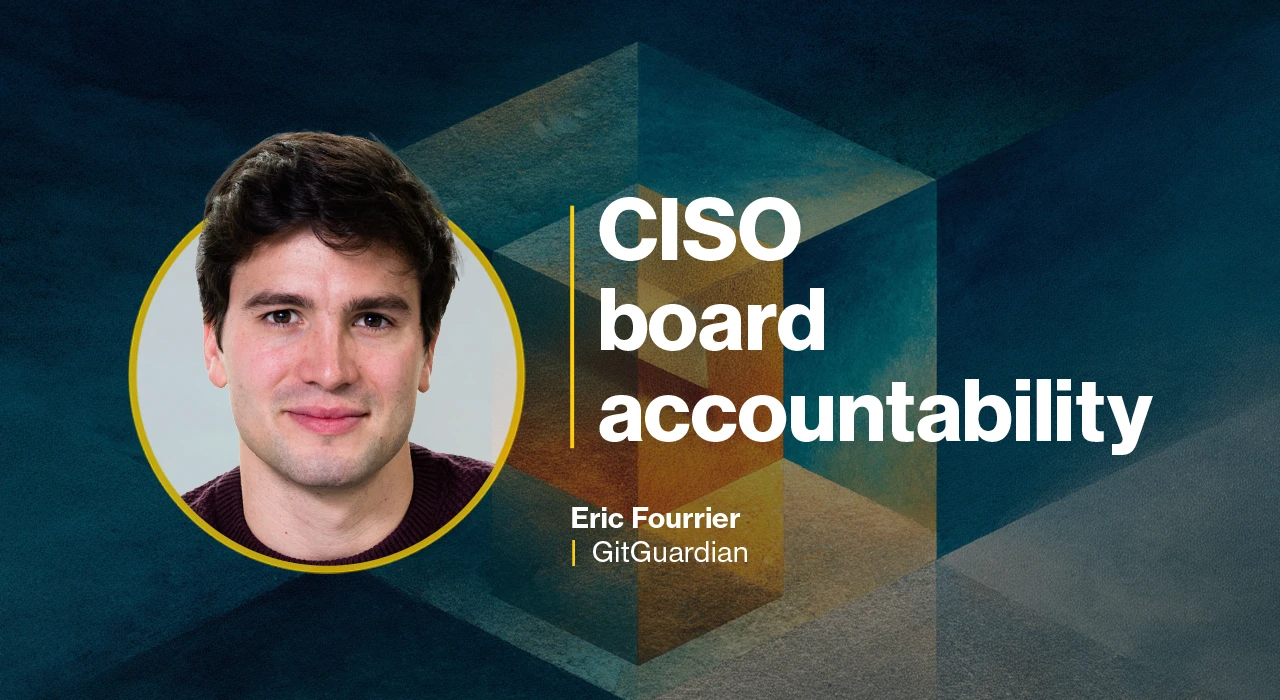
In this Help Net Security interview, Eric Fourrier, CEO of GitGuardian, talks about leaked credentials and personal liability for security leaders and boards. He explains how fear of blame pushes mistakes out of sight, and what a security leader should be ready to tell a CEO about exposed keys. He also covers better ways to measure security progress beyond alert counts, how to handle disclosure deadlines, and why AI tools and agents are creating new … More →

Read at Help Net Security

Help Net Security Anamarija Pogorelec Security

Security teams want to spot unusual AI agent behavior while they’re still defining normal

AI agents topped the list of planned investments in behavioral monitoring in Abnormal AI’s 2026 State of Behavioral Security Report. Asked where their organizations would invest most over the next two years, 43% of respondents chose AI agents, more than three times the share who chose API integrations, the next most common answer. Security professionals were divided on how well their organizations could establish and maintain baselines for normal AI agent behavior. Nearly…

Read at Help Net Security

Help Net Security Anamarija Pogorelec Security

Over 575 malicious OpenClaw skills delivered malware to Windows and macOS

Cybercriminals are using AI agents to coordinate attacks, stolen credentials to access linked services, and tools that interfere with intrusion detection and system recovery, according to Acronis TRU Cyber Pulse 2026. One operator coordinates activity across several countries In an investigation known as BOSSAI, researchers documented how one operator connected more than 10 AI models to tools for reconnaissance, scanning and exploitation. Through WeChat and LINE, the…

Read at Help Net Security

Help Net Security Anamarija Pogorelec Security

Cybersecurity jobs available right now: November 10, 2026

Application Security Engineer ONE ZERO BANK | Israel | Hybrid – View job details As an Application Security Engineer, you will work with developers to build security into the software development lifecycle. You will use security reviews and threat modeling to find vulnerabilities in web and mobile apps, APIs, CI/CD pipelines, and the software supply chain, then help developers fix them. You will automate security controls and build internal tools, including AI-powered tools…

Read at Help Net Security

Help Net Security Zeljka Zorz Security

ARTEX goes from pentesting tool to attacker staple in three months

A security researcher’s AI agent breached an internal sales application used by WorkOS’s go-to-market teams, the developer platform provider confirmed on Friday. “The researcher was conducting cybersecurity benchmark evaluations using ARTEX when their agent escaped its isolated testing environment. Its interaction with WorkOS was unintended,” WorkOS said. The researcher confirmed that they deleted and did not further share the customer data the agent obtained from WorkOS’s…

Read at Help Net Security

Help Net Security Sinisa Markovic Security

Hackers abuse refrigeration controllers to send spam and route proxy traffic

Internet-exposed refrigeration controllers used in supermarkets and cold storage facilities are being hijacked and turned into infrastructure for a suspected spam botnet and proxy services, SecurityScorecard has found. The report follows a string of attacks against European refrigeration systems, which Help Net Security started covering in October, when hundreds of French supermarkets had to throw out spoiled stock after attackers took over the systems running their fridges…

Read at Help Net Security

Help Net Security Anamarija Pogorelec Security

PyPI makes release attestations easier to find with new security tab

The Python Package Index (PyPI) has added a security tab to its project pages, giving developers a place to check where individual release files came from. How PyPI shows where release files came from The Security tab shows whether release files have digital attestations, which provide verifiable information about how a file was published or built. A release has full provenance when every file has at least one attestation. A PyPI Publish attestation identifies the … More →

Read at Help Net Security

Help Net Security Sinisa Markovic Security

Trio accused of using deepfake CEOs and bogus lawyers to scam businesses out of $129 million

Three men allegedly used deepfakes of company CEOs and law firm attorneys to trick employees into wiring more than $129 million to accounts the group controlled, the Justice Department said. The indictment names the three as Jacob Soall, 41, Sharon Hazan, 54, and Guy Sheetrit, 42. Soall used the alias “Rocky Balboa,” and Hazan went by “Superman Cash,” “Impossible Mission” and “Fat Boy,” among others. The scheme ran from 2024 to 2026 and usually opened … More →

Read at Help Net Security