Atomera, IQE Partner on RF GaN-on-Silicon for Volume Markets
Atomera and IQE will co-optimize MST-enabled GaN-on-Silicon wafers, which IQE will manufacture for foundry and IDM customers.
Also at Semiconductor Today
Chips and semiconductors: chip design and manufacturing, foundries such as TSMC, Intel and Samsung, memory and HBM, AI accelerators, chipmaking equipment and lithography, and the export controls and subsidies that shape the industry, from the semiconductor trade press, analysts and the tech news, plus any story whose headline is about chips.
Atomera and IQE will co-optimize MST-enabled GaN-on-Silicon wafers, which IQE will manufacture for foundry and IDM customers.
Also at Semiconductor Today
The CHIPS Research and Development Office’s incentives will advance and accelerate domestic R&D for semiconductors and materials critical to U.S. energy infrastructure and data centers.
Company says foreign-made robotic vehicles are crucial to US chip production.
Power semiconductor start-up Vertical Semiconductor of Cambridge, MA, USA — which was spun out of Massachusetts Institute of Technology (MIT) in 2024 — has signed a letter of intent with the US Department of Commerce’s CHIPS Research and Development Office (CRDO) to receive up to $73m in federal incentives under the CHIPS and Science Act...
STMicroelectronics of Geneva, Switzerland has extended its MasterGaN integrated transistor/driver family with new MasterGaN7 devices that contain 650V enhancement-mode gallium nitride (GaN) transistors with 6A maximum current rating. The new series helps designers to boost efficiency and power density in applications such as power adapters, chargers, industrial lighting equipment, and solar micro-inverters...
It’s iPhone Duo launch day around the world, and Wall Street is pleased. Apple reclaimed the title of most valuable company in the world on Friday as it reached new trading highs.
China has stretched older DUV lithography far further than expected, using multiple patterning to approach 5nm-class without EUV. But experts say the trade-offs in cost, yield, and die size mean further advancements are unlikely to be economically viable.
By Julia Woertink, VP of R&D of Semiconductor Technologies at Qnity Electronics For decades, semiconductor progress followed a simple formula: shrink the transistor, fit more on a chip, and deliver more performance at lower cost. That formula still works, but it no longer works alone. Each new node in both logic and memory is harder
Chipmakers, equipment suppliers and EDA companies are adopting NVIDIA's CUDA-X libraries and AI tools to build what it calls AI-defined fabs, connecting accelerated simulation, AI physics, AI agents and digital twins across the factory.
The excimer laser maker is applying its lithography know-how to micro-via drilling for advanced packaging, compact EUV sources for actinic mask inspection and 3D metrology, and on-site neon recycling to blunt the next rare-gas crisis.
The company plans to begin testing Pony.ai's robotaxis in Kazakhstan's capital in the first half of 2027.
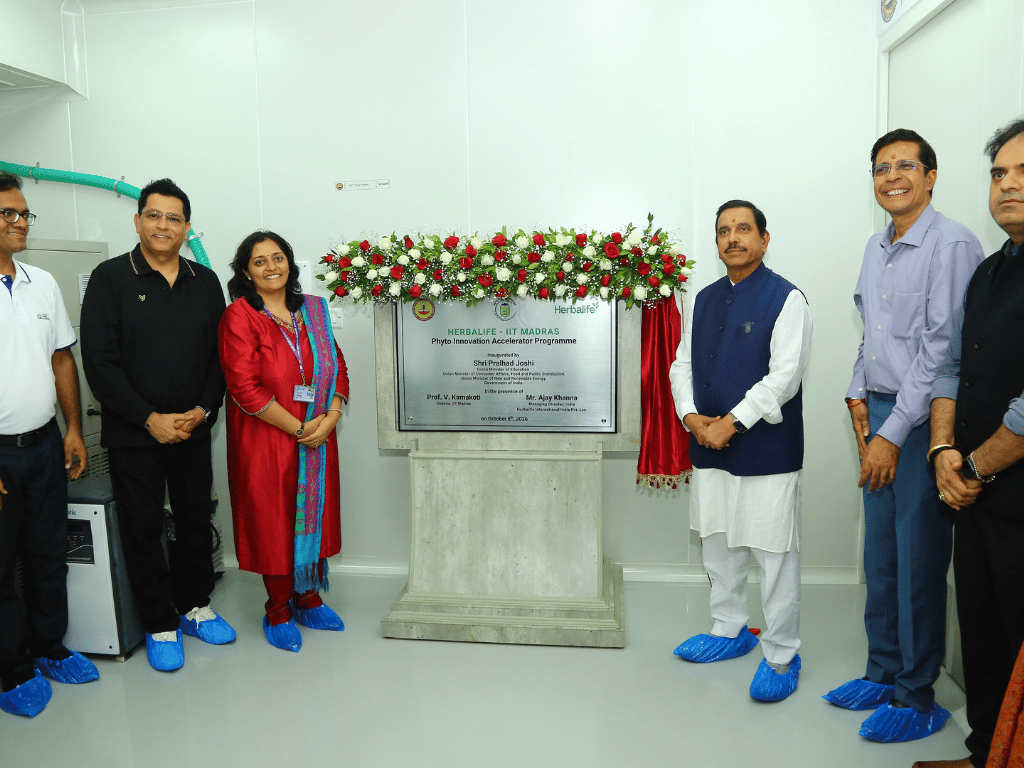
4 Mins ReadUS supplements giant Herbalife and the Indian Institute of Technology Madras have established a Phyto Innovation accelerator programme to translate plant biotechnology research into scalable solutions. Months after opening a plant cell fermentation centre, US dietary supplements corporation Herbalife and the Indian Institute of Technology (IIT) Madras are building on their collaboration with a new biotech
Helion, the Everett, Wash., startup chasing fusion energy, is expanding its semiconductor work with a potential $175 million federal award and plans for more than 100 local jobs. The goal is to develop U.S.-made chips that can more efficiently handle the huge electrical pulses its fusion systems require.
Launched today, NVIDIA Minerva is an AIOps platform built to help teams find problems earlier and keep AI factories productive. It brings together telemetry from infrastructure and AI workloads, then applies purpose-built AI models to turn that data into timely, actionable insight. AI factories are among the most complex operations in the world, with vast
Helion now has another $225 million to help speed development of its first fusion power plant, due to provide Microsoft with electricity in 2028.
TSMC is reportedly asking equipment suppliers for factory machinery that doesn't use rare-earth components, as the chipmaker seeks to reduce exposure to China’s dominance of critical minerals and permanent magnets.
The semiconductor industry has two problems to solve to keep pace with AI, Bill Wiseman, senior partner at McKinsey & Company, told the SEMI Market Symposium at SEMICON West: control the power it takes to process tokens, and build faster. “Demand’s on an exponential,” he said. “Everything that we have built in this industry is all linear.”
Imec President and CEO Patrick Vandenameele opens ITF USA at SEMICON West with his keynote, “Orchestrating a Scalable AI Revolution,” arguing that the next compute multiplier will come from collaboration across the whole ecosystem rather than from a single breakthrough.
After planar transistors gave way to FinFETs and FinFETs to gate-all-around nanosheets, the next transistor architecture is coming into focus: the complementary FET, or CFET, which stacks n-type and p-type transistors on top of each other to build the same logic in roughly half the footprint. Intel, TSMC, Samsung and IBM Research have now all put working silicon behind the concept.
As AI moves from model development to widespread deployment, the definition of a good AI chip is changing. Inference runs continuously across millions of devices under tight limits on latency, power, cost, memory and privacy, writes Ankur Saxena of TDK Ventures, and raw compute output is no longer the main benchmark.
By nearly every technical measure, today’s chips are astonishingly fast, yet phones still hesitate and cloud applications stall. Faraj Aalaei of Cognichip argues the problem isn’t that innovation has slowed but that the industry is optimizing for the wrong definition of speed: “We didn’t run out of performance — we lost it in translation.”
View CSAF Summary Multiple vulnerabilities have been identified in the additional GNU/Linux subsystem of the firmware version V3.1.7 for the SIMATIC S7-1500 CPU 1518(F)-4 PN/DP MFP (incl. SIPLUS variant). Siemens is preparing fixes and recommends specific mitigations for products where fixes are not or not yet available. The following versions of Siemens SIMATIC S7-1500 CPU 1518(F)-4 PN/DP MFP are affected: SIMATIC S7-1500 CPU 1518-4 PN/DP MFP (6ES7518-4AX00-1AB0)…
why selling robot data is tough business; and ChinaTalk at CoRL!
Ask most executives to picture the cost of AI and they’ll likely see GPUs—racks of accelerators with gigawatts of power—and a waitlist for silicon. But that picture leaves something out: Data storage costs. What happens to data after a model responds? Much of the back-end data that’s generated—from billions of daily prompts, images, and videos—needs…
At GTC Berlin, banks, payment companies and financial data providers are showing what production-scale intelligence looks like — built on NVIDIA accelerated computing, powered by open weight models and running on their own infrastructure. Revolut is rebuilding its technology stack on a single foundation model PRAGMA, powered by NVIDIA accelerated computing. Using the NVIDIA cuDF
To help developers rapidly build world models, which help physical AI systems understand and simulate the real world, NVIDIA has expanded the Cosmos platform with new training tools, simulation checkpoints and Cosmos Data Factory blueprints. Ranking top five on six different open models leaderboards, the NVIDIA Cosmos platform gives world model builders the frontier open
Companies around the world are building on the NVIDIA DSX AI Factory Platform to plan, simulate and run the grid and the AI factory as one system, from the substation to the rack. Their adoption of the platform responds to an acute problem. Power is now the biggest bottleneck in infrastructure. More than $300 billion
European retailers are using open models and physical intelligence across use cases — from a commerce platform cutting inference costs by 90% to to a fulfillment center where collaboration of different robotic fleets is simulated inside a digital twin. Frontier Results With Open Models Retail leaders and technology companies across Europe are using NVIDIA-accelerated open
Weather forecasts shape more than daily plans; timely weather information is crucial for energy producers, insurers and transport operators to plan around changing conditions. A global forecast can show a storm taking shape, but decisions about solar farms, shipping routes or insured property depend on what happens locally. NVIDIA Earth-2 gives developers and researchers a