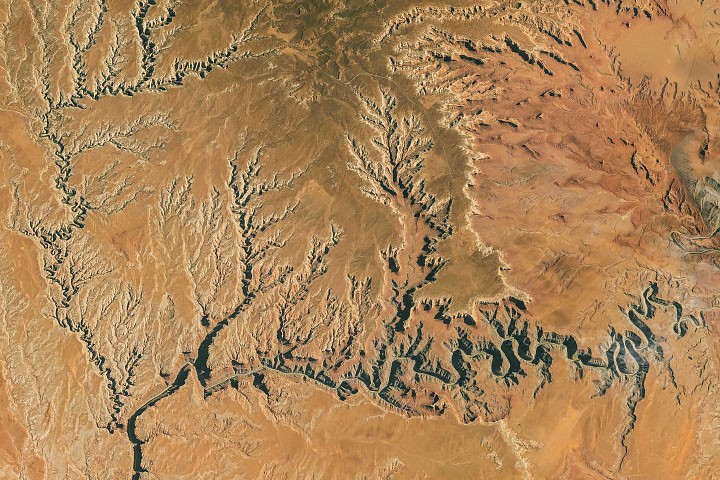
Taking a Gander at Utah’s Goosenecks
The San Juan River has carved deep, improbably curvy meanders into the desert landscape.
Science and technology fields in one place: space, quantum technology, biotechnology, agritech, the Internet of Things and robotics, with news from the specialist press and research from journals and arXiv. Each field has its own page in the Fields menu.
The San Juan River has carved deep, improbably curvy meanders into the desert landscape.
Agility Robotics, which makes the Digit humanoid robot for warehouses and factories, began trading on the Nasdaq on Thursday after a $2.5 billion SPAC merger. Co-founder Jonathan Hurst described how Amazon's warehouse tests convinced the…
4 Mins ReadAs it tables acquisition offers for its international business, plant-forward dairy leader Flora Food Group has completed the $150.5M sale of its Latin American operations (excluding Mexico and Brazil) to CPG giant Alicorp. Flora Food Group, the maker of Country Crock, I Can’t Believe It’s Butter! and Violife, has sold its business in Latin America
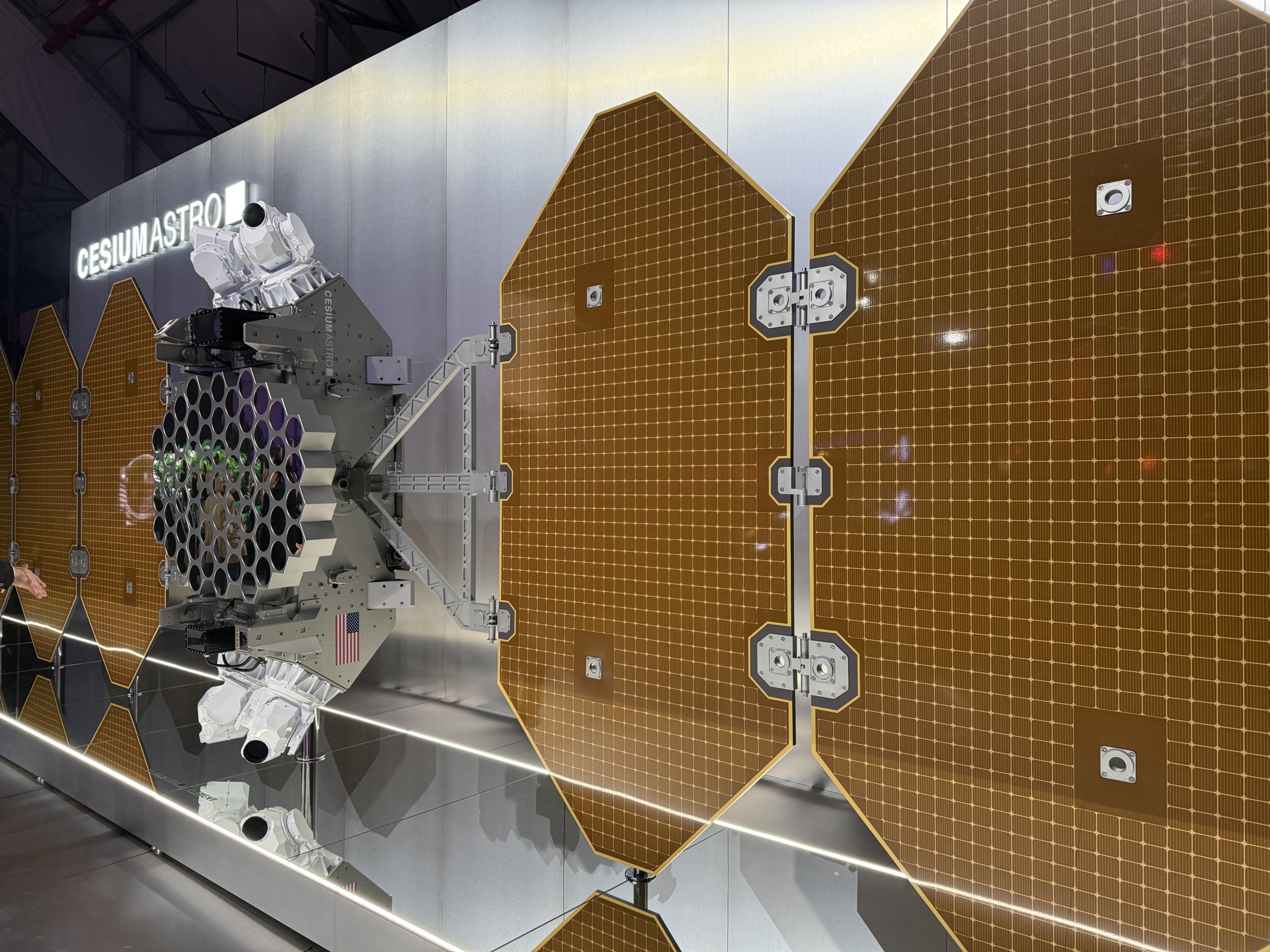
CesiumAstro plans to build and deploy a new constellation—called Synchronicity—consisting of 737 satellites, deployed with the help of a recently closed $730M financing round.
The company raised its 2026 revenue outlook to US$31 million-US$34 million, up from US$28 million-US$32 million.
Using the Low Frequency Array (LOFAR), an international team led by Leiden University has produced the sharpest and most sensitive radio image of the sky ever made at low radio frequencies. The image reveals almost 63,000 radio sources, such as active galactic nuclei and star-forming galaxies, across a patch of sky about 25 times the area of the full moon. The results have been accepted for publication in Astronomy & Astrophysics. The paper is currently available on the…
"This is going to be a game-changer."
The head of T-Mobile's parent company is casting doubt on SpaceX's plans to make Starlink Mobile a "major" carrier in the US. During an earnings call on Thursday, Deutsche Telekom CEO Tim Höttges says he takes the Elon Musk-owned company…
The announcement was made during an invite-only event ahead of the weekend’s, NASA-backed Max Power airshow at the Kennedy Space Center.
During Thursday’s spacewalk, the astronauts will install the eighth and final International Space Station Roll-Out Solar Array, or IROSA.
Also at NASA Science
Spacewalking astronauts Joshua Kutryk and Anil Menon unfurled the last of eight new solar arrays outside the International Space Station Thursday, working through an unexpected power snag to complete a five-year upgrade designed to keep the orbiting laboratory running through its retirement in 2030.
Investigating a scientific question is often a complex process. As an astrophysicist studying some of the most energetic phenomena in the universe, I know that finding answers requires much more than reading scientific papers or understanding existing theories. Astrophysical research involves collecting observations, analyzing data, building physical models and comparing their predictions with observations. These tasks require different scientific tools, databases and…
CesiumAstro Inc., a global leader in space and defense communications systems and satellites, today announced the closing of $730 million in Series D financing, valuing the company at more than
Researchers at Tohoku University and the Japan Atomic Energy Agency (JAEA) have successfully controlled a unique quantum phenomenon—the quantum-geometric nonlinear Hall (QgNLH) state—using electric current for the first time. The breakthrough was achieved by revealing and exploiting the coupling between the spin structure and the QgNLH state in an electrically switchable chiral antiferromagnet.
Detecting a single photon is a challenge in itself. But what if you also want to know exactly how many photons arrive at a particular point at the same time? Physicist Erik Baalbergen is working on light detectors that can do just that. They form a key building block for the optical quantum computer of the future.
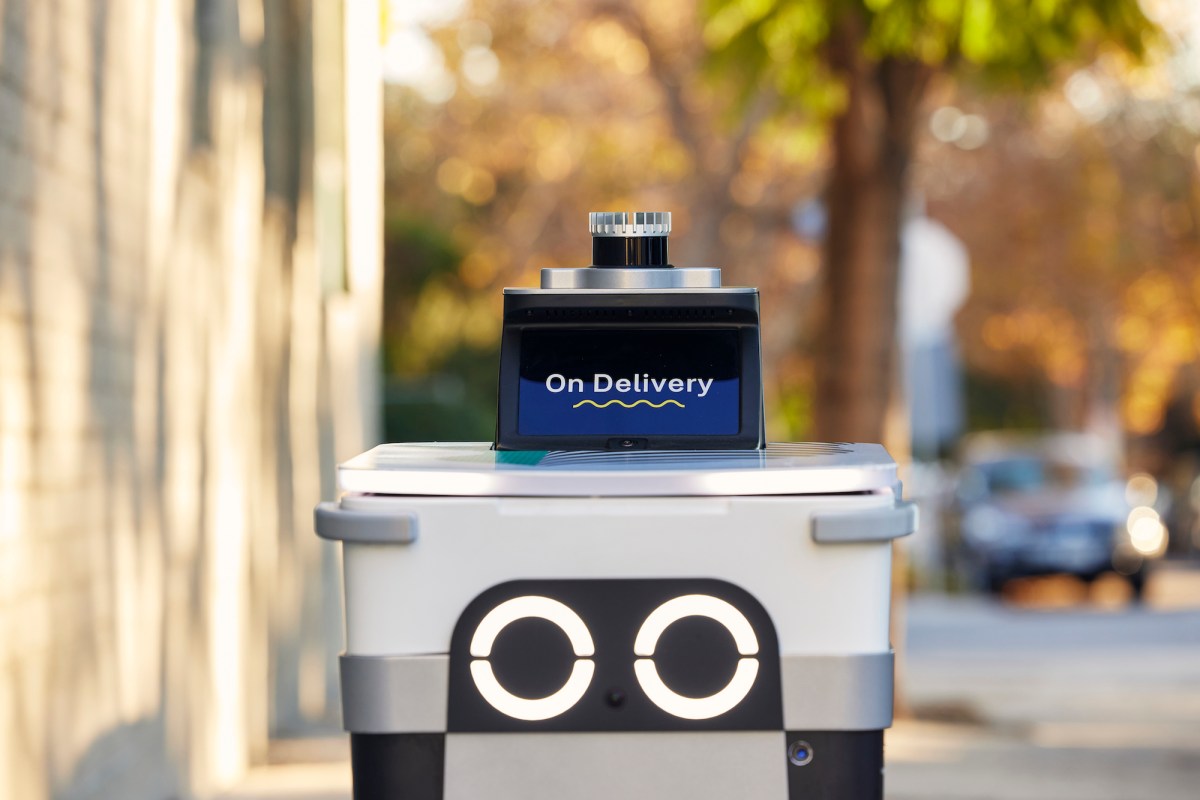
Serve Robotics announced alonsgside its third-quarter earnings that it will launch a new business line called Physical AI Services to offer customers its connectivity and data tools.
TOI-5217 A b is a gas giant exoplanet that orbits a F-type star. Its mass is 1.282 Jupiters, it takes 4.4 days to complete one orbit of its star, and is 0.0604 AU from its star. Its discovery was announced in 2026.
TOI-7176 b is a gas giant exoplanet that orbits a K-type star. Its mass is 0.632 Jupiters, it takes 47.9 days to complete one orbit of its star, and is 0.2292 AU from its star. Its discovery was announced in 2026.
TOI-7025 b is a gas giant exoplanet that orbits a F-type star. Its mass is 0.873 Jupiters, it takes 67 days to complete one orbit of its star, and is 0.3485 AU from its star. Its discovery was announced in 2026.
TOI-6842 A b is a gas giant exoplanet that orbits a G-type star. Its mass is 0.302 Jupiters, it takes 5.4 days to complete one orbit of its star, and is 0.06023 AU from its star. Its discovery was announced in 2026.