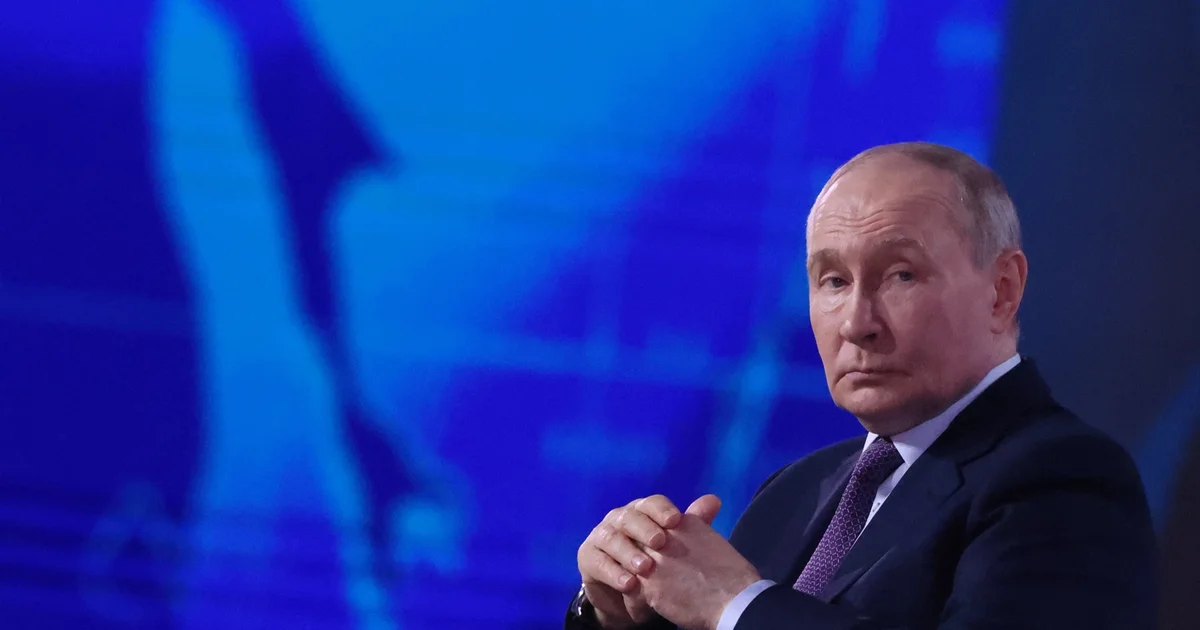
What the Trump-Putin-Xi meeting actually achieved
Our experts unpack what Trump, Xi, and Putin gained from their summit and what their declaration means for the global order.
364 research items
Journal articles, academic blogs, think-tank reports and papers in this section, newest first. Back to the news.
Our experts unpack what Trump, Xi, and Putin gained from their summit and what their declaration means for the global order.
Russia has a taste for attacking energy facilities. Norway’s gas infrastructure is central to Europe’s economy, and it looks extremely vulnerable.
Alia Brahimi and Alexander Kolyandr discuss the “one-shot” mercenaries Russia employs for its shadow war in Europe.
Russian surveillance and Chinese financing allow the Ortega-Murillo regime to withstand external pressure, at the cost of new strategic dependencies. O post How Moscow and Beijing reinforce Nicaragua’s authoritarian consolidation apareceu primeiro em Latinoamérica 21.
The 2027 Ukraine Recovery Conference in Tallinn is an opportunity to turn this event from a one-off series of signing ceremonies into a substantive discussion of Ukraine’s future, writes Luke Zahner.
Around four-in-ten Americans say Trump is favoring Russia too much in the conflict, while a much smaller share (7%) say he is favoring Ukraine too much.
An expert examines whether Russia’s strikes on Ukraine’s energy infrastructure constitute a war crime and crime against humanity.
U.S. President Donald Trump, who has sought nuclear arms control with Russia and China since his first term, may finally have his chance. The first-ever U.S.-Chinese-Russian leaders’ summit is set to take place in Shenzhen, with nuclear issues potentially on the agenda. Regardless of whether the summit yields substantive progress, it could make the prospect of trilateral nuclear arms control seem somewhat less remote than before. For Beijing, however, the summit’s symbolism…
Atlantic Council experts answer seven pressing questions ahead of the meeting of the US, Russia, and Chinese presidents.
By: Elizabeth Plantan and Calla Li A trilateral summit would be historic. What would these three global leaders hope to gain from this meeting?
A nation fighting an existential war needs its armed forces to innovate rapidly, but must also be able to transform its structure and culture.
What can look like harmless entertainment is, for the Kremlin, a deliberate front for propaganda and mobilisation.
Living under constant Russian threat, Ukrainians near the frontline pick past bombed-out buildings and wrecked cars, drink bottled water and keep going.
The US mid-terms were a serious disappointment for the Kremlin’s mouthpieces, but they still have high hopes for Washington’s support.
Bulgaria has painted itself into a geopolitical corner as Russia raises the stakes in the Black Sea and across the eastern flank.
Russia emerges from a flurry of meetings in a stronger position, extracting U.S. agreement to consider the "European security order," Kremlin code for "spheres of influence."
Putin’s intelligence agencies have a long history of deflecting change and ploughing on with hostile operations abroad. They will cling to the old ways, regardless.
Five years after Russia tried to bring Moldova to its knees through energy pressure, a landmark new power line has removed one of Moscow’s last remaining levers over the country, writes Aura Sabadus.
The burden of Russia’s unending assaults on Ukrainian cities is falling on children and their schools.
The Kremlin is well-established and well-armed in the Arctic. It’s also increasingly nervous about Western responses to its ambitions.
The age gap between Russia and Ukraine’s leaders are important for understanding the motivations of both sides in the war.
As Washington courts Moscow and Beijing, Tokyo is left to manage a worsening Kuril dispute largely on its own.
A catalog of over 100 articles (many with Ukrainian translations) on the Russia Ukraine War -- law, diplomacy, policy options, and more.
In the early 2000s, Russia faced an emerging and large-scale threat posed by neo-Nazi and extreme-right violent organisations. The government response at the time was strong – security forces and police relentlessly pursued violent groups, arresting their members and handing out long sentences, many for life. For almost two decades, while single incidents of right-wing violence still took place, the
Andras Toth-Czifra on how Russia’s war-driven fiscal priorities are turning regional debt relief into a tool of central control
Europe has witnessed a surge in suspected Russian hybrid warfare incidents in recent weeks. This is fueling concerns that Vladimir Putin is escalating his intimidation campaign against Ukraine’s partners, writes Maksym Beznosiuk.