Results for “Code”

arXiv (research papers) Fakhar Abbas Tech policy

Beyond Falsehoods 2026: Global Trends in the Regulation of Misinformation and Disinformation

This report examines global legislative and regulatory responses to misinformation, disinformation, and mal-information (MDM) between 1995 and 2025. Drawing on an expanded and updated dataset of 409 coded regulatory and policy entries, including hard and soft law, policy measures, and proposed or draft instruments, it analyses their growth, geographic distribution, substantive focuses, and regulatory designs, which represent the various approaches taken against MDM, as well…
Read at arXiv (research papers)

The Hacker News Security

Hackers Compromise Ethersphere's bee-js and Swarm Desktop to Deliver Wallet-Stealing Malware

Attackers used the Ethersphere project's own release automation to publish malicious versions of two of its tools for the Swarm decentralized storage network: bee-js 13.3.0 and Swarm Desktop 0.56.2. Both releases download and run code built to steal the wallet key that Swarm Desktop keeps for its node, along with the stored password that unlocks it. The code is also built to install a backdoor

Read at The Hacker News

Ars Technica Kyle Orland SI

Claude Code is accidentally exposing secrets all over GitHub

"Do not ask again" prompt leads to passwords, API keys, and more being shared.

Read at Ars Technica

MarkTechPost Michal Sutter SI

Baidu’s ERNIE Evolve Automated Research System Beats NanoChat and NanoGPT Records

Baidu’s ERNIE Evolve is an automated research system that edits code, runs experiments and keeps only verified gains. It beat public bests on NanoChat and NanoGPT Speedrun and sped up ERNIE-5.5-Flash inference.

Read at MarkTechPost

arXiv (research papers) Andrew Trask SI

Double Blind Evals: Resolving the Dual Confidentiality Dilemma in AI Safety Auditing

AI safety evaluations often involve sensitive prompts and proprietary models. Evaluators want to keep their evaluation prompts secret from model owners to prevent purposeful or incidental data leakage, ensuring longer usefulness of their benchmark. Model owners in turn wish to keep their proprietary model weights and inference code within their own secure infrastructure to protect their IP. We present a way forward for "double-blind evals", which provide cryptographic…

Read at arXiv (research papers)

TechCabal Frank Eleanya Startups

This tech firm built the geospatial infrastructure behind Nigeria’s door-level address system

Nigeria’s new digital postcode system aims to replace landmark-based directions with precise building-level codes. Behind it is Milsat’s push to build location-data infrastructure—but keeping that information accurate, accessible and useful will be the bigger test.

Read at TechCabal

TestingCatalog Alexey Shabanov SI

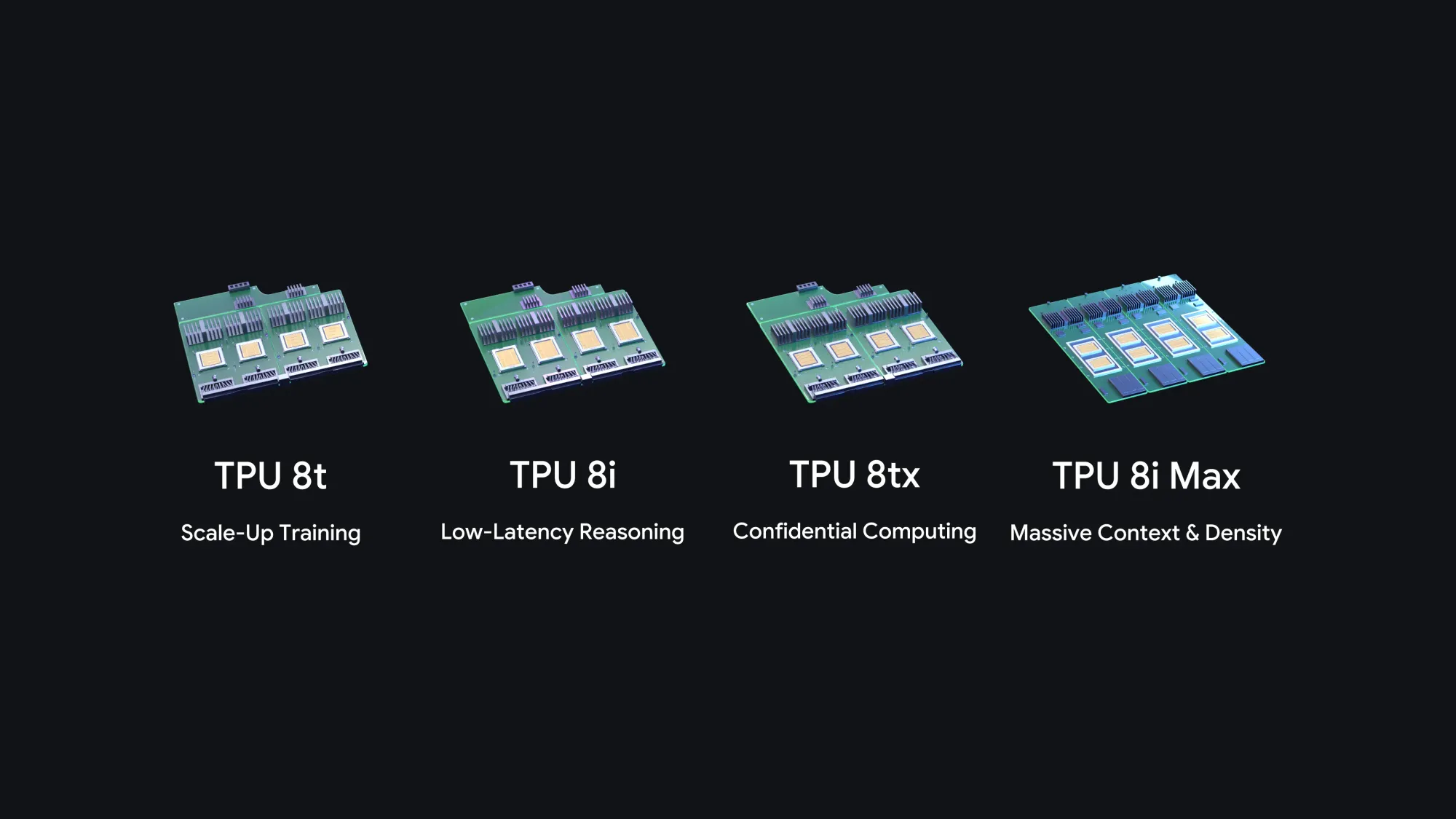
Google adds new TPU 8tx and TPU 8i Max for AI workloads

Google expands its TPU lineup with confidential computing and dual-chip systems for agents handling large codebases and million-token contexts.

Read at TestingCatalog

CISA advisories CISA Security

CISA Adds Four Known Exploited Vulnerabilities to Catalog

CISA has added four new vulnerabilities to its Known Exploited Vulnerabilities (KEV) Catalog, based on evidence of active exploitation. CVE-2026-102895 GPUStack Improper Authentication Vulnerability CVE-2026-116779 SignalWire FreeSwitch Code Injection Vulnerability CVE-2026-123158 OpenBSD OpenSSH Unexpected Status Code or Return Value Vulnerability CVE-2026-123218 IBM Aspera Faspex Incorrect Authorization Vulnerability These types of vulnerabilities are a frequent attack…

Read at CISA advisories

arXiv (research papers) Mohsen Ahmadvand Monad Foundation Security

Lessons Not Learned: Why Cross-Chain Bridges Keep Losing Billions the Same Way

Bridge hacks have cost billions, often without exploiting a code bug. In the cross-chain bridge hacks we catalogue from 2021 to 2026, failures of security posture, meaning how a bridge's people, code, controls and off-chain infrastructure are set up, account for 88% of reported losses since 2023, and nearly all repeat earlier failures. Code audits cannot catch these failures, so we propose a bridge security assessment rubric. It scores each bridge deployment from on-chain…

Read at arXiv (research papers)

OpenAI News SI

CodeRabbit scales agentic software development and ships 20x more

CodeRabbit uses OpenAI models to govern and trust AI-generated code and Codex to ship 20 times more software with the same engineering team.

Read at OpenAI News

MarkTechPost Michal Sutter SI

0sec Labs Open-Sources 0, an AI Security Harness With Web UI, CLI and MCP

0sec Labs has open-sourced 0, an AI security harness for code review, pentesting, reverse engineering and fixes. It runs locally through a browser console, a headless CLI and an MCP server, with your own model provider.

Read at MarkTechPost

Simon Willison SI

Hide your slop PR descriptions behind

Most of the changes I make to my projects these days come in the form of PRs opened for me by Claude Code or Codex. The PR is my unit of work - I use them to bundle commits together, iterating on them until a feature is complete, document decisions and then merge the finished result. Today's coding agents are great at writing PR descriptions. They're too good at describing the work The problem is that they are too good. An agent-written PR description is accurate and…

Read at Simon Willison

The New Stack Carly Page

Moving from AI adoption to an AI operating model: How Docusign engineering went beyond tool rollout

Docusign rolled out AI coding tools across its engineering teams, expecting them to help developers write code faster and do

Read at The New Stack

The Verge Terrence O’Brien SI

Chatbots might be coming to Apple’s HomeView

Code in the iOS 27.3 beta suggests that Apple could add support for chatbots to its smart home hub. There's a flag listed for a "Conversational Apps" category. While there are no details about what apps would fall under that heading, it…

Read at The Verge

MarkTechPost Asif Razzaq SI

Google AI Releases Elephant-Goldfish Model Plugin for Spec-First Coding

Google's Elephant-Goldfish Model plugin makes coding agents draft specs, then runs 5 zero-context review stages before any code.

Read at MarkTechPost

The Rio Times Oliver Mason

Chile Lawmakers Urge Lawsuit Over Codelco

Sixteen Chilean deputies asked the state's legal defence council to sue former Codelco managers over copper output figures that were falsely inflated.

Read at The Rio Times

The New Stack Ankit Jain

How we review 4x more AI code without reading every line

Do you need to read every line of AI-generated code to trust it? Not necessarily. Instead, check five things: the

Read at The New Stack

arXiv (research papers) Thanh M. Truong-Le SI

Agents of Chaos: A Systematization of Knowledge (SoK) on Malicious Attacks on Agentic AI Systems

Agentic AI systems extend large language models with tools, memory, retrieval, browser or computer-use interfaces, code execution, external services, and multi-agent coordination. Although these capabilities enable agents to act beyond text generation and perform tasks, they also create attack paths through which adversaries can exploit untrusted content, deceptive metadata, poisoned state, compromised skills, mutable dependencies, or malicious code. Such attacks can…

Read at arXiv (research papers)

The New Stack Arjun Iyer

In the software factory, engineers become process engineers

For most of software’s history, the scarce resource was people who could write code. Every process the industry built assumed

Read at The New Stack

9to5Mac Bradley C SI

Apple @ Work: Mac admins are shipping AI-written code with mistakes, but fixing the problems is taking days

Apple @ Work is exclusively brought to you by Mosyle, the only Apple Unified Platform. Mosyle is the only solution that integrates in a single professional grade platform all the solutions necessary to seamlessly and automatically deploy…

Read at 9to5Mac

The Hacker News Security

Claude Code's “Don't Ask Again” File Exposes Passwords and Keys in 1,122 Public Copies on GitHub

Passwords and API keys that developers typed into commands they approved in Claude Code are sitting in public GitHub repositories, where anyone can read them. When a user selects "Yes, and don't ask again," Anthropic's AI coding assistant can save the command, word-for-word, including the secret, in a project settings file. Software security company Apiiro said yesterday that 1,122 public

Read at The Hacker News

arXiv (research papers) Dayou Du

BitDecoding-FP4: Native FP4 KV Cache Decoding via Algorithm-System Co-Design

The key-value (KV) cache dominates memory capacity and bandwidth in long-context LLM serving. While 4-bit microscaling formats (NVFP4, MXFP4) shrink the cache and run attention on FP4 Tensor Cores, a fundamental gap remains between algorithmic quantization and system-aware acceleration: existing FP4 KV systems use vanilla quantization that causes severe accuracy drops, whereas accuracy-oriented 4-bit algorithms rely on vector codebooks whose lookup overhead degrades decoding…

Read at arXiv (research papers)

AWS Machine Learning Blog Aishwarya Pawar SI

Serverless MCP server for AI agent data lake access on Amazon ECS Fargate

Learn how to build a serverless Model Context Protocol (MCP) server on Amazon ECS with AWS Fargate that gives AI agents secure, metadata-driven access to an enterprise data lake. Exposing a new dataset requires only a JSON file, with no per-dataset integration code.

Read at AWS Machine Learning Blog

AWS Machine Learning Blog Andrew (Qingjie) Ren SI

Extend Claude Code to remote sessions on Amazon Bedrock AgentCore with security controls

Run Claude Code as a remote agent on Amazon Bedrock AgentCore. Each coding task runs in its own isolated session in your AWS account, every model call goes through Amazon Bedrock, and the result comes back as a GitHub pull request you review and merge.

Read at AWS Machine Learning Blog

The Verge Terrence O’Brien

How Akai and Moog are embracing vibe-coded mods

inMusic, the parent company of Akai, Moog, Native Instruments, and more, has decided to embrace the modding community. In an interview with The Verge, inMusic CEO Jack O'Donnell said, "We're going to provide a toolbox to the community…

Read at The Verge

The Hacker News Security

Installing the Fix for an Exploited WordPress Flaw Can Expose Some Sites One Last Time

Some WordPress sites can still be attacked while they install the fix for an actively exploited flaw, according to Umut Bayram, the Picus Security researcher who found it. The update that installs the fix still unpacks its files using the site's old, unpatched code, so an attacker who strikes at the right moment can run code on the server. The researcher advises blocking web access to the

Read at The Hacker News

The Hacker News Security

Hackers Target OpenSSH SSHole Flaw Within Hours of Disclosure, Gain Root on Honeypot

Threat actors are attempting to exploit a recently disclosed security flaw impacting OpenSSH that can enable sign-ins to accounts that have no password set, according to Previdian. The vulnerability, tracked as CVE-2026-123158 (CVSS score: 8.1) and codenamed SSHole (or *sshole), impacts Linux systems that run OpenSSH on the musl C library with Pluggable Authentication Modules (PAM) disabled,

Read at The Hacker News

The Hacker News Security

Microsoft Paint RCE Fix Now Available, but Windows Update Won't Deliver It

A fix for CVE-2026-83844, a remote code execution flaw in Windows Paint, is now in the Microsoft Store. Paint gets this fix only through a Store update, not through Windows updates. The fixed build, 11.2609.401.0, was the newest Paint build in all ten countries The Hacker News checked today. The flaw is an out-of-bounds read that could let an attacker run code over a network. Microsoft rates

Read at The Hacker News

The Hacker News Security

Malicious Browser Extensions Could Use Claude Dispatch to Run Code on Users' Computers

A browser extension that can run scripts on claude.ai could make Claude Desktop run code on a person's computer, researchers at Forever Security, an endpoint security company, showed in a test. The attack needs Dispatch, a Claude feature that lets people send tasks from their phone to Claude Desktop. The flaw that makes this possible can still be exploited, the researchers said earlier this

Read at The Hacker News

The New Stack Paul Sawers

Kubernetes, mark II? Why Google’s giving away gVisor, a code sandbox used by Anthropic and OpenAI

Google wants to emulate one of its biggest ever open-source success stories, donating three core AI agent infrastructure projects to

Read at The New Stack

Older stories